
The Bitrefill card is a prepaid Visa for euro-spending crypto holders in the EU — solid on cost, quiet on its own limits
 Available in US
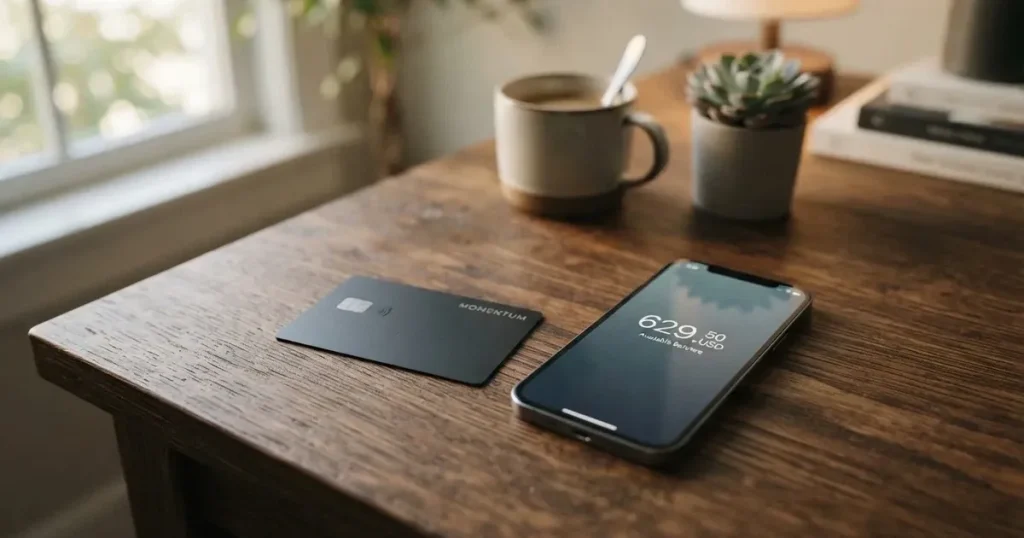
The Bitrefill card is a prepaid Visa — virtual and physical, denominated in euros — that you load with crypto or with a SEPA bank transfer and then spend like an ordinary payment card. It is issued by Wallester AS in Estonia and the crypto side runs through Lightspark Payments Europe AS; the site itself is run by Airfill Pre prepaid AB in Sweden. In practice it is aimed at people who already hold bitcoin, Lightning, Ethereum or stablecoins and want to spend them in euros inside the EU without opening a bank account for that purpose.
I gave it 6.8 / 10. That is a good score for a narrow product, not a great one for a general payment method. It gets the boring parts right — the card itself is free, there is no foreign exchange fee, and the platform is licensed and long-running. It loses points because the numbers you need most to judge the card day to day — the conversion spread, the ATM charges, the exact tier limits — are either absent from the public pages or only available from third-party sites. And of course it is only open to residents of the eligible European countries; US and Russian citizens are excluded no matter where they live.
The conditions described below are current as of October 28, 2026.
The score, criterion by criterion
| Criterion | Mark | Why |
|---|---|---|
| Who can get it | 5 / 10 | Issued to residents of 29 EU states plus Norway and Iceland, 18+; US and Russian citizens excluded regardless of residence |
| Cost | 6 / 10 | Card through the app is free, top-up: fixed 1.99% commission, 0% FX; unofficial: simple EUR 10 a month after 12 months, ATM 2.49% |
| Top-up options | 7 / 10 | Bitcoin, Lightning, Ethereum, USDC, Solana, Base, Polygon and SEPA; USDT deposits ended 17 March 2025, minimum EUR 15 |
| Reliability and complaints | 9 / 10 | Card issued by Wallester AS (Estonia, licensed by Finantsinspektsioon), operator Airfill Prepaid AB; Trustpilot 4.5/5 from 2,943 reviews, complaints mainly about the gift-card store |
| Everyday use | 8 / 10 | Virtual and physical Visa, Google Pay available, Apple Pay “soon”, ATMs on Visa cards |
Total: 6.8 / 10
Those five lines are the whole judgement in miniature. Notice the shape of it: the highest mark is for the boring, verifiable things — who issues the card, what people say about the company — and the lowest is for the first thing you need, which is whether you are eligible at all. That is not the card’s fault so much as a fact about who lives where.
Who it suits: you live in the eurozone or in an EEA country on the eligible list, you already hold crypto or stablecoins, you want to convert and spend without a bank, and you are comfortable with a prepaid model where the balance is loaded first. Who it does not suit: anyone living outside Europe, anyone who travels and expects one card to work everywhere without surprises, anyone who spends large amounts and needs clear published tier limits, and anyone who wants their money held in their own wallet rather than by a provider.
Will they give you the card
Eligibility is residence-based, not citizenship-based — with two hard exclusions and a long blocklist behind them. The card page itself does not publish a country list. The terms say access is “subject to eligibility criteria” and that “further eligibility requirements, established and verified by our partners, shall apply”. So the list you actually need is this one: residents of Austria, Belgium, Bulgaria, Croatia, Cyprus, Czech Republic, Denmark, Estonia, Finland, France, Germany, Greece, Hungary, Ireland, Italy, Latvia, Lithuania, Luxembourg, Malta, Netherlands, Poland, Portugal, Romania, Slovakia, Slovenia, Spain, Sweden, Norway and Iceland. Eighteen or older, with identity verification.
Then the exclusions, which are where people get caught out. US citizens and Russian citizens are excluded regardless of where they live — this is a citizenship rule, not an address rule, so a Russian citizen who also holds EU or EEA citizenship is eligible, while an EU resident holding only a US passport is not. And you cannot sign up with a Kyrgyzstan or Tajikistan mobile number. The help centre also keeps a blocklist for verification and deposits that includes the US, Japan, Russia, Ukraine and the UAE; that list was truncated where I read it, so treat it as a floor rather than the complete picture.
Why is nationality treated separately from residence? Because sanctions screening and issuer risk policy get applied to citizenship and country of birth as well as to your address. If your passport and your address disagree, the system will notice, and no amount of good documentation fixes a policy that says no.
Two practical notes. First, “not stated” is a real answer here: Bitrefill’s public pages do not set out a country list or explain the eligibility criteria beyond those quoted phrases. Second, the fact that the card is issued by an Estonian institution under an EU licence is not a workaround for living elsewhere. An Estonian licence lets the issuer serve customers across the EU and EEA — it does not extend the card to someone in the US, the UK or Nigeria.
How to get it
You need the app, an identity check with the card partner, and then either a virtual card immediately or a physical card in the post — but the card page does not describe its own KYC process. Identity verification is managed by the card partner and is required before you can order a card. At the Starter tier that means a photo ID and a selfie liveness check, and possibly proof of address. If you activate outside the EU, proof of address is required. For the Plus tier, source-of-funds documents are set by Lightspark. How long the check takes and why it might be refused are not stated on the pages I read, so do not plan around a specific turnaround.
The card itself is a virtual and physical Visa. The virtual one is usable on receipt; the physical one has to be activated. Card currency is EUR — crypto deposits are converted into euros, and cashback is paid in EUR. The physical card is sent to the address you provide and ordering it is free; delivery time is not stated, and neither is the cost of a replacement. You can order another card from the Cards page, and a new card has to be ordered when the old one expires.
Two things to keep in view. The verification runs through a partner, not Bitrefill’s own staff, which means the documents go to a company you did not choose and whose standards you cannot read. And because the tier limits are set by the partner as well, the boundaries between Starter and Plus are not something Bitrefill publishes in full detail.
Fees: what it really costs
The card is free, the FX fee is zero, and every top-up costs a flat 1.99% — but the conversion spread is not published, and that is the number that decides whether this is cheap or expensive for you. The card page says the card is free through the app. The issuance and monthly amounts are not stated there. What is stated: a fixed 1.99% deposit fee, plus a variable exchange cost at the card partner’s live rate, plus a spread on the crypto-to-euro conversion whose percentage is not disclosed, plus whatever spread the payment processor or ATM operator applies when you spend. On the foreign exchange side there is no FX fee of Bitrefill’s own — the Visa exchange rate applies to foreign-currency payments.
So what do the published numbers actually mean? 1.99% is a clean, fixed, knowable fee. The spread is not. If the spread is small, a 1.99% flat fee is competitive with almost anything. If it is wide, the spread quietly eats a third of that. And I cannot tell you from the public pages which it is, and neither, I suspect, can the company without asking.
| Fee or limit | Value |
|---|---|
| Issuance | Free through the app; amount not stated |
| Monthly fee | Not stated; inactivity fee applies after 12 months without spending or cash-out (amount not stated) |
| Top-up / deposit | Fixed 1.99%, plus a variable conversion spread (percentage not stated); minimum deposit currently EUR 15 |
| Conversion | Crypto-to-euro spread, percentage not stated |
| FX | No foreign exchange fee; the Visa rate applies to foreign-currency payments |
| ATM | Cash out at ATMs that accept Visa; fee and free allowance not stated |
| SEPA pay-in | 1.99% |
| Spend limit | EUR 10,000 per day |
| Monthly limit | EUR 10,000 (Starter) or EUR 15,000 (Plus) |
| Contactless limit | EUR 200 per transaction |
Some of those rows are better sourced than others. Third-party figures — not confirmed by Bitrefill’s own pages — put ATM withdrawals at 2.49% for both Starter and Plus on top of the ATM operator’s own charge, with limits of EUR 350 per day and EUR 3,000 per month. The same source notes that the pricing page appears to render those cells incorrectly, and a separate third-party report says the ATM line was dropped from the pricing page in mid-2026. Also unofficial: an inactivity fee of EUR 10 per month after 12 months without spending or cash-out, a EUR 10 replacement physical card, and EUR 0 physical-card delivery where offered. A separate February 2026 review agrees on the EUR 10 inactivity figure. If those numbers matter to you, confirm them in the app before you rely on them.
Three everyday payments, and which fees bite
A EUR 30 coffee, a EUR 12 lunch, and a EUR 200 train ticket look identical in structure, but only the third one crosses a limit. Take a EUR 30 coffee paid from a balance you loaded yesterday. The flat deposit fee already happened at load time, not at the coffee. At the till you pay the Visa rate — nothing, since it is euros — plus any spread the processor applies. No ATM, no FX, no tier edge. This is the payment the card is genuinely good at, and it is the one most people make several times a week.
Now a EUR 12 lunch on a day you also tap the contactless terminal: same structure, and at EUR 12 you are nowhere near the EUR 200 contactless ceiling. The contactless limit is per transaction, so a EUR 200 grocery shop wipes it out for that tap, while a EUR 190 one does not. Neither is worth thinking about until you are near the ceiling.
Then a EUR 200 train ticket bought the same week. It clears the EUR 200 contactless threshold exactly at the line, so expect it to need a chip-and-PIN insert rather than a tap, and it consumes the day’s EUR 10,000 spend allowance in one go — irrelevant in amount, relevant as a reminder that the daily and monthly caps are real counters, not suggestions. If you are on Starter, the EUR 10,000 monthly cap is the ceiling to watch; on Plus it is EUR 15,000.
The payment that costs you extra is the cash withdrawal, and that is the one people underrate. Any cash-out figure you have seen — 2.49% plus the operator’s charge, or whatever the app currently shows — applies on top of the load fee you already paid. Two fees for one transaction. If you are taking cash out regularly, work out whether a bank transfer to your own account is the cheaper route.
Top up
Nine-ish ways in, one flat 1.99% fee, a EUR 15 floor, and no USDT since March 2025. The card page’s “Buy with” list runs to Bitcoin, Lightning, Ethereum, USDC, USDT, Solana, BASE, Polygon, Li.Finance, Apple Pay, Google Pay, Visa and MasterCard — but be careful reading that as a funding list, because Apple Pay, Google Pay, Visa and MasterCard appear there as purchase payment options in the gift-card store, not explicitly as ways of loading the card. The currencies that genuinely load the card are Bitcoin, Lightning, Ethereum, USDC, Solana, Base and Polygon, plus a SEPA bank transfer per the terms.
Here is the trap worth naming. USDT deposits ended on 17 March 2025, on any network. That matters more than it sounds, because USDT is the single most common thing people hold. If your balance sits in USDT, you now need to move it to USDC or to a supported chain yourself, paying whatever that chain charges — on-chain network fees for your deposit are paid to the blockchain, not to Bitrefill — and handling the risk of getting the network or the address wrong.
Two hard rules on the way in. The fixed fee is 1.99% plus the partner’s live exchange rate on top of it, and the minimum deposit is currently EUR 15; anything smaller is simply not added, so a EUR 12 top-up fails rather than rounding down. And store credit from the gift-card side cannot be moved onto the card — those are separate balances, which is the single most common misunderstanding I saw in the complaint themes.
Lightning deserves a mention because it is genuinely useful and genuinely awkward: it is cheap and fast, but it only works with Bitcoin, so anything else in your wallet has to go through the on-chain route.
Paying with it every day
A normal Visa that works in shops, plus Google Pay on your phone, plus 1% back on every purchase and 1% back on every deposit. The card is a Visa, so it works wherever Visa is accepted, and cash is available at ATMs that accept Visa. Google Pay works. Apple Pay does not: the site says “not supported yet” and “will be available soon”, which I would treat as no.
The rewards structure is worth understanding properly because it is easy to overrate. It is 2% total cashback with, in the page’s word, “no cap” — split as 1% on each crypto deposit and 1% on each purchase. That means the headline 2% is not 2% on everything you spend; it is 1% on spend and 1% on loading. If you load EUR 1,000 and spend EUR 400, you have earned EUR 10 plus EUR 4. Whether cashback lands in EUR is stated in the terms rather than the page; the payout currency is not stated on the page itself, and the rate is published on the website. Extra costs: 1% cashback does not cover the 1.99% load fee, so the reward is real but smaller than the headline suggests.
On the app, it is on the App Store and Google Play; I did not read the store ratings. Unofficial figures for those are an Apple App Store 4.7/5.0 from 372 ratings and Google Play 4.5/5.0 from 2,468 ratings.
When something goes wrong, the help article on disputing a card payment tells you to contact the merchant first, because most refunds are handled that way — which is realistic, and it means the merchant is your first line of defence rather than the issuer. Two warnings from the same article: rewards may be debited if a transaction is refunded or charged back, so a reversal costs you the cashback too; and Bitrefill is not liable if a merchant simply refuses the card. No time frames are stated. Which merchants might decline is also not stated, and that is worth understanding on its own — some shops decline prepaid or foreign-issued cards because the BIN lookup reveals the card type and the issuer’s country, which is the same mechanism that makes a Swedish-issued card look foreign in a Spanish shop.
What can go wrong
The realistic risks are a wrong-network deposit that cannot be undone, a rules change that closes your funding route, and the ordinary risk of holding your money with someone else’s company. Take them in that order of how much they actually hurt.
Wrong network or wrong token is the one that can cost you everything in a single tap. Blockchain transfers are irreversible. If you send on a network Bitrefill does not support, or to an address belonging to a different network, the funds can be lost or need manual support recovery with no guarantee. Reviewers report exactly this — wrong-network and wrong-token deposits turning into refund disputes. Tether also disables tokens in wallets on the OFAC sanctions list, so stablecoins are not censorship-proof: funds tied to illicit activity have been frozen.
Rules changing under you is the second risk, and it is not hypothetical. The EU Transfer of Funds Regulation applies from July 2026, and deposits from non-own or non-EU-licensed-VASP wallets above EUR 1,000 are declined — which is a real narrowing of where crypto can come from, on top of SCA changes affecting deposits. USDT deposits ended 17 March 2025 with no notice period that I could find. There is also a temporary suspension of applications from Hungarian residents mentioned in the help centre. The lesson is general: the funding routes listed on a card page today are not a guarantee of the routes listed next year.
Third, custody. This is a custodial card: Lightspark and Wallester hold the funds. Control of crypto belongs to whoever holds the private key or seed phrase, and with a custodial wallet the provider holds it, so you must trust the provider completely. The failure record of this industry is not theoretical — Mt. Gox (about US$350 million reported stolen, 2011–2014), Coincheck (about US$400 million, 2018), Ronin Network (US$625 million, 2022). A seed phrase is 12 to 24 unencrypted words and anyone who gets it can restore the wallet and spend the funds, with no built-in recovery. EMIs must safeguard customer funds by segregating or insuring them, but such funds are not bank deposits and may not be covered by a deposit guarantee scheme. Bitrefill’s own safeguarding and insurance arrangements are not stated.
The safeguards that are in place are ordinary and reasonable: freeze the card and hide the balance in the app with one tap, 3-D Secure on online payments, lost or stolen or unauthorised transactions reported to [email protected], and a help centre at help.bitrefill.com plus a contact form. What 3-D Secure does is check you at checkout — the issuer assesses risk and either waves it through or challenges you with a code — and, in fraud cases, liability can shift away from the merchant. It does not protect you from a wrong address or a scammed support contact.
On the company itself: the site is owned and operated by Airfill Prepaid AB (559001-6035), Stockholm, Sweden. The card is issued by Wallester AS, licensed by Finantsinspektsioon in Estonia. Crypto and virtual IBAN services come from Lightspark Payments Europe AS, licensed by the Estonian FIU. Bitrefill is not a bank, and you are not a bank customer.
Finally, the complaints picture, which needs reading carefully rather than at a glance. Trustpilot shows 4.5/5 from 2,943 reviews, 89% five-star and 5% one-star. Bitrefill replies to all one-to-three-star reviews. But almost none of the negativity is about the card: the recurring themes are gift-card markup and fees (October 2026), Apple gift-card codes disabled by Apple with the refund declined (Bitrefill replied that Apple must resolve it), a lookalike fake site (October 2026), a deposit pending 20+ days with support called “worthless” (September 2026), and refunds paused (September 2026). A three-star review says the Visa card is sometimes declined. That last one is the only card-specific complaint in the mix, and it is the one I would hold in mind — the rest tells you the gift-card store is the rough part of this business.
The obvious question here is: why does this not feel like a bigger warning? Because this is not a Wild West product. It is an e-money card issued under EU licences, run by established regulated firms, in a market where the standard pattern is a programme manager on top of a licensed issuer. The card brand itself is often just a front-end — here Airfill Prepaid — while the network routes the payments and the issuer holds the programme. What that means in practice is that a failure at the crypto-provider level is a different risk from a failure at the issuer level, and they are backed by different things.
What to take instead
Three alternatives, all weaker on score and all solving a slightly different problem — plus a short lesson in what to look for. Here they are against the same criteria:
| Bitrefill | Cardex | TakeCard | OkiCard | |
|---|---|---|---|---|
| Score | 6.8 / 10 | 5.6 / 10 | 5.5 / 10 | 6.0 / 10 |
| Who | Residents of 29 EU states, Norway, Iceland | “200+ countries”, no exclusions listed | Physical card Bolivia only | “150+ countries”, no geo-blocking on passport |
| Card | Virtual + physical Visa, EUR | Virtual + physical, Naira-focused | Virtual; physical Bolivia only | Virtual, USD/EUR |
| Cost | Free via app | Not stated | Virtual USD 5; physical USD 20 + USD 20 shipping (conflicting figures) | Issuance $0 or $15 (pages disagree) |
| Fees | 1.99% top-up + undisclosed spread; no FX fee | “AI-Powered Conversion Rate”, no percentage stated | 1% per purchase; USD 1:1 | 3% load fee; 0% transaction fee |
| Funding | BTC, Lightning, ETH, USDC, Solana, Base, Polygon, SEPA | USDT, USDC, BTC wallets; networks not stated | Top up from Takenos balance | USDT on BSC, Ethereum, Tron, Solana |
Cardex markets itself on reach — “one crypto card, 200+ countries” with no country list and no exclusions — and converts at the moment of payment with what it calls an AI-powered conversion rate that scans global exchanges and picks the best one. The catch is what you saw in the table: no fee percentage is stated anywhere, and the app-store listing is Naira-focused. Reach without a published fee is not a bargain, it is an unknown.
TakeCard is the cheapest to start among the three — USD 5 for the virtual card, 1% per purchase, USD payments at 1:1 with no currency adjustment — but the physical card is “available only to Bolivian users for now”, the country list is not published in the help articles, and even the physical-card price contradicts itself between two articles in the same help centre. Its funding route runs through a Takenos account rather than a direct deposit, and the coins named in starting data were not confirmed.
OkiCard has the most explicit fee schedule of the three: a 3% load fee, 0% transaction fee in USD, and a stated absence of hidden exchange spreads. Against that, its own pages disagree on whether issuance is $0 or $15, the initial deposit is 100 USDT, USDC is “soon” and Bitcoin and altcoins are “coming soon” — so at the moment you are funding a USDT-only card, on four chains, at a 3% entry cost. That is 3% on the way in against Bitrefill’s 1.99%.
None of the three is clearly better than Bitrefill. What Bitrefill has that they lack is a European issuer under an EU licence, published tier limits, a free physical card, Lightning support, and a cash-back programme. What they have in various forms is reach beyond Europe — which matters only if Bitrefill’s eligibility list excludes you, in which case it is the only criterion that counts.
If none of them fit, the option worth naming is a self-custody-linked card: funds stay in your own wallet until the moment of payment, but you bear sole responsibility for key loss, phishing, and clipboard-hijacking malware that swaps a copied address. That is a different trade, not a better one — you exchange counterparty risk for personal-key risk.
Who I would recommend it to
Bitrefill is for the person who already has the crypto and is stuck on the spending side. I would recommend it if you are a resident of one of the listed European countries, 18 or older, hold bitcoin, Lightning, Ethereum or a supported stablecoin, want to spend euros without a bank account, and are willing to load a balance before spending it rather than spending from a linked account. You also get a real Visa, Google Pay, SEPA withdrawal, no foreign exchange fee and a euro-denominated balance that a shop can read without guessing.
I would not recommend it if you live outside Europe, hold mostly USDT, need published numbers you can plan a month around, want to withdraw cash often, or want your money in a wallet you control. In each of those cases the card’s structure works against you — not because it is badly run, but because it is built for a specific job.
The single thing I would do before applying: open the app, look at the current tier limits and the current ATM and inactivity fees with your own eyes, and check that your funding coin and chain are on the list that day. Everything in the table above is accurate to what I could read; almost none of it is guaranteed to stay that way, and the fastest-changing rows are the ones not printed on the public pages.
Frequently asked questions
What is the Bitrefill card?
The Bitrefill card is a prepaid Visa card, available virtual and physical, denominated in euros. You load it with crypto — Bitcoin, Lightning, Ethereum, USDC, Solana, Base or Polygon — or with a SEPA bank transfer, and then spend that balance like any other payment card. It is issued by Wallester AS in Estonia, with crypto services from Lightspark Payments Europe AS.
How does the Bitrefill card work?
It works on the pre-loaded balance model: you convert or top up a euro balance first, and the card can only spend what is in it, so it cannot overdraw. When you tap, the Visa network routes the payment and your balance is debited. Because crypto was already converted at the moment you loaded, you are not exposed to the market between loading and spending — but you do pay the loading cost up front.
Is Bitrefill a bank?
No. The site is operated by Airfill Prepaid AB of Stockholm, Sweden, and the card is issued by Wallester AS, an Estonian company licensed by Finantsinspektsioon. That makes it an e-money and payment-services arrangement, not a bank account, so your balance is safeguarded e-money rather than a bank deposit, and you cannot rely on deposit-guarantee protection.
Who owns Bitrefill?
The site states it is owned and operated by Airfill Prepaid AB, registration 559001-6035, in Stockholm. The card programme itself sits with Wallester AS, and the crypto and virtual IBAN side with Lightspark Payments Europe AS. So the brand you sign up to is a front-end over two regulated European companies, which is a normal structure in this category.
Is the Bitrefill card free?
The card through the app is free, and there is no foreign exchange fee. But nothing is truly free to run: each top-up costs a fixed 1.99% plus a variable exchange cost and an undisclosed conversion spread, ATM withdrawals carry a fee on top of the ATM operator’s own, and an inactivity fee applies after 12 months without spending or cashing out.
How much can I spend on the Bitrefill card?
The daily spend limit is EUR 10,000, and the contactless limit is EUR 200 per transaction. The monthly limit is EUR 10,000 on the Starter tier and EUR 15,000 on Plus. To reach Plus you are invited after the Starter deposit limit and must upgrade within 30 days, or the card is suspended. Deposit caps on Starter are up to EUR 15,000 of crypto lifetime.
Does the Bitrefill card require KYC?
Yes. Identity verification is run by the card partner and is required before you can order. At Starter it means photo ID plus a selfie liveness check, and possibly proof of address; activating outside the EU requires proof of address. Plus adds proof of source of funds. Because due diligence that cannot be completed means the institution must decline or end the relationship, an incomplete check can mean a refused application.
Can I use the Bitrefill card in my country?
If you are a resident of Austria, Belgium, Bulgaria, Croatia, Cyprus, Czech Republic, Denmark, Estonia, Finland, France, Germany, Greece, Hungary, Ireland, Italy, Latvia, Lithuania, Luxembourg, Malta, Netherlands, Poland, Portugal, Romania, Slovakia, Slovenia, Spain, Sweden, Norway or Iceland, and 18 or older, then yes. US and Russian citizens are excluded regardless of residence. The card page does not publish a country list itself, so verify your location in the app before applying.
How do I add the Bitrefill card to Apple Wallet?
You cannot yet. Google Pay works with the card today; Apple Pay is listed as “not supported yet” and “will be available soon”. That phrase has appeared for a while without a date attached, so if Apple Pay in your Wallet is the reason you want the card, wait until you see it offered inside the app rather than planning around it.
Is the Bitrefill card safe and safe to keep money on?
It is licensed and regulated, with 3-D Secure on online payments, one-tap card freeze, balance hiding and an email channel for lost or stolen transactions. But the balance is custodial, so you are trusting the providers, and that carries counterparty and hack risk — Mt. Gox, Coincheck and Ronin Network are the standard precedents. Safeguarding and insurance arrangements are not stated, so treat the balance as spend money rather than savings.
Virtual cards for online use – cryptocardselect
Content created by the «cryptocardselect» team