
Free to issue, 5% to load, and the issuer is not named
 Available in US
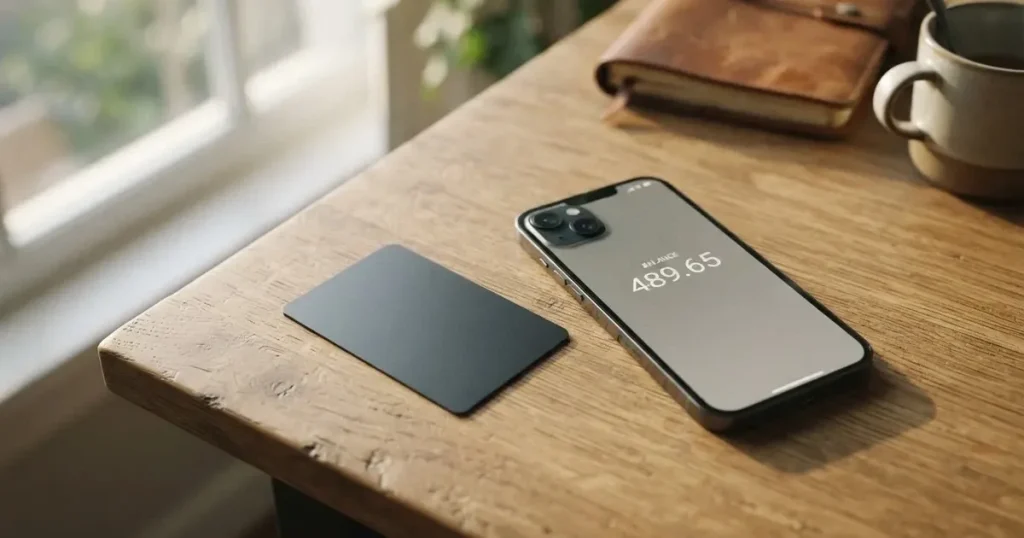
RivoCard is a virtual prepaid card that you fund with crypto and spend like an ordinary Visa or Mastercard. The idea is straightforward and the price list is friendly at the front end: the card itself is free, there is no monthly fee, and online purchases are charged at 0%. The bill arrives later, in the loading step and in the fine print. My score for it is 5.4 out of 10 — the top-up options pull the number up and the day-to-day practicality of the card pulls it down.
The conditions described here are current as of October 28, 2026.
Verdict: 5.4 out of 10, and the two halves of that number come from opposite ends of the product
| Criterion | Mark | Why |
|---|---|---|
| Who can get it | 9 / 10 | Global reach across 150+ countries and age 18+, with no country list published; the terms prohibit circumventing sanctions programmes of OFAC, the EU and the UN |
| Cost | 2 / 10 | Issuance and servicing are free, but loading the card is 5% (10% in the terms) and creating a card is 10% in the terms; online purchases are 0% |
| Top-up options | 9 / 10 | BTC, USDT on TRC20 and ERC20, ETH on ERC20, XMR, LTC, USDC, DASH, SOL on SPL; the site claims 50+ assets |
| Reliability and complaints | 4 / 10 | Rivocard LTD is named but registration and issuer are not; reports include cards stuck at “Pending” for weeks and unanswered support; Trustpilot 3.9 out of 5 from 12 reviews in a year |
| Everyday use | 3 / 10 | Virtual card only, on Visa or Mastercard, issued in about 60 seconds; Apple Pay and Google Pay are not mentioned on the site; unofficial: cash machines without a fee |
| Total | 5.4 / 10 |
The card suits one person well: someone who already holds several coins, moves them around on different networks, and wants to load a spending balance without converting everything in advance. For that person the top-up list is genuinely wide, and the 0% on online purchases is the best number in the whole fee schedule.
It does not suit a second person, and this is where the 5.4 comes from. RivoCard is virtual only. Apple Pay and Google Pay are not mentioned on the official pages — which, for a virtual card, removes the main practical way people use one. Support and reliability are the other problem: the complaint themes are unanswered tickets, a card stuck at “Pending” for weeks with money already deposited, and unclear fees. On the company side, the name given is Rivocard LTD with no registration details, and the cards are said to be issued by licensed third-party partners who are not named.
You may be wondering whether 5.4 is a rejection. It is not a verdict to skip the card — it is a verdict on a product that is unusually generous at one end and unusually thin at the other. Read the two sections on costs and support before you decide anything.
Will they give you the card?
Yes, on paper this is one of the more widely open cards in the category. An earlier check described RivoCard as global, covering 150+ countries, with an age requirement of 18 and up. The terms set the same floor: at least 18. There is no country list published, so you cannot check your own country against a list — the open side of that is good news, and the frustrating side is that you have nothing to confirm it against.
The terms do draw one line, and it is a real one. They prohibit circumventing sanctions programmes run by OFAC, the EU and the UN. That is a compliance clause, not a rule you can engineer around, and I am not going to describe how anyone might. If you are in a sanctioned jurisdiction, the honest answer is that the terms do not cover you.
On identity, the site describes “optional identity verification tiers” and contrasts its “Flexible” approach with competitors’ “Extensive Documenting”. Which documents you need and what proof of address looks like is not stated. There are three tiers — Basic, Full and Enhanced — each carrying its own limits, and both the processing time for a tier and the reasons a verification might be rejected are not stated. That gap matters: an optional tier with no published list of documents means you learn the requirements by trying.
Here is the practical takeaway. Age is clear, geography is wide open, and the verification structure exists. What you do not have is a page telling you which documents to send. Budget for that being the part where you find out.
How to get it
The stated sequence is three steps: sign up, fund, and the virtual card is issued in under 60 seconds. A separate note on delivery puts issuance at about 30 to 60 seconds. Both point the same way — this is a product built for speed after funding, not for a long approval queue.
What you get is a virtual prepaid card on either Visa or Mastercard. The site describes these as merchant-locked, single-use and reloadable. BINs are listed for the US, the UK, Hong Kong and the EU, and there are multi-currency wallets in USD, EUR, GBP and JPY. Two things follow from “virtual only”. First, you will not be able to use it anywhere that insists on a physical card. Second, the card currency per BIN is not stated, so you cannot predict from the marketing which currency your particular card will present at checkout — and that matters at the point described under fees.
So the honest version: getting the card is fast and the eligibility bar is low. The friction is not in the application, it is in the verification tiers whose documents are unpublished, and in the fact that there is no physical fallback if the virtual route does not work for the shop you are at.
Fees and what they add up to on an ordinary shopping day
The headline numbers are good. The details are where the money goes.
| Fee or limit | What the card states |
|---|---|
| Card creation / issuance | Free on the fees page; the terms page says card creation is 10% |
| Monthly or annual subscription | None |
| Card replacement | Free |
| Account cancellation | Free |
| Online purchases | 0% |
| International purchases | 0% |
| Card top-up | 5% of the amount funded on the fees page; the terms page says 10% |
| Conversion fee | Not stated |
| FX fee | Not stated |
| ATM fee | Not stated on official pages |
| Limits | Fees page: Basic KYC $20,000 per transaction, per day, per month and per load; Full KYC and Enhanced KYC unlimited. FAQ conflicts: Basic $1,000 per day, Full $10,000 per day, Enhanced $50,000 per day, with unlimited monthly spend. Custom limits by day, week or lifetime |
Two conflicts sit in that table and neither is resolved. The first is card creation: free on one page, 10% on another. The second is top-up: 5% on the fees page, 10% in the terms. When a provider publishes two numbers for the same action, I assume the worse one is the one that lands on a statement, and I would plan around the higher figure until the card tells me otherwise. A third gap is the one that costs real money in practice: the conversion and FX fee is not stated. If you load US dollars and buy something priced in euros, something has to be converted or converted twice, and where that cost sits is not written down anywhere I could read.
Let me take three ordinary payments and walk them through, because abstract percentages hide which number is doing the work.
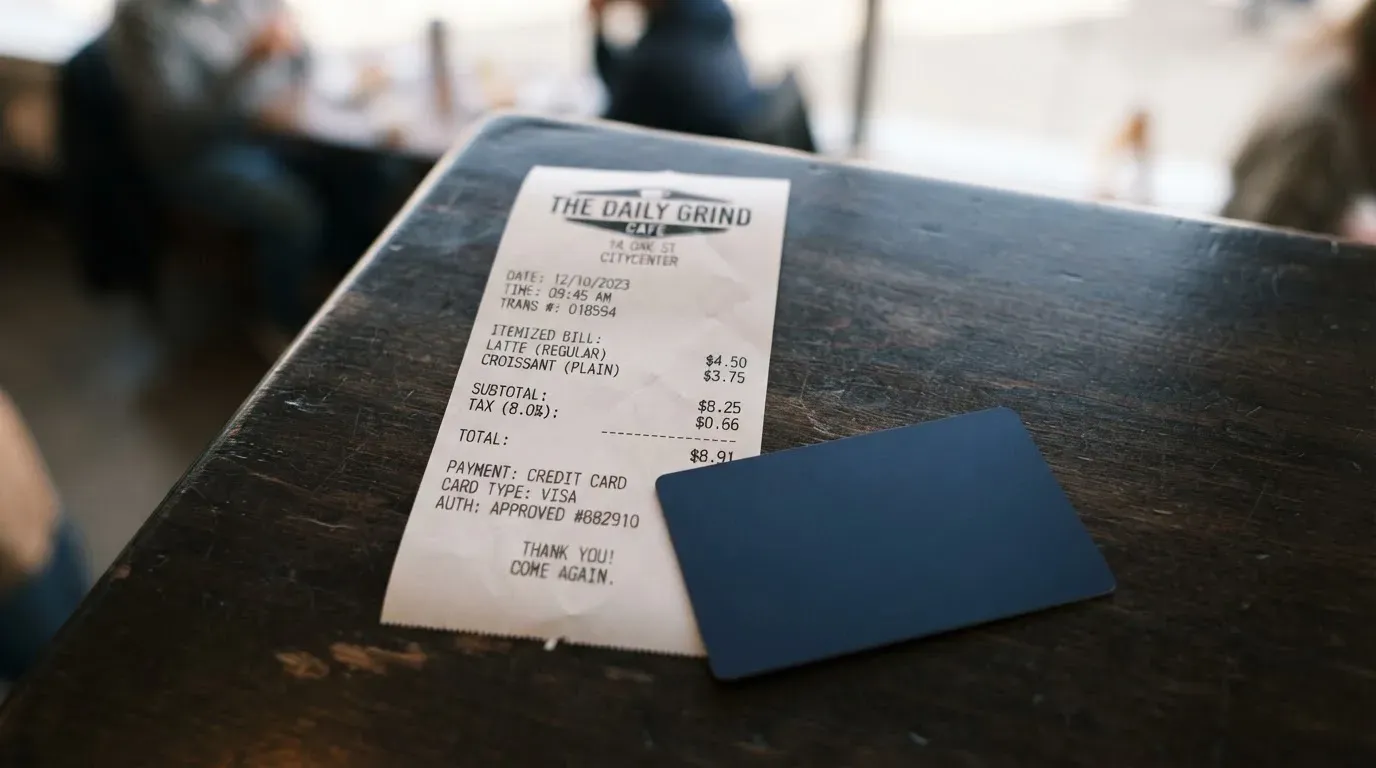
Coffee, card loaded in dollars, shop prices in euros. You paid nothing for the card and nothing for the purchase itself. But the balance you loaded was bought with a 5% or 10% top-up fee, and a currency conversion happens at the till. The conversion and FX fee is not stated, so you cannot price this transaction in advance. This is the payment where the card’s own numbers are least helpful.
An online subscription in US dollars, merchant-locked single-use card. This is the case the card is good at. Purchase fee 0%, top-up fee already paid when you funded, no conversion if the balance is already dollars. Clean.
Paying for something from your home country in your home currency, with the balance funded by a stablecoin. Again 0% on the purchase. The 5% or 10% top-up is the whole cost of the round trip, and it was charged once, at the moment you loaded.
Read that pattern and the card’s economics become clear: RivoCard is cheap to use and expensive to fill. If you load rarely and spend the balance down, the top-up percentage is amortised across many purchases and stops looking like a problem. If you load in small amounts every week, that same percentage is the dominant cost of the card, and no purchase fee will offset it. On the limits, the fees page and the FAQ disagree by an order of magnitude on the Basic tier, so if you need a high daily ceiling, treat the tier as something to ask about rather than something you can rely on. I also want to name what is missing: ATM charges are not stated on the official pages. A third-party site claims free withdrawals with no limit, but that is unofficial and not confirmed by the card — treat cash machine access as unknown.
How to top it up
You send crypto to a wallet address, and the balance lands in your RivoCard wallet once the blockchain confirms it. The named coins are BTC, USDT on TRC20 and ERC20, ETH on ERC20, XMR, LTC, USDC, DASH, and SOL on SPL. The site claims 50+ assets are supported. The crypto deposit into the wallet itself is free; the top-up into the card is the 5% (10% per the terms, non-refundable once processed). The site shows “Starts From $50” without clearly saying whether that is a minimum.
That network list is the strongest single feature here, and it deserves a word on why. ERC-20 is the Ethereum token standard, and gas on that network is paid only in ETH — so a wallet holding USDT with no ETH cannot send it, a small trap that catches people regularly. Tron prices its transactions through bandwidth and energy, often by burning TRX. And USDC over TRC20 is not a native option: Circle stopped supporting USDC on Tron in February 2024. The practical reading is that the correct network matters more than the ticker symbol, and the page names networks, which is more than many cards do.
Three caveats before you send anything. Network fees for your deposit are charged by the blockchain, not by the card, and the card does not state what they are. Blockchain transfers are irreversible, so a deposit sent on a network RivoCard does not support, or to an address belonging to a different network, can be lost or need manual recovery with no guarantee. And since the top-up fee is non-refundable once processed, there is no cheap way to learn.
Money going the other way: crypto withdrawals (USDT, BTC, ETH) are described as instant, and bank transfers by SEPA, SWIFT and ACH take 1 to 2 days. Support is 24/7 with no lock-in. Withdrawal fees are not stated. Cards can be frozen or deleted at any time — worth knowing before you plan around a balance that is still there.
Paying with it every day
Here is where the card is weakest, and the reasons are structural rather than fixable by spending more.
It is virtual only. There is no physical card in any of the material I checked. At a restaurant that takes cards, a market, a parking meter, a laundromat — anywhere that wants to see plastic — you are dependent on the phone.
And on the phone, the official pages do not mention Apple Pay or Google Pay. That is the standard way a virtual card gets used, so this is a real gap rather than a technicality. A third-party site lists both wallets as supported in its spec table and then says neither is supported in its own cons list; those two statements contradict each other, and neither comes from RivoCard. So: not confirmed, and contested at that.
Other everyday details are simply absent. There is no published list of blocked merchant categories, and MCC 7995 — gambling — is one of the categories issuers commonly block by policy rather than law, with the list differing by issuer. Whether RivoCard blocks it is not stated. There is no cashback on the official pages; a third-party site claims 2% cashback and a $3 referral bonus, which is unofficial and unconfirmed by the card. There is no app listing — it is a web dashboard, and no mobile app was found. No two-factor authentication is mentioned in the security section, and custody of funds is not addressed in the terms.
What you do get is a sensible set of card controls: freeze the card, a one-click kill switch, and real-time spending limits. And on a failure, the FAQ promises resolution of a reported issue within one business day via the Report Issue page. That promise sits next to the complaint picture in the next section, and you should read both before you rely on it.
What can go wrong
Nobody has publicly documented an official incident with RivoCard. That is worth stating, because it is easy to read the absence of a scandal as the absence of risk.
What exists is user reporting. On Trustpilot in September and October 2026, reviewers described slow or missing support replies (September 2026), a card stuck at “Pending” for weeks alongside a $400 deposit, with the company saying it had no matching record (September–October 2026), unclear fees (October 2026), and one case where a company reply exposed a reviewer’s email address (September 2026). The aggregate is Trustpilot 3.9 out of 5 from 12 reviews in the last 12 months, read on 2026-10-21; other regional pages showed 4.0 from four reviews. The themes are consistent: support that does not answer, cards and funds stuck, and fees nobody could explain.
The company picture is the other half of the risk. The name given is Rivocard LTD. Registration details are not stated. The site describes itself as a financial technology platform, not a bank, and says cards are issued by licensed third-party partners who are not named. No dated events were found in the news.
Now put those two things side by side, because this is the part I would want a reader to take away. When a card issuer is unnamed and a complaint about a stuck card meets a company with no matching record, there is no one you can escalate to. Support is listed as 24/7 live chat, a Telegram group, email and a contact form with replies within 24 hours on business days, a knowledge base and enterprise ticketing — an unusually broad list, and the reports suggest it is not always the channel that answers. On disputes: report unauthorised charges through the Report Issue page with resolution within one business day, but the card is not responsible for merchant-side disputes, and top-up fees are non-refundable once processed. Refund terms sit at a refund policy page on the site.
Two structural risks come with the category itself. Platform funds carry counterparty risk: the history of custodial failures includes Mt. Gox at about US$350 million reported stolen across 2011–2014, Coincheck at about US$400 million in 2018 and the Ronin Network at US$625 million in 2022. And crypto transfers are irreversible by design — the network cannot freeze or return a payment, and a stolen key has no built-in recovery. On spending, a declined authorisation can leave a hold on your funds for several days, typically up to seven, which is worth knowing before you assume a failed payment left your balance untouched.
None of that makes the card unsafe by definition. It makes the small amounts sensible and the unresolved questions worth respecting.
What to take instead
Three alternatives came up in the same category. None of them is dramatically better, and the differences are structural enough to matter.
| RivoCard | Cardex | TakeCard | OkiCard | |
|---|---|---|---|---|
| My score | 5.4 / 10 | 5.6 / 10 | 5.5 / 10 | 6.0 / 10 |
| Card | Virtual prepaid, Visa or Mastercard | Debit crypto card on VERVE, Visa, Mastercard and UnionPay; virtual and physical | Virtual immediately, physical Bolivia only; Visa; USD | Virtual card; network not specified; USD/EUR pegged |
| Who | 150+ countries, 18+, no country list | “One crypto card, 200+ countries”; app listing Naira-focused | Physical card “available only to Bolivian users for now” | “150+ countries” (some pages “200+”); no geo-blocking on passport |
| Cost | Free to issue; top-up 5% (terms 10%) | Not stated | Virtual USD 5; physical USD 20 issuance plus USD 20 shipping (another page says USD 10) | Issuance $0, monthly $0, starting price $15 (pages disagree); initial deposit 100 USDT |
| Spending | Online 0%; conversion and FX not stated | Real-time crypto-to-fiat conversion at payment with an “AI-Powered Conversion Rate” picking the best rate; no percentage stated | 1% commission per purchase; USD 1:1 | Load fee 3%; transaction fee (USD) 0%; “no hidden exchange spreads” |
| Funding | BTC, USDT (TRC20/ERC20), ETH (ERC20), XMR, LTC, USDC, DASH, SOL (SPL); 50+ claimed | USDT, USDC, BTC wallets; networks not stated | Top up from the Takenos balance; coins not named | USDT on BSC, Ethereum, Tron, Solana; USDC “soon”; BTC and altcoins “coming soon” |
TakeCard suits a Bolivian or Latin American reader who wants a physical card and can accept paying for it — USD 5 for the virtual version, and a physical price the site’s own articles disagree about. Its 1% per-purchase commission is the clearest spending fee in this group, and its virtual card pays USD 1:1.
OkiCard scores highest here at 6.0 and has the most transparent percentage structure: 3% to load, 0% on USD transactions, no claimed exchange spread, and a stated starting price. Its catch is scope — USDT on four networks, USDC coming soon, BTC coming soon — against RivoCard’s nine named coins.
Cardex is close on score and the most unusual: a debit-style card on four networks including UnionPay, both virtual and physical, converting crypto at the moment of payment with no fee percentage published at all.
What none of the three fixes is the structural problem that keeps RivoCard at 5.4. Cardex publishes no fee percentage, so you cannot cost a transaction. TakeCard’s physical card is Bolivia-only. OkiCard’s price pages disagree with each other and its coin list is narrower. If your reason for looking at RivoCard is breadth of coins, it still wins on that single measure; if your reason is daily usability or a card you can hold, none of these three is a clean upgrade either.
Who I would recommend it to
I would recommend this card to the person the score’s top-up mark was written for: someone funding a virtual card with many coins, who already knows which network their tokens live on and has a reason to keep several kinds at once. For them the coin list is the product, the 0% on purchases is a real benefit, and loading infrequently keeps the top-up percentage from dominating.
I would not recommend it as a primary everyday card, for three reasons that all trace to the same structural facts: there is no physical card, no confirmed mobile wallet, and a support and company picture that leaves nowhere to escalate when a card sits at “Pending” for weeks. Nor would I load it with money you cannot afford to have frozen for a month, because top-up fees do not come back and the card can be frozen or deleted at any time.
Before you decide, check three things yourself: which fees the card shows you in your own account versus the two pages that disagree, which KYC tier you land on and what its real ceiling is, and whether your country and circumstances sit comfortably inside the sanctions clause. If you have looked at those and the coin list still decides it, this card does what it says.
Frequently asked questions
What is RivoCard card?
It is a virtual prepaid payment card on Visa or Mastercard that you fund with crypto rather than from a bank account. You send crypto to a wallet, the balance converts into spending money, and the card pays merchants like an ordinary card. There is no physical version, and no app listing was found — you work through a web dashboard. The site describes the cards as merchant-locked, single-use and reloadable.
How does RivoCard card work?
The flow has three steps: sign up, fund, and the virtual card is issued in under 60 seconds, with delivery noted at about 30 to 60 seconds. Crypto arrives in your wallet, is credited once the blockchain confirms, and the card spends from that stored balance. Because it is a stored balance rather than a bank account, the card cannot overdraw. Merchants can look up the BIN and see which institution and country issued it.
Is RivoCard a bank?
No, and the site says so plainly: it describes itself as a financial technology platform, not a bank, and says cards are issued by licensed third-party partners who are not named. The company given is Rivocard LTD, with registration details not stated. That distinction matters for what happens to your funds if the platform fails, and it is the single most important thing to understand about the card.
Who owns RivoCard card?
The published name is Rivocard LTD. Nothing more is disclosed that I could verify: no registration details, no named issuer, no dated events in the news. In a payment card, the issuer is normally the licensed institution holding the programme, so the absence of a named issuer is unusual — and it is exactly what you would want to know before loading money.
Can I use RivoCard card in my country?
The earlier description of the card is global, spanning 150+ countries with an age requirement of 18, and there is no published country list, so you cannot check yourself against one. Terms require at least 18 and prohibit circumventing sanctions programmes of OFAC, the EU and the UN. Because no list exists, the practical test is whether the card opens an account for you — which you will learn by trying, not by reading.
Does RivoCard card require KYC?
Not at the start: the site describes “optional identity verification tiers” and calls its approach “Flexible” against competitors’ “Extensive Documenting”. There are Basic, Full and Enhanced tiers, each with its own limits, and the fees page gives Full and Enhanced as unlimited. Which documents you need, how long verification takes, and why a verification might be rejected are all not stated — that part you learn by attempting it.
How much does it cost to top up and use?
Issuance and monthly servicing are free, online and international purchases are 0%, and replacement and account cancellation are free. Loading the card costs 5% of the amount funded on the fees page while the terms page says 10%, and card creation is free on one page and 10% on the other. The conversion and FX fee is not stated, and the ATM fee is not stated on official pages. I would plan on the higher of each pair.
Is RivoCard card safe?
There are sensible controls — card freeze, a one-click kill switch and real-time spending limits — and reported unauthorised charges go through a Report Issue page with resolution within one business day per the FAQ. Against that: no dated official incidents were found, but Trustpilot shows 3.9 out of 5 from 12 reviews in a year, with themes of unanswered support, cards and funds stuck, and unclear fees. Custody is not addressed in the terms and two-factor authentication is not stated.
Can I add RivoCard card to Apple Wallet or Google Pay?
Not on the evidence available. Apple Pay and Google Pay are not mentioned on the official pages at all. A third-party site lists both as supported in its specification table and then lists neither as supported in its own cons section, and it is unofficial and not confirmed by the card. Since it is a virtual-only card, the absence of a confirmed mobile wallet is the practical constraint that matters most.
How do I delete my RivoCard account?
The fees page lists account cancellation as free, and the card can be frozen or deleted at any time, so deletion is not blocked by a fee or a notice period. What I could not verify is the effect on any balance left at the moment you close it, so if you have money loaded, withdraw it first and confirm the closure before assuming the funds came back to you.
Virtual cards for online use – cryptocardselect
Content created by the «cryptocardselect» team