
Virtual cards from USDT, priced by volume, with a lot the site does not say
 Available in US
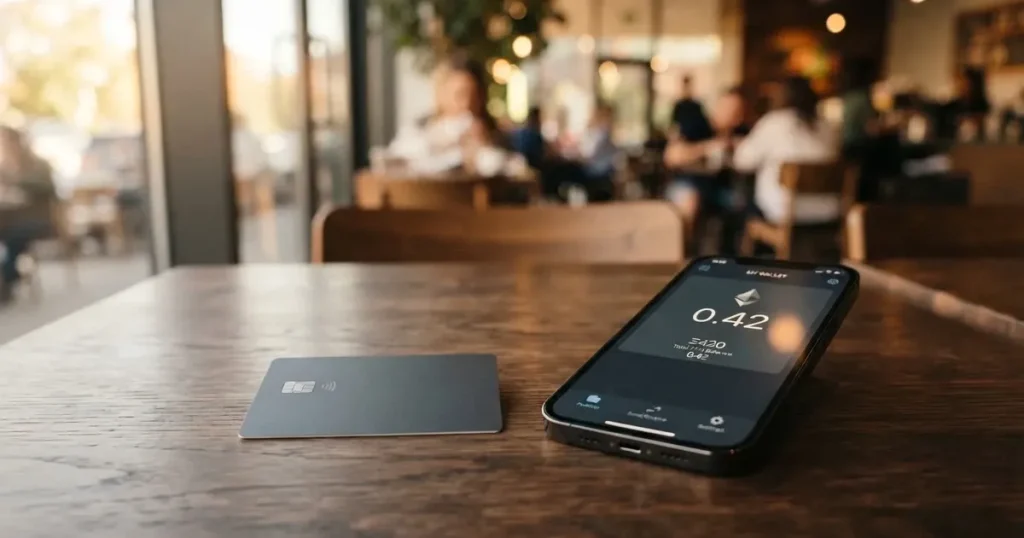
If you have been searching for a way to spend crypto without living in the country a normal bank will serve, you have probably collected a pile of similar-looking products. FBM sits in an unusual corner of that pile: it is not really a consumer card at all. It is a platform that issues virtual Mastercard and Visa cards from a USDT balance, and it prices itself by how much you move through it each month. That design has real strengths for one kind of user and real costs for everyone else. My score for it is 4.7 out of 10, and I want to explain exactly where the points come from and where they go.
The conditions described here are current as of October 28, 2026.
Before the details, the honest summary: this is a service built for teams and businesses that need to issue large numbers of virtual cards and fund them from USDT. If you are an individual who wants one card for daily spending, the $500 minimum top-up and a 4.5% fee on the smallest tier will make you wince. And if you are the kind of person who asks “is this safe?” — rightly so — the answers are thinner here than they are with better-documented competitors.
Verdict: who this card suits, and who it does not
The single biggest fact about FBM is that it is a card platform rather than a card for you personally. It offers virtual cards only — no physical plastic ever arrives — across more than ten BINs from Hong Kong, the United States, Singapore, Colombia and other countries, in Credit, Debit and Corporate types. You can issue as many as you like, instantly, from a browser dashboard. That is genuinely useful if you run an ad agency paying many contractors, a testing operation needing throwaway card numbers, or a team that has been handed USDT and told to spend it. It is not useful if you want to walk into a supermarket.
On cost, the picture is unusually transparent about one thing and unusually silent about others. Top-up commission is published per monthly volume tier and falls from 4.5% at the bottom to 2% at the top. There are no transaction fees and no decline fees. But cards are $2 each on Start, Basic and Advanced, and the FAQ contradicts itself about this — one place says “$0–3”, another says “from $3 to $0”. ATM access is not mentioned at all, which is unsurprising for virtual cards but means you should not plan on it.
On trust, the picture is thin. The registered address is in Hong Kong, the site says it has operated since 2024, and the issuing institution is not named anywhere on the public pages. The company says client funds sit in segregated accounts and transactions are monitored in real time. I could not find a Trustpilot page or a Reddit presence for fbm.cards. The site claims a TrustScore of 5 from 215 reviews; I could not verify that figure from an independent source, so treat it as a claim rather than a fact.
On everyday use, this is where it drops furthest. Only virtual Mastercard and Visa cards, issued instantly, in unlimited numbers. Apple Pay and Google Pay support are not stated. Withdrawals go back to a USDT wallet within 24 hours, with no amount limit and a 1% fee.
Here is the score broken down by criterion.
| Criterion | Mark | Why |
|---|---|---|
| Who can get it | 5 / 10 | Countries not named; full KYC applied to all clients; BINs from HK, US, SG, CO and others |
| Cost | 3 / 10 | Cards $2 on Start, Basic, Advanced; top-up 4.5% at Start falling to 2% at Elite; no transaction fees; FX spread 1% |
| Top-up options | 8 / 10 | USDT on TRC-20 and ERC-20, $500 minimum, credited in 1–3 minutes; USDC per starting data; bank wire from $5,000 |
| Reliability and complaints | 5 / 10 | Hong Kong address, operating since 2024, issuer not named, funds said to be segregated; no Trustpilot page found; the site’s own rating of 5 unverified |
| Everyday use | 3 / 10 | Virtual Mastercard and Visa only, instant issue, unlimited cards; Apple Pay, Google Pay and ATM not stated |
| Total | 4.7 / 10 | A strong top-up score cannot offset a weak cost and everyday-use score |
My honest read: the top-up section scores highest because the mechanics are clear and the networks are mainstream, while everyday use scores lowest because the card barely functions as a wallet. If your mental image is “crypto debit card like the big apps”, FBM is not that. If your mental image is “card issuing API funded by stablecoin”, it is closer to what is actually on offer.
Will they give you the card?
The site does not say. Not once, on the public pages, is a list of eligible or excluded countries published. What it does say is that KYC procedures apply to all clients — the Russian-language page states this — and then leaves the specifics unstated. Which documents you need, whether proof of address is required, whether an age check is performed separately: the card’s public pages do not say.
That absence matters more than it might look. Regulated businesses are required to verify customers and assess risk as part of anti-money-laundering law, and in the EU that means checking name, address, date of birth, nationality, identity documents, sanctions lists and whether you are a politically exposed person. If due diligence cannot be completed, rules require the institution to decline the transaction or, where necessary, end the relationship — which is why accounts get closed or frozen pending paperwork. In the US the customer identification programme requires name, date of birth, address and an identification number.
Nationality is also recorded and screened separately from where you live, because sanctions screening and issuer risk policy are often applied to citizenship and country of birth as well as to the address you type in. So “which countries can use this” has at least three possible answers — where you are, what passport you hold, and which BIN you end up with — and FBM publishes none of them.
What is stated, and useful: virtual cards only, in Mastercard and Visa BINs, in Credit, Debit and Corporate types, across more than ten BINs originating from Hong Kong, the United States, Singapore, Colombia and others. Cards are issued instantly and you can create any number. Card currency is USD, described as “10+ USD BINs”. There is no delivery, because there is no physical card.
Before you invest an evening in this, the single most useful thing you can do is ask their Telegram support, which is the contact channel named on the site, whether your country and your citizenship are both acceptable. That is a factual question with a factual answer, and you will get a clearer reply than you will from me.
How to get it
Registration runs through the browser dashboard — there is no dedicated app — and the card itself appears essentially instantly. There is no activation ritual described, no waiting period, no delivery to wait for.
What makes this quick is also what makes it different. Issuing a virtual card number from a dashboard is not the hard part of running a card programme; the hard parts are licensing, funding and holding the money properly. FBM describes itself as having operated since 2024 from an address at Unit 1903, 19/F, Tower 2, Lippo Centre, 89 Queensway, Admiralty, Hong Kong. The issuing institution behind the BINs is not named, and the public pages do not state the licensing status. That is not automatically a warning sign — many legitimate programmes run exactly this way, with a named EMI behind an unbranded front end — but it does mean you are trusting a structure you cannot fully see from outside.
There are seven volume tiers, and they matter here because they change what support you get. Pro and above get 24/7 support and free cards; Private adds a personal manager and custom BINs. Below Pro, support is Telegram during the day, in Russian or English, and cards cost $2 each. So “free cards” is something you unlock by moving enough money, not something you get on day one.
A structural point about these cards that is easy to miss: a card number begins with a 6- or 8-digit issuer identification number — the BIN — that tells any merchant which institution and country issued it. Merchants can look that up, and some apply extra scrutiny when the issuer country differs from the customer’s billing address. A card issued in Hong Kong can therefore look “foreign” in a shop in Lisbon, Atlanta or Lagos. If your use case involves payments at unfamiliar merchants, that mismatch is a real operational factor, not a theoretical one.
What it really costs: Fees
Here is every number the card publishes about price. Where a figure is not stated, I will say so rather than guess.
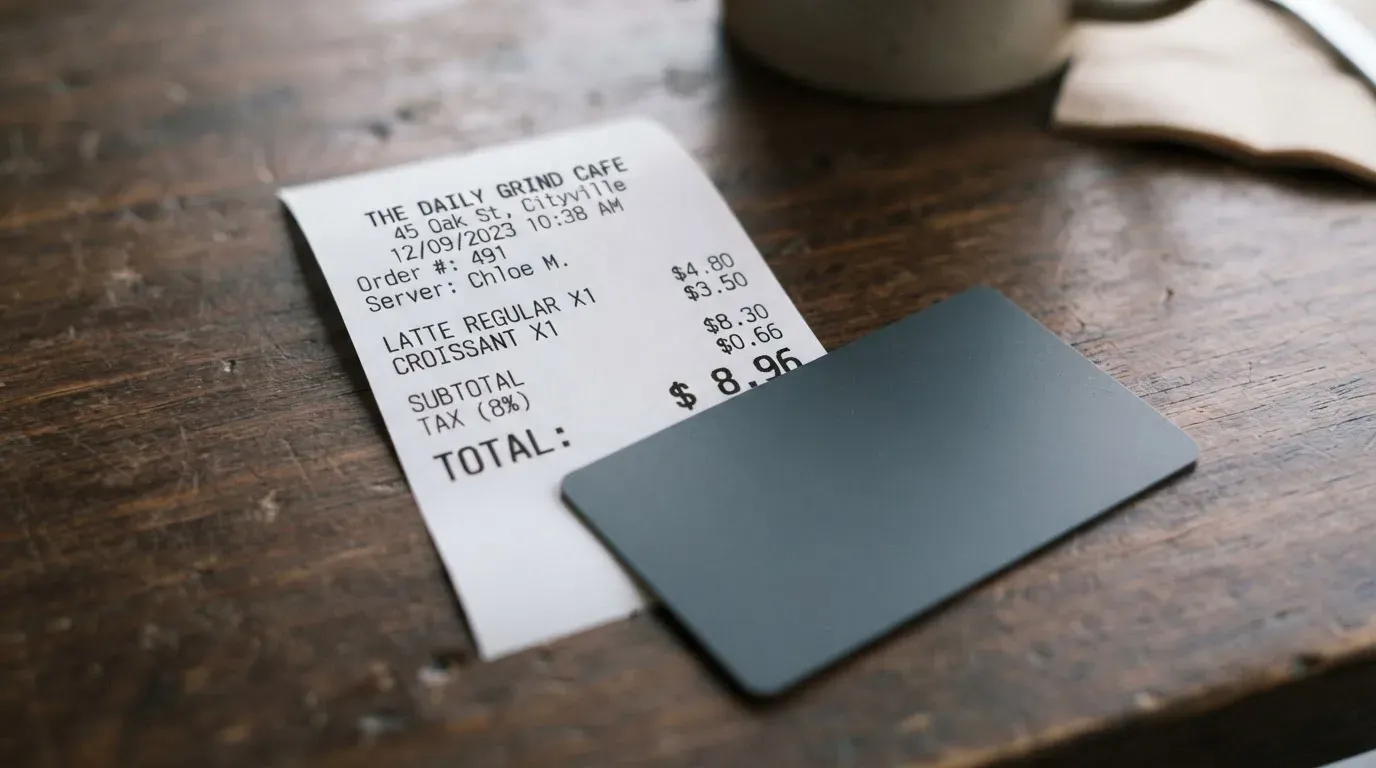
| Fee or limit | Value |
|---|---|
| Card issuance | $2 each on Start, Basic and Advanced; free on Pro and above; the FAQ says “$0–3” and elsewhere “from $3 to $0” |
| Monthly fee | Not stated |
| Top-up commission | Start ($0–20k) 4.5%; Basic ($20–50k) 4%; Advanced ($50–100k) 3.5%; Pro ($100–250k) 3%; Enterprise ($250–500k) 2.8%; Elite ($500k–1M) 2.5%; Private (from $1M) from 2% |
| Transaction fee | None |
| Decline fee | None |
| FX spread | Described as a standard 1% bank spread |
| ATM | Not stated (virtual cards) |
| Per-card spending limit | Set by you per card; example given is $1,000 per card with daily and monthly limits |
| Platform-wide limits | Not stated |
| Withdrawal fee | 1% |
The top-up fee is the number that should drive your decision. At the smallest tier, 4.5% of $500 is $22.50 to load money you might spend in a fortnight. At the top tier, 2% on $1 million is $20,000 — which is why the model is aimed at volume. The curve is steeply rewarding, and it rewards you only after you have already moved the money.
Now, some everyday payments, with the fees that actually apply:
A $30 subscription — no transaction fee, so the card itself is free to use. But if the merchant bills you in euros and your card is USD, the 1% spread applies on top of whatever the merchant’s own pricing does. You also face the possibility that the merchant simply declines the payment because the BIN lookup shows a foreign prepaid card. Declined authorisations can leave a hold on your funds for several days.
A $400 online purchase three times a month — $1,200 a month falls into Basic ($20–50k) or Advanced, so top-up commission at that point is 4% or 3.5%. There is no per-transaction charge on top. If the purchase triggers a 3-D Secure challenge, FBM says codes and alerts come through a Telegram bot rather than an app.
A $1,000 payout to a contractor — again no transaction fee. The 1% spread if the contractor wants their own currency. No ATM to fall back on, and no dispute process described on the public pages, which means if the contractor takes the money and does not deliver, you have no stated route to a chargeback.
Two things are worth pausing on. First, the FAQ contradicts itself on card pricing, which is a small but telling detail about how closely the documentation is maintained. Second, the FX spread is described as “standard 1%”. For a card that exists to move value across borders, that is the fee line most likely to surprise you, and it is the one people tend to discover only after they have already started using the card.
How to Top up
Topping up is the strongest part of this product, and the reason it scores 8 out of 10. USDT on the TRC-20 and ERC-20 networks, minimum $500, credited within 1–3 minutes of confirmation. USDC is also supported per the starting data. Bank wire transfers are accepted from $5,000. The top-up fee is the tier fee in the table above, and who pays the on-chain network fee is not stated.
Two practical notes before your first transfer. The first is that “USDC over TRC-20” is not a native option — Circle stopped supporting USDC on Tron in February 2024 — so if you attempt it you may be sending to a network the provider does not handle. The second is that blockchain transfers are irreversible. If you send to a network the card provider does not support, or to an address belonging to a different network, the funds can be lost or need manual recovery with no guarantee. Check the deposit address character by character, and check which network your exchange’s withdrawal screen is set to.
Why the fast credit is possible: USDT and USDC are US-dollar-pegged tokens, and the Bank for International Settlements put about 90% of stablecoin market capitalisation in these two as of July 2025. They behave like digital dollars in transit, so there is no exchange-rate swing while your money moves. The price you pay is the 4.5%-to-2% fee, not a fluctuating rate. The network matters too: on ERC-20, gas is paid only in ETH, so a wallet holding USDT with no ETH cannot send at all; on Tron, fees are paid through bandwidth and energy, often by burning TRX.
Money goes back the same way. Withdrawals return to a USDT wallet within 24 hours, with no amount limit and a 1% fee. The balance required to close an account is not stated, so if you stop using the platform, ask what the exit looks like before you stop.
Paying with it every day
Everyday use is this card’s weak point, and I want to be blunt about it. There is no physical card. There is no dedicated app — you work through a browser dashboard that is usable on a phone, plus a Telegram bot for 3-D Secure codes and alerts, an API at api.fbm.cards, and CSV, Excel and Google Sheets export. Apple Pay support is not stated and Google Pay support is not stated. No cashback or rewards programme is mentioned.
For someone who spends digitally all day, that is workable: browser-based card entry with a code arriving in Telegram covers most online subscriptions, SaaS tools and ad platforms. For someone who buys groceries or pays a restaurant bill, it is a non-starter. There is no wallet app to carry, no tap, and no ATM.
The features that are stated are aimed squarely at operations. Issuing unlimited cards instantly is the headline. Setting a spending limit per card, with an example of $1,000 per card alongside daily and monthly limits, means you can hand a card to someone and know the ceiling before you do — useful for agencies and teams, less relevant if you are spending your own money.
One thing you will not find on the public pages: what happens when a payment is wrong. The dispute process is not stated, and no wallets are named either. In the US, debit card reversal rights come from Regulation E and credit card rights from Regulation Z; prepaid-card coverage varies and should not be assumed. Given that FBM’s card types include Credit and Debit, it is worth asking which regulatory regime actually applies to your specific card before you rely on it for anything you would fight to recover.
What can go wrong
Let me take the risks in the order I would weigh them.
Nobody is named. The company address is in Hong Kong and it says it has been operating since 2024, but the issuer is not named. That means the institution whose licence actually stands behind your BINs is invisible from the public pages. You cannot check it against a regulator’s register, because you cannot tell which regulator to check.
Custody means counterparty risk. FBM says client funds are held in segregated accounts and that transactions are monitored in real time, with per-card limits and a custodial platform balance. If that is accurate, it is the standard arrangement. But holding funds with a custodian has a documented history: Mt. Gox reported about US$350 million stolen between 2011 and 2014, Coincheck about US$400 million in 2018, and Ronin Network US$625 million in 2022. Segregated account wording is a protection, not a guarantee, and it is not the same as a bank deposit.
There is no track record to read. I found no official incident, but I also found no Trustpilot page and no Reddit community for fbm.cards. The site’s own claim of a TrustScore of 5 from 215 reviews is unverified. Absence of complaints from a service nobody has written about is not a clean record; it is an absence of data. Support is via Telegram, with 24/7 only on Pro and above, and the site is in Russian.
Programmes get shut down. Visa and Mastercard do not issue crypto cards themselves; they license issuers, and they can suspend a programme. Visa terminated its global agreements with FTX on 13 November 2022, and the FTX US debit card was wound down by its issuer. WaveCrest, a Visa issuer that supplied crypto card brands, was suspended by Visa in Europe in 2018, closing all its Visa programmes. The pattern that emerges is: notice, then loads stop, then spending stops, then you are asked to withdraw. If you hold a balance here, keep the amount small enough that you can move it quickly if that ever happens.
Sanctions screening applies to your tokens too. Tether says it disables tokens in wallets on the OFAC sanctions list and has frozen funds tied to illicit activity. Stablecoins are not censorship-proof, and neither is the platform holding them.
Merchant-side friction. Address Verification Service compares parts of the billing address you type with issuer records, and is mainly offered in the US, Canada and the UK — generally unavailable for foreign-issued cards, which can cause declines. Some merchants decline prepaid or foreign BINs outright. And if you pay in a non-USD currency, the 1% spread is waiting for you.
I would add one more that is not a risk but a blind spot: the card’s public pages say nothing about what happens to your balance if the company simply stops. No insolvency protection is mentioned, and e-money balances are not the same as bank deposits. In the EU, authorised electronic money institutions must safeguard customer funds by segregating them or insuring them, but that requirement comes from MiCA-era and e-money law, and the card does not name which licence it operates under. Ask.
What to take instead
If FBM’s shape does not fit you, three alternatives scored higher in my review work, and each fails in different places.
OkiCard — 6.0 out of 10. The strongest of the three on transparency of pricing: issuance $0, monthly $0, load fee 3%, transaction fee in USD 0%, and the site says there are no hidden exchange spreads. It states “150+ countries” on one page and “200+” on another, and says there is no geo-blocking based on your passport, though users must confirm they are not in a sanctioned jurisdiction. Cards are virtual, with a physical card mentioned but not detailed; the network is described only as “Visa/Mastercard”. The card currency is USD or EUR pegged. Funding covers USDT on BSC, Ethereum, Tron and Solana, with USDC “soon” and BTC “coming soon”, converted to fiat at the moment of spending. One inconsistency to note: the pricing page says the starting price is $15 for a virtual card while the FAQ mentions a one-time issuance fee, and the pages disagree. An initial deposit of 100 USDT is required — much lower than FBM’s $500.
Cardex — 5.6 out of 10. Marketed as “one crypto card, 200+ countries”, with no country list or exclusions, and an App Store listing that is Naira-focused, meaning payments in naira. It issues a debit crypto card on the VERVE, Visa, Mastercard and UnionPay networks, virtual and physical, and converts crypto to fiat at the moment of payment using what the site calls an “AI-Powered Conversion Rate” that scans exchange rates and picks the best. That description raises more questions than it answers, and no fee percentage is stated anywhere I could find. Funding is by USDT, USDC and BTC with networks not named. Note that VERVE is a network few merchants accept.
TakeCard — 5.5 out of 10. Here the country story is the most concrete and also the most awkward: the physical card is available only to Bolivian users for now, while starting data lists virtual cards for Argentina, Bolivia, Peru, Chile, Paraguay, Colombia, Ecuador, the US, Spain and Italy — though I could not confirm that on a page I could read, so treat it as unofficial. Virtual cards cost USD 5, the Bolivian physical card USD 20 issuance plus USD 20 shipping, though another article in the same help centre says USD 10 for physical in Bolivia — a direct conflict. It takes 1% per purchase, pays USD 1:1 with no currency adjustment, and other currencies at the official Visa rate of the day. Crypto conversion fees are not stated. A virtual card available immediately and a Visa-issued prepaid card in the United States make it a reasonable second look if your country appears on that unofficial list.
Here is the comparison at a glance.
| FBM | OkiCard | Cardex | TakeCard | |
|---|---|---|---|---|
| Score | 4.7 / 10 | 6.0 / 10 | 5.6 / 10 | 5.5 / 10 |
| Card type | Virtual only, 10+ BINs (HK, US, SG, CO and others) | Virtual; physical mentioned, not detailed | Debit on VERVE, Visa, Mastercard, UnionPay; virtual and physical | Virtual immediately; physical Bolivia only |
| Load fee | 4.5% down to 2% by volume tier | 3% | Not stated | Not stated |
| Per-transaction fee | None | 0% in USD | Not stated | 1% |
| Minimum top-up | $500 | 100 USDT initial deposit | Not stated | Not stated |
| Networks | USDT on TRC-20, ERC-20 | USDT on BSC, Ethereum, Tron, Solana | USDT, USDC, BTC; networks not stated | USDC/USDT via Polygon, BNB Chain, Tron or Ethereum — unofficial |
| Countries | Not stated | “150+” or “200+”; no passport geo-blocking | “200+”, no list | Physical: Bolivia only; virtual: unofficial list |
One more comparison worth making, even though it is not a card competitor. In the EU, the crypto side of a card product is regulated under MiCA — in legal effect since June 2023, with rules on e-money tokens applying from 30 June 2024 and the crypto-asset service provider rules from 30 December 2024 — while the card itself is a payment service regulated separately. Providers already operating under national law have a transitional period running until 1 July 2026 or until they receive or are refused a MiCA authorisation, whichever comes first. If you are in the EU, you can check a provider against ESMA’s interim register of authorised CASPs, white papers and non-compliant entities. That check takes five minutes and tells you more about a provider than any amount of reading their pricing page.
Who I would recommend it to
I would recommend FBM to a specific person: someone running a business that issues many virtual cards, funds them from USDT, and moves enough monthly volume that the tier fee has dropped to something defensible. An ad agency paying creators, a QA team churning through one-off subscriptions, a business that receives stablecoin and pays out in dollars without wanting a traditional banking relationship in between. The instant unlimited issue, the API, the CSV and Google Sheets export, the per-card spending ceilings, the Telegram bot for 3-D Secure codes — these are the tools of an operator, and they are the reason the product scores well where it does.
I would not recommend it to someone who wants a personal card. The $500 minimum, a 4.5% top-up fee at the bottom tier, no physical card, no named Apple Pay or Google Pay support, no stated ATM access, no named issuer, no verifiable review history, and a 1% FX spread on top of everything — for that person, one of the three alternatives above will serve better, and a mainstream card funded from a regulated exchange will serve best of all.
And I would ask everyone, before depositing: is my citizenship acceptable, is my country of residence acceptable, which entity is the issuer, and what happens to my balance if the service stops. Four questions. All four get you a clear answer or an unclear one, and either way you learn what you need before the money moves.
Frequently asked questions
What is the FBM card?
FBM is a platform that issues virtual Mastercard and Visa cards funded from a stablecoin balance rather than a bank account. It offers more than ten BINs originating from Hong Kong, the United States, Singapore, Colombia and other countries, in Credit, Debit and Corporate types. Cards are issued instantly and you can create any number of them. It is virtual-only, with no physical card delivered.
Is FBM a bank, and who owns it?
FBM is not a bank. The company states an address at Unit 1903, 19/F, Tower 2, Lippo Centre, 89 Queensway, Admiralty, Hong Kong, and says it has operated since 2024. The site is in Russian, and the issuing institution behind the cards is not named on the public pages. Its own site claims a TrustScore of 5 from 215 reviews, which I could not verify from an independent source.
Which countries can use the FBM card?
The card’s public pages do not say. There is no country list and no list of exclusions; the only statement is that KYC applies to all clients, with documents, proof of address and age requirements unstated. Because nationality is screened separately from residence, ask their Telegram support about both your country and your citizenship before applying.
How do I top up an FBM card?
The main route is USDT on the TRC-20 or ERC-20 network, with a $500 minimum, credited within 1–3 minutes of confirmation. USDC is also supported per the starting data, and bank wire transfers are accepted from $5,000. Top-up commission runs from 4.5% on the smallest monthly tier down to 2% at the top, and who pays the on-chain network fee is not stated.
Is the FBM card free?
Partly. Cards cost $2 each on the Start, Basic and Advanced tiers and are free from Pro upward, though the FAQ contradicts itself, giving both “$0–3” and “from $3 to $0”. There are no transaction fees and no decline fees. Top-up is never free: it ranges from 4.5% to 2% depending on monthly volume, and withdrawals carry a 1% fee.
Can I add the FBM card to Apple Wallet or use an ATM?
The card’s public pages say neither. Apple Pay support is not stated, Google Pay support is not stated, and ATM access is not stated, which is consistent with a virtual-only product. Practical alternatives for everyday spending are the browser dashboard on a phone and a Telegram bot that delivers 3-D Secure codes and alerts. If contactless or cash withdrawal matters to you, look elsewhere.
Is the FBM card safe for my money?
The company says client funds are held in segregated accounts and transactions are monitored in real time, which is the standard custodial arrangement. But the issuer is not named, the licensing status is not stated, no Trustpilot page or Reddit community could be found, and no dispute process is described. Holding funds with a custodian carries real counterparty risk, so keep balances small.
How do I get money back out of FBM?
Withdrawals go back to a USDT wallet within 24 hours, with no amount limit and a 1% fee. Whether a balance must be cleared before an account can be closed is not stated, so ask support before you stop using the platform. Note that blockchain transfers are irreversible in both directions, so double-check the network and address before sending.
What should I check before depositing at FBM?
Ask four questions: whether your country and citizenship are both accepted, which legal entity is the issuer and under whose licence, what the dispute process is for a cardholder who is overcharged or defrauded, and what happens to your balance if the service closes. None of the four is answered on the public pages. Until they are, treat the platform the way you would treat any new custodial counterparty — with a small balance you can withdraw quickly.
Is FBM worth it compared with other crypto cards?
For a high-volume business issuing many virtual cards from USDT, arguably yes, since the fee falls to 3% at Pro and 2.5% at Elite, and the issuing tools are genuinely good. For an individual wanting one everyday card, no — the $500 minimum and 4.5% starting fee work against you, and OkiCard, Cardex and TakeCard all scored higher in my review, at 6.0, 5.6 and 5.5 out of 10.
Virtual cards for online use – cryptocardselect
Content created by the «cryptocardselect» team