
Wafee pairs a euro IBAN with a Visa, but leaves the fee sheet for you to ask about
 Available in US
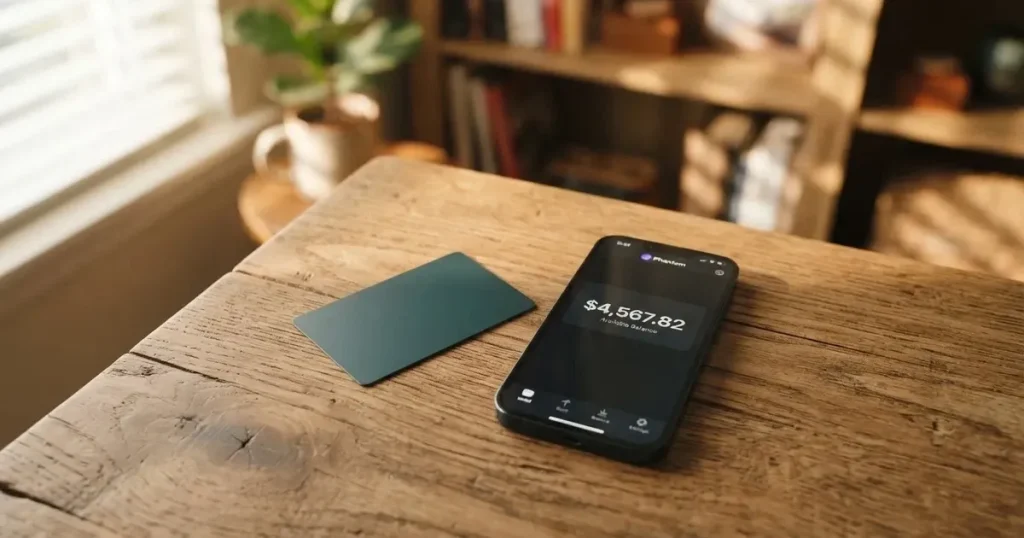
Wafee is one of those crypto card products that tells you a great deal about what it can do and almost nothing about what it costs to do it. You get a euro-denominated IBAN account, a Visa card that you can spend in shops, and an in-app wallet that converts crypto to fiat at the point of sale. What you do not get, at least on the public website, is a fee schedule, a country list, a cardholder agreement or a license number. That tension — broad ambition, thin disclosure — is the thread running through this review, and it is what most people weighing Wafee have to think about.
The conditions on this page are current as of October 28, 2026.
Verdict
Wafee scores 6.5 out of 10. That is a middling mark, and the breakdown below shows why. The card is genuinely useful for a specific kind of person: someone who already holds crypto, wants to spend it through a euro account with a Visa, and is comfortable with a provider that has not published most of its fees. If that description does not match you, there are friendlier products elsewhere.
| Criterion | Mark | Reason in brief |
|---|---|---|
| Who can get it | 9 / 10 | The site says “160+ countries” and shows flags from Brazil to the UAE, but no actual country list |
| Cost | 5 / 10 | Only “competitive exchange rates” is published; issuance, conversion and ATM fees are not stated |
| Top-up options | 5 / 10 | Spend crypto wherever Visa is accepted, but the coins and networks are not named; EUR IBAN, SEPA and SWIFT for cashing out |
| Reliability and complaints | 5 / 10 | Wafee Ltd is registered in Nevis, the card partner appears to be Walletto, and no licenses are named; no complaints surfaced online |
| Everyday use | 8 / 10 | Visa with both physical and virtual cards, plus Apple Pay and Google Pay, but the app links are stubbed and ATM terms are not stated |
The audience this score fits is fairly narrow: crypto holders who want a euro IBAN account with a Visa and are willing to contact support for the small print. If you are outside that group — a casual spender, someone in a country the site does not flag, or anyone who needs a published fee schedule before signing up — the same product is going to feel half-finished.
Who will they give you the card
Wafee’s site opens with the line “Available in 160+ Countries”, which is generous, but it is the only answer to the question “where can I get it?” The marketing materials decorate the page with a handful of national flags — Brazil, Argentina, Mexico, Egypt, Nigeria, Jamaica, Turkey and the UAE among them — and a checkerboard of currency symbols. None of that is a country list, and the site does not link to one. The phrase “availability of products is determined by Wafee.co” appears in the small print, which is the closest thing to a policy: Wafee itself decides, and you find out when you sign up.
What the site does not say is just as important. There is no statement about minimum age, no description of the KYC (Know Your Customer) checks you will be asked to complete, and no list of countries the card will not be issued in. People who live in heavily sanctioned jurisdictions should assume they will be refused, because the company behind Wafee is Wafee Ltd, registered in St. Kitts and Nevis, a jurisdiction often chosen for its lighter regulatory touch. If your situation is unusual, the only reliable test is to start the application and see how far you get.
In plain terms: if your country is not on a sanctions list, you have a reasonable chance, but it is not a guarantee. If you are in a country where crypto products are restricted — for example, mainland China, India or Turkey, all of which are common in such restrictions even though Wafee flags Turkey as a supported market — do not rely on the flag in the marketing page. Verify before you upload your documents.
How to get it
The site describes a physical and a virtual card and says they connect “seamlessly” to your account, but it is short on the practical steps. The app-store buttons in the footer of wafee.co link to “#”, which is a placeholder rather than a destination, so the suggested route is to open the web sign-in at app.wafee.co and create an account from there. Whether the next step is a web-only sign-up or a download of a mobile app is not stated.
The card itself is a Visa, which is useful: it works anywhere Visa is accepted, online and offline, in 160+ countries and territories. Whether the card settles in euros, dollars or pounds is not stated, and the IBAN account is described as a euro account. If you live outside the eurozone, that may matter when you load and spend — the conversion will happen somewhere, and someone will charge for it.
The other practical points — delivery times for the physical card, whether a virtual card is issued instantly, what KYC documents are needed, whether there are different KYC tiers with different limits — are not stated. If any of those details matter to you, you will need to ask the company directly.
A short checklist for getting started:
- Go to app.wafee.co on the web, because the iOS and Android links in the footer do not currently point anywhere.
- Prepare for an identity check: a government-issued photo ID and a proof of address are typical, even though the site does not say so.
- Decide whether you want the physical card, the virtual card or both, but expect to be told the price only after you have an account.
- Treat the published “competitive exchange rates” claim as marketing, not as a fee schedule; confirm the rate inside the app before you load a meaningful amount.
What it really costs: fees
This is the section where the review has to slow down and say something the site does not. Wafee talks about “competitive exchange rates” and the convenience of converting crypto to fiat in the app, but it does not publish a fee schedule. There is no table of issuance fees, monthly fees, conversion spreads, ATM charges, or daily and monthly limits. Anyone signing up is, in effect, accepting fees the company will quote at the time of the transaction.

That makes the costs section harder to write than for most cards, because there is no number to copy. Instead, the only thing the public material confirms is that the IBAN account is in euros, that the card loads and spends “at competitive exchange rates” abroad, and that the exchange between crypto and fiat happens in the app. The “competitive” framing is also a hint about how Wafee makes money: not necessarily through flat fees, but through the spread between the market rate and the rate it gives you when it converts your crypto into euros at the moment of spending.
| Fee or limit | What is published |
|---|---|
| Issuance | Not stated |
| Monthly fee | Not stated |
| Conversion (crypto to fiat) | Not stated; described as “competitive” |
| Foreign exchange (card in non-euro country) | Not stated; described as “competitive” |
| ATM withdrawal | Not stated |
| Daily limit | Not stated |
| Monthly limit | Not stated |
To make this concrete, three everyday payments illustrate what the absence of a fee schedule actually means for a cardholder.
A coffee paid in euros. You hold USDC, you tap the card at a café in Berlin, Wafee converts USDC to euros at the moment of authorisation and pays the merchant. The cost is the spread between the rate you see on a public price feed and the rate Wafee uses. That spread is the fee, and it is the only one that is even hinted at in the public material.
A flight paid in dollars. You book a ticket from a eurozone airport, the merchant charges in USD, your card is loaded in euros. Somewhere in that chain there is an FX margin — the difference between the interbank rate and the rate the card network or Wafee uses. The site calls it “competitive” and stops there.
A cash withdrawal at a foreign ATM. You take out the local currency on holiday. Even with a normal bank card, this typically involves a flat ATM fee from the operator of the machine, a percentage from your card issuer, and possibly a foreign-exchange margin on top. Wafee’s site says nothing about any of those three lines, so the only way to know what the withdrawal will cost is to try it and look at the receipt.
The honest summary is this: the cost question is the one a prospective cardholder has to answer for themselves, with the help of the in-app rate screen, before they load significant funds. Anyone who needs certainty in writing should ask Wafee to send the fee schedule by email before they sign up.
How to top up Wafee
Wafee supports top-ups via crypto and traditional currency. The crypto side: you “spend crypto anywhere Visa is accepted”, which sounds simple but raises the first round of questions. The site does not name which coins it supports or which networks you can send them on. For most users that means USDC and USDT are the natural starting point, because those are the two largest stablecoins and the ones most card products accept, but you should not assume that. Wafee does not list the supported assets, and the wrong network is a common way to lose a transfer.
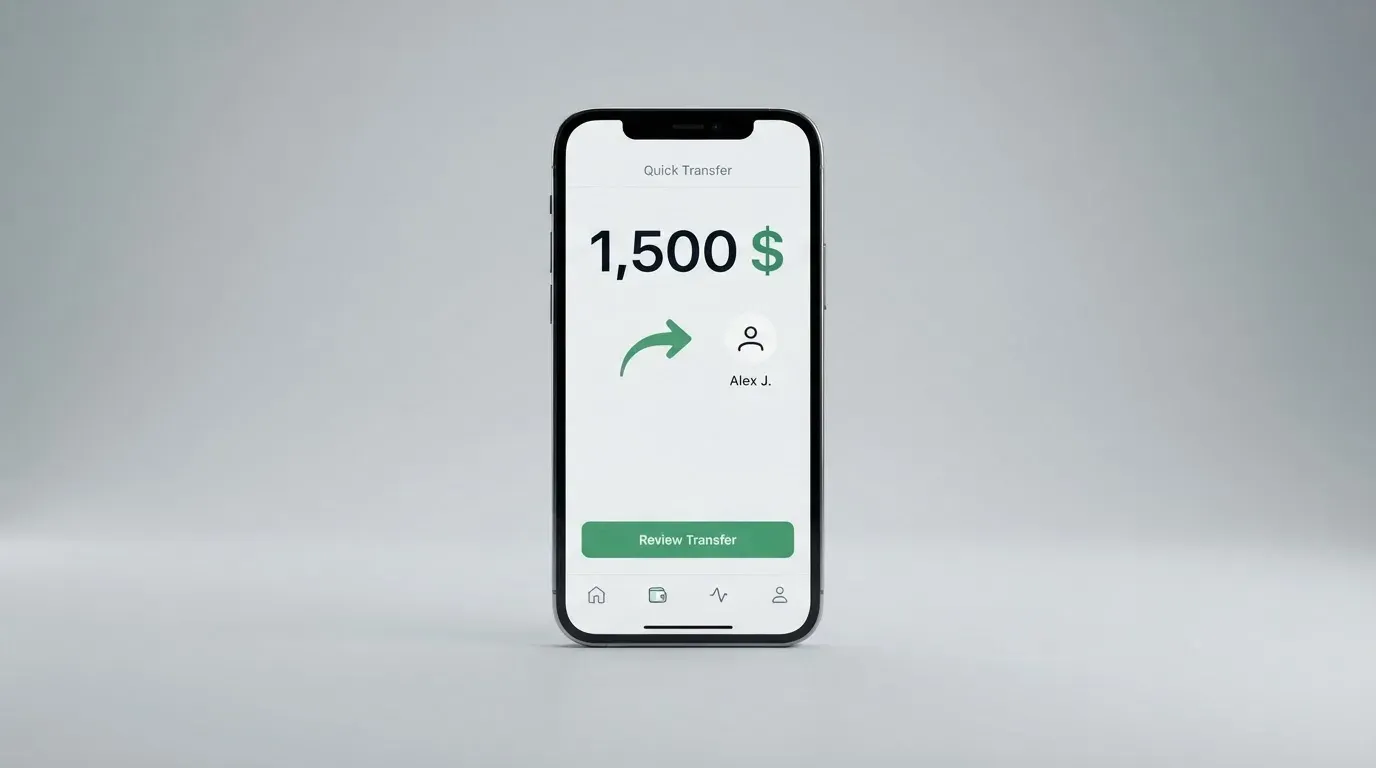
The other route is the fiat side. Wafee gives you a euro IBAN, and the description of the account makes clear that you can also receive euro transfers, send outgoing SEPA payments, send SWIFT transfers and make P2P transfers from the account. The minimums and the fees for those transfers are not stated. SEPA in particular has its own pricing in the wider market — incoming SEPA credits are often free, outgoing SEPA credits usually cost a small flat fee — and there is no reason to assume Wafee follows that norm in either direction.
The cash-out side mirrors the same picture. The site mentions an “instant conversion feature” to turn crypto into traditional currency “whenever you need it”, which is just a way of saying the conversion happens in the app and the card debits a euro balance. There is no published fee, no minimum amount, and no information on whether large conversions are subject to extra checks or limits.
A practical reading of this section is: top-ups work, the card will charge your crypto at the point of sale, and the IBAN makes the account usable like a normal euro account — but the cost of every leg is left to the in-app quote and the support inbox.
Paying with it every day
In day-to-day use, Wafee does several things right. The card is a Visa, so it is accepted wherever Visa is taken, and you can have both a physical card and a virtual card on the same account. The site explicitly says you can add the card to Apple Pay and Google Pay, which means contactless payments at the terminal and in-app purchases on your phone are covered. The combination — a Visa, both card types, both mobile wallets — is a sensible baseline for a 2026 crypto card.
A few things the site does not tell you, though. There is no list of merchant categories the card will decline, no description of how disputes work if a transaction goes wrong, and no cashback or rewards programme described anywhere on the public pages. Some card products block gambling, adult content or cryptocurrency purchases by policy, and the absence of a published list means you only find out by trying. The dispute process is the more important gap: if a merchant does not deliver, you will want a chargeback route, and the site does not say one exists.
The mobile app is the second soft spot. The App Store and Google Play badges in the footer link to “#”, which is a placeholder rather than a real store listing. The web sign-in at app.wafee.co appears to work, but the experience on a phone is unconfirmed by the public material. If you are the kind of person who needs the app to do everything — freeze the card, see transactions, raise a dispute — you will want to confirm with Wafee that those features are live in the app you are given, not just promised in the marketing.
For a 3-D Secure test, an online shop should normally trigger an extra identity check on the first few purchases. That is the network’s standard behaviour, not something Wafee controls, but it is worth knowing if you have not set up the relevant authentication method in the app. The same goes for address verification: some merchants run an AVS check, and a card with a euro billing address can be declined by a US merchant that expects US-style address data. That is a category issue, not a Wafee-specific one, but it is the kind of friction a first-time user may not expect.
What can go wrong
Risks fall into three groups: company risk, regulatory risk and product risk.
On the company side, Wafee Ltd is registered in St. Kitts and Nevis under company number C 57790, with a listed address of Suite 1, A.L. Evelyn Ltd Building, Main Street, Charlestown, Nevis. The FAQ page links to “Walletto Terms & Conditions” and a “Walletto Annex Prohibited Activity List”, which strongly suggests Walletto is the card-issuing partner, but the relationship is not described on the public pages. More importantly, no license is named. There is no EU EMI authorisation on the public site, no UK FCA registration, and no MiCA reference. That does not mean the licence does not exist — the card partner may hold it — but it is unusual for a card product to publish so little.
On the regulatory side, two things matter for a euro-denominated account. First, the EU’s MiCA regulation (Regulation (EU) 2023/1114) took legal effect in June 2023; its rules on e-money tokens and stablecoins applied from 30 June 2024 and the remaining provisions, including CASP (Crypto-Asset Service Provider) authorisation, applied from 30 December 2024. Wafee’s own pages do not reference MiCA, and there is no CASP listed for it on the public registers. Second, the IBAN looks like a euro account but is not, on the evidence available, a bank account, so the funds are unlikely to be covered by a deposit guarantee scheme. If the company fails, the recovery path is whatever the local insolvency rules in Nevis provide, and that is a weaker starting point than a regulated bank in Frankfurt or Paris.
On the product side, the absence of a fee schedule is itself a risk. You only find out what a transaction costs by doing it. The other product risks are familiar to anyone who has used a crypto card: the spread on crypto-to-fiat conversion is the real cost, and a stablecoin that briefly depegs — a small but recurring event in the market — can make a “stable” balance momentarily worth less than a dollar. The site also mentions “cutting-edge encryption”, multi-factor authentication and security audits in general terms, but the custody model is not stated. The link to a “Custody Note” PDF is the closest hint, and it is worth reading before you load a large balance.
Finally, on complaints: a search in late October 2026 for “wafee card reviews trustpilot reddit” returned no pages about Wafee itself, only unrelated companies. There is no Trustpilot profile, and no user reviews to anchor a sense of how the product behaves in the wild. That is not the same as a clean record — it is the same as an unrecorded one, which is its own warning sign for a financial product.
What to take instead
Wafee is not the only crypto card on the market, and the alternatives below are useful as a comparison: each takes a different approach, and one of them is likely to fit your situation better. The scores come from independent reviews, not from Wafee.
Whop Cards — 5.2 out of 10
Whop Cards is positioned around creators and small businesses rather than individual spenders. The card is a Visa, accepted anywhere Visa works, and is backed by stablecoin collateral from a linked wallet, so the on-ramp is closer to a payout than a top-up. The trade-off is geography: Whop Cards serves consumers in 31 US states and businesses in 41, and explicitly does not serve a long list of countries including Belarus, mainland China, Cuba, Hong Kong, India, Iran, Iraq, Israel, Myanmar, Nepal, Nicaragua, North Korea, Russia, Syria, Turkey, Ukraine, Venezuela and Vietnam. The card offers 5% cashback at selected merchants, currently Uber, with more planned, and the marketing line is “no extra fees”, but no full fee schedule is published. If you are a US creator in a supported state, this is a more transparent product than Wafee; if you are not, it is irrelevant.
Stella — 6.5 out of 10
Stella is a closer match to Wafee in scope. It is a virtual and physical Visa card, working at “over 40 million VISA merchants globally”, and the funding model is the same: you deposit crypto into the account and the card auto-tops-up. The Terms bar users under economic sanctions and route US and European users through affiliates, which is a meaningful signal about the regulatory posture. There is no cashback on the card itself, but the wider Stella product includes a separate yield feature. Like Wafee, Stella’s fee schedule is not published, so the same “ask before you load” advice applies.
UniFi Card — 4.7 out of 10
UniFi Card is a prepaid Visa debit card issued by Lead Bank, denominated in US dollars, and the funding routes are different from Wafee: ACH, wire, SEPA via IBAN, SPEI via CLABE, and a USDC wallet for on-chain deposits. The app also supports Apple Pay. The card’s marketing claims 3% rewards on balances, although the listing does not detail how that interacts with the card itself. The honest summary is that UniFi is a US-centric product with a wide funding surface and a less polished public story; the lower score reflects thinner disclosure rather than a known problem.
Across the three, the pattern is the same: crypto cards are useful tools that often publish less about themselves than a normal bank product. Wafee is in the middle of that pack: more ambitious than UniFi in scope, more transparent than Whop about who it serves, less specific than any of them about what it charges.
Who I would recommend it to
Wafee is the right product for a fairly specific person. If you already hold stablecoins or other crypto, want a euro-denominated account with an IBAN, and need a Visa you can top up from your crypto balance and spend in shops, the core offer is sound. The euro IBAN plus SEPA, SWIFT and P2P transfers gives you a real account, not just a prepaid balance, and the Apple Pay and Google Pay support means the card fits the way most people pay in 2026.
The card is the wrong product if you need a published fee schedule before you sign up, if you want a clear license from a major regulator on the front page, if you are not comfortable sending crypto without knowing the supported networks in advance, or if your country is not the kind of place where a Nevis-registered company will be allowed to serve you. In any of those cases, the alternatives above are worth a look, and a more established European-licensed crypto card may serve you better.
Before you put real money on the card, three checks are worth doing. First, ask Wafee for a written fee schedule — issuance, monthly, conversion, FX, ATM and the per-transaction limits — and keep the email. Second, ask which coins and which networks the app actually supports, and send a small test amount before you load a meaningful balance. Third, read the “Custody Note” PDF that the site links to, so you understand who holds your crypto between the deposit and the moment the card is charged. None of that is a substitute for regulation, but it is the practical best you can do with a product that has chosen to publish so little.
Frequently asked questions
What is the Wafee card?
The Wafee card is a Visa payment card linked to an in-app crypto wallet and a euro IBAN account. You can fund it from crypto, hold euros in the IBAN, and spend the balance anywhere Visa is taken. The card comes in physical and virtual form, and the company is Wafee Ltd, registered in St. Kitts and Nevis.
How does the Wafee card work?
You hold crypto in the Wafee wallet, and at the moment of payment the app converts it to euros and the Visa pays the merchant. The euro IBAN also lets you receive bank transfers, send SEPA and SWIFT payments, and move money to other Wafee users. The conversion rate is described as “competitive”, which is the only published word on the cost.
Is Wafee a bank?
Wafee is not described as a bank on its public site. The euro IBAN is a payment account, not a deposit account, which means the funds are unlikely to be covered by a national deposit guarantee scheme. Treat it as a payment account, not as a savings account, and do not park more than you are willing to lose in operational risk.
Who owns Wafee?
Wafee Ltd is the company behind the product, registered in St. Kitts and Nevis under number C 57790. The FAQ page links to “Walletto Terms & Conditions”, which suggests Walletto is the card-issuing partner, but the relationship is not described in the public material. No individual owners or shareholders are named.
In which countries is the Wafee card available?
The site says “160+ Countries” and shows flags for Brazil, Argentina, Mexico, Egypt, Nigeria, Jamaica, Turkey and the UAE, but it does not publish a list. Availability is, in the company’s own words, “determined by Wafee.co”, which means you find out at sign-up. If you are in a country where crypto products are restricted, do not rely on a flag in the marketing.
How do I top up the Wafee card?
You top up by sending crypto to the wallet, where it can be converted to euros in the app, or by receiving a euro transfer into your IBAN. The site does not name the supported coins or networks, and the fees for crypto deposits, IBAN credits and SEPA or SWIFT transfers are not stated. Send a test amount before you load a meaningful balance.
Does the Wafee card require KYC?
The site does not describe its KYC requirements, which is unusual for a card product with a euro IBAN. In practice, you should expect a government-issued photo ID and a proof of address, because EU and international banking rules require it of any licensed partner involved. The exact documents and the time it takes are not stated.
Can I add the Wafee card to Apple Wallet or Google Pay?
The site says the card supports Apple Pay and Google Pay for contactless and in-app payments. Adding the card to a mobile wallet usually requires the card details and a one-time verification, both of which happen inside the Wafee app. If the relevant button is missing, contact support before you assume the feature is broken.
Is the Wafee card safe?
The site mentions “cutting-edge encryption”, multi-factor authentication and security audits, but the custody model is not described in the public material and no regulatory license is named. The honest answer is that the safety of your balance depends on the issuer and the custody partner behind the card, and the public information does not let you verify either. Treat the account as a payment account, not as a vault.
Is the Wafee card worth it?
Wafee is worth it if you want a euro IBAN plus a Visa that you can fund from crypto, and you are willing to ask the company directly for the fees and the supported networks before you load. It is not worth it if you need a published fee schedule, a named regulator and a clear dispute process before you sign up. For the second group, the alternatives in the previous section are a better starting point.
Money-app cards – cryptocardselect
Content created by the «cryptocardselect» team