
Six things worth knowing before you pay $99 for an IncoCard card
 Available in US
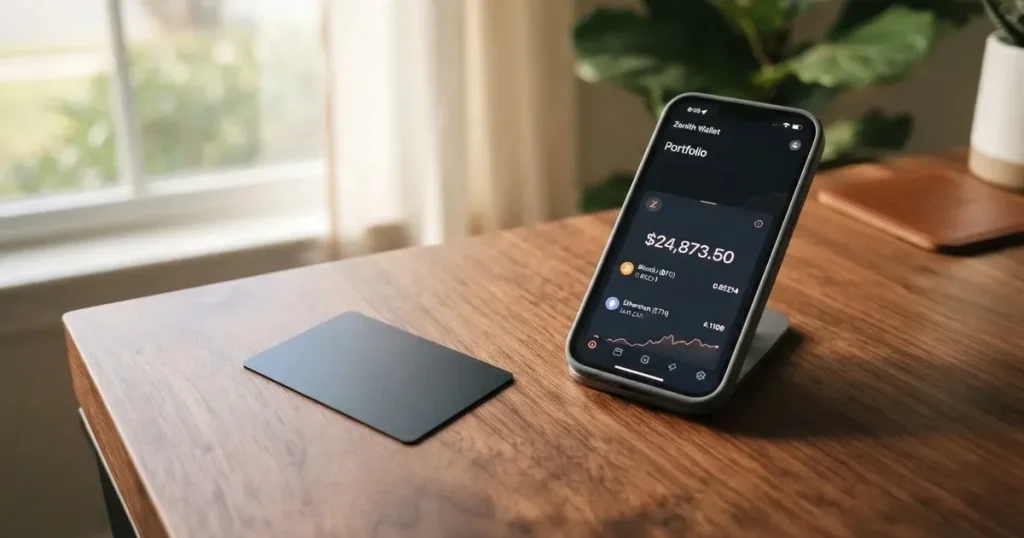
IncoCard is one of those crypto cards aimed at people who cannot open an ordinary bank account, or would rather not try. There is no identity check: you get in with a 10-digit access code, no email, no documents. You load it from a crypto balance, and it behaves like a prepaid card from there. The coin list is genuinely wide — 25+ assets, from XMR and BTC down to USDC on four different networks. That combination is real, and for the specific person it is built for, nothing else on this page does the same thing.
What I could not pin down matters just as much. The card’s public pages do not name a legal entity, a country or an issuing bank. The currency conversion fee is not disclosed. The FX rate you get is a black box. And there is not a single independent review of IncoCard on Trustpilot or Reddit that I could find, which cuts both ways: no pile of angry complaints, and no track record from anyone else either.
My score is 6.2 out of 10. The product works as described on the surface, the funding options are the best in this comparison, and the price of entry is steep enough that you should know exactly what you are buying before you send $99.
The conditions described here are current as of October 28, 2026.
Verdict: 6.2 / 10
The number is not a verdict on whether crypto cards are a good idea. It is a verdict on this card against the alternatives a reader in my situation could actually pick. IncoCard scores almost perfectly on access and funding, and badly on everything you have to trust without being able to check it.
| Criterion | Mark | Why |
|---|---|---|
| Who can get it | 9 / 10 | “Worldwide”, no prohibited countries listed in the terms, and using it to circumvent financial sanctions is prohibited |
| Cost | 1 / 10 | Virtual card $99, physical $299, free delivery; 2% top-up fee, no monthly fee claimed, FX fee not disclosed |
| Top-up options | 10 / 10 | 25+ coins including XMR, BTC, ETH; USDT in ERC-20, TRC-20, BEP-20, TON, SPL; USDC in ERC-20, Base, BEP-20, SPL; LTC, DOGE, BCH, DASH, ZEC, TRX, BNB, SOL |
| Reliability and complaints | 4 / 10 | No legal entity, country or issuer named; access code cannot be recovered; no independent reviews found; an activated card is not refundable |
| Everyday use | 9 / 10 | Virtual card in seconds, physical card for ATMs and shops, Apple Pay and Google Pay |
| Total | 6.2 / 10 | Strong on access and funding, weak on disclosure and price |
Who this suits: someone who has no access to a normal bank card, who holds crypto rather than salary, and who values being able to fund from XMR or a specific stablecoin network over what the fee costs. If a shop declines your usual card and you need something that works this week, the virtual card being available “in seconds after payment” is a genuine advantage.
Who it does not suit: anyone who spends primarily in one currency and cares what that payment cost. A 2% load fee is charged before you have spent anything, and the FX fee on top is not stated. On a $200 monthly spend, $99 plus load fees is a lot of runway burnt before you have bought a coffee. It also does not suit anyone who cannot afford to lose the balance, because there is no dispute process described and an activated card is not refundable.
Will they give you the card?
Yes, and that is the whole point. The terms say “Worldwide” and list no prohibited countries, which is about as open as this category gets. The one line in the terms about geography is a prohibition rather than a restriction: you may not use the card to circumvent financial sanctions. That is a normal clause and, on its face, not a barrier to an applicant anywhere.
Two things follow from that, and both are worth sitting with.
First, “worldwide” is a claim on a marketing page, not a statement about which merchants will accept the card. A card issued in one country can look foreign to a shop in another, and some merchants decline prepaid or foreign-issued cards precisely because the issuer lookup reveals the card type and country. So the question is not “will they issue it to me” — almost certainly yes — but “will the shop I want to pay take it”.
Second, the absence of country exclusions does not mean the absence of risk. The card’s public pages do not name a legal entity, a country of registration or an issuing bank. I could not tell you who is liable to you if the operator disappears, and I could not check any register for them. If you are somewhere with a strong card-payment culture and a functioning banking system, that gap is worth weighing before you pay.
One more thing about who gets it: there are no KYC levels at all. That is not a tiered system where documents unlock more. It is a single state — no documents — and it applies to refunds as well as to sign-up.
How to get it
The sign-up is short by design. You create an account with a 10-digit access code; no email or ID is required. Age is not stated on the page, so I cannot tell you whether a minimum age is enforced behind the form.
Then you choose one of two products, and these are the only two — there is no tier structure, no monthly plan, no upgrade path:
- Virtual card — for online and mobile payments, valid 3 years.
- Physical card — for ATM withdrawals and in-store purchases.
The network and the card currency are not stated on the page. The only concrete detail I found was an example expiry date of 12/29, which tells you roughly how long they expect a card to live, and nothing else. That absence is significant: without knowing the network you cannot predict which merchants will accept it, and without knowing the card currency you cannot predict whether a foreign transaction will involve a conversion at all.
Timing is where this card is genuinely good. The virtual card is ready “in seconds after payment”. The physical card ships worldwide and free, with no timeline given at all — so “free” is the only thing you can rely on. If you lose the physical card before activating it, you get a free replacement or a full refund, but the window is 30 days from shipping. After that, the protection described on the site does not apply.
Activating the card is the point of no return. Before activation, a lost or unused card is refundable in full. After activation it is not, though your balance can be moved to a new card free of charge. Treat the moment you activate it as the moment your money becomes non-recoverable from the operator’s side, and check the card works before you load it with anything you care about.
Fees and limits: what it really costs
Here is where the 1 / 10 comes from. IncoCard’s headline features are strong; its pricing is the part you have to accept on trust rather than on arithmetic.
| Fee or limit | Value |
|---|---|
| Virtual card issuance | $99 per card |
| Physical card issuance | $299 per card, free worldwide shipping |
| Monthly fee | None claimed |
| Top-up (load) fee | 2% |
| Currency conversion fee | Not stated |
| ATM withdrawal fee | Not stated |
| ATM allowance | Not stated |
| Minimum load | $10 |
| Maximum load | $5,000 per card (virtual) |
| Maximum load, physical | Not stated |
Read that table twice. The two numbers you can plan around are $99 and 2%. The number you cannot plan around is the conversion fee, and it applies to the one transaction type the card exists for: spending crypto balance.
Let me run three ordinary payments through it, using only the fees the terms state.
A $15 lunch. You load $15, the 2% load fee takes $0.30, and $14.70 reaches the card. If the lunch is in the card’s own currency — which the page does not tell us — that is the whole cost. If it is in another currency, the FX fee applies at a rate nobody has published.
A $200 monthly grocery run. Two hundred dollars of spending means loading at least $204 if the load fee is the only cost, because the fee comes out of what you send. Add the FX fee on top and the true cost is above $204. There is no monthly fee to offset this, so the load fee is the price of admission to every single month’s spending.
A $40 ATM withdrawal. The physical card works “anywhere” for withdrawals. The fee is not stated and the allowance is not stated, so I cannot tell you what this costs or whether a monthly cap exists that would surprise you mid-month. If cash is a meaningful part of how you use the card, this is the number to ask support about before you rely on it.
The 2% fee also compounds the $99. You pay $99 to open the virtual card, then 2% of everything you load for as long as you keep it. There is no stated expiry on the card beyond its 3-year validity, so a card bought today and barely used is $99 spent for nothing. That is the honest shape of this deal: the price is not hidden, but it is front-loaded, and the absence of any stated FX fee means the running cost is genuinely unknowable from the public pages.
How to top it up
This is the strongest part of the product and the reason it scores 10 / 10. IncoCard accepts 25+ coins, and I want to be specific because the network detail is what usually goes wrong:
- Major coins: XMR, BTC, ETH
- USDT: ERC-20, TRC-20, BEP-20, TON, SPL
- USDC: ERC-20, Base, BEP-20, SPL
- Others named: LTC, DOGE, BCH, DASH, ZEC, ETC, TRX, BNB, TON, SOL
Two consequences. First, the ability to fund with XMR is close to unique — most cards in this category take stablecoins and a handful of majors, and XMR is deliberately hard to trace and rarely supported anywhere. If holding a privacy coin and being able to spend it is your reason for existing here, IncoCard is one of very few products that does it.
Second, and more practically, the network choice is a trap with sharp edges. USDT and USDC are the same idea issued on different blockchains, and sending the wrong one to the wrong address is a common and irreversible mistake. USDC on TRC-20, for instance, is not a native option, because Circle stopped supporting USDC on Tron in February 2024. If you hold USDC on Tron and the card’s supported list does not name it, treat that as a no.
The mechanics are: minimum load $10, load fee 2%, maximum $5,000 per card for the virtual card, and the physical card’s maximum is not stated. Who pays the on-chain network fee for your deposit is not stated either — the blockchain charges that, not the card company, so it comes out of your transfer at whatever your wallet or exchange charges.
On the way out, the balance can be moved to a new card free of charge. That is the whole cash-out story: no withdrawal to a bank account and no conversion back to crypto is described. So this is not a card for round-tripping money; it is a card for spending what you have already loaded, with a way to rescue the remainder if you buy a new one.
Paying with it every day
Day to day, the mechanics are simple and, on paper, good. Apple Pay and Google Pay are supported per the site, which means most of your spending will go through a tokenised number on your phone rather than a card you have to hand over. Which merchant categories are blocked is not stated — so whether gambling, adult content, fuel dispensers, or travel desk purchases will work is something you will find out by trying, not by reading.
There is no app mentioned. What exists is a web dashboard, and contact is through it.
Rewards are not stated. No cashback, no points, no fee rebate appears anywhere in the terms. If you are comparing cards on perks, IncoCard simply does not play that game, and the $99 and $299 prices are not offset by anything back to you.
Where the day-to-day experience will actually be tested is at the moment something goes wrong with a payment, and here the terms are thin in a specific, unhelpful way:
- There is no dispute process described.
- Unactivated cards get a full refund.
- Activated cards are not refundable; the balance is transferable to another card.
- Failed or partial payments are refunded to the crypto address you provided.
- Merchant declines are disclaimed.
Read the fourth bullet carefully. If a payment fails, your money goes back to a crypto address. That is a workable arrangement, but it means you need that address to still be yours and still be under your control at the moment of the failure, and it means the refund arrives as crypto rather than as card balance. If the address has moved, or the exchange it sat on has withdrawn support for the network, recovery becomes a support ticket.
The fifth bullet is the one I would want a straight answer to before loading. Merchant declines being disclaimed means the card’s operator is not promising to stand behind you when a shop refuses the card.
What can go wrong
Six things, roughly in order of how likely they are to matter to you.
The operator is not identifiable. The public pages carry only “© 2026 IncoCard”. No legal entity, no country, no issuing bank. Everything else in this review is verifiable; this is not, and it is the reason the reliability and complaints mark is 4 / 10 rather than higher. I am not alleging anything — I am saying that you are asked for $99 and asked to hand over a crypto balance on the strength of a name and a copyright line.
Your access code cannot be recovered. The terms disclaim liability for it. That single 10-digit code is the entire authentication scheme — no email, no ID, no second factor mentioned — and if you lose it, the terms say the loss is on you. Two-factor authentication and card freezing are not stated. Write the code down somewhere that is not the same device you use every day, and understand that this is the whole of your account security.
There is no dispute route. Described above, and it is the risk that bites hardest once real money is loaded.
The FX rate is a black box. Not disclosed, not described, not bound by anything in the terms. Combined with a 2% load fee, this is the cost that will quietly define your experience.
There is no independent track record. I found no IncoCard reviews on Trustpilot or Reddit, and no Trustpilot page for it. For a card whose entire pitch is that it works for people other systems turn away, that absence of both complaints and confirmations is telling. It is also, to be fair to the operator, what a new service looks like.
The balance sits with a third party. When you load, you are holding a prepaid balance with the card operator, not coins in your own wallet. Category history is worth keeping in mind here: custodial platforms have failed before, and the crypto card world has seen programmes closed and users told to withdraw remaining balances. Programme closures typically follow a pattern — a notice period, then loading and spending stop, then users are asked to withdraw what is left.
One genuine positive on the risk side: lost physical card protection is offered, and a lost pre-activation card is replaced or refunded free within 30 days of shipping.
What to take instead
None of these do what IncoCard does. All of them disclose more. That is the trade on offer: a card that gets you in with no documents and any coin, versus cards that tell you who is liable for your money.
Cardex — 5.6 / 10. “One crypto card, 200+ countries”, with no country list or exclusions. It runs on the VERVE, Visa, Mastercard and UnionPay networks and offers virtual and physical cards; its App Store listing is Naira-focused, so the card currency appears to be the naira. Funding is by USDT, USDC and BTC wallets, networks not stated. Its interesting feature is conversion at the moment of payment with an “AI-Powered Conversion Rate” that scans global exchange rates and picks one — a good idea, though no fee percentage is published. Cost not stated.
TakeCard — 5.5 / 10. The most transparent of the three on paper: Visa network, issued in the United States, prepaid, card currency USD with payments 1:1. Virtual card available immediately; the physical card is “available only to Bolivian users for now”, so for almost everyone this is a virtual-only card. Pricing is also the lowest here — $5 virtual, and $20 issuance plus $20 shipping for the physical card, though another article in the same help centre quotes $10 for the physical card in Bolivia, so the shipping figure is not consistent. Fees: 1% commission per purchase, USD payments at 1:1, other currencies at the official Visa rate of the transaction day. Top up from a Takenos account; coins are not named in the article.
OkiCard — 6.0 / 10, the closest overall. “150+ countries” (some pages say “200+”), no geo-blocking on passport, users must confirm they are not in a sanctioned jurisdiction. Fees are the clearest of the group: 3% load fee, 0% transaction fee in USD, and “no hidden exchange spreads” — though the FX fee is not stated either. Funding is USDT on BSC, Ethereum, Tron and Solana, with USDC “soon” and BTC and altcoins “coming soon”; deposits go to a generated address and convert to fiat at the moment of spending. Its own pages disagree on price: the pricing page shows $0 issuance, $0 monthly and $15 starting for the virtual card, while the FAQ mentions a one-time issuance fee. Initial deposit is 100 USDT. No cashback.
My honest read of that table: if your problem is “no ordinary bank card” and XMR funding is not part of it, OkiCard at 6.0 gives you the same no-KYC proposition with published fees, USDC coming, and none of the $99 outlay. If XMR is the point, IncoCard is doing something the others are not, and you accept the disclosure gap knowingly.
Who I would recommend it to
To the person who has tried to open a bank account and been refused, holds crypto rather than a salary, and needs a card that works this week. The virtual card arriving in seconds after payment is not a marketing line when your alternative is nothing at all, and funding from a privacy coin is a real capability rather than a checkbox.
To nobody else, and specifically not to you if any of these are true:
- You spend in a single currency and want to know what a payment costs. The 2% load fee is published; the FX fee is not.
- You are deciding based on the $99 or $299. If the balance you would load is under a few thousand dollars and you are still learning, the entry cost is disproportionate.
- You need chargeback rights or a dispute process. The terms describe none.
- You intend to hold a large balance for any length of time. An activated card is not refundable and the balance is a claim on an unnamed entity.
- You need cash. ATM fees and allowances are not stated.
Two habits if you go ahead. Load in small amounts rather than parking a balance, because an activated card is non-refundable and there is no dispute route. And confirm the refund crypto address is one you control before you load, because failed payments are refunded there and only there.
Frequently asked questions
What is IncoCard?
IncoCard is a prepaid-style crypto card: you load a balance from crypto, and the card spends that balance like an ordinary payment card. It comes as a virtual card for online and mobile use and a physical card for ATMs and shops. There is no identity check — a 10-digit access code gets you in, with no email or documents — and it accepts 25+ coins. Pricing is $99 virtual, $299 physical, with a 2% load fee.
Is IncoCard a bank, and who owns it?
No — it is not a bank, and I could not identify an owner from its public pages. The only company information there is a copyright line reading “© 2026 IncoCard”; no legal entity, country of registration or issuing bank is named. That matters because a card programme is normally held by a licensed issuer, and you cannot check one here. Treat this as an unresolved question, not as reassurance.
Does IncoCard require KYC?
No. There are no KYC levels at all — not a reduced tier, but none. An account is created with a 10-digit access code and no email or ID, and refunds require no KYC either. The trade is that your balance sits with the operator, and your only credential is that code: if you lose it, the terms say it cannot be recovered and liability is disclaimed.
Is the IncoCard card free?
No. The virtual card is $99 and the physical card $299, with free worldwide shipping on the physical one and no monthly fee claimed. That is why the card scores 1 / 10 on cost in my review. You also pay 2% on every top-up, and the currency conversion fee is not stated at all — so the running cost of the card is partly unknowable from the public pages.
Which countries is IncoCard available in?
The terms say “Worldwide” and list no prohibited countries, which is unusually open. The one geographic clause is a prohibition: you may not use the card to circumvent financial sanctions. Separately, “worldwide” describes who can be issued the card, not which shops accept it — some merchants decline prepaid or foreign-issued cards.
How do I top up an IncoCard card?
Send crypto to the address the card gives you, from any wallet or exchange holding one of 25+ supported coins: XMR, BTC, ETH, LTC, DOGE, BCH, DASH, ZEC, ETC, TRX, BNB, TON, SOL, USDT (ERC-20, TRC-20, BEP-20, TON, SPL) or USDC (ERC-20, Base, BEP-20, SPL). Minimum $10, maximum $5,000 per virtual card, and a 2% load fee. Pick the network carefully — sending on an unsupported one can lose the deposit.
Can I use IncoCard with Apple Pay or Google Pay?
Yes, both are supported per the site’s own description, which means most spending happens through a tokenised number on your phone rather than the plastic. You can add the virtual card to a mobile wallet. Note that which merchant categories are blocked is not stated, so fuel, travel desks, gambling or adult merchants may decline — you find that out by trying.
Is IncoCard safe to use?
It depends on what you mean. The card does what it says, but the operator behind it is not identifiable from public pages, your access code cannot be recovered if lost, no dispute process is described, and an activated card is not refundable. There is also no independent review record I could find on Trustpilot or Reddit. Nothing I found suggests a problem; what is missing is anything you could verify.
Is an IncoCard card worth it?
For one specific person, yes: someone with no access to an ordinary bank card who holds crypto and needs a card quickly — especially if XMR funding matters, which almost nothing else supports. For anyone else, the $99 entry fee plus 2% on every top-up and an undisclosed conversion fee makes it hard to justify. My score is 6.2 / 10, and the reason is price and disclosure, not function.
How do I withdraw money from an IncoCard card?
The only route described is moving your balance to a new card free of charge. No cash-out to a crypto wallet or a bank account is described anywhere in the terms, and ATM withdrawals on the physical card come with no stated fee or allowance. So treat it as a spending instrument, not a bridge between your crypto and a bank balance.
Virtual cards for online use – cryptocardselect
Content created by the «cryptocardselect» team