
A closer look at the Based card — and whether the staking tiers actually pay off
 Available in US
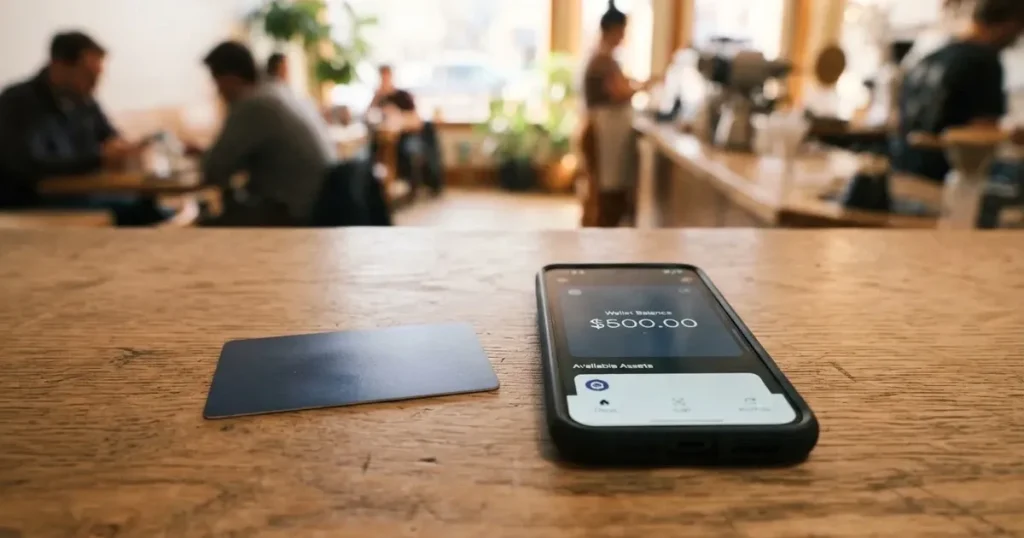
The Based card is a Visa debit card tied to a crypto balance inside the Based app. It comes in three tiers — Orange, HYPE and Gold — and the more $BASED you stake, the cheaper the foreign-exchange markup and the higher the cashback. The headline pitch is that a staker who holds a serious $BASED position can pay in any currency with zero FX markup and earn 4% back in $BASED. In practice, the card lives in a narrow lane: it is best suited to people who already hold a meaningful $BASED bag and want to spend it like cash. Everyone else will find a thinner proposition.
I read the Based website, the help-centre pages, the public Telegram and X feeds, and what little there is on third-party review sites. The conditions in this review are current as of October 28, 2026.
Verdict
I rate the Based card 6.9 out of 10. It does a few things unusually well — a wide range of deposit coins and networks, an FX markup that actually drops to zero on the top tier, and a card you can pre-order as a staker — but it also leaves some basic questions unanswered (who issues it, under which licence, how disputes work) and asks for a lot of staking to unlock the headline numbers.
The Based card suits a staker who already holds $BASED and wants a daily card to spend that balance cheaply, with cashback paid in the same token. It is less useful for someone who only wants a flat crypto-to-fiat card, and it is a poor fit for anyone who is not comfortable with staking for 21 days plus a three-day cooldown.
Here is how I arrived at the score.
| Criterion | Mark | Reason |
|---|---|---|
| Who can get it | 7 / 10 | Worldwide except about 74 countries from 1 August 2026 (Russia, Belarus, US, Canada, Australia, China, India, Singapore, Ukraine, Iran, Turkey and others); admission depends on country of residence |
| Cost | 7 / 10 | No signup or annual fee; physical shipping $50 on HYPE, free on Gold; FX 2.5% / 1.5% / 0% by tier; stablecoin deposits free of provider fees |
| Top-up options | 9 / 10 | USDT, USDC, XSGD, SOL, HYPE, BASED on Solana, Arbitrum, Polygon, Hyperliquid; auto-converts at point of sale |
| Reliability and complaints | 5 / 10 | Operated by SHA2 LABS PTE. LTD. (Singapore) per the start-up filings; the issuer and licences are not named; Trustpilot sits at 3.4 from a single review; cashback needs staking and is capped |
| Everyday use | 7 / 10 | Virtual card straight after approval, plastic on HYPE, metal on Gold; Apple Pay and Google Pay in the docs, though one user report disputes Apple Pay; ATM not enabled |
Who can get the Based card
Based says the card is available worldwide except for a published list of about 74 countries that takes effect on 1 August 2026. The list I saw includes the Russian Federation, Belarus, the United States, Canada, Australia, China, India, Singapore, Ukraine, Iran and Turkey, alongside a long tail of other jurisdictions. If you are reading this from one of those countries, you are out of luck at the country-of-residence layer, regardless of citizenship.
The card is open to anyone at least 18 years old who lives somewhere the card is offered. You do not need to be a citizen of a specific country — Based checks where you actually live. That detail matters: a lot of crypto cards gate on citizenship, and a digital nomad or an expat can end up excluded even though their home country is fine. Based’s wording leans the other way and asks you to confirm your country of residence in the app.
Beyond residence, there is a single Know-Your-Customer (KYC) step inside the Based app. The accepted ID is a passport or a national ID card — driver’s licences and voter IDs are explicitly not accepted. Screening typically takes up to three days, and Based can ask for more documents via [email protected]. The page I read does not name a proof-of-address document, which is something to expect anyway and to have ready.
A note on the KYC shape: there is only one tier of verification. The cards have tiers (Orange, HYPE, Gold), but those tiers are unlocked by staking $BASED, not by going through heavier or lighter identity checks. The decision to upgrade your card is a wallet decision, not a paperwork one.
How to get the Based card
The application runs inside the Based app. There is no web sign-up, and there is no physical form to print. The flow is: install the app, create an account, complete KYC, then order the card tier that matches how much $BASED you want to lock up.
Based Orange is a virtual-only tier that, at the time of writing, is not yet available — you cannot order it today. HYPE is the entry-level card you can actually have shipped: you get a virtual card instantly after approval, and a physical plastic card follows by DHL. Based Gold is the metal card (the spec sheet says 20 g); it is free to ship, but you need a 100,000 $BASED lockup to qualify.
The virtual card is what you use day-to-day while the plastic is in the post. In practical terms that means: once your KYC clears, you can pay online or add the card to a mobile wallet straight away, and the physical card shows up later. The Based site does not state delivery times beyond naming DHL, and the help-centre pages do not break down country-by-country shipping windows.
What the Based card really costs
There is no signup fee and no annual fee. The only upfront cost is shipping for the HYPE physical card, which is $50; the Gold metal card ships free. Because Orange is virtual-only, it has no shipping cost at all, but you cannot order it yet.
The cost that actually moves the needle is the foreign-exchange (FX) markup, the surcharge that gets layered onto anything you buy in a currency other than US dollars. The card itself is denominated in USD, so every non-USD transaction gets converted. The markup is tiered:
- Based Orange: 2.5%
- HYPE: 1.5%
- Based Gold: 0%
A 2.5% FX markup on a debit card is roughly in line with mainstream crypto cards. A 1.5% markup is competitive. A 0% markup on Gold is the headline number and, if you can get there, is genuinely better than most cards in this category.
Stablecoin deposits do not have a Based-side fee. The network itself will charge its own gas to move your tokens to Based, and the same network will charge it back when you spend — that is the cost of using a public blockchain, not a Based charge. Based does not separately publish the cost of converting crypto into fiat at the point of sale, so I cannot tell you whether the conversion itself carries a spread on top of the FX markup.
Cashback is paid in $BASED at the start of each month. The numbers are: 2% on HYPE, capped at $20 a month; 4% on Gold, capped at $100 a month. There are also subscription rebates — up to $10 a month on HYPE and $100 on Gold for AI subscriptions, and a Gold-only entertainment rebate of up to $20 a month. All of these are promotional and can change, and every benefit ends the moment you start unstaking. So the moment you decide to sell your $BASED, your rewards also stop.
| Fee or limit | Orange | HYPE | Gold |
|---|---|---|---|
| Signup fee | None | None | None |
| Annual fee | None | None | None |
| Physical shipping | n/a (virtual only) | $50 | Free |
| Card form | Virtual | Virtual + plastic | Virtual + metal (20 g) |
| FX markup (non-USD) | 2.5% | 1.5% | 0% |
| Lockup required | None | 10,000 $BASED | 100,000 $BASED |
| Cashback | — | 2% in $BASED | 4% in $BASED |
| Cashback cap | — | $20/month | $100/month |
| Airport lounge | — | — | 4 visits/year |
| ATM withdrawals | Not enabled | Not enabled | Not enabled |
A few everyday examples, just to put the numbers in plain language:
- Coffee in Paris for €4 on HYPE: you pay €4, Based converts USDT/USDC to USD, the card network converts USD to EUR, the 1.5% FX markup lands on the converted amount. That is six extra cents on a four-euro coffee — not a rounding error you would notice, but it is there on every non-USD purchase.
- A $1,000 flight to Tokyo on Gold: 0% FX markup, so the only friction is the conversion rate the network gives you. That is the cleanest deal the card offers.
- A $300 month of streaming and AI subscriptions on HYPE: 2% cashback on the lot, capped at $20, so you get back $6 in $BASED, provided the subscriptions count towards the rebate programme (Based describes them as “AI subscription rebates up to $10/month” for HYPE, so the practical ceiling on subscription-specific cashback is $10).
The cashback cap is the part I would read carefully. Two percent of $1,000 is $20, which is exactly the HYPE cap; spend more than that on the card and the percentage effectively drops. On Gold the cap is $100, which means the 4% rate starts to lose ground at $2,500 of monthly spending. If you are a high spender, the 4% is only “4%” up to a ceiling, then zero.
ATM withdrawals are not mentioned in the documentation. A Trustpilot reviewer in May 2026 said cash-machine withdrawals were not enabled, and there is nothing on the Based site to contradict that. I would treat ATM access as unavailable until Based says otherwise.
How to top up the Based card
The card runs on a stored balance. You deposit supported tokens into your Based app wallet, and when you pay, the balance converts at the point of sale. There is no monthly billing and no credit line — it behaves like a prepaid card and cannot overdraw.
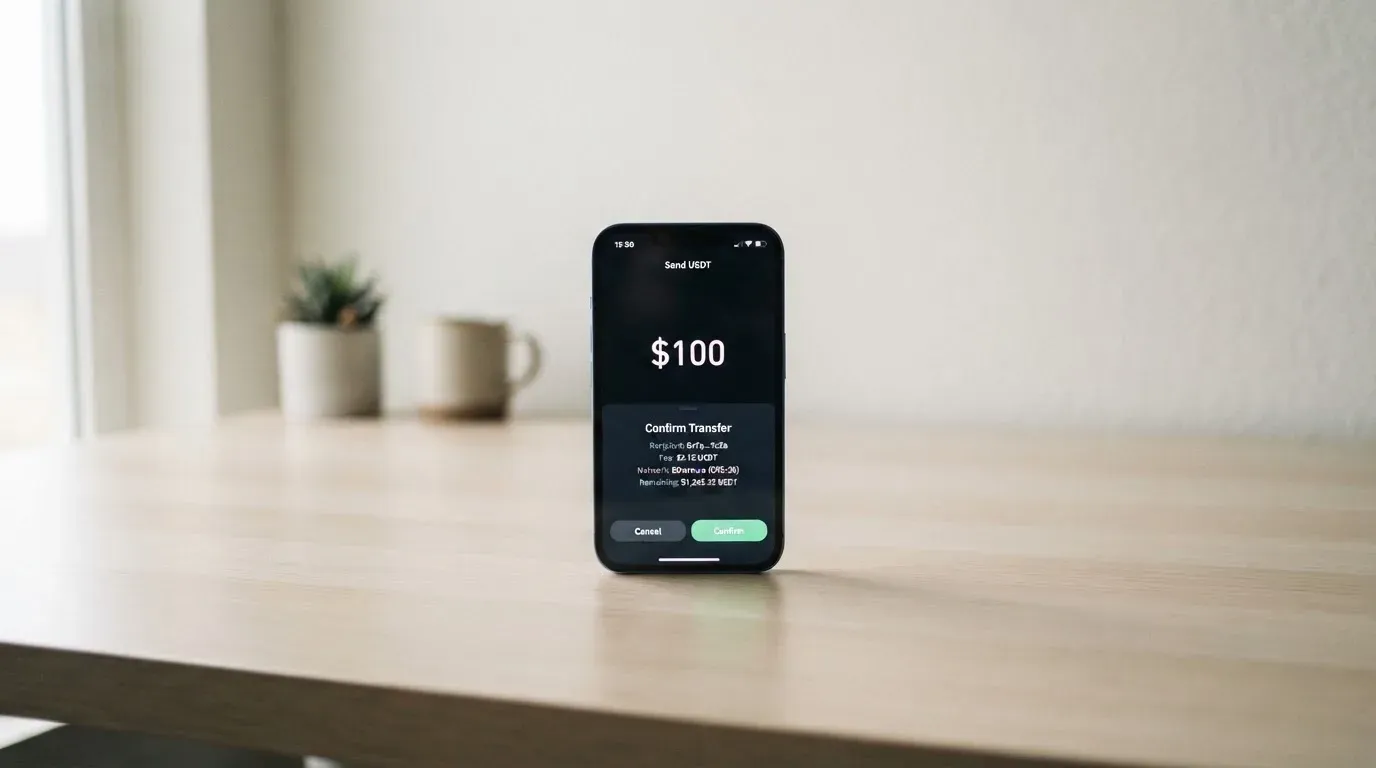
The supported deposit coins are USDT, USDC, XSGD, SOL, HYPE and BASED. The supported networks are Solana, Arbitrum, Polygon and Hyperliquid. The card converts your deposit to whatever the merchant needs at the moment of payment, so you do not have to manually swap into USD first.
A few practical warnings before you deposit:
- Send on the right network. The deposit address is network-specific, and the help-centre text is emphatic that you must pick a chain Based supports. Sending USDT on Tron (TRC-20) instead of, say, Arbitrum can mean a support ticket at best and a lost deposit at worst. Stablecoin transfers are generally irreversible.
- Mind the gas. The provider does not charge for stablecoin deposits, but the network does. USDT and USDC on Ethereum mainnet will burn real ETH in gas; on Solana the cost is usually a fraction of a cent; on Polygon it is also small. The wallet holding the tokens must have the network’s native asset to pay gas, which is a known gotcha — a wallet full of USDC and no ETH cannot actually send.
- The minimum top-up and who pays network fees (you, presumably) are not stated in the pages I read.
- Fiat top-up is not stated. Based describes the funding flow in crypto, and there is no bank-transfer or card-to-card top-up route described in the documentation.
- Withdrawals are not stated. The site talks about spending the balance, not cashing it back out to a bank.
If you only hold one chain’s version of USDC and you do not know which network, that is the question to answer before you tap “deposit”.
Paying with the Based card every day
The virtual card arrives as soon as your KYC is approved, so the moment you are cleared, you can pay online or add the card to a mobile wallet. Based lists Apple Pay and Google Pay among the supported wallets, which means tokenised card numbers stored in your phone rather than a plastic swipe.
There is a wrinkle. The Based help-centre pages say Apple Pay works. A Trustpilot reviewer in May 2026 said it did not, and rated the card 3 out of 5. I would not treat the user report as the final word — it is one review — but I would not treat the doc page as a guarantee either, given that there is no published track record on the wallet integration. If Apple Pay is the deal-breaker for you, the safest path is to test a tiny tokenised transaction in a wallet before staking a large $BASED balance.
In-store, the physical HYPE card behaves like a normal Visa debit card. The metal Gold card is the same network, just heavier and more expensive to ship (free, in this case). The card is denominated in USD, so any non-USD purchase is converted and marked up by the tier rate.
The Based app is what you use to manage the card. The reviews I read do not give the iOS or Android app store ratings, so I cannot tell you whether users find the app stable.
Blocked merchant categories are not stated. Many crypto cards exclude gambling (the MCC 7995 code) and similar high-risk categories, but Based does not publish a list, so I cannot say what is and is not allowed.
3-D Secure, the extra identity check that many European online shops trigger, depends on the issuer rather than on the card brand. With Based, that means it depends on the unnamed issuer.
What can go wrong with the Based card
There are three things I would not gloss over before staking any $BASED to upgrade.
The issuer and the licence are not named. Based states the operator is SHA2 LABS PTE. LTD., a Singapore entity that I have taken from the start-up filings on the site. The site footer says only “Based” and the help-centre pages do not name the issuing bank, the e-money licence, or the regulator. For a card that handles real money, the absence of a named issuer is unusual — most competitors in this space publish a regulatory page.
Complaints and track record are thin. Trustpilot shows 3.4 stars from a single review (24 May 2026), titled “Mediocre support”. The reviewer’s main gripes were: cashback needs staking and is capped at roughly $20 a month on a low-volume card or $100 on the top tier, Apple Pay was not actually working for them, and ATM withdrawals were not enabled. The profile is unclaimed, which means the company has not verified the page.
Staking locks the card, not just the rewards. All card-tier benefits end the moment unstaking begins. There is also a 21-day lockup from redemption and then a three-day unstake cooldown. If you decide to sell $BASED, your card essentially downgrades the day you start unstaking and you have to wait weeks before you are fully out. That is a long exposure window for a market that can move sharply.
Other gaps worth flagging:
- Custody model, two-factor authentication options, and instant freeze are not stated in the pages I read.
- Dispute and chargeback handling is not described. With a card issued through an unknown bank, the practical question of “where do I complain if I am charged for something I never bought” is hard to answer up front.
- A new restricted-country list took effect on 1 August 2026. If you are reading this from a country that was on the list and you were grandfathered in, the rules may have shifted under your feet.
- Stablecoin choice is your depeg risk. USDC and USDT have both had brief depegs in the past; the card’s auto-conversion does not protect you from a depeg in the moment between a price feed and a settled transaction.
What to take instead of the Based card
Based is a niche proposition: it is a good deal if you already hold a lot of $BASED and want to spend it. If you are outside that lane, there are three alternatives worth comparing.
Gemini Credit Card (4.9 / 10). A Mastercard World Elite credit card that pays rewards in Bitcoin or 50+ other cryptocurrencies. The headline is 4% back on gas, EV charging and transit (on the first $300 a month), 3% on dining, 2% on groceries and 1% on everything else, with no foreign transaction fees. The card is paid off in fiat, so there is no crypto-to-fiat conversion on the way out — you buy crypto with the rewards, not the other way around. The $50-a-year equivalent referral bonus structure is more generous than Based’s tiered cashback, but the credit-card model assumes a credit history and US address, which Based explicitly does not require.
Lava (7.1 / 10). A “spend anywhere” card that targets 150 million merchants across 150+ countries. Lava’s pitch is “no annual fees, no FX fees, no FX spread”, which makes it a strong fit for travellers and remote workers. Cashback goes up to 5% in bitcoin, though the conditions behind that number are not stated. Lava takes deposits in local currency or stablecoins, which is a more flexible funding story than Based’s crypto-only path.
Trastra (4.1 / 10). A prepaid Visa debit card available in 31 listed European countries (including Germany, France and the UK) and rolling out across the EEA. Trastra tops up from cryptocurrencies in the Mover wallet. The card scores lower than Based partly because the help-centre pages are missing the kinds of detail (FX fees, rewards, issuance cost) that a prospective user would want to know. If you are inside its coverage, though, it is worth a look as a European residency-gated alternative.
A quick side-by-side of the headline costs:
| Card | Annual fee | FX markup | Issuer named? | Cashback |
|---|---|---|---|---|
| Based (HYPE) | None | 1.5% | No | 2% in $BASED, cap $20/month |
| Based (Gold) | None | 0% | No | 4% in $BASED, cap $100/month |
| Gemini | None | 0% | Yes (US) | 1–4% in BTC, no cap on most tiers |
| Lava | None | 0% | Not stated | Up to 5% in BTC, conditions not stated |
| Trastra | Not stated | Not stated | Not stated | Not stated |
The honest read is: if you want zero FX markup and a published issuer, Lava or Gemini serve that brief better than Based, with the trade-off that neither is a staker-rewards product. If you specifically want to spend $BASED with crypto-native cashback, Based is the only one of the four built for that.
Who I would recommend the Based card to
I would point the Based card at one reader in particular: someone who already holds a meaningful position in $BASED, is comfortable with the staking lockup mechanics, and wants a daily-use card that converts a stablecoin balance into any currency at point of sale. The Gold tier’s 0% FX markup, in particular, is a real saving on a high-spend card and is hard to find in this category.
I would be more cautious about recommending it to:
- A first-time crypto-card user, because the lack of a named issuer and the staking lockup make the product harder to evaluate than its peers.
- A traveller who already has access to a no-FX-markup card, because the 0% Gold rate comes with a 100,000 $BASED lockup and a long unstake cooldown.
- A user who needs cash from ATMs, because the documentation does not promise ATM access and a user report says it is not enabled.
- A US, Canadian, Australian, Chinese, Indian, Singaporean, Russian, Belarusian, Ukrainian, Iranian or Turkish resident, because the restricted-country list from 1 August 2026 covers those places.
- A user whose priority is reward token flexibility, because cashback is paid only in $BASED and disappears the moment you start unstaking.
If any of those bullet points describes you, the alternatives section is a better starting point.
Frequently asked questions
What is the Based card?
The Based card is a Visa debit card that draws on a crypto balance held inside the Based app. It comes in three tiers (Orange, HYPE and Gold), and the higher tiers are unlocked by staking $BASED rather than by going through extra identity checks.
How does the Based card work?
You deposit supported tokens (USDT, USDC, XSGD, SOL, HYPE or BASED) to your Based wallet on one of the supported networks, the app auto-converts your balance at the point of sale, and the card network handles the merchant payment in fiat.
Is Based a bank?
No. Based is operated by SHA2 LABS PTE. LTD. (Singapore per the start-up filings on the site); the actual card issuer and any banking or e-money licence are not named on the pages I read.
Is the Based card available in my country?
Based says the card is available worldwide except for a list of about 74 countries effective 1 August 2026, including the US, Canada, Australia, China, India, Singapore, Russia, Belarus, Ukraine, Iran and Turkey. Eligibility depends on your country of residence, not just your passport.
How do I apply for the Based card?
You apply inside the Based app. The flow is account creation, single-tier KYC (passport or national ID, no driver’s licence or voter ID), and approval typically within three days. The virtual card is issued immediately after approval.
Does the Based card require KYC?
Yes. KYC is completed in the Based app with a passport or national ID card; driver’s licences and voter IDs are not accepted. Screening typically takes up to three days and additional documents can be requested via [email protected].
How do I top up the Based card?
You send USDT, USDC, XSGD, SOL, HYPE or BASED to the deposit address on one of the supported networks (Solana, Arbitrum, Polygon or Hyperliquid). The card converts the balance at the point of sale, and the provider does not charge a top-up fee on stablecoin deposits.
Can I use the Based card with Apple Pay or Google Pay?
The Based help-centre pages list Apple Pay and Google Pay as supported. A Trustpilot reviewer from May 2026 said Apple Pay was not working for them, which I would treat as a flag to test the wallet integration with a small tokenised payment before committing a large $BASED stake.
Is the Based card free?
There is no signup fee and no annual fee. The HYPE physical card costs $50 to ship; the Gold metal card ships free. Based Orange is virtual-only and not yet available for order.
Is the Based card safe?
The card sits behind standard KYC and inherits the safety of the Visa network, but the issuer and licence are not named in the pages I read, the support and dispute process is not described, and a single Trustpilot review cites “Mediocre support”. As with any prepaid crypto card, the practical safety of your balance depends on the issuer and custodian behind the programme.
Credit and cashback cards – cryptocardselect
Content created by the «cryptocardselect» team