
VaultLeap charges nothing to hold or use, so what are you actually paying with?
 Available in US

The VaultLeap card is a virtual Visa debit card that you load with USDC and then spend like an ordinary payment card, with Apple Pay and Google Pay on top. It charges no monthly fee, no annual fee and nothing per purchase, and it takes no currency markup on international spending. That is the pitch, and the pricing genuinely is that good. What I could not shake is the other side of the ledger: the issuer relationship is thin, the card is virtual only, and the public complaints in 2026 are about accounts being blocked and funds not landing. I scored it 6.0 out of 10.
Conditions are current as of October 28, 2026.
If you live in the United States, in Latin America or in Ghana, you hold stablecoins rather than dollars, and your problem is that a normal bank card is awkward to get or awkward to use, this card does something few things in this category manage: it costs nothing to hold and it converts at the network rate. If your priority is a card you can hand to a shop that wants plastic, or an ATM you can actually visit, or a provider whose name you have heard of, this is the wrong card — and I would rather say that now than at the end.
The conditions described here are current as of October 2026.
Score
Here is how the pieces landed, criterion by criterion, out of ten.
| Criterion | Mark | Why |
|---|---|---|
| Who can get it | 5 / 10 | Advertised for 27 countries — the United States, Latin America and Ghana — but the list is not published and the card agreement says it is not directly marketed outside the U.S. |
| Cost | 9 / 10 | $0 a month, $0 a year, $0 per purchase, free closure, 0% international fee, no currency markup; conversion carries roughly 0.5% in partner fees, and the issuance fee is not disclosed |
| Top-up options | 5 / 10 | USDC only, moved manually from your VaultLeap balance via Dashboard to Card to Add Funds; other coins and networks are not disclosed, and gas is on you |
| Reliability and complaints | 5 / 10 | Issued by Lead Bank, programme run by Bridge Ventures LLC; Trustpilot shows 3.4 out of 34 reviews, with 2026 complaints about account blocks and funds not credited |
| Everyday use | 5 / 10 | Virtual Visa in minutes, Apple Pay and Google Pay present; no plastic, no ATM |
Total: 6.0 / 10. The arithmetic is a fair summary — one excellent column, four middling ones. Nobody gets a nine out of ten on this card for cost and then loses it back on whether the company will still be running next year.
For the reader this is written for — US and Latin America residents paying online with USDC — the card does its job when paying online is the job. The instant the card has to behave like a physical object in a physical shop, the score falls.
Will they give you the card
Yes, probably, if you are in the right place. VaultLeap advertises the card for “27 countries” and names the regions: the United States, Latin America — Argentina, Colombia, Mexico, Brazil, Peru, Bolivia, Guatemala, Dominican Republic, Ecuador, Costa Rica, El Salvador, Honduras, Panama, Paraguay, Uruguay — and Ghana. The actual list of those 27 countries is not on the page, so the only starting point you get is those regions.
The cardholder agreement is the more important sentence, and it cuts the other way. It says the card is issued under U.S. law and is “not directly marketed outside the U.S.” Read plainly: the legal machinery is American, and if you are in Colombia or Accra you are being served a product whose own terms say it is not aimed at your market. That is not an accusation — plenty of products reach well beyond their stated market — but it does mean that if something goes wrong, you are dealing with a U.S. entity rather than a local one.
Age of majority applies. Nothing on the page hints at a lower age.
So the honest answer to “will they give you the card” is: probably yes if you are in a listed region, possibly not if you are elsewhere, and the terms themselves give no promise to people outside the U.S. If your country is not obviously in that set, check before you spend an afternoon on verification.
How to get it
The route is short. You need to be 18 or over, you go through identity verification, and the card is requested from the dashboard “once your account is verified”. It is issued in minutes, virtual only, denominated in US dollars. The card’s legal description is a “Prepaid Debit Visa Card”.
What documents you need is not stated on the public pages. Proof of address, passport or driving licence, selfie or ID upload — none of that is spelled out, and neither is how long verification takes or how many attempts you get. If your case is unusual, that gap is exactly what will cost you time. Plan for the possibility that you will be asked for something you did not anticipate.
Two things you will want to know early:
- There is only one card product. The account has tiers — Standard, Pro at $14.99 a month or $144 a year, and a Zero tier for transfer fees — but the card itself does not change with them. Paying for Pro buys you account features, not a better card. Since the free tier carries the card, there is no reason to pay for Pro for card reasons.
- A replacement card is free. The page is explicit: “There is no fee for replacing your Card.” Lose the virtual card, lose access, mistype something — replacing it is not what will bankrupt you.
Number of verification tiers or levels is not stated.
Fees
This is the good part, and it is worth reading the table before anything else, because for a crypto card the fee schedule is usually where the promise quietly ends.

| Fee or limit | Value |
|---|---|
| Monthly fee | $0 |
| Annual fee | $0 |
| Per purchase | $0 |
| Closure | Free |
| Issuance fee | Not stated |
| International transaction fee | 0% |
| Currency markup | None |
| Conversion | Carries about 0.5% in partner pass-through fees |
| ATM withdrawal | Not available |
| ATM balance inquiry | Not available |
| Maximum per-transaction load | $2,000.00 |
Other limits may be set by the issuing bank. The card is a USD card; the account can hold USD, EUR and MXN; foreign purchases settle at the Visa network rate.
Now, three ordinary days, and which fees actually bite.
A month of online subscriptions and services. Nothing per purchase, so a dozen payments cost you twelve lots of nothing. If they are denominated in your own currency, the Visa network rate applies with no markup added by the card. The only cost that can attach is the conversion fee if the service price has to be converted from USDC — that 0.5% pass-through. On a $30 monthly service that is roughly $0.15. Small, but it is the number that recurs.
Two purchases in a holiday country. The international transaction fee is 0% and there is no FX markup. But the card is US-issued, which means a shop in another country will see a foreign BIN and may treat the payment with more suspicion than a local card would — some merchants decline foreign-issued cards outright, and address verification on a foreign-issued card is often unavailable, which can turn into a decline. The card’s price is zero and it may still be refused.
A cash withdrawal. You cannot make one. ATM withdrawals and balance inquiries are listed as not available. This is not a fee; it is an absence, and it is the one that decides whether this card works for you.
Two more things worth pricing in. Gas: if you move USDC over a blockchain to top up, the network charges you, not the card — and on Ethereum that means you need ETH in the wallet as well as the token, or the transfer simply cannot happen. And the $2,000.00 per-transaction load ceiling means this is a card for spending, not for moving serious sums in one go.
Top up
The mechanism is manual and narrow: you send USDC from your VaultLeap balance through Dashboard, then Card, then Add Funds, and it lands in a Bridge-powered card wallet. There is no card-network top-up, no direct bank transfer into the card, and no auto-loading.
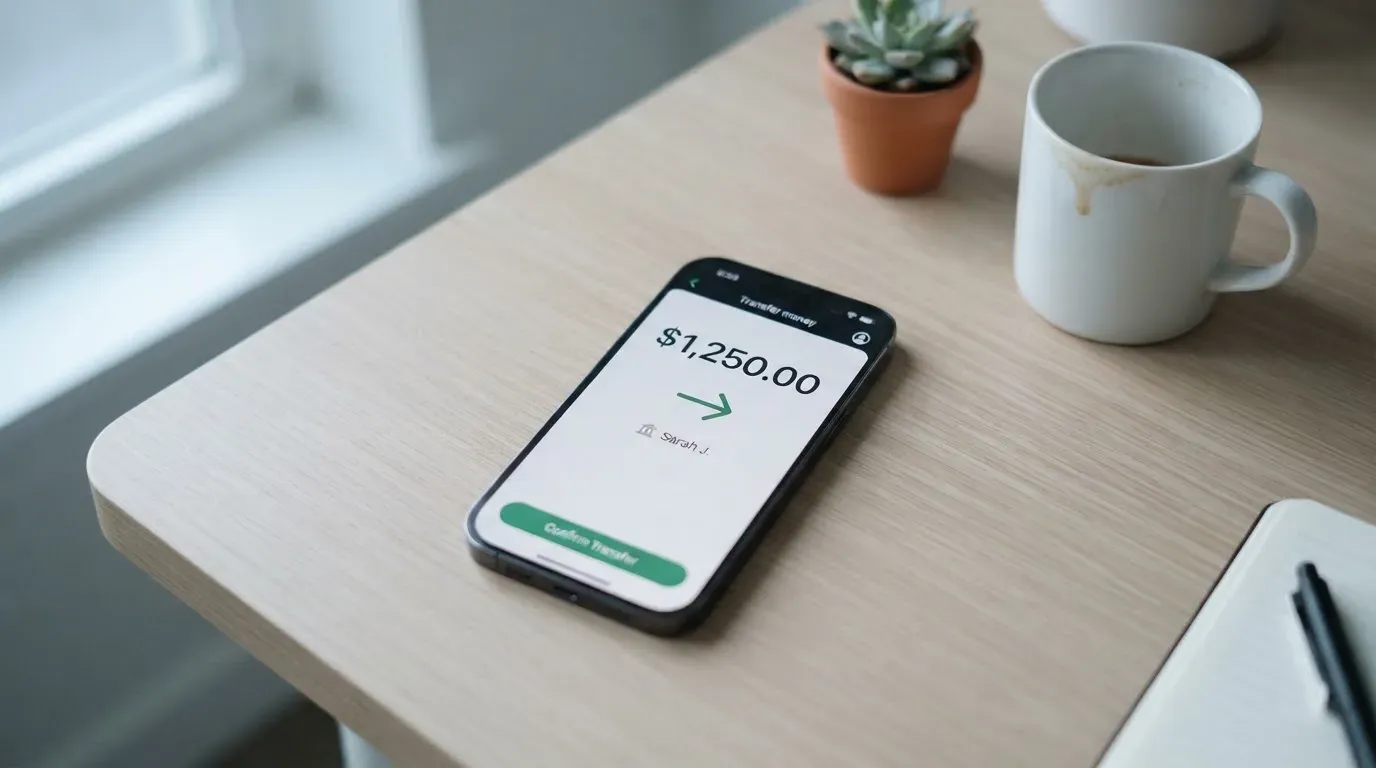
What is not stated on the public pages: the deposit fee, the minimum deposit, and which other coins or networks are supported. The page describes one path with one asset. If you hold anything other than USDC, or you hold USDC on a chain the platform does not name, you are outside what is documented.
You pay blockchain gas yourself. That is the honest part of “no fees”: the card charges nothing, the network charges whatever it charges, and if your USDC sits on a network with a busy fee market you will feel it.
One detail that matters at the end of the road: when you close the account, any remaining fiat balance goes to the platform wallet as stablecoins. The bank may refuse balances under $1.00 — in other words, a few cents left on the card can be lost rather than swept. Withdrawal to any supported USD or EUR bank account is available.
Paying with it every day
Everyday use is where the virtual-only design either works for you or does not. Apple Pay: yes. Google Pay: yes. Both are there, and because a tokenised mobile wallet replaces the card number with a device-specific one and generates a fresh code per payment, tapping to pay is the safest way this card is used.
What is missing:
- No physical card, at any price. There is no tier that buys you plastic.
- No ATM, at all.
- No cashback is stated. “Points & Rewards” exists as a separate help category whose contents I did not read, so I cannot tell you what it contains — but there is no cashback figure on the card page, and that is the number that matters.
- Blocked merchant categories are not stated. That cuts both ways: you may find gambling or adult sites still open, and you may find something you need blocked.
The apps are on the App Store and Google Play. I did not read the store ratings, so I am not going to characterise them.
Disputes have a real process: Dashboard, then Support, then File a Ticket, then Dispute a Charge. Report errors within 60 days. The bank decides within 10 business days, extendable to 45 days, and to 90 days for new cards, point-of-sale purchases or foreign transactions. Report unauthorised transactions within 2 business days and liability is capped at $50; later, up to $500. Those are US debit-card reversal rules applied to a prepaid-style product, and prepaid coverage varies — do not assume the full protection you would have on a credit card.
What can go wrong
No official incident involving VaultLeap came up in my checks. What I did find is a thin public record and a stack of unresolved complaints, and the two things people actually complain about are serious ones.
The Trustpilot picture, from 34 reviews, is 3.4 out of 5 — read on 2026-10-21, and note this is user reports, not verified findings. The themes: accounts suspended or blocked without a clear reason, in January 2026 and again through June to August 2026; funds not credited or not returned, in October 2025 and June 2026; and communication that people describe as unclear. A review dated 12 October 2026 acknowledges problems with card issuance.
Read those three themes as one fear: access. If the account is blocked, the balance sits where it sits until someone explains why, and nobody at the platform has an obligation to make that fast.
Behind the brand is a structure worth understanding, because it tells you who is actually on the hook. Klydo Inc., a California S corporation, operates VaultLeap. Bridge Ventures LLC, a Delaware company and licensed money transmitter, is the programme manager. Lead Bank, a Missouri state-chartered bank, is the issuer. This is the standard pattern in this category: the crypto brand is usually only a front end and programme manager, while the actual card contract is with a bank. It also means the entity you complain to when a payment fails may not be the entity you signed up with.
Your funds are in a self-custodial wallet — the terms say VaultLeap “does not hold customer funds”. Take that at face value and understand what it means: nobody holds your money for you, and nobody owes you a balance. The protection you have instead is a freeze button, at Dashboard, Card, Freeze, plus what you can do yourself. Funds are not FDIC insured. Support is email in English and Spanish, plus a Support tab and tickets. No news record is stated.
Two structural risks sit underneath all of it. First, this category has a history: FTX’s card was wound down after Visa terminated its global agreements in November 2022, and WaveCrest, which supplied crypto card brands, was suspended by Visa in Europe in 2018, closing every programme it had issued. Programmes end, and when they do, spending stops and you withdraw what is left. Second, a U.S.-issued card with a self-custodial balance is a setup where the crypto side and the payment side live under different rules, and a problem in one does not automatically get fixed by the other.
What to take instead
If VaultLeap does not fit, here is what else people in this category look at, with the same care and the same caution about what is and is not stated.
| Option | Score | Who it is for | Card and cost | Funding and rewards |
|---|---|---|---|---|
| Whop Cards | 5.2 / 10 | Consumers in 31 US states; businesses in 41 states. Consumer countries listed as unsupported include Belarus, China (Mainland), Cuba, Hong Kong, India, Iran, Iraq, Israel, Myanmar, Nepal, Nicaragua, North Korea, Russia, Syria, Turkey, Ukraine, Venezuela and Vietnam. Basis of citizenship or residence is not stated. | Visa that works anywhere Visa is accepted, online and in stores; virtual and physical type and card currency are not stated | Spends from a Whop balance, with pending balance usable as soon as a payment arrives and standard withdrawals using settled funds; backed by stablecoin collateral from a linked wallet, coins and networks not stated. 5% cashback at select merchants, currently Uber, more planned; payout currency and conditions not stated |
| Stella | 6.5 / 10 | Countries not stated on the official site; terms bar users under economic sanctions programmes and route US and European users through affiliates | Virtual and physical, Visa, accepted at “over 40 million VISA merchants globally”; fees are “described under this User Agreement and/or on the App” and no amounts are given | Deposit crypto into the account, which automatically tops up the card (in-app, custodial wallet). No cashback stated on the card page — the Earn product is separate yield |
| UniFi Card | 4.7 / 10 | Not confirmed from official pages. The App Store lists send-money routes to the Philippines, Mexico and the eurozone, and recent release notes mention Colombia, Brazil and the UK | “Prepaid Debit Visa Card”, issued by Lead Bank, also supports Apple Pay, USD card spending from a USD balance; fees “may apply”, with no amounts stated | Receive funds via ACH, wire, SEPA (IBAN) or SPEI (CLABE); get paid to a USDC wallet; other coins and networks not stated on the listing. A listing claims “3% rewards on balances”; card cashback not stated |
How to read that table. Whop has the clearest cashback and the longest unsupported-country list. Stella scores highest and has both virtual and physical, which VaultLeap does not — but it tells you nothing concrete about fees. UniFi is the one I would watch rather than adopt: it is not confirmed from official pages, and its rewards claim is about balances, not about card spending.
On plain cost, VaultLeap is ahead of all three, because it is the only one of the four that publishes $0 monthly, $0 annual, $0 per purchase and 0% international. That is a real advantage and it is why the score is 6 rather than 4.
Who I would recommend it to
I would recommend this card to someone specific: you are in the United States, Latin America or Ghana, you are paid in or hold USDC, you buy things online, and the reason you are here is that an ordinary bank card is either hard to get, hard to fund, or awkward to top up from a stablecoin balance. For that person, $0 fees, a card in minutes, and Apple Pay in the same afternoon is a genuinely good outcome.
I would not recommend it to you if any of these are true:
- You need a physical card, for a shop that takes cards only in person or for anything requiring an imprint.
- You need cash, at any point. There is no ATM.
- You are outside the United States, Latin America and Ghana, or you cannot satisfy U.S.-style verification comfortably. The terms themselves say this is not directly marketed outside the U.S.
- You hold assets other than USDC, or USDC on networks the platform does not name. One asset, one documented path.
- Your balance is large relative to your patience. A blocked account with a self-custodial balance is a worse experience than it sounds, and 2026 already has those complaints.
- You want cashback, a rewards rate, or a fee table with every line filled in. Two of those are blank or absent.
The general lesson, because it applies well beyond this card: a crypto card number is not a bank account. The PAN starts with a six- or eight-digit issuer identifier that any merchant can look up, and if that identifier’s country differs from your billing address you can be scrutinised or declined — which is why a U.S.-issued card can look foreign anywhere. Prepaid-style cards draw on a stored balance, and many crypto cards work exactly that way. Behind the number sit three separate parties: the network, which sets the rules and can suspend a programme; the issuer, a licensed bank or e-money institution that holds the card contract; and often just a front-end brand on top. When something breaks, knowing which of the three to write to is half the work. And if you hold stablecoins, remember what they are: about 90% of stablecoin market capitalisation sits in USDT and USDC, but “stablecoin” is a description of intent, not a guarantee — TerraUSD collapsed in May 2022, USDC lost its peg briefly in March 2023, and on Ethereum you cannot send without holding ETH for gas. Transfers are irreversible. If you are somewhere in Europe, MiCA has been in force in stages since June 2023, with stablecoin rules applying from 30 June 2024 and a transitional window running to 1 July 2026, and you can check a provider against ESMA’s interim register. None of that is a judgement about VaultLeap specifically. It is the ground the card stands on.
Frequently asked questions
What is the VaultLeap card?
The VaultLeap card is a virtual Visa debit card that spends from a stablecoin balance. It is issued in minutes, is denominated in US dollars, and is described in the legal text as a prepaid debit Visa card. There is no physical version. Klydo Inc. operates the platform, Bridge Ventures LLC is the programme manager, and Lead Bank is the issuing bank.
How does the VaultLeap card work?
You hold USDC in a self-custodial wallet, you move it manually from your VaultLeap balance through Dashboard, Card, Add Funds, and it loads a card wallet powered by Bridge. From then on it behaves like an ordinary prepaid Visa, including Apple Pay and Google Pay. The terms state VaultLeap does not hold customer funds, and the balance is not FDIC insured.
Is VaultLeap a bank, and who owns it?
No — VaultLeap is not a bank. It is a platform from Klydo Inc., a California S corporation, with Bridge Ventures LLC, a licensed money transmitter, as programme manager. The bank in the structure is Lead Bank, a Missouri state-chartered issuer, which is the entity that actually holds your card agreement. So when a payment fails, the party you need may not be the one you signed up with.
Is the VaultLeap card free?
Mostly. The monthly fee is $0, the annual fee $0, there is nothing per purchase, closure is free, the international transaction fee is 0% and there is no currency markup. Conversion carries roughly 0.5% in partner pass-through fees, the issuance fee is not stated, and you pay blockchain gas yourself when you move USDC.
Which countries can use the VaultLeap card?
The card is advertised for “27 countries” without publishing the list, naming the United States, Latin America — including Argentina, Colombia, Mexico, Brazil, Peru, Bolivia, Guatemala, the Dominican Republic, Ecuador, Costa Rica, El Salvador, Honduras, Panama, Paraguay and Uruguay — and Ghana. The cardholder agreement says it is issued under U.S. law and is not directly marketed outside the U.S.
How do I top up the VaultLeap card, and can I use other coins?
You top up manually with USDC only, from your VaultLeap balance via Dashboard to Card to Add Funds, and the card wallet is powered by Bridge. Other coins and networks are not stated, so anything beyond USDC on the path the page describes is undocumented. You pay the blockchain network fee for the transfer, and the maximum single load is $2,000.00.
Does the VaultLeap card have an ATM or a physical card?
Neither. ATM withdrawals and balance inquiries are listed as unavailable, and the card is virtual only with no tier that adds plastic. There is one card product, though the account itself has Standard, Pro at $14.99 a month or $144 a year, and a Zero tier for transfer fees. Replacing a lost card is free.
Is the VaultLeap card safe to use?
It uses the usual protections — a self-custodial wallet, an in-app freeze at Dashboard to Card to Freeze, and tokenised Apple Pay and Google Pay — but funds are not FDIC insured and you bear the risk yourself. Trustpilot shows 3.4 from 34 reviews, with 2026 user reports of accounts blocked without explanation and funds not credited. I found no official incident.
What happens to my money if I close the account?
Remaining fiat balance is sent to the platform wallet as stablecoins, and the bank may refuse balances under $1.00 — so small leftovers can be lost rather than returned. You can withdraw to any supported USD or EUR bank account. Closure itself is free. Note that converting or spending crypto can produce a taxable gain in most countries, so that is worth checking where you live.
Is VaultLeap worth it compared with Whop, Stella or UniFi?
On stated cost, yes — VaultLeap is the only one of the four publishing $0 monthly, $0 annual, $0 per purchase and 0% international fees. Stella scores higher at 6.5 and offers both virtual and physical cards but publishes no fee amounts. Whop gives 5% cashback at select merchants but lists many unsupported countries. UniFi, at 4.7, is not confirmed from official pages.
Money-app cards – cryptocardselect
Content created by the «cryptocardselect» team