
A close look at the Bybit card before you apply
 Available in US
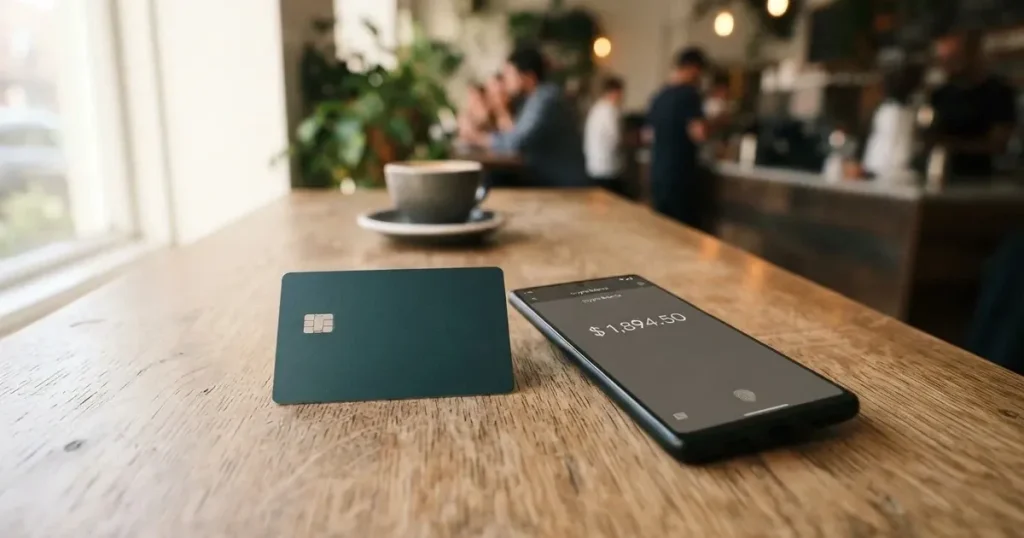
The Bybit card is a payment card tied to a Bybit exchange account. You fund it by holding crypto in your Funding Account, and the card spends the local or US-dollar balance that the exchange converts on the fly. The idea is simple, but the small print is where it gets interesting, especially if you are somewhere ordinary banks are hard to come by. I went through the official help-centre pages, the cardholder terms and the user feedback around the programme, and what follows is what I found, written for someone weighing whether to apply.
Conditions on this page are current as of October 28, 2026.
Verdict
The card scores 6.0 out of 10 in my notes, and that is a fair number for what is essentially a working product in a narrow band of countries. The day-to-day experience is good: virtual and physical cards, Apple Pay and Google Pay in most regions, ATM withdrawals, and crypto-funded cashback that can reach 10% at the top tier. The cost picture is less flattering once you stack the conversion fee and the FX fee, and the customer-trust story is poor: a 2.5 Trustpilot score for the wider exchange, programme changes that have already cancelled newly issued physical cards, and a policy that can stop your card if your Bybit account is restricted.
Who it suits: people in Argentina, the AIFC in Kazakhstan, Georgia, Kazakhstan more broadly, Australia, Mexico, Brazil, Peru, and the broader Asia Pacific region who already use Bybit as their exchange and want a card that draws from that balance. Who it does not suit: anyone in the European Economic Area, where the cards page says participation is “strictly prohibited,” and anyone who wants a card from a regulated bank with the protection that goes with it — the issuing bank is not named in the public materials I read, and Bybit itself is the programme manager rather than a licensed card issuer.
| Criterion | Mark | Why it scored that way |
|---|---|---|
| Who can get it | 6 / 10 | A defined list of countries, but the EEA is excluded and the issuing bank is not named |
| Cost | 5 / 10 | Free virtual card, but conversion 0.9% plus FX 2% adds up, and physical card costs 29.99 USDT in Georgia and Kazakhstan |
| Top-up options | 7 / 10 | Spends from BTC, ETH, XRP, USDT, USDC and GRAM in the Funding Account, but the deposit networks are not published |
| Reliability and complaints | 4 / 10 | Account restrictions stop the card, recent card cancellations, and Trustpilot is 2.5 across the exchange |
| Everyday use | 9 / 10 | Virtual and physical, Apple Pay, Google Pay and Samsung Pay in several regions, ATM works |
| Total | 6.0 / 10 | A workable exchange-linked card, with the right caveats |
Who can apply for the Bybit card
The card is not a global product. The official help centre lists nine card regions: Argentina, the AIFC in Kazakhstan, Georgia, Kazakhstan, Australia, Mexico, Brazil, Peru, and the broader Asia Pacific region. The application asks for your country of residence. If your country is not on the supported list, the help centre says Bybit “will register your interest,” which is a polite way of saying no card today.
The cards page is firm on one exclusion: “This product is not meant for European Economic Area customers. All European Economic Area customer participation is strictly prohibited.” If you live in the EEA, the application is not for you, and any attempt to register against another country would put you on the wrong side of the card’s own rules.
Bybit’s fiat-service restricted list — for deposits, withdrawals and One-Click Buy, not the card specifically — adds Belarus, the Russian Federation, Serbia, China and the United States. The list also notes that “Russian users can only make RUB transaction in Fiat.” I did not find a card-specific statement on Russian or Belarusian citizens, and the card’s own pages do not draw a clear line between citizenship and residence. The card currency, where it is set, “depends on the country of your Advanced Identity Verification,” which is residence-based. So the rule in practice is residence: the address you verify against decides which currency your card will hold.
Two unofficial points are worth naming so you don’t get the wrong idea. Russian-language promotional guides advertise ways for Russian users to obtain the card through another country’s registration, but those schemes break the card’s residence rule and risk the account restriction described later in this review. Separately, a Forklog report, older and unofficial, said Bybit “conducts thorough checks of Russian clients and follows very strict rules” on sanctions. None of that changes the basic answer: the supported countries are the ones above, and the EEA is out.
How to get the card
Sign-up runs through the Bybit app and starts with identity verification. The minimum is Identity Verification Level 1, and the help centre warns that the Bybit Card “has more stringent requirements for Identity Verification,” so some users have to redo it. You may also be asked for proof of address from an eligible country, issued within the last three months, and Bybit can decline any application at its discretion.
The extra paperwork depends on the country. AIFC applicants are asked for intended usage, employment status, source of income and annual income. Argentinian applicants are asked for a PEP declaration, nationality, place of birth, occupation and CUIL. Brazil adds a PEP declaration, nationality, CPF, monthly income, mother’s name and occupation. Mexico wants country of birth, occupation, CURP and RFC. Peru wants nationality, marital status, spouse name, occupation, address and a PEP declaration. The AIFC card, helpfully, “does not require any additional verification” for virtual activation.
The steps in practice: choose your country of residence, verify your identity and your residential address, then apply for the virtual card. The review usually takes minutes, in some cases up to seven working days. The physical card is only available after the virtual one, and it is not available in Peru at all. The cards have been rolled out in phases, so even inside a supported country you may find the physical card waits on a regional rollout. The minimum age for an applicant is not stated in the pages I read.
The card itself comes in a few flavours. Argentina is on Mastercard prepaid. The AIFC, Georgia, Kazakhstan, Australia and Mexico are listed in the fee table as “Mastercard credit card” (that is the wording the table uses). Brazil and Peru are Visa prepaid, and Asia Pacific is Visa credit. The fiat currency on the card is USD for the AIFC, Georgia, Kazakhstan, Australia and Asia Pacific; ARS in Argentina; MXN in Mexico; BRL in Brazil; and PEN or USD in Peru. Validity is three years for the AIFC, Georgia, Kazakhstan, Asia Pacific and Australia, six years for Argentina, and five years for Brazil, Mexico and Peru.
A few practical points for delivery. The shipping address for the physical card has to be in the same country as the residential address, and delivery can take up to thirty days. The display name on the card is limited to twenty-one Latin characters. Asia Pacific and Australia need a residential-address check. If you are rejected, the official reason is not stated: a compliance rejection simply “restricts” you from the card service.
One thing to be careful about. An unofficial Bybit wiki page, AI-generated per its own disclaimer and dated August 2026, claims the card is available in more than thirty countries including the EEA, the UK, the UAE and Turkey, and that Georgia and Kazakhstan are not on the list. That page contradicts the official help centre, and I would not trust it for an application decision.
What the card really costs
The cost picture is the part of this card that needs the most attention. Some lines are friendly, and one or two are quietly expensive once you start paying for real things in non-USD currencies.
Issuance: the virtual card is free in all regions “until further notice.” There is no annual fee and no cancellation fee listed with a value; the cards page says simply “no annual fees.” The physical card costs 29.99 USD in Australia, 5 USD/USDT in Argentina, 29.99 USDT in Georgia, 29.99 USDT in the AIFC in Kazakhstan, 5 USDT in Asia Pacific, and nothing in Brazil or Mexico. VIPs holding a physical card in Australia, the AIFC, Georgia or Asia Pacific pay no issuance or replacement fee.
Conversion: when you pay, crypto is sold at the One-Click Sell rate plus a Bybit Card crypto conversion fee. That fee is 0.9% in Australia, Asia Pacific, Georgia, Kazakhstan, Brazil and Mexico, 0.5% in Argentina, and the conversion is not supported in Peru.
FX: the foreign-exchange fee is on top of the network rate. It is 2% in Australia, Asia Pacific, Georgia and Mexico, 2% as an “International Fee” in Kazakhstan for purchases outside Kazakhstan even when billed in USD, 7% in Argentina, 1.5% in Brazil and 1% in Peru. On top of that, the cards page describes a small FX padding — 0% for the Australia group and Mexico, 5% in Argentina, 1% in Brazil — with the excess refunded.
ATM: ATM withdrawals are available and they cost 2% after the first 100 USD per month in Australia, Georgia, Kazakhstan and Asia Pacific (or 100 USD / 1,800 MXN in Mexico), 2% after 95,000 ARS in Argentina, and 2% after 550 BRL in Brazil. The ATM operator can add its own access fee or prompt a currency conversion, which is a separate charge. ATM withdrawals are restricted in Mainland China, and a virtual card can only get cash from an ATM if the operator supports NFC. Argentina has its own tax stack on top: VAT 21% on foreign digital services, a 30% tax on foreign transactions, and a provincial gross-income tax of 1% to 13.2%.
Limits: the spend caps are tight in some regions and generous in others, and they vary between virtual and physical cards in Australia, Asia Pacific, Georgia and Kazakhstan, while they are shared in Argentina, Brazil and Mexico. Only Asia Pacific limits can be raised, and only by climbing tiers.
| Fee or limit | Value |
|---|---|
| Virtual card issuance | Free in all regions |
| Physical card issuance (Australia) | 29.99 USD |
| Physical card issuance (Georgia, AIFC Kazakhstan) | 29.99 USDT |
| Physical card issuance (Argentina) | 5 USD/USDT |
| Physical card issuance (Asia Pacific) | 5 USDT |
| Physical card issuance (Brazil, Mexico) | Free |
| Crypto conversion fee | 0.9% (0.5% in Argentina; not supported in Peru) |
| FX fee | 2% (Australia, Asia Pacific, Georgia, Mexico); 2% in Kazakhstan for non-KZ purchases; 7% Argentina; 1.5% Brazil; 1% Peru |
| ATM fee | 2% after 100 USD / 1,800 MXN / 95,000 ARS / 550 BRL monthly free allowance |
| Spend caps (per transaction / daily / monthly / annual) | Georgia: N/A / 15,000 / 65,000 / 300,000 USD. AIFC: 9,000 / 15,000 / 65,000 / 300,000 USD. Australia: 50,000 / 50,000 / 150,000 / 500,000 USD. Asia Pacific: 10,000 / 10,000 / 50,000 / 150,000 USD. Argentina: 1,000 / 5,000 / 10,000 / 50,000 USD. Brazil: N/A / 27,500 / 137,500 / 550,000 BRL. Mexico: N/A / 97,000 / 145,000 / 1,940,000 MXN. Peru: N/A / 1,000 / 5,000 / 50,000 USD |
Three everyday situations are worth walking through, because the total cost depends on which combination of fees fires. The first is buying coffee in Buenos Aires with the Argentine card. The crypto conversion is 0.5% and the FX fee is 7%, plus the 5% FX padding (refunded). On top of that sits Argentina’s tax stack: 21% VAT on foreign digital services, 30% on foreign transactions and a provincial gross-income tax of up to 13.2%. The total is not a single number, because the tax is local and depends on the province, but it is clearly the most expensive region on the card.
The second is paying for a hotel in Tbilisi with the Georgian card, billed in euros. The crypto conversion is 0.9% and the FX fee is 2%. The third is paying in a shop in Sydney with the Australian card, billed in Australian dollars. The card currency is USD, so the FX fee of 2% applies even though the merchant is domestic to you, because the conversion USD→AUD is the FX line. That is the part many people miss: an “Australian” card with an “AUD merchant” can still trigger a 2% FX line.
Top up
The card has no balance of its own. It draws on your Bybit Funding Account and any Flexible Easy Earn balance, and it spends fiat first. If the fiat balance is not enough, crypto is sold at the One-Click Sell rate plus the 0.9% conversion fee (or 0.5% in Argentina, or not at all in Peru).
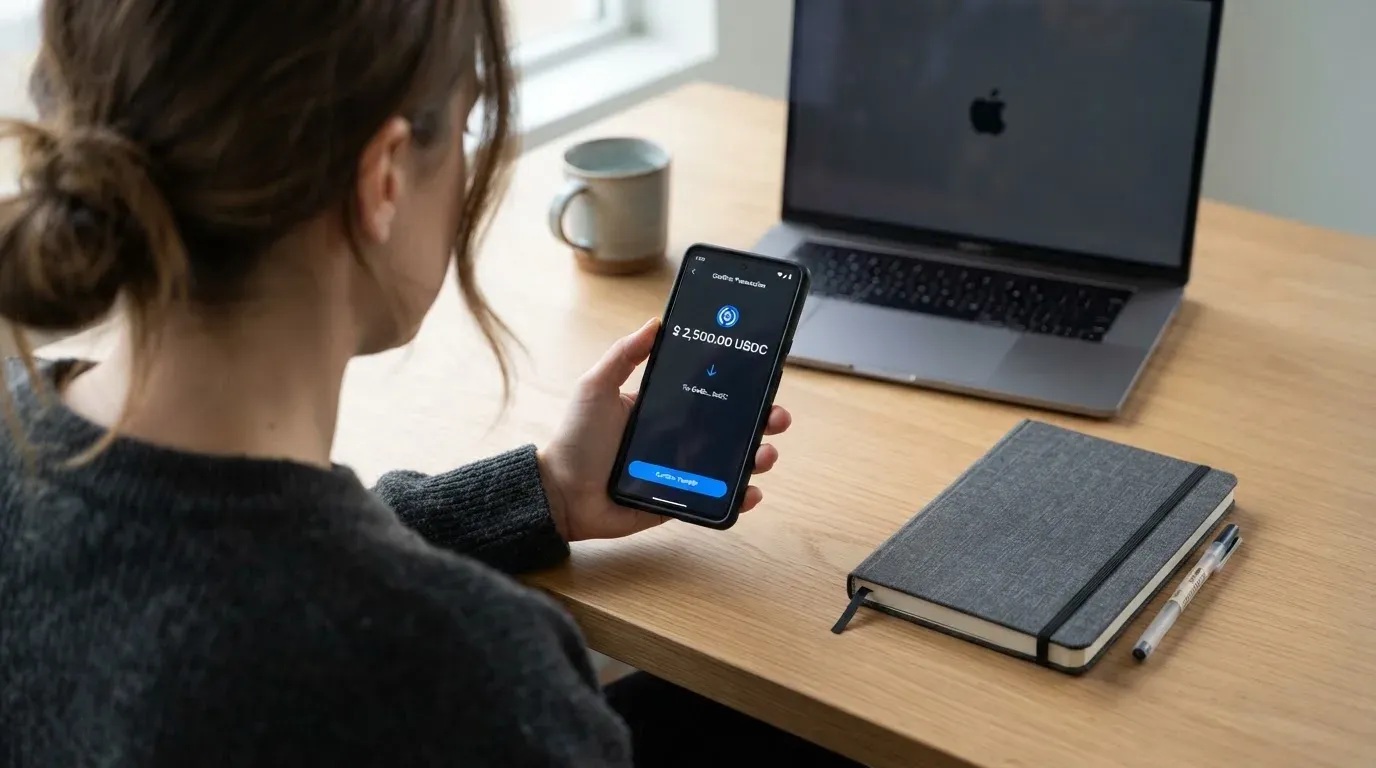
The supported cryptocurrencies are BTC, ETH, XRP, USDT, USDC and GRAM. The default order is USDT, then USDC, GRAM, BTC, ETH and XRP, and you can reorder the priority in the Card Dashboard. If you want to top up with anything else, the answer is to sell it for USDT first, then load the card. The Funding Account itself is topped up by buying crypto through the app or by depositing from another wallet.
A few practical points that the help centre leaves thin. The networks for depositing crypto are not published, which means the choice of network on the sending side is yours and the recovery is theirs — see the risks section for why that matters. The minimum conversion amounts are 1 USD in Australia, Mexico, Georgia, Kazakhstan and Asia Pacific, 5,000 ARS in Argentina, and 10 BRL in Brazil. Who pays the deposit network fee and whether fiat top-up carries a fee is not stated, and neither is anything about withdrawing value from the card back to fiat.
Paying with the card every day
The day-to-day experience is the strongest part of this card. Virtual and physical cards are both available (with Peru being the one exception for physical), and contactless mobile wallets are supported broadly. Apple Pay and Google Pay work in Georgia, Kazakhstan, the AIFC, Argentina, Brazil and Peru. Samsung Pay works in Australia on top of those two. Asia Pacific and Mexico have Google Pay only. Bybit claims the card works at over 90 million Mastercard and Visa merchants worldwide.
From 5 October 2026, only crypto-funded transactions earn points or cashback, and fiat-funded spending does not. The tiered rates and caps (monthly cashback cap and monthly spend to unlock for non-VIP users) are: Base 2.00% with a 5 USD cap and no spend requirement; Beta 2% with 50 USD cap and 500 USD spend; Alpha 4% with 150 USD cap and 3,500 USD spend; Apex 6% with 250 USD cap and 9,500 USD spend; Omega 8% with 400 USD cap and 12,500 USD spend; Infinite 10% with 600 USD cap and 25,000 USD spend. The tiers map to Bybit VIP levels: VIP 1-2 to Beta, VIP 3 to Alpha, VIP 4 / PRO 1 to Apex, VIP 5 / PRO 2 to Omega, and Supreme VIP / PRO 3-5 to Infinite. Cashback is in USDT, at points × 0.002, with points pending for four calendar days, and the Auto Cashback switch has to be on. There is a 10% welcome cashback up to 110 USDT in the first thirty days, a “100% cashback on must-have subscriptions” perk for VIPs and Alpha and above, an extra 1% on Pay Later instalment bonuses, and a 20 USDT / 10 USDT referral offer.
The wider Bybit app on iOS App Store, called “Bybit: New Financial Platform,” has a 4.69 rating from 46,912 ratings as of 20 October 2026, but that rating covers the whole app, not the card. The cards page claims three million card users. Neither figure is a guarantee of how the card itself will behave at the till.
What can go wrong
There are three problems to weigh up before you apply, and I think any honest review has to put them up front.
The first is programme risk. Bybit changed its card programme in some countries in 2026 and withdrew newly issued physical cards, and there is an official “Changes to Bybit Card Services in the EEA & CH” page that I could not read for content. Card cancellations after a programme change are the most-mentioned complaint in user reports. If the programme changes again, your card can be cancelled on a notice period, with the usual pattern being a stop on new loads first and a stop on spending second, and a request to withdraw any remaining balance.
The second is account risk. The help centre is explicit: if your card application is rejected on compliance grounds, you are “restricted from using the Bybit Card service.” It also says that if your Bybit account is suspended, the card is not formally suspended, but transactions simply fail. Recent user reports (blogs from September and October 2026) describe accounts restricted after small USDT transfers flagged as having an “abnormal origin,” which stops the card working even when the card itself is fine. The funds sit in the Bybit Funding Account — exchange-linked custody — not in a segregated bank account, so the card inherits the exchange’s custody risk. Insurance or safeguarding of those funds is not stated in the public pages.
The third is the customer-trust story. Trustpilot scores Bybit at 2.5 across 7,757 reviews as of 9 October 2026, and of 53 reviews I sampled that mention the card, the dominant themes are card cancellations after the 2026 programme changes and account restrictions. The card is marketed by Bybit, but the issuing bank per region is not named in the pages I read. The App Store seller is “Bybit Fintech Limited,” and the cardholder terms exist for the regional programmes (Argentina, Mexico, Brazil “CBRL,” Australia, Asia Pacific, AIFC, and a programme called “Pomelo”), but the licensed issuer behind each is not surfaced to the applicant.
A few other things the help centre does not say. There is no published blocked-merchant list, and MCC 7995 (gambling) is not specifically called out. The dispute process for an unauthorised charge is not stated. Customer-support SLAs are not stated. If any of those matter to you — and a chargeback process is one of the things that makes a card feel safer than a wallet transfer — you have to read the cardholder terms for your specific programme before you apply.
What to take instead
A few other crypto-linked cards are worth comparing to put the Bybit card in context. The numbers below come from the same research process and are not endorsements.
MSX scores 6.4 out of 10 in the same notes. The official MSX pages I could read did not publish country availability, fees, top-up details or rewards in a way I could verify, so I treat those as gaps. MEXC scores 5.6 out of 10. MEXC lists “The Philippines, Taiwan, Thailand…” with a Details link and the full country list is not shown. MEXC is virtual-only — physical cards are not yet available — and the issuance fee on the page appears next to a discounted price that is unclear. Cashback is by M-Score tier: Standard 4% with a 100 USDT monthly cap, Premier 6% with 300, Elite 10% with 800, paid by the 15th of the next month. Pionex scores 4.8 out of 10. Pionex’s rule is by KYC country, not citizenship, and new Visa applications from Belarus stopped on 14 August 2026, with Belarus-verified applicants offered Mastercard instead. The card holds USDT only (billing USD/USDT 1:1). The Visa fee is 1%, with a free small-payment allowance, and the Mastercard fee is “up to 3.5%”. Cashback is 1% on most USD and local-currency purchases, with 0% on listed exclusions, and 5% APY on the USDT card balance.
The trade-offs come down to what you want. If you are in Latin America or the Caucasus and you already use Bybit, the Bybit card is a reasonable on-ramp to a Mastercard or Visa number. If you want a card with a clearly named issuer and a known regulator, none of these are quite that. If you want a no-fee virtual card that holds USDT directly, Pionex is the closest of the three. If you want a heavier cashback on a virtual card and you are in a MEXC-supported country, the MEXC programme is competitive. And if you are in the EEA, none of the three is for you, and the Bybit card is the firmest in saying so.
Who I would recommend this card to
The honest answer is: a small, well-defined group. You should be in one of the supported card regions, you should already have a Bybit account with the Funding Account and Identity Verification in good standing, and you should be comfortable with the fact that the issuing bank is not named in the public pages. You should be paying in the card’s own currency most of the time, because the FX fee is what makes this card quietly expensive, and you should not be relying on the card as a primary bank account, because the programme has already changed once in 2026 and the customer-trust story is poor.
I would not recommend this card to anyone in the EEA, to anyone whose main reason for getting it is to spend in a currency different from the card’s own, to anyone who needs a clear chargeback and dispute process from a named issuer, or to anyone who keeps more on the card than they would be willing to lose if the exchange side of the business had a bad week. The card is best treated as a thin spending layer over an exchange balance, not as a substitute for a bank account.
Frequently asked questions
What is the Bybit card?
The Bybit card is a payment card tied to a Bybit exchange account. It comes as a virtual and a physical card, it is on the Mastercard or Visa network depending on region, and it spends from your Bybit Funding Account by converting crypto to fiat at the moment of payment.
How does the Bybit card work?
The card has no balance of its own. You hold crypto in your Funding Account, and when you pay the exchange sells the crypto at the One-Click Sell rate plus a 0.9% conversion fee (0.5% in Argentina, not supported in Peru) and the card is debited in the card’s fiat currency.
Is Bybit a bank?
No. Bybit is a cryptocurrency exchange. The card is a payment product that Bybit markets, but the issuing bank per region is not named on the public pages I read, and the cardholder terms refer to regional programmes (Argentina, Mexico, Brazil, Australia, Asia Pacific, AIFC, and “Pomelo”).
Is the Bybit card available in my country?
The supported regions in the official help centre are Argentina, the AIFC in Kazakhstan, Georgia, Kazakhstan, Australia, Mexico, Brazil, Peru and Asia Pacific. The cards page excludes the European Economic Area, and the fiat-service restricted list adds Belarus, the Russian Federation, Serbia, China and the United States.
Does the Bybit card require KYC?
Yes. The minimum is Bybit Identity Verification Level 1, plus a proof of address from an eligible country issued within the last three months, and additional fields per country. Bybit can decline any application at its discretion.
Is the Bybit card free?
The virtual card is free in all regions. The physical card is 29.99 USDT in Georgia and the AIFC in Kazakhstan, 29.99 USD in Australia, 5 USD/USDT in Argentina, 5 USDT in Asia Pacific, and free in Brazil and Mexico. There is no annual fee listed with a value, but a 0.9% conversion fee and a 2% FX fee (where applicable) apply to spending.
How do I top up the Bybit card?
You do not top up the card directly. You top up the Bybit Funding Account by buying crypto in the app or by depositing crypto from another wallet, and the card spends that balance. The default crypto priority is USDT, USDC, GRAM, BTC, ETH, XRP, and you can reorder it in the Card Dashboard.
How do I add the Bybit card to Apple Wallet or Google Pay?
Apple Pay and Google Pay work in Georgia, Kazakhstan, the AIFC, Argentina, Brazil and Peru; Samsung Pay works in Australia on top of those two; Asia Pacific and Mexico have Google Pay only. The process is the standard tokenisation in the wallet app after your virtual card is active.
Is the Bybit card safe?
The card has app-based controls (freeze and unfreeze, 2FA at application, 24/7 fraud monitoring), but the funds sit in the Bybit Funding Account rather than in a segregated bank account, and the help centre does not state any insurance or safeguarding. Recent user reports describe account restrictions that stop the card working, and the exchange as a whole has a 2.5 Trustpilot score as of 9 October 2026.
Is the Bybit card worth it?
For someone in a supported country who already uses Bybit and pays mostly in the card’s own currency, the card is a useful spending layer with reasonable cashback. For anyone in the EEA, anyone paying mostly in a foreign currency, anyone who needs a named issuer and a clear dispute process, or anyone keeping meaningful funds on the card, the cost and the risk picture tilt the answer toward not worth it.
Trading-platform cards – cryptocardselect
Content created by the «cryptocardselect» team