
Pay Card Has Stopped Issuing: A Plain-Language Review for Anyone Holding a Balance
 Available in US
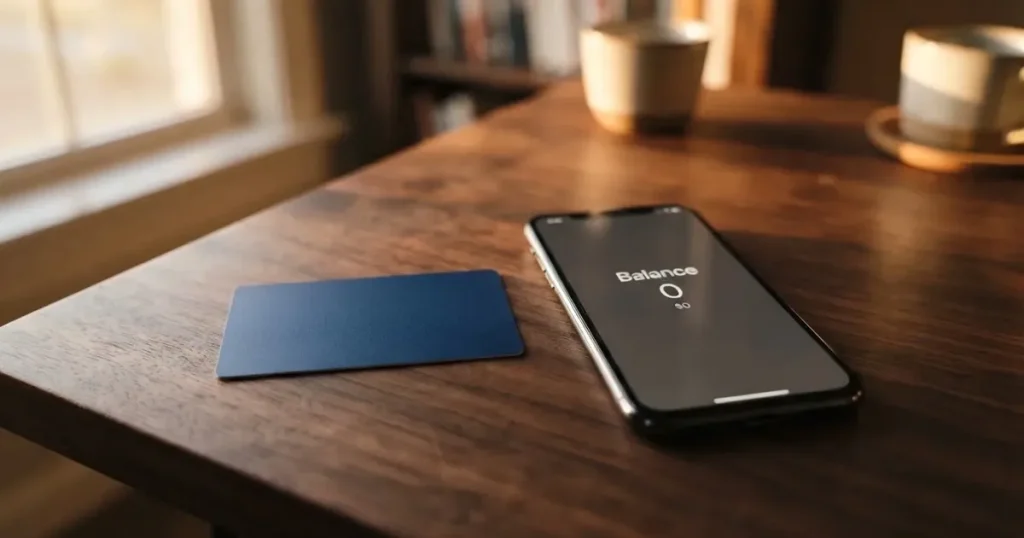
The Pay card programme, built by Cardstack, is no longer issuing new cards. If you came here looking to sign up, the short answer is: you can’t, and have not been able to since late 2022. What matters now depends on where you stand. If you already have a card or a balance, you need to know what your options are for spending or withdrawing what remains. If you are shopping for a crypto-linked card in general, this review walks you through why Pay closed, what went wrong, and which cards from other providers are still active and worth considering.
The conditions described in this review are current as of October 28, 2026.
Verdict
The Pay card scores 1.8 out of 10. That score reflects a programme that has been closed to new applicants for years, with no fees, limits, or issuer information published and no customer support channel beyond a developer website. The app still exists in the App Store, but it is not issuing cards.
The score breaks down as follows:
| Criterion | Mark | Reason |
|---|---|---|
| Who can get it | 0 / 10 | Programme closed; prepaid card purchases via Wyre disabled from 2022-12-05; last app version 1.2.0 from 2023-02-18 |
| Cost | 5 / 10 | App is free; the only in-app purchase is “Account on Gnosis Chain” at GBP 0.99; card fees were never disclosed |
| Top-up options | 2 / 10 | Programme closed; top-up methods not disclosed; Polygon was removed in version 1.1.13 |
| Reliability and complaints | 1 / 10 | Card purchases via Wyre disabled; Wyre announced wind-down in 2023; issuer never named; App Store rating 5.0 from 3 ratings |
| Everyday use | 0 / 10 | Cards are no longer issued through the app; physical delivery never mentioned |
| Total | 1.8 / 10 |
Who the card would have suited: people who already used the older Card Pay wallet and wanted a prepaid card they could load with crypto and spend at merchants that accept card payments. The app confirmed transactions with Touch ID or Face ID, which kept the daily flow quick once a balance was loaded.
Who it does not suit: anyone looking for a card today. New sign-ups are not being accepted, no replacement card programme has been announced, and the materials made public do not explain what happens to a remaining balance after closure. If you are a former holder, the next section explains what we know about the timeline. If you are looking for a working alternative, the comparison section covers three cards that are still issuing.
What Happened to the Programme
The Pay card was a prepaid card managed inside a DeFi payments wallet developed by Cardstack Services Pte. Ltd. The App Store listing described the app’s purpose in plain terms: “Manage your prepaid cards.” It was free to download, with one in-app purchase, an “Account on Gnosis Chain” listed at GBP 0.99. Beyond that, no card fees, issuer name, supported countries, or required documents were ever published. The card network, the card’s currency, and whether a physical card was ever shipped are all “not stated” on the public listing.
What we do know is when things stopped. Version 1.1.12, released on 2022-12-05, carried a single, important note: prepaid card purchases through Wyre were disabled until further notice. Wyre was the payment partner handling the link between crypto balances and the prepaid cards. The app’s last release, version 1.2.0, dates to 2023-02-18. There has been no app update since.
Wyre’s own troubles unfolded around the same time. According to news coverage (Benzinga, reported by a third party and not confirmed by Cardstack), MetaMask ended Wyre support in January 2023 as Wyre was reportedly closing. The Block reported that Wyre’s wind-down was announced in June 2023. These third-party reports are unofficial; no source links Cardstack directly to Wyre’s shutdown, and the app’s release notes do not name Wyre as the cause of the card-purchase halt. Still, the timing lines up: the partner that processed card funding went away, and no replacement appeared.
The result is what you see in the App Store today. The app can still be downloaded, it still scores 5.0 from a small number of ratings, and the developer website at cardstack.com is still reachable, but the app does not issue cards and has not for over three years. The app’s compatibility list (iOS 13.0+, macOS 11.0+ on Apple M1+, visionOS 1.0+) is the only technical detail that has been kept current. Google Play availability is not stated, and no public support page is linked from the App Store listing.
If You Already Have the Card
If you already hold a Pay card, the public materials do not spell out what to do next. The listing says the app “manages” prepaid cards, and version notes mention “Reward withdrawal” bug fixes in 1.0.11 and individual claiming of “rewards” in 1.1.13, but no information is given about withdrawing a card balance, closing a card, or what happens to any remaining balance after the programme stopped. There is no published process for ATM withdrawals, no support email or help centre, and no dispute process described.
Here is what can be confirmed from public sources, and what cannot:
- ATM access: not stated.
- Spending or loading limits: not stated.
- Funding sources the card accepts today: not stated. The listing mentions crypto balances; Polygon was removed as a supported network in version 1.1.13.
- How to top up: not stated. The only in-app purchase on record is the “Account on Gnosis Chain” at GBP 0.99.
- How to withdraw or close a card: not stated. No balance-after-closure policy is published.
- Customer support: not stated. The App Store listing points only to cardstack.com and a privacy policy.
What this means in practice: if you have a balance or a card, the safe assumption is that the programme is not actively maintained. Treat any remaining funds as if they could become unreachable. If the app still shows a balance, attempt to spend or withdraw it through whatever channels still work. If you cannot reach anyone through the developer website, document your balance and transaction history now, while the app is still functional, because there is no published dispute process if the balance disappears.
The app’s self-custody status is also not stated. The listing only mentions Touch ID and Face ID for transaction confirmation, which is a device-level biometric check, not a statement about who holds the underlying keys. Without clarity on whether your crypto was held by Cardstack or by you, the risk of a frozen or stranded balance is real, and the lack of a published support channel makes resolving that risk on your own harder.
What Can Go Wrong
The clearest risk is the one that has already happened. The card-purchase pipeline through Wyre was disabled in December 2022 and never came back. Wyre itself wound down in mid-2023, and although no source directly links Cardstack to Wyre’s closure, the dependency was real and the replacement never materialised. This is the most common way crypto card programmes end: the partner that handles the fiat or the card-issuing licence pulls out, the programme suspends new loads, and users wait for news that does not come.
Several other risks follow from the same root cause:
- No named issuer. The card’s issuing bank or e-money institution is not stated in the App Store listing. Without an issuer, there is no institution bound by banking regulation to safeguard your balance or to handle disputes, and no clear party to contact if something goes wrong. A card programme is typically a stack: the network (Visa or Mastercard), the issuer, the programme manager, and the front-end brand. If any layer disappears, the card stops working.
- No published support channel. The App Store listing does not link a help centre or a support email. The only contact point is cardstack.com, which is a developer homepage. When something goes wrong with a card, the standard first move is to call the number on the back or to open a chat in the app. Neither is documented here.
- No dispute or chargeback process. Because the issuer is not named and the programme is not actively issuing cards, there is no published process for disputing a transaction, freezing a lost card, or recovering funds sent in error. A user with a disputed charge has no public path to resolution.
- Crypto transfer irreversibility. Any crypto sent to a card programme that is not actively maintained is at the mercy of the programme operator. Blockchain transactions cannot be reversed, and no customer support channel means no one to ask if a deposit is stuck.
- Stablecoin depeg exposure. The Pay app description mentions a “Gnosis Chain” account, which implies on-chain crypto balances. Holding balances in stablecoins is not risk-free. USDC temporarily lost its peg in March 2023 during the US banking crisis, and algorithmic stablecoins like TerraUSD collapsed in May 2022. Even if your balance is technically still in your wallet, its dollar value can change.
- Regulatory transition. In the EU, MiCA’s transitional period for crypto-asset service providers runs until 1 July 2026 (or until the provider receives or is refused a MiCA authorisation, whichever comes first). Providers that do not adapt lose authorisation. If Pay’s crypto side required any regulated status, the closure of the card programme may be tied to a broader compliance decision that was never published.
- Counterparty risk. Custodial platforms have a record of failures, including Mt. Gox (about US$350 million reported stolen between 2011 and 2014), Coincheck (about US$400 million in 2018), and Ronin Network (US$625 million in 2022). When a programme stops issuing and stops communicating, the chance that a balance becomes stranded is non-trivial.
- Third-party reports. The Wyre wind-down is reported by news outlets, not by Cardstack. The app’s release notes do not name Wyre as the cause of the card-purchase halt. Treat the third-party connection as unofficial.
What to check first if you are worried about a balance: open the app, take screenshots of every screen that shows a balance or a transaction, export any history the app offers, and note the date. If you can spend the balance, spend it. If you can withdraw it, withdraw it. If neither works and there is no support channel, the next step is to look for an alternative card to move to, which is what the next section covers.
What to Take Instead
Because Pay is not issuing cards, the practical question is which other cards are still active and worth applying for. Three alternatives cover different priorities: low cost, broad geographic availability, and self-custody integration. None of them are a like-for-like replacement for Pay, because Pay never published its own feature set in detail. The table below compares them on the points that are public.
| Card | Score | Card type | Activation / issuance fee | Spend fee | FX fee | Funding | Rewards |
|---|---|---|---|---|---|---|---|
| BloFin Wallet Card | 6.9 / 10 | Visa Platinum (virtual/physical not stated) | $0.00 activation, annual, issuance, dormancy | 1.00% (VIP 0) down to 0.00% (VIP 5) | Not stated | USDT and USDC on Arbitrum and Base | No cashback; reduced spend rate by tier |
| Decaf | 6.2 / 10 | Visa (virtual or physical) | Virtual $5 worldwide; physical $10 US only or $90 rest of world | Not stated | No fee added by Decaf; Visa’s exchange rate applies | Card or bank transfer via payment link, or USDC; app on Solana and Stellar | Not stated |
| SafePal | 6.2 / 10 | Mastercard debit (virtual; physical not stated); Swiss Fiat24 account in EUR | No account creation or management fees; card issuance fee not stated | 0% standard top-up fee; 1% FX on non-USD Mastercard settlement | 1% on non-USD Mastercard settlement; 1 USD/EUR/CHF/7 CNH refund fee; swaps include a spread (not quantified) | Crypto from 40+ blockchains, converted to USDC by default or fiat; on-chain transactions on Arbitrum | No cashback; referral commissions up to 40% of referred top-up fees; tier privileges tied to deposits, referrals, and SFP staking |
BloFin Wallet Card
The BloFin Wallet Card is positioned for users who want a card with very low fixed costs. Activation, annual, issuance, and dormancy fees are all listed at $0.00. The variable cost is the spend fee, which scales with a VIP tier: VIP 0 pays 1.00%, VIP 1 pays 0.90%, VIP 2 pays 0.80%, VIP 3 pays 0.50%, VIP 4 pays 0.20%, and VIP 5 pays 0.00%. The fee is charged at the time of payment. The FX fee is not stated. Top-up is with USDT and USDC on Arbitrum and Base, two low-fee networks. There is no cashback; the reward is a lower spend rate at higher tiers. The card is described as a Visa Platinum, and whether a physical card is offered is not stated. Country availability is also not published on the card page itself; the sign-up flow asks you to select your country or region in-app, and the starting data lists 35 countries, including the US, Australia, Japan, the UAE, Brazil, Mexico, Malaysia, and New Zealand. Whether the rule is by citizenship or by residence is not stated.
Decaf
Decaf issues a Visa card, with both a virtual and a physical version. The physical card ships with tracked delivery but is available only in the US ($10 issuance) or internationally ($90 issuance). The virtual card costs $5 worldwide. There is no annual or monthly fee. Decaf adds no FX fee of its own, using the Visa exchange rate. The crypto conversion fee is not stated. Funding is more flexible than most: clients can pay a Decaf payment link or account details by card, by bank transfer, or by USDC, and the app runs on Solana and Stellar. Which specific coins and networks top up the card itself is not stated. The rewards policy is not stated.
Decaf is the most restricted of the three. The card is not issued to residents or citizens of Belarus, China, North Korea (DPRK), India, Iran, Iraq, Israel, Myanmar, Nepal, Russia, Syria, Turkey, Cuba, Ukraine, Venezuela, Vietnam, Nicaragua, Puerto Rico, or Nigeria. Several US states are restricted: Arizona, Delaware, Georgia, Idaho, Louisiana, Maryland, Montana, Ohio, Oregon, Rhode Island, Washington, and Wisconsin. Russia and Belarus are both on the restricted list, but whether the rule is by citizenship or by residence is not stated, so dual nationals and people who have moved should check before applying.
SafePal
SafePal offers a virtual Mastercard debit card linked to a Swiss Fiat24 account, with spending limits given in EUR. There are no account creation or management fees, and the card issuance fee is not stated. The standard top-up fee is 0%. The Mastercard non-USD settlement carries a 1% FX fee. Refund processing costs 1 USD, EUR, or CHF, or 7 CNH. Swaps include a spread that is not quantified on the card page, although another part of the SafePal bank documentation says crypto top-up can be as low as 0.4% on the top tier. Funding is the broadest of the three: crypto from 40+ blockchains, converted to USDC by default or to fiat, with transactions settled on Arbitrum. There is no cashback. Rewards come in the form of referral commissions of up to 40% of referred top-up fees, plus tier privileges tied to deposits, referrals, and SFP staking. Country availability is described as “citizens of supported regions who live in supported areas,” but the public list at /en/bank/regions was empty when fetched, so the supported regions are not publicly documented in one place.
How to read this comparison
The three cards differ on the dimension that matters most to different users. BloFin is the cheapest if you spend heavily and can climb the VIP ladder. Decaf is the most open in funding methods, accepting card, bank transfer, or USDC. SafePal is the most open in funding source, accepting crypto from 40+ blockchains. On country availability, BloFin lists 35 countries in the starting data but does not publish them on the card page; Decaf publishes a long restricted list; SafePal’s list is not publicly documented. On physical cards, only Decaf confirms both virtual and physical options with delivery, and the physical card is restricted to the US for the lower fee. None of these cards is a like-for-like replacement for what Pay was, because Pay’s own feature set was never publicly documented. The honest comparison is on what each alternative does well today, not on parity with a closed programme.
Who I Would Recommend This To
Almost no one. The Pay card is closed to new applicants, and there is no public statement about a successor programme. If you do not already hold a Pay card, there is no path to getting one, and the score reflects that with a 0 on “who can get it” and a 0 on “everyday use.”
The only readers for whom this review has actionable content are the holders of the older Card Pay wallet. If that is you, the priority order is:
- Try to spend or withdraw any balance shown in the app while it still functions.
- Screenshot every screen that shows a balance, a card number, or a transaction history, and export any data the app offers.
- If the app does not work, look for a working alternative. The three cards above (BloFin, Decaf, SafePal) are all currently issuing. Each handles a different priority, and each has gaps in country support that you will need to check.
- Treat any balance you cannot move as at risk. There is no published support channel and no dispute process, so recovery options are limited.
For everyone else, this review is a record of what happened and a starting point for choosing a different card. The general background below explains how crypto cards work, so the comparison above makes more sense if you are new to the category.
Frequently Asked Questions
What is the Pay card?
The Pay card was a prepaid card managed inside a DeFi payments wallet developed by Cardstack Services Pte. Ltd. The app’s App Store listing described it as a way to “manage your prepaid cards.” The programme is no longer issuing new cards, and card purchases through the payment partner Wyre were disabled from 2022-12-05.
How does the Pay card work?
In its active period, the card drew on a stored balance loaded from crypto, similar to other prepaid crypto cards. The app confirmed transactions with Touch ID or Face ID. The card’s network, currency, and detailed mechanics were never publicly disclosed, and the programme is not issuing new cards today.
Is Pay a bank?
No public source identifies Pay or Cardstack Services Pte. Ltd. as a bank or as a licensed e-money institution. The card’s issuer is not stated, and the App Store listing does not name a banking partner. Treat the card as an unbranded prepaid product with no public regulatory status.
Who owns Pay?
The App Store credits the developer as CARDSTACK SERVICES PTE. LTD. The Cardstack homepage footer lists the Cardstack Foundation. No parent company, owner, or investor is named in the materials reviewed. Ownership structure is not stated beyond these two entities.
Is the Pay card available in my country?
Country availability was never published. The App Store listing does not list supported or restricted countries, and the in-app sign-up flow is not active. The card is not being issued to anyone today, regardless of country.
Can I use the Pay card in my country?
The card’s merchant acceptance depends on the card network, which was not disclosed. The app’s listing describes “prepaid cards” without naming Visa or Mastercard. Without a network, the practical answer is: not applicable, because the programme is closed and no new cards are being issued.
How do I get a Pay card?
You cannot. The programme stopped issuing cards in December 2022, and no successor has been announced. The app is still downloadable in some regions, but it does not issue cards and has not been updated since version 1.2.0 on 2023-02-18.
How do I apply for a Pay card?
There is no active application process. The sign-up flow that would have let a new user apply is closed, and the App Store listing does not point to a waitlist or a replacement programme. Apply for a different card from a provider that is currently issuing instead.
Does the Pay card require KYC?
Identity-verification requirements were never publicly disclosed. The programme is closed, so this question is academic. For reference, regulated crypto cards in the EU and the US require customer due diligence under anti-money-laundering rules, including name, address, date of birth, and identity documentation.
How do I activate a Pay card?
Activation steps were never publicly documented. The App Store listing does not include a setup guide, and the developer website does not host a help centre. The card programme is not actively issuing, so any activation steps that once existed are not reachable today.
How do I use a Pay virtual card?
The card was managed inside the Cardstack app. Transaction confirmation used Touch ID or Face ID. No public documentation describes how to use a virtual card at checkout, and the programme is closed to new applicants. Existing holders should follow whatever prompts the app still shows, but the app has not been updated since 2023-02-18.
How do I top up a Pay card?
Top-up methods are not stated. The listing mentions crypto balances, and Polygon was removed as a supported network in version 1.1.13. The only in-app purchase listed is “Account on Gnosis Chain” at GBP 0.99. Because the programme is closed, the practical answer is that top-up is not available.
How do I withdraw money from Pay?
Withdrawal processes are not stated. The app’s version notes mention “Reward withdrawal” bug fixes and individual claiming of rewards, but no process for withdrawing a card balance or for closing an account is published. There is no public support channel. If you have a balance, your best option is to try every withdrawal and transfer path the app offers while it still works.
Is the Pay card free?
The app is free to download. The only in-app purchase is “Account on Gnosis Chain” at GBP 0.99. Card fees, if any, were never published, and the programme is closed to new applicants. For an active comparison of fees, see the alternatives section.
How do I add the Pay card to Apple Wallet?
Steps for adding the card to Apple Pay were never published in the public materials. The card’s network was not disclosed, and tokenisation depends on the network’s support. The programme is not issuing new cards, so the question applies only to existing holders, who should check the in-app prompts or contact the developer through cardstack.com.
Where can I use the Pay card?
Acceptance depends on the card network, which was never disclosed. Without a Visa or Mastercard logo in the public materials, merchant acceptance cannot be confirmed. The programme is closed, so this question applies only to existing cardholders and to any merchants who may still process a card on file.
Is the Pay card safe?
The card’s self-custody status was never stated. The app confirmed transactions with Touch ID or Face ID, which is a device-level biometric, not a guarantee about who holds the underlying keys. With no named issuer, no published support channel, and no dispute process, the safety profile is unclear. Treat any remaining balance as at risk if the programme is not actively maintained.
How do I delete a Pay account?
The deletion process is not stated. The App Store listing does not include an account-deletion guide, and no privacy or support page is linked. Existing users can try deleting the app and revoking any app permissions in their device settings, but the on-chain data associated with a Gnosis Chain account is independent of the app and cannot be removed by deleting the app.
Is the Pay card worth it?
For new applicants, no. The programme is closed. For existing holders, the answer depends on whether you can still spend or withdraw your balance. If you can, move it to a working alternative card from a provider that is currently issuing. If you cannot, document what you have and accept that the balance may be stranded. The score of 1.8 out of 10 reflects the programme as it stands today, not as it was when it was active.
Wallet-linked cards – cryptocardselect
Content created by the «cryptocardselect» team