
A virtual dollar card built for naira, with quiet spots where a bank card would have answers
 Available in US
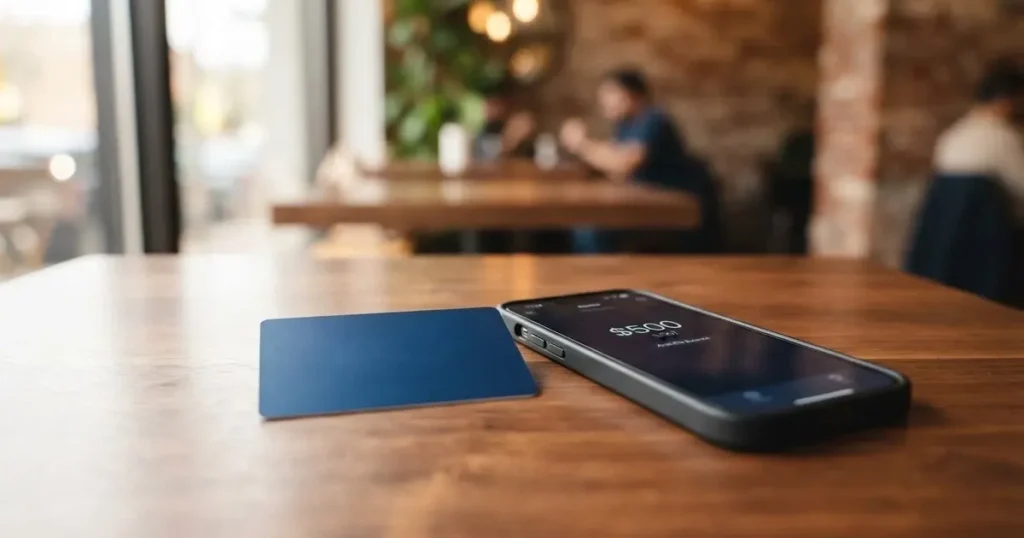
If you have tried to get an ordinary bank card and hit a wall, the pitch here is obvious: a virtual dollar card that you fund from crypto, spend anywhere Visa or Mastercard is accepted, with no conversion fee attached to the swap. Monica Pay is a Lagos-based platform, and the card sits inside an app that sells crypto for naira and pays out to a Nigerian bank account. That is a real product with a real job to do. It is also a card whose public pages leave a lot of the usual answers unsaid, and those silences matter more than the ones that are filled in.
I gave it 5.6 out of 10. That is not a verdict on whether it works — it plainly does something — but on how much of a card’s job it lets you check before you commit money to it. The cost side is unusually good and drags the whole number up. The everyday-use side is unusually thin and drags it down.
Who this suits: Nigerian residents who already hold crypto, want to spend it at foreign merchants, and would rather not pay a conversion margin every time. Who it does not suit: anyone outside Nigeria reading the page as though it were globally available, anyone who needs a physical card, and anyone whose bank refuses crypto-adjacent transfers. If you want a wallet you can push into Apple Pay, a physical card in the post, or a published schedule of fees and dispute handling, this is not that card.
The conditions described here are current as of October 28, 2026.
The score, criterion by criterion
| Criterion | Mark | Why |
|---|---|---|
| Who can get it | 2 / 10 | The page is oriented to Nigeria (Lagos, EN-NG, NGN payouts); there is no country list |
| Cost | 9 / 10 | “0% conversion fees” when selling crypto for naira and funding the card; unofficially a one-time non-refundable $1 to open the card |
| Top-up options | 7 / 10 | BTC, ETH, SOL, TRX, BNB, USDT and USDC sold for naira, then the card loads from the naira balance; networks not listed |
| Reliability and complaints | 6 / 10 | Monica Technologies Limited (Lagos), stated alignment with the SEC VASP framework, issuer unnamed; App Store 4.6 from 15K ratings, Trustpilot 3.7 from 1 review |
| Everyday use | 4 / 10 | Virtual dollar card on Visa and Mastercard, NFC and QR; Apple Pay and Google Pay not mentioned, no ATM |
| Total | 5.6 / 10 | A cheap, focused product with a narrow front door and a thin everyday feature set |
Will they give you the card?
Short answer: if you are in Nigeria, probably. If you are anywhere else, the public pages do not tell you, and that is the single biggest limitation of this card.
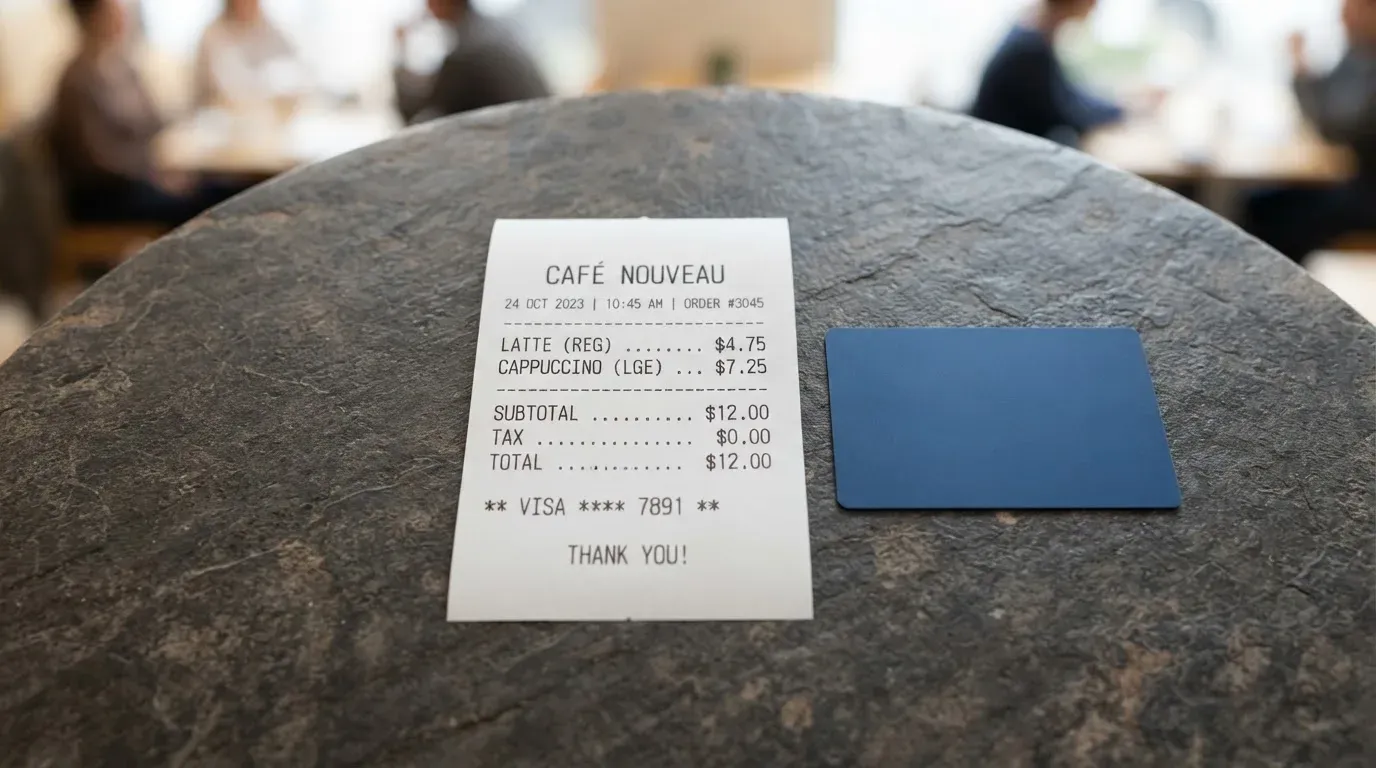
The page is Nigeria-centred in ways that are visible rather than stated as a restriction. Lagos appears as the location, the language tag is EN-NG, and payouts are in naira. There is no country list anywhere on it — no “available in” section, no exclusions table, nothing to check your own country against. The card itself, being a Visa or Mastercard product, would work wherever those networks are accepted, but that is the limit of what the page promises.
The terms add one line that is worth reading carefully because it is broader than it looks: use is barred from any jurisdiction where crypto-asset services are unlawful. That is a self-executing clause. It means the card’s availability is conditional on your local law rather than on a published list, and it can change without the page changing.
What I could not establish, and what you should assume until you see it in the app: which countries outside Nigeria are accepted, whether a non-Nigerian resident with a Nigerian connection qualifies, and whether the platform serves non-residents at all. Ask support before you send anything, and treat the answer you get as the only reliable list.
How to get it
The signup story is short, which is not the same as simple. Verification happens in the app and is described as “one-screen KYC” — one screen rather than one form field, in other words. The terms say only “eligible verified Users” may apply. That phrase does a lot of quiet work: it defers the definition of eligibility to a document the reader is not shown, and it does not say which documents are needed or what age you must be.
What is not stated on the public pages:
- Which identity documents are accepted
- The minimum age
- Whether a proof of address is required
- How long approval takes
- What happens on a rejection, and whether you can reapply
You should expect to prove you are who the account says you are, with real documents, uploaded into an app. That is ordinary and I would not read anything sinister into it — identity checks exist because anti-money-laundering law requires them, including ongoing monitoring and suspicious-activity reporting. The part I object to is not the check, it is that this card’s page does not tell you what the check involves before you start it.
Two more things about the card itself. It is virtual, which means no plastic arrives in the post — nothing to activate, nothing to trip over, and nothing to hand to a shop that wants a physical card. And the card is issued on both Visa and Mastercard under the name Pay Cards, with NFC tap-to-pay and QR, denominated in dollars.
The terms also mention general verification tiers in clause 5.2, which apply to naira withdrawals. Card-specific verification levels are not stated. In plain terms: there may be a step-up process for pulling money out, and you will only discover which tier applies to you when you get there.
What it really costs
The headline number is genuinely good, and it is the reason this card scores 9 out of 10 on cost. Monica advertises 0% conversion fees when you sell crypto for naira and when you fund the card from your naira balance. The FX spread is set by the scheme operator, and Monica states it does not retain that spread. In a category where the usual trick is to bury the margin in “conversion”, saying zero and meaning it is worth something.
The catch is that the card’s own public pages do not publish a fee schedule. Monica does not state an issuance fee, a monthly fee, an ATM fee, or a card-replacement fee. One third-party app listing page states a one-time, non-refundable $1 fee to unlock the Virtual USD Card (unofficial, 2026, and not confirmed by Monica itself). Treat that as a data point rather than a fact. Where a figure is not stated, I will say so rather than fill the gap.
| Item | What is published |
|---|---|
| Issuance | Not stated by Monica; a third-party listing page mentions a one-time, non-refundable $1 (unofficial) |
| Monthly fee | Not stated |
| Conversion | 0% conversion fees on selling crypto for naira and on funding the card |
| FX spread | Set by the scheme operator; Monica states it does not retain it |
| ATM | Not applicable — no ATM withdrawal is mentioned; ATM fees not stated |
| Daily and monthly limits | No amounts given; spending limits can be adjusted in real time in the app, and transactions outside Nigeria may be subject to “additional regulatory limits” |
| Tiers | A single tier |
Three everyday payments, so you can see what actually applies:
A subscription at a foreign streaming service, paid in dollars. If you sell $5 worth of crypto for naira inside Monica and load the card from the naira balance, the conversion fee is 0% and the FX spread belongs to the scheme operator. What I cannot tell you is what that spread is, because no number is published. On the $1 card-unlock charge, if that unofficial line is accurate, it has already been paid by the time you make this purchase.
A $40 meal in a Lagos restaurant where the terminal asks for dollars. Here the FX spread does the work instead of the conversion fee, and you have no published figure to compare it against. You also enter the region the terms warn about — “additional regulatory limits” on transactions outside Nigeria — so treat the ceiling as unknown rather than high.
A withdrawal at a foreign ATM. I would not try this. No ATM withdrawal is described for this card, ATM fees are not stated, and it is virtual, so there is nothing to insert. The route back to your own money is the app-to-bank naira transfer, not the card.
The structural point underneath the table: this is a prepaid balance, not a debit card tied to a bank account. You convert or top up a balance and the card spends only that balance, which is why it cannot overdraw. That is a genuine safety property, and it also means the card is only as useful as whatever you have already moved into it.
How to top it up
The path is short and worth walking through end to end, because two of its steps are the ones where crypto users normally lose money.
- Sell. Inside Monica, you sell BTC, ETH, SOL, TRX, BNB, USDT or USDC for naira.
- Load. The card draws on your naira balance. Sell-then-load, at the live rate, at 0% conversion fee.
- Spend. The virtual dollar card uses that balance in dollars.
An alternative order exists and Monica describes it too: send crypto to a Monica wallet, it converts to naira at the live rate, and the balance loads onto the card. That is described as instant. After on-chain confirmation, naira reaches your bank within 60 seconds.
What is not stated: which networks are supported for each coin, the minimum top-up, and who pays the network fee. Those three gaps are all in the same place — the transfer — and all of them are places where a deposit can go wrong. So let me be blunt about the mechanism, without pretending to give you a trick.
If you send on a network Monica does not support, or to an address belonging to a different network, the transfer can be lost or need manual support recovery with no guarantee. Blockchain transfers are irreversible; the network cannot freeze or return the funds. What protects you is not cleverness, it is copying the deposit address and network from Monica’s own screen and checking both before you confirm, character by character — the classic attack here is malware that silently swaps a copied address for one you do not control. And the network fee on the deposit is charged by the blockchain, not by the card provider, so it comes out of your crypto whatever Monica’s fee is.
One quirk to know before you plan your transfers: gas on Ethereum is paid only in ETH, so a wallet holding USDT with no ETH cannot send. Tron prices its fees with bandwidth and energy, often burning TRX. And Circle stopped supporting USDC on Tron in February 2024, so “USDC over TRC20” is not a native option.
The way back out is the other direction: the App Store listing says “Move money to your bank without fees”, with naira reaching the bank within 60 seconds of confirmation. Whether you can move the card balance itself back out is not stated. I would read that as: the naira balance is withdrawable, the dollar card balance is a spending balance. Ask before you assume otherwise.
Paying with it every day
Here is where the card is thinnest, and this is the 4 out of 10 in the score.
What works: it is a virtual dollar Visa and Mastercard, it has NFC tap-to-pay and QR, and it is accepted wherever those networks are accepted. The App Store listing for “Monica – Pay, Send, Bills” shows 4.6 from 15K ratings, read 2026-10-21 — a large sample, which is worth more than a large number on a small one. The Google Play listing I did not read.
What is missing: Apple Pay and Google Pay are not mentioned. This is not a small gap. Tokenising a card into a phone wallet replaces the card number with a device-specific number stored in the Secure Element, never on the provider’s servers, and each payment uses a one-time dynamic code. Without it, every online payment on your phone is your typing the full card details into a browser, and every contactless payment is the card-in-phone-plus-PIN dance instead of a tap. You also lose the ability to restrict the card’s use by channel, since that restriction is applied to a tokenised number.
Also missing: no physical card, no ATM, no stated rewards or cashback, and no list of blocked merchant categories. That last one matters because merchant category codes classify businesses — MCC 7995 covers gambling, for instance — and many issuers block such categories by policy rather than by law. With no published blocked list, you find out by decline.
Two payment realities you should hold in mind regardless of provider. Address Verification Service compares the numeric parts of a billing address against issuer records and is mainly offered in the US, Canada and the UK; it is generally unavailable for foreign-issued cards, which causes declines. And some merchants decline prepaid or foreign BINs outright, because the first six or eight digits of the card number identify the issuing institution and country, and a shop that sees a mismatch with the billing address may apply extra scrutiny or refuse. That is the background reason a card issued in one country can look foreign in another, and it is a category fact rather than a Monica fact — but it is what you will be navigating.
On a declined payment, be aware that the authorisation may leave a hold on your funds that can persist for several days, typically up to seven.
What can go wrong
I found no official incident involving this card, and no independent reviews of the virtual card. That is not the same as a clean bill of health — it is closer to a company too new or too small to have generated a public record either way, and with an unnamed card issuer behind it, the surface where a failure would show up is not necessarily visible.
The issuer is unnamed. Monica Technologies Limited (Lagos, Nigeria) is the company behind the platform. The card is issued by an unnamed third-party card partner. This matters more than it sounds: the issuer is the party that holds the card programme, sets much of the operational policy, and handles disputes. Monica describes itself as “SEC VASP-framework aligned” and states compliance with NDPA 2023 and NFIU (as claimed on site) — Nigerian data protection and financial intelligence units. Those are claims by the company about itself, not verified findings on my part.
Proof of reserve is a category problem, not theirs. Where funds are custodial, the user must trust the provider completely, because control of the crypto belongs to whoever holds the private key. That risk is not hypothetical: Mt. Gox (about US$350 million reported stolen 2011-2014), Coincheck (about US$400 million, 2018) and Ronin Network (US$625 million, 2022) are the standing evidence. A seed phrase — typically 12 to 24 words — is an unencrypted form of the private key, and anyone who obtains it can restore the wallet and spend the funds. Monica’s public pages do not state the custody model, and their security page says nothing beyond real-time spending limits. Real-time limits are genuinely useful; they are not the same as knowing who holds your keys.
Programme closures happen. Visa and Mastercard do not issue crypto cards to consumers themselves; they license issuers and can suspend a programme. Visa terminated its global agreements with FTX on 13 November 2022, and WaveCrest, a Visa issuer that supplied crypto card brands, was suspended in Europe in 2018, closing all its Visa-issued programmes. The typical closure sequence is a notice period, then spending and loading stop, then you are asked to withdraw remaining balances. So the thing to hold onto is this: if the card programme ends, your claim is against a third-party card partner in a jurisdiction you may not live in. One 2026 closure reported by a secondary source had new loads end 8 July 2026 and spending stop 8 August 2026 — single source, unconfirmed, but the shape of it is the standard one.
Disputes are the quiet gap. The card terms do not address disputes at all. The general process the terms do describe is negotiation for 30 days, then arbitration in Lagos, under Nigerian governing law. A chargeback is a refund ordered by the card issuer, with reason codes such as fraud, duplicate billing or goods not received; your protection here comes from a general arbitration clause in a city you may not be in. Also keep in mind that 3-D Secure can shift liability for a fraudulent online payment, sometimes toward you. And under US rules, debit reversal rights come from Regulation E and credit card rights from Regulation Z — prepaid-card coverage varies and should not be assumed.
Trustpilot tells you almost nothing. 3.7 from 1 review — five stars, dated 19 May 2026, an unclaimed profile, read 2026-10-21. One review from an unclaimed profile is not a signal in either direction. No complaint themes emerge, because there is nothing to draw them from.
The tax question is yours to answer, not mine. I am not giving tax advice here. What is true at the category level: the IRS treats digital assets as property, so exchanging them for goods, services, dollars or other digital assets generally produces a taxable gain or loss, measured in local fiat currency at the fair market value on the date of the transaction. Nigerian rules are their own business. Speak to an accountant about your situation rather than taking my word for anything.
One last thing on safety, because it is easy to overpromise: there are no guarantees here. Nobody can promise this card is safe or that your funds are protected. What protection actually exists is specific — app-based two-factor authentication, instant card freeze, spending limits, 3-D Secure confirmation and tokenised mobile wallets are the typical safeguards, and of those, this card publicly documents only the spending limits.
What to take instead
Three alternatives came up in the same comparison, and each fails or wins in a different direction. None of them is a clean substitute for a Nigerian naira-to-foreign-spends card; they are what else is on the table.
| Alternative | Score | Who it suits | Where it falls short |
|---|---|---|---|
| Monica Pay | 5.6 / 10 | Nigerian residents spending crypto through a virtual dollar card | No country list, no published fee schedule, no phone wallets, no ATM |
| Stella | 6.5 / 10 | People who want virtual and physical cards and deposit crypto directly | Official site does not state countries; terms bar users under sanctions programmes and route US and European users through affiliates; card fees not stated |
| Whop Cards | 5.2 / 10 | US consumers in 31 states who want a stablecoin-backed balance with 5% cashback at select merchants | Card type and currency not stated; coins and networks not stated; fees not stated |
| UniFi Card | 4.7 / 10 | People who want a USD Visa balance fed by ACH, wire, SEPA or SPEI | Availability not confirmed from official pages; fees not stated |
Stella scores highest of the four at 6.5. It is virtual and physical, on VISA, and it claims acceptance at “over 40 million VISA merchants globally”. You deposit crypto into the account and it tops up the card automatically from an in-app custodial wallet. Its terms bar users under economic sanctions programmes and route US and European users through affiliates, and its official site does not state countries. Fees are “described under this User Agreement and/or on the App” — which is the standard way of saying the number exists but not on the marketing page. No cashback is stated for the card; an Earn product is separate yield.
Whop Cards is 5.2. It works in 31 US states for consumers and 41 for businesses, with an explicit unsupported list including Belarus, China (Mainland), Cuba, Hong Kong, India, Iran, Iraq, Israel, Myanmar, Nepal, Nicaragua, North Korea, Russia, Syria, Turkey, Ukraine, Venezuela and Vietnam. It is a Visa that works anywhere Visa is accepted, spends from a Whop balance (pending balance usable as soon as a payment arrives, standard withdrawals use settled funds), and starting data says that balance is backed by stablecoin collateral from a linked wallet. Coins and networks are not stated. It does publish one thing Monica does not: 5% cashback at select merchants, currently Uber, with more planned — though payout currency and conditions are not stated.
UniFi Card is 4.7, a “Prepaid Debit Visa Card” issued by Lead Bank, card currency USD, spending from the USD balance. You fund it by receiving funds via ACH, wire, SEPA (IBAN) or SPEI (CLABE), or by getting paid to a USDC wallet; coins and networks beyond USDC are not stated on the listing. It is also the only alternative here that supports Apple Pay, and the listing claims 3% rewards on balances, though card cashback is not stated. Availability is not confirmed from official pages: the App Store lists send-money routes to the Philippines (PHP), Mexico (MXN), the eurozone (EUR), and recent release notes mention Colombia, Brazil (PIX) and the UK (GBP). Its fee line is “Fees may apply. See UniFi website for more details.”
The pattern worth naming: every one of these cards leaves its fee schedule off the marketing page. The lesson is not to pick the one with the best number, it is to work out which gaps you can live with before you fund anything.
Who I would recommend it to
Three groups, in order.
A Nigerian resident who holds crypto, spends it on foreign subscriptions and merchants, and is content to route everything through naira. This is the designed-for case. Zero conversion fee on the sell and on the load is a real saving, the sell-load-spend loop is simple, and the app has a large body of user ratings behind it.
Someone who cannot get an ordinary card and has decided a virtual prepaid card is the right substitute. The balance cannot be overdrawn, there is no credit line and no debt risk, and the 60-second bank transfer is a genuine convenience. Just go in understanding that this is a spending instrument with a Nigerian arbitration clause behind it, not a bank account.
Not someone who needs the full card experience. If your day depends on tapping your phone at a terminal, this fails — no Apple Pay or Google Pay mentioned. If you need cash from an ATM, it fails. If you are outside Nigeria and hoping the virtual card sidesteps regional eligibility, the page gives you nothing to rely on. If you want to know who holds your keys or how a disputed payment gets resolved, the page does not say.
My own checklist, if it were my money: confirm my country is served before depositing anything; confirm the deposit network and address on Monica’s screen before confirming a transfer; treat the dollar balance as a spending balance and keep a separate plan for getting value out; and put a small amount through first, end to end, before moving anything you would miss.
Frequently asked questions
What is the Monica Pay card?
Monica Pay’s card is a virtual dollar card issued on the Visa and Mastercard networks, with NFC tap-to-pay and QR, held inside a Nigerian crypto app. You fund it by selling BTC, ETH, SOL, TRX, BNB, USDT or USDC for naira and loading the card from your naira balance. It is a prepaid balance product, not a bank debit card, and no physical card is delivered.
Is Monica Pay a bank?
Not on the published pages. Monica Technologies Limited is a Lagos, Nigeria company that describes itself as aligned with the SEC VASP framework and claims compliance with NDPA 2023 and NFIU. The card itself is issued by an unnamed third-party card partner. That unnamed issuer is the party that holds the card programme and handles disputes, and Monica does not name it.
How does the Monica Pay card work?
Sell, load, spend. You sell one of the supported assets for naira at the live rate, Monica states 0% conversion fees on both the sell and the card funding, and the virtual dollar card spends the resulting balance wherever Visa or Mastercard is accepted. The card draws only on the balance you have loaded, so it cannot overdraw.
Does Monica Pay require KYC?
Yes. The app describes “one-screen KYC”, and the terms allow only “eligible verified Users” to apply. This is standard: anti-money-laundering law requires regulated businesses to verify customers and assess risk, including ongoing monitoring and suspicious-activity reporting. What the public pages do not tell you is which documents, what age, or how long approval takes.
How much does the Monica Pay card cost?
Monica advertises 0% conversion fees on selling crypto for naira and on funding the card, and states that the FX spread is set by the scheme operator and not retained by Monica. No issuance fee, monthly fee, ATM fee or replacement fee is stated on its pages. A third-party app listing page mentions a one-time, non-refundable $1 to unlock the card — unofficial, not confirmed by Monica.
Can I add the Monica Pay card to Apple Wallet?
Based on the published pages, no — Apple Pay and Google Pay are simply not mentioned, so I would not plan around either. It matters more than it sounds, because tokenising a card replaces the number with a device-specific one in the Secure Element and gives a one-time code per payment. Without it you type full card details into every checkout.
Where can I use the Monica Pay card?
Anywhere Visa or Mastercard is accepted, in principle. In practice, expect the usual friction of foreign-issued and prepaid cards: some merchants apply extra scrutiny or refuse when the card’s issuing country differs from the billing address, and address verification is generally unavailable for foreign-issued cards, which causes declines.
Is Monica Pay safe and is it worth it?
I would not call it safe — nobody should. The public pages do not state the custody model or describe safeguards beyond real-time spending limits, the card issuer is unnamed, and programme closures in this category are real: Visa ended its FTX agreements in November 2022 and suspended WaveCrest in Europe in 2018. Whether it is worth it depends on whether 0% conversion fees on your own spending outweighs a thin feature set.
What are the limits on the Monica Pay card?
Monica does not publish amounts. Spending limits can be managed in real time in the app, and transactions outside Nigeria may be subject to “additional regulatory limits”. There is a single tier, the card is USD-denominated, and the card-specific verification levels are not stated even though general tiers in clause 5.2 apply to naira withdrawals.
How do I withdraw money from Monica Pay?
The app-to-bank route: naira reaches your bank within 60 seconds of on-chain confirmation, and the App Store listing describes moving money to your bank without fees. Whether the dollar card balance itself can be returned to you is not stated. Read it as: the naira balance is withdrawable, the dollar balance is for spending.
Money-app cards – cryptocardselect
Content created by the «cryptocardselect» team