
A $10 virtual card and an $80 metal card, with several important gaps in the pricing
 Available in US
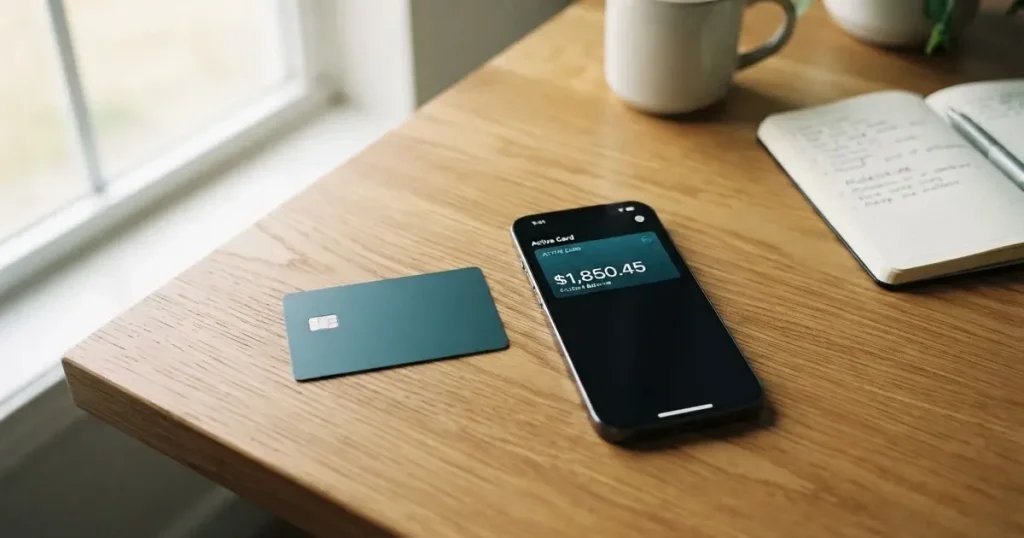
UUPAY is a crypto card that converts your balance into ordinary card payments at the moment you spend. It comes in two forms: a virtual card that arrives in about a minute for $10, and a physical metal Gold card for $80 that includes worldwide shipping. On everyday use it scores well — Apple Pay and Google Pay, cash at Visa and Mastercard ATMs, and a cashback rate that reaches three percent on the Gold card. On cost, it also scores respectably, partly because the physical card carries “zero foreign transaction fees” and deposit fees are waived under a promotion. But a great deal that you would want to know is simply not on the pages: the monthly fee is not stated, the conversion fee or spread is not stated, the card currency is not stated, and the networks you can deposit on are not stated. The score I give it is 6.9 out of 10.
The conditions described here are current as of October 28, 2026.
Who this card suits, in one line: someone who already holds crypto or stablecoins, cannot get a normal bank card they are happy with, and wants a card that works at a shop within minutes. Who it does not suit: anyone who needs published, itemised pricing, or who wants their own keys to remain the final word on where the money sits.
Score: 6.9 out of 10
| Criterion | Mark | Why |
|---|---|---|
| Who can get it | 7 / 10 | A long restricted list covers both card types — including Russia and Belarus, plus the United States, Ukraine, Iran, North Korea, Cuba, Syria, Mainland China, Hong Kong, Singapore, Serbia, Croatia, Montenegro, Slovenia, Bosnia and Herzegovina, North Macedonia and others; in India, Israel, Pakistan and Nigeria only the virtual card |
| Cost | 7 / 10 | Virtual card $10 in USD or USDT, Gold $80 in USDT with worldwide delivery included; “zero foreign transaction fees” on the physical card and zero deposit fees under a promotion — but no monthly fee and no conversion fee are disclosed |
| Top-up options | 7 / 10 | USDT, USDC and BTC convert automatically at payment, and the site also mentions USDT and “other major stablecoins” — but the supported networks are not named |
| Reliability and complaints | 5 / 10 | UUpay Limited in Hong Kong, identity checks handled by Sumsub; the issuing entity and any licences are not named, and I found no complaints or reviews to weigh |
| Everyday use | 9 / 10 | Glacier White virtual card in about a minute, Luxury Gold physical card, Apple Pay and Google Pay, and $2,000 a day at ATMs on the Gold card |
Total: 6.9 / 10. The number is not a rounding of a marketing claim; it is the sum of the five marks above, and the reason the average sits in the middle rather than high is the reliability row. That row is low not because anything went wrong, but because there is very little published to check: no named issuer, no named licence, and no public complaint history either way. An empty search result is not a clean bill of health.
The card also makes a narrower promise that matters more than the average: it is built for crypto holders who want a virtual card alongside a metal Gold card. If that is you, the everyday-use number is the one that counts, and it is the strongest of the five. If you are comparing this to a mainstream bank card, the comparison is not close and never was.
Will they give you the card?
Short answer: almost certainly, unless you are in one of the countries on the restriction list — and the list is long, and it applies to the virtual card as much as to the physical one.
The restricted list covers both physical and virtual cards and includes Russia (RU) and Belarus (BY), the United States, Ukraine, Iran, North Korea, Cuba, Syria, Mainland China, Hong Kong, Singapore, Serbia, Croatia, Montenegro, Slovenia, Bosnia and Herzegovina, North Macedonia and others. That last word matters: “and others” means the published list is not the complete list, so if you are somewhere unusual you cannot rely on being told in advance that you are fine.
There is a second tier of restriction. In India, Israel, Pakistan and Nigeria the virtual card is supported, but the physical card is restricted and delivery is not allowed. So in those four countries the $80 Gold card and its $2,000-a-day ATM withdrawals are simply not part of the offer; you get the $10 virtual card, with no ATM access at all.
Two things the card does not settle, and you should assume the worse of them if they apply to you:
- The list is framed as “subject to applicable sanctions laws”. That is a compliance phrase, not a promise of eligibility. Screening happens against citizenship and country of birth as well as the country you live in, which is standard practice in the industry but means a dual national with one passport from a restricted country may still be refused.
- Whether the rules apply to your citizenship or your residence is not stated. I found no text saying which one decides. If you are a citizen of a restricted country living somewhere else, or the other way round, you have no published answer to go on — the only way to find out is to apply and see.
If your country appears anywhere on that list, stop here. Nothing further on this page applies to you, and there is no route around it that I would describe.
How to get it
You will need to pass identity verification, and the card provider’s stated reasons for refusing an application are worth reading before you start, because most of them are fixable and one of them is not.
Verification runs through Sumsub. The provider’s stated position is that name, date of birth and a valid ID are the basis of the check: an original document — a passport, ID card or driver’s licence depending on your region — that is valid for at least three months from the point of verification, and an age of 18 or over. Your country of residence is not part of what the card publishes, so you should not read a green light in the country list as an approval of your specific case.
The flow itself is ordinary:
- Enter your personal information.
- Upload photographs of your ID.
- Complete a real-time liveness check.
- Provide a personal declaration if one is requested — and note the deadline: 14 days to upload it.
Two details about the process that readers often miss. Proof of address is not part of what the card covers, so a request for it would come from somewhere other than the published flow — if you are asked for a document nobody mentioned, ask why before you send it. And one identity per account, which matters if you were hoping to run two people’s spending through one login.
The stated reasons for rejection are: a mismatch between your name or date of birth and your documents, an unsupported type of ID, unclear photographs, a failed liveness check, a declaration not uploaded within 14 days, a restricted region, or a duplicate verification. The processing time is not stated, and neither are any tiers or levels within the verification — one flow, and limits that vary by level, without the levels being published.
If verification passes, you choose one of two products:
- Glacier White, virtual, issued in about one minute. The $10 product.
- Luxury Gold, physical, metallic. The $80 product, and the one that runs on dual Visa and Mastercard rails.
The currency of the card is not stated; the limits you will see quoted are in USD. A multi-currency card and a single-currency card behave very differently at a shop in another currency, and you cannot tell from the pages which one this is.
On the Gold card’s delivery: it ships by DHL or FedEx, typically 3–7 business days, with shipping included in the $80. It ships to supported regions other than the restricted ones. What a replacement card costs is not stated, so if you lose the metal card in a bag, the price of the mistake is unknown in advance.
Fees: what the card really costs you
The honest summary: the entry price and the foreign-transaction promise are good, the promotion removes deposit fees, and then the pricing page stops talking. The single largest unknown is the conversion fee or spread — and on a card whose entire job is converting crypto at the point of sale, that is the number you most need.

| Fee or limit | What the card states |
|---|---|
| Virtual card issuance | $10 (USD or USDT) |
| Gold physical card issuance | $80 USDT, worldwide shipping included |
| Monthly fee | Not stated |
| Conversion fee / spread | Not stated; crypto converts at the moment of payment and the final amount depends on the app’s settlement rate |
| Foreign transaction fee | “Zero foreign transaction fees” on the physical card |
| Deposit and top-up fee | Zero under a limited-time promotion |
| ATM fee | Not stated |
| Virtual card limits | $10,000 per transaction, $100,000 per month |
| Gold card limits | $50,000 per transaction, $500,000 per month |
| ATM withdrawal limit | $2,000 per day, Gold card only |
What “zero foreign transaction fees” means in practice: the card does not add a markup on top of the network’s currency conversion. What it does not tell you is whether the crypto-to-fiat step carries a spread — and that is a separate line item from the network’s conversion. A card can honestly claim zero foreign transaction fees while still costing you a percentage on every sale, because the crypto side is priced separately. Because that percentage is not published, you cannot compute your true cost per payment in advance. That is the practical thing to check before you rely on this card: buy something small with it and compare what you paid in crypto against what the shop charged.
Two other things to keep in view:
- “Promotional pricing applies” during promotions, on top of the zero deposit and top-up fees under the limited-time promotion. Promotions end. A price built on a promotion is not a price.
- The ATM fee is not stated. The $2,000 daily cash limit on the Gold card is generous; the charge per withdrawal is unknown, so a heavy cash user has no idea what that access costs.
Three ordinary payments, to make the fee structure concrete:
- Coffee abroad, paid by tapping your phone. The foreign transaction fee is zero on the physical card. What you may still pay is the crypto conversion, whose size is not stated, and if you use the virtual card instead, the zero foreign transaction fee is claimed for the physical card only.
- A monthly subscription charged to the virtual card. No monthly card fee is disclosed, so the recurring cost here is whatever the conversion costs you on the top-up or the sale, applied again every month.
- Withdrawing $500 in cash in a city where you are a stranger. The daily $2,000 limit is not a problem at that amount. The ATM operator’s own surcharge applies, the provider’s own ATM fee is not stated, and there is no foreign transaction fee on the Gold card. On the virtual card, none of this happens at all — it has no ATM access.
Top up: how money gets into the card
Topping up is the part that is easiest in principle and vaguest in detail. The coins are named; the networks are not.
The card states that USDT, USDC and BTC are converted automatically at the moment of payment. Its home page also says USDT and “other major stablecoins”. So the asset side is reasonably clear: this is a stablecoin-first card with Bitcoin accepted as well.
What is missing is the network side. Which networks are supported for deposits is not stated. A deposit guide exists in the help centre, but the headline pages do not name a chain. This is not a small gap, and it is worth being blunt about why. If you send USDT over a network the provider does not support, or to an address belonging to a different network, the transfer can be lost or need manual recovery by support with no guarantee — blockchain transfers cannot be reversed by design. So the first thing to do is not to guess a network from a tutorial, and not to assume that “USDT” means one specific chain. Find the supported networks in the guide before you send anything.
On fees and timing:
- “Zero deposit and top-up fees”, under a promotion described as limited in time and since extended.
- Deposits are “usually settled within minutes”.
- The minimum top-up is not stated, and who pays the network fee is not stated — on-chain costs are normally charged by the blockchain rather than by the card provider, but the card’s own pages do not say who bears it here.
- A fiat route exists: “Fiat Express 2.0” was announced on 2026-07-28. The details of that announcement were not part of what I could read, so I am telling you it exists rather than telling you how it works.
Getting money back out is symmetric and similarly thin on specifics. You can convert USDT to fiat and withdraw to a bank card or e-wallet, in “minutes”. Crypto withdrawal to other wallets has its own guide. The withdrawal fee and the minimum are not stated on the pages I read. And if you close your account — which is done via support — what happens to the remaining balance is not stated. If you are considering winding down, ask that question before you close rather than after.
Paying with it every day
This is where the card is genuinely good, and the reasons are concrete rather than promissory.
The virtual card is issued in about one minute, which means the “get a card” problem is solved before your coffee cools. The physical Gold card is metallic, carries an EMV chip, and runs on both Visa and Mastercard rails — a practical advantage when one network declines and the other does not.
Mobile wallets work, and this is the feature people actually use. Apple Pay: you add the card in Apple Wallet on iPhone, Apple Watch or Mac, with the card status showing as Active. Google Pay is mentioned on the home page. Once a card is in a mobile wallet the number on the device is a token specific to that device, and each payment carries a one-time code — which is also why a card can be frozen or restricted on channels without affecting the physical card.
Rewards are real but published imprecisely:
- Cashback of 1.0% on the virtual card, up to 3.0% on the Gold card. The payout currency and the conditions are not published, so treat “3.0%” as a ceiling rather than a rate.
- A promotion gives 1 USDT cashback instantly on the $1 virtual card — which, given the card costs $10, is small in absolute terms.
- 100 points equal 1 USDT.
- Referrals pay up to a 50% commission.
Two things worth checking as a user rather than assuming. Blocked merchant categories are not stated — the help centre has an article on merchants where payments fail, which tells you the problem exists but not the list. Gambling is the category most often blocked by policy rather than by law, and the list varies by issuer, so if that applies to you, ask before you rely on the card. And no dispute process is stated beyond being able to contact customer support: there is no published procedure for disputing a charge, no reason codes, no timeframe. For everyday spending that may not matter. For anything you would have to fight to recover, it does.
The app is where I would look before committing. The iOS App Store listing shows no rating — it “hasn’t received enough ratings or reviews to display an overview”, read on 2026-10-21. The Android package is com.uupay.app, and I could not read the Google Play rating. An app with no visible rating is not a red flag; it is a reason to try small amounts first.
Support is 24/7 in-app, with an email at [email protected] and a Help Centre at help.uupay.com/en/. The card has published articles for the problems that matter to you — frozen cards, deposits, crypto withdrawals, merchants that fail — which is a better sign than silence.
What can go wrong
Nothing has gone wrong in public that I could find. That is the finding, and it is a genuinely double-edged one.
Complaints: none found. A search for UUPAY reviews, Trustpilot and Reddit returned no UUPAY-specific pages, and no official incident has been published. A Trustpilot page for UUPAY was not found. One search surfaced a rating of 2.6 from 19 reviews for “Upay Technology Limited” via a reposted article — I could not confirm that this is the same company, so I do not use it. If you are researching this card yourself, be careful with that particular number circulating online: similar names are the most common way a bad review attaches itself to an unrelated business.
So there is no complaint history to weigh, in either direction. What there is instead is a gap in the basics:
- The company is UUpay Limited, Hong Kong, at 49/F Enterprise Square Three, 39 Wang Chiu Road, Kowloon Bay.
- The card issuer is not named. The card says fiat settlement goes “through licensed financial institutions” — that is not the same as naming the issuer that your money is held by.
- No licences are named. Verification is handled by Sumsub, a well-known provider, but that is a supplier relationship, not a regulatory status.
- The card provider is a Hong Kong company; the issuing and settlement arrangements are not described in a way that lets you check them.
On security, the published measures are a reasonable list: AES-256 encryption at rest, TLS 1.3, real-time monitoring, device binding, withdrawal whitelists, the EMV chip on the Gold card, and a transaction compliance (KYT) policy. Whether your balance is custodial is not stated — and the terms themselves carry the warning that holding balances on the platform carries financial risk. Read that clause as written. It is the clearest signal about custody on the whole site, and it is on their side, not mine.
Two structural risks sit underneath the card, and they belong to the category rather than to this provider, but you should price them anyway:
- A card programme can be closed. Visa and Mastercard do not issue crypto cards to consumers themselves; they licence issuers and can suspend a programme. Visa terminated its agreements with FTX on 13 November 2022 and the FTX US debit card was wound down by its issuer. WaveCrest, a Visa card issuer that supplied crypto card brands, was suspended by Visa in Europe in 2018, closing every WaveCrest-issued Visa programme. Closures typically follow a pattern: a notice period, then loading and spending stop, then you are asked to withdraw your balance. If a large balance is sitting on the card when that happens, your exit is a queue, not a tap.
- A stablecoin is not a bank deposit. Stablecoins aim to hold a stable value but are not necessarily stable: TerraUSD collapsed in May 2022, and USDC temporarily lost its peg in March 2023. Tether says it disables tokens in wallets on the OFAC sanctions list and has frozen funds tied to illicit activity. And if your card turns out to sit on an electronic money licence, safeguarded funds are not the same as bank deposits and may not be covered by a deposit guarantee scheme.
What is worth doing about all this is boring and unglamorous: keep the balance you need for the week rather than the balance you plan to invest, use the card as a spending tool rather than a store of value, and make sure your crypto sits in a wallet you control for anything you are not spending this month.
What to take instead
Three cards came up in the same category, and all three score below UUPAY’s 6.9. I am including them because you will run into them, and because the differences are instructive.
Cardex — 5.6 / 10. Claims “one crypto card, 200+ countries” with no country list and no exclusions, which sounds easier until you need to know whether your country is on it; the App Store listing is Naira-focused, with payment in Naira. It runs on VERVE, Visa, Mastercard and UnionPay, virtual and physical. Cost is not stated. On fees it says an “AI-Powered Conversion Rate” scans global exchange rates and picks the best one when you spend, but no fee percentage is published, so the claim cannot be checked. USDT, USDC and BTC wallets; networks not stated. No rewards mentioned.
TakeCard — 5.5 / 10. The sharpest restriction of the three: the physical card is “available only to Bolivian users for now”, and the Takenos site says the wallet can receive payments “from any country” — receive, not spend. Its own starting data lists virtual cards for Argentina, Bolivia, Peru, Chile, Paraguay, Colombia, Ecuador, the US, Spain and Italy, though I could not confirm that on a page I could read. Pricing is clearer than most: virtual card USD 5; physical in Bolivia USD 20 issuance plus USD 20 shipping — with another article in the same help centre quoting USD 10 for the physical card in Bolivia, which conflicts. The best-published fee structure of the three: 1% commission per purchase, USD payments at 1:1 with no currency adjustment, other currencies at the official Visa rate of the day. The card is issued in the United States and is prepaid.
OkiCard — 6.0 / 10. The closest competitor. “150+ countries” on some pages, “200+” on others, with “no geo-blocking based on your passport” — though you must confirm you are not in a sanctioned jurisdiction. Its pricing page is the most complete of the four: issuance $0, monthly $0, starting price $15 for the virtual card, and an initial deposit of 100 USDT — while its FAQ mentions a one-time issuance fee, so the pages disagree with each other. Fees: load fee 3%, transaction fee 0% in USD, and it claims no hidden exchange spreads; the FX fee is not stated. Funding is the best-documented in this comparison: USDT on BSC (BEP-20), Ethereum (ERC-20), Tron (TRC-20) and Solana (SPL), with USDC “soon” and BTC “coming soon”. Deposits go to a generated address and convert at the moment of spending. No cashback mentioned.
| UUPAY | Cardex | TakeCard | OkiCard | |
|---|---|---|---|---|
| Score | 6.9 / 10 | 5.6 / 10 | 5.5 / 10 | 6.0 / 10 |
| Entry price | $10 virtual, $80 Gold with shipping | Not stated | USD 5 virtual | $15 virtual (pricing page also says $0 issuance) |
| Where it works | Long restricted list; virtual-only in India, Israel, Pakistan, Nigeria | “200+ countries”, no list | Physical card Bolivia only; virtual card in a listed set of ten | “150+ countries” / “200+”, no passport geo-blocking |
| Published fee detail | Zero FX on physical; conversion fee not stated; monthly fee not stated | No percentage published | 1% per purchase, USD 1:1 | Load 3%, transaction 0% in USD |
| Networks named | Not stated | Not stated | Polygon, BNB Chain, Tron, Ethereum (starting data, unverified) | BSC, Ethereum, Tron, Solana |
My read: if you want the most predictable published economics and you spend in USD, TakeCard’s flat 1% is easier to model than anything UUPAY publishes. If you want a wide spread of deposit networks documented up front, OkiCard is the only one of the four that names its chains. If you want no exclusion list at all in the marketing, Cardex says so but publishes nothing to check it against. UUPAY’s advantage over all three is the pair of cards: a virtual card in a minute plus a metal card with three percent cashback and $2,000 a day at ATMs.
Who I would recommend it to
I would recommend UUPAY to a specific person, and that person is not you if any of the following is true.
Recommended if: you already hold USDT, USDC or BTC; you are in a country that is not on the restricted list; you want a virtual card you can use within a minute of signing up, and a metal card later; you want cash from ATMs without a traditional bank card; and you are comfortable with a Hong Kong platform whose issuer is not named and whose terms tell you that balances held on it carry financial risk. In that last clause, I want to be plain: this is a spend-from-crypto tool, and I would not hold savings on it.
Not recommended if: you need to know what a payment costs before you make it — the conversion fee is not published, and that is the number that matters most here. If you are in any of the countries on the restriction list, the question is settled for you. If you are in India, Israel, Pakistan or Nigeria and you want the physical card or ATM access, it is not available. If you want to hold the card currency rather than have it converted, or if the idea of a provider holding your funds is not one you can accept, read the terms again rather than the marketing.
Two checks I would make before depositing anything, both of them five minutes of work. First, open the deposit guide and confirm which network your coin is on — the sites name coins, not chains, and an irreversible transfer to the wrong network is the one error on this card with no recovery path. Second, make one small purchase and compare the crypto you spent against what the shop charged you. That single number tells you what the unpublished conversion fee actually is, and it is worth more than anything on this page.
Frequently asked questions
What is UUPAY card?
UUPAY is a crypto payment card that converts your crypto balance into ordinary card purchases at the moment you pay. It comes in two versions: Glacier White, a virtual card issued in about a minute for $10, and Luxury Gold, a physical metal card for $80 in USDT with worldwide shipping included. The platform is run by UUpay Limited in Hong Kong, and identity checks are handled by Sumsub. It is a spending tool for crypto holders, not a bank account.
How does UUPAY card work?
You sign up, pass identity verification, and fund the account with USDT, USDC or BTC. When you pay, the crypto converts at that moment and the merchant is charged in ordinary currency; the final amount depends on the app’s settlement rate, and the conversion fee or spread is not published. The card then behaves like any other card — you can add it to Apple Pay or Google Pay, and the Gold card works at Visa and Mastercard ATMs.
Is UUPAY a bank?
No — it presents itself as a card programme on UUpay Limited’s platform, not as a bank. The card says fiat settlement happens “through licensed financial institutions”, but it does not name the issuing bank or any licence it holds. Its own terms note that balances held on the platform carry financial risk. So the honest answer is that it is a crypto card provider whose banking arrangements are described in outline only.
Who owns UUPAY?
The operator is UUpay Limited, registered in Hong Kong, at 49/F Enterprise Square Three, 39 Wang Chiu Road, Kowloon Bay. The card issuer itself is not named, and no licence numbers are published anywhere on the pages I read. One online rating of 2.6 from 19 reviews circulates for a similarly named company, “Upay Technology Limited”, but I could not confirm it is the same business, so I would not treat it as UUPAY’s rating.
Which countries can use the UUPAY card?
The restricted list applies to both virtual and physical cards and includes Russia, Belarus, the United States, Ukraine, Iran, North Korea, Cuba, Syria, Mainland China, Hong Kong, Singapore, Serbia, Croatia, Montenegro, Slovenia, Bosnia and Herzegovina, North Macedonia and others. In India, Israel, Pakistan and Nigeria only the virtual card is supported, with no physical delivery and no ATM access. The card does not state whether the rules follow your citizenship or your country of residence, which matters if the two differ.
Does UUPAY require KYC, and can I be refused?
Yes. Verification runs through Sumsub and requires your name, date of birth, an original valid passport, ID card or driver’s licence valid at least three months, and an age of 18 or over, plus a real-time liveness check. Stated refusal reasons include a name or date-of-birth mismatch, an unsupported ID type, unclear photos, a failed liveness check, a declaration not uploaded within 14 days, a restricted region, or duplicate verification. Only one identity is allowed per account.
How do I top up the UUPAY card?
You send USDT, USDC or BTC to the platform and it converts at the moment of payment; the home page also mentions “other major stablecoins”. Deposits are usually settled within minutes and are free under a current promotion. Before you send anything, confirm the supported network in the help centre’s deposit guide — the public pages name coins but not chains, and a transfer on an unsupported network can be lost with no guarantee of recovery.
What are the UUPAY card’s fees and limits?
The virtual card costs $10 and the Gold card $80 with shipping included; the monthly fee and the conversion fee are not stated, so a zero foreign transaction fee does not mean a zero-cost payment. Limits are $10,000 per transaction and $100,000 per month on the virtual card, $50,000 and $500,000 on the Gold card, and $2,000 per day at ATMs. The ATM fee itself is not stated, and the virtual card has no ATM access at all.
Is UUPAY card safe?
No public complaints or official incidents surfaced in my search, but that is an absence of information rather than a clean record. The platform publishes real technical measures — AES-256 at rest, TLS 1.3, device binding, withdrawal whitelists and an EMV chip on the Gold card — while naming no issuer, no licence, and not stating whether balances are custodial. Its terms do say that holding balances on the platform carries financial risk, so treat the card as a spending tool rather than a place to keep money.
Is UUPAY worth it?
For a crypto holder who cannot get an ordinary bank card they are happy with, the pair is genuinely useful: a virtual card in about a minute, a metal card with Apple Pay, Google Pay, up to three percent cashback and $2,000 a day at ATMs. Against that, the pricing is unhelpfully incomplete — no conversion fee, no monthly fee, no named issuer, no named networks — so you cannot cost a payment before you make it. Buy something small first and measure.
Virtual cards for online use – cryptocardselect
Content created by the «cryptocardselect» team