
A Colombian crypto card that costs almost nothing to hold and asks a lot of unanswered questions
 Available in US
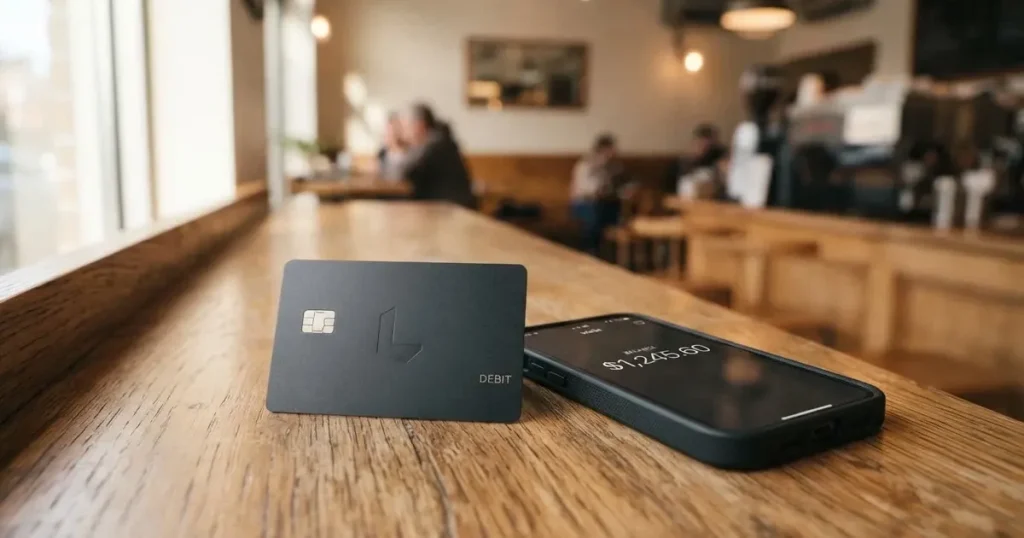
Wallib looks, on paper, like the cheapest crypto-linked card you can find: the card itself costs nothing to create and activate, there is no monthly fee listed, and spending pesos in Colombia costs nothing at the point of sale. That combination is rare enough to be worth a page. The catch is not in the fees — it is in what the card’s public pages simply do not say. Who issues the card, which licences hold it up, which networks your crypto has to arrive on, whether a physical card ever shows up in the post, what the ATM fee is: all of that is absent. Wallib is a small Colombian fintech in Bogotá, and the public record about it is thin — which cuts both ways. Nobody is posting horror stories about it either, and that is partly because almost nobody is posting anything at all.
Let me give you the honest shape of this card before I give you the numbers. If you are a resident of Colombia who holds bitcoin or USDT and wants to spend pesos in local shops, subscriptions and online merchants, Wallib is a genuinely cheap way to do it. If you are anywhere else and you are reading this because an ordinary bank card is hard to get in your situation, Wallib is probably not the answer: it launched in Colombia, the site also names Mexico, and the details you would need to judge it from another country are not published. That is not a complaint about Wallib; it is simply the shape of a young company serving a home market first.
The conditions described here are current as of October 28, 2026.
Verdict: 5.4 out of 10
The score is not a rounding of my opinion; it is the sum of six criteria, each scored out of 10, and the arithmetic gives 5.4. Here they are with my reasoning.
| Criterion | Mark | Why I gave it that |
|---|---|---|
| Who can get it | 2 / 10 | Colombia is the launch market; Mexico is named on the site; international purchases work wherever Visa is accepted |
| Cost | 8 / 10 | Creation and activation 0 USD, no monthly fee; top-up 0.1% + 1,000 COP + IVA, COP purchases 0%, Visa adds 1.2% abroad |
| Top-up options | 5 / 10 | BTC, USDT or COP, converted to COP on loading; networks not disclosed |
| Reliability and complaints | 6 / 10 | Colombian fintech in Bogotá; issuing bank and licences unnamed; no complaints or Trustpilot page found |
| Everyday use | 6 / 10 | Virtual card immediately, Apple Pay and Google Pay at no extra cost; physical card mentioned in passing, ATM not disclosed |
| Total | 5.4 / 10 | The fees are excellent; the disclosure is not |
The audience the card is built for is narrow and clear: Colombian residents paying in pesos from BTC or USDT. If that is you, the cost score of 8 out of 10 is doing a lot of work in that total, and the “who can get it” score of 2 out of 10 is doing almost none. If you are not in Colombia, you are being asked to take a 5.4 on trust.
Let me say plainly what I could not find, once, and then not repeat it. Wallib’s public pages do not state several things: the issuing bank, the licences, the required documents and proof of address, the age requirement, the blockchain networks used for top-up, ATM fees, ATM and monthly limits, blocked spending categories, how disputes work, or who pays the network fee on a deposit. Where I touch on any of these below, I am telling you it is not stated — not guessing.
Will they give you the card?
Yes, if you are in Colombia, and the situation is more open than it looks: the card is aimed at domestic purchases at merchants in Colombia, and international purchases work anywhere that accepts Visa. The site also names Mexico, and says transfers go to “cualquier banco, billetera o tarjeta en Latinoamérica” — any bank, wallet or card in Latin America. That sentence tells you the company thinks in regional terms, but it is not a list of countries you can hold the card in, and it is not a licence statement.
Why the “who can get it” score is 2 out of 10: this is a single-market launch. The card works abroad in the sense that Visa works abroad, which is a much weaker statement. There is no published list of countries where a non-resident can apply, and the second section below is where you find out whether you need to ask.
How to get it
Three steps, in the card’s own order: create and verify your Wallib account, activate the virtual card in the app, then recharge from BTC, USDT or COP. Before any of that, the account has to be created and identity verification (KYC) approved, and a first deposit of at least 20,000 COP is required. That first-deposit figure is the gate. If you cannot put 20,000 pesos in, you cannot start, whatever your documents say.
The card itself is a rechargeable Visa debit card, available virtually and ready immediately, with the balance held in COP. A physical card is mentioned only in passing: there are no ordering steps described and no delivery information at all — the virtual version is instant, the plastic is a rumour with a logo on it.
On verification, the site mentions “verificación de primer nivel” — first-level verification. The levels themselves, the processing time, and the reasons a verification might be refused are not stated. So if you are trying to plan around a specific document set, you will have to ask. The generic background below explains what KYC normally covers in a regulated business, but I want to be clear that Wallib’s own requirements are not published: documents, proof of address and age requirements are not stated.
Fees: what it really costs
The headline is excellent and the details are thin. Card creation is $0, activation is free, and no monthly or annual fee is listed. Recharging costs 0,1% (sale rate) + 1,000 COP + VAT per recharge, with BTC or USDT converted to COP. A purchase in Colombian pesos costs 0%. A purchase in a foreign currency costs 1.2% of the purchase value, charged by Visa.
| Fee or limit | What Wallib’s pages state |
|---|---|
| Card creation | $0 |
| Activation | Free |
| Monthly or annual fee | None listed |
| Recharge | 0.1% (sale rate) + 1,000 COP + IVA per recharge |
| Purchase in COP | 0% |
| Purchase in foreign currency | 1.2% of purchase value, charged by Visa |
| ATM fee | Not stated |
| ATM and monthly limits | Not stated |
| Daily purchase limit | Up to 10,000 USD, or the COP equivalent |
| Card tiers | A single card; no tiers stated |
Two everyday payments, so you can see what actually lands on your statement. First: you buy coffee for 10,000 COP in Bogotá. That is 0% — the number in the costs table that justifies the 8 out of 10. Second: you subscribe to an overseas service and the billing is in dollars. There the 1.2% Visa fee applies on top of whatever the merchant charges, and your balance still has to be in COP, so the conversion happens against the 0.1% sale rate plus 1,000 COP plus IVA if you top up to cover it. Nothing is hidden here, but nothing is rounded in your favour either: the 1.2% is Visa’s, not Wallib’s, and it is the price of the international reach that the “who can get it” score already marks as weak.
If you recharge often, the 1,000 COP plus IVA is a fixed toll per recharge and it punishes small top-ups harder than large ones. Nobody at Wallib tells you the optimal top-up size, so treat the fixed component as a real cost, not a rounding error.
Top up
Recharge from BTC, USDT or COP balances, and the amount is converted to COP at reload — the card never holds crypto, it holds pesos. That simplicity is the product’s best feature: you are not exposed to a stablecoin depeging between topping up and spending.
The catch is that the networks are not stated. This is the single most important practical gap on this page. If you send USDT on a network Wallib does not support, or to an address belonging to a different network, the transfer can be lost or need manual recovery with no guarantee — blockchain transfers are irreversible, and that is a property of the technology, not of Wallib. The generic background explains why USDT exists on several networks (Ethereum, Tron, Solana, Polygon, Avalanche and others) and why that difference matters, and it explains why a wallet holding USDT but no ETH on Ethereum cannot send anything at all.
Also worth knowing: the network fee on your deposit is charged by the blockchain, not by the card company, and who reimburses it is not stated. The first deposit must be at least 20,000 COP.
On the way back out, withdrawing from the card to your Wallib balance is 0% with no fixed fee. What happens to a leftover balance when you close the account, and whether you can withdraw to a bank, are not stated.
Paying with it every day
The virtual card works immediately for online merchants, subscriptions, and anywhere that accepts COP with Visa. Apple Pay and Google Pay both work at no extra cost. Apps exist for iPhone and Android; I did not read the ratings, so I will not pretend to a star count I have not seen.
Blocked categories are not stated. That matters more than it sounds: gambling, for example, sits in a merchant category that many issuers block by policy rather than by law, and the list varies by issuer. Wallib does not publish one, so you cannot know in advance whether a category you need will be refused.
The reward is the part that is unusual. Bitcoin cashback of 1% on eligible purchases over 10,000 COP, capped at 20 cashback transactions and 3,000,000 COP of eligible purchases per month, paid into your Wallib BTC wallet once the payment is confirmed. Read that cap carefully: 1% on ordinary spending is a real return in a category where most cards return nothing, but the monthly ceiling and the per-transaction limit mean it is a nudge, not a strategy. And it pays in bitcoin, so it inherits bitcoin’s price risk on the way to being worth anything.
How disputes work is not stated. If a charge is wrong, a merchant never delivers, or a payment is duplicated, Wallib’s pages do not tell you the route, the time limit, or the reason codes. For a prepaid-style card, do not assume the reversal rights you would have with a US bank debit card.
What can go wrong
Nothing bad has surfaced about Wallib, and I want to be precise about why. I found no official incidents. I searched for reviews on Trustpilot and Reddit and found no pages about Wallib at all as of 21 October 2026. No complaint themes were found, because there were no complaints to find themes in. The site displays its own testimonials rating of 4.5 out of 5 — that is the company grading itself, and I weight it accordingly.
So the risks here are structural, not reputational. The company is Wallib, a Colombian fintech based in Bogotá, a member of Colombia Fintech, with Cristian Peñaranda as CEO; the legal entity per its starting data is Wallib SAS. The issuing bank and the licences are not named. In this category that matters more than it might seem: a card payment involves the network (Visa) routing messages, an issuer holding the card programme, and the crypto brand often being only a programme manager or front end. When a card brand is not the issuer, and it does not say who the issuer is, you are trusting a chain of parties you cannot name. History in this field is not encouraging — Visa terminated its global agreements with FTX in November 2022, and WaveCrest, a Visa issuer that supplied crypto card brands, was suspended in Europe in 2018, closing all its Visa programmes.
On custody: Wallib says the app has 2FA and can freeze, block and unblock the card. How the crypto is held, and whether funds are safeguarded or segregated, is not stated. That is the question I would ask before I loaded a meaningful balance — because custodial platforms have a record of failures (Mt. Gox, Coincheck, Ronin Network all lost hundreds of millions), and a self-custody card flips that risk onto you instead: your keys, your loss.
Support is real but thin: an Intercom help centre (“Talk with us”), an FAQ, and social accounts on Instagram, Telegram and Facebook. The site is in Spanish, though English help articles exist — so help exists, in two languages, and probably not around the clock.
One more thing to weigh, and it is not a complaint. The news from 7 May 2024 said Wallib launched its Visa debit card with the first 1,000 cards free through a referral campaign, targeted 1 million cards by the end of 2025, and planned expansion to Mexico, the US and Peru. That is the company’s own stated ambition, and it is why I treat the thin disclosure as immaturity rather than concealment. It is also why I would not treat an expansion announcement as a fact about where you can get the card today.
Support where you should ask rather than assume: what happens to a closing balance, how a dispute is filed, which networks USDT is accepted on, and what the ATM charges.
What to take instead
All three alternatives below score lower or similar on my scale, and I want to be honest that the comparison is not clean: none of these publishes a full fee table either. What differs is where they publish what.
Whop Cards — 5.2 / 10. Visa, works anywhere Visa is accepted online and in stores. Its differentiator is reach within the US: consumers in 31 states (Alabama, Alaska, Arkansas, California, Colorado, Connecticut, Florida, Hawaii, Illinois, Indiana, Iowa, Kansas, Kentucky, Maine, Massachusetts, Michigan, Minnesota, Montana, Nebraska, New Hampshire, New Jersey, New York, North Carolina, Oklahoma, Pennsylvania, South Carolina, Texas, Utah, Virginia, West Virginia, Wyoming), businesses in 41 states. It also publishes an unsupported-country list, which is more than Wallib does. Unsupported consumer countries include Belarus, China (Mainland), Cuba, Hong Kong, India, Iran, Iraq, Israel, Myanmar, Nepal, Nicaragua, North Korea, Russia, Syria, Turkey, Ukraine, Venezuela and Vietnam; unsupported corporate countries include Russia and Belarus. Whether eligibility runs on citizenship or residence is not stated. The page says “No extra fees” but lists no issuance or monthly amounts; conversion and FX fees are not stated. It spends from a Whop balance, pending balance is usable as soon as a payment arrives, standard withdrawals use settled funds, and the starting data says it is backed by stablecoin collateral from a linked wallet — coins and networks not stated. Cashback is 5% at select merchants, currently Uber, with more planned; payout currency and conditions not stated.
Stella — 6.5 / 10, the highest of the four. Virtual and physical, VISA, working at “over 40 million VISA merchants globally”. You deposit crypto into the account, which automatically tops up the card, through an in-app custodial wallet. Fees are “described under this User Agreement and/or on the App” — that is, not on the card page — so not stated officially. No cashback is stated on the official card page; the Earn product is separate yield. Its terms bar users under economic sanctions programmes and route US and European users through affiliates. Countries are not stated on the official site. The custodial in-app wallet is the thing to weigh.
UniFi Card — 4.7 / 10, the lowest here. A “Prepaid Debit Visa Card” issued by Lead Bank, so at least it names its issuer — the thing Wallib does not do. Card currency is USD per the starting data, spending from the USD balance, and the app supports Apple Pay. Eligibility was not confirmed from official pages: the App Store lists send-money routes to the Philippines (PHP), Mexico (MXN), the eurozone (EUR), and recent release notes mention Colombia, Brazil (PIX) and the UK (GBP) — which is not the same as saying you can hold the card there. Fees “may apply. See UniFi website for more details” — not stated. Funding comes in through ACH, wire, SEPA (IBAN) or SPEI (CLABE), or by getting paid to a USDC wallet; coins and networks beyond USDC are not stated. The listing claims “3% rewards on balances”; card cashback is not stated.
| Wallib | Whop Cards | Stella | UniFi Card | |
|---|---|---|---|---|
| Score | 5.4 / 10 | 5.2 / 10 | 6.5 / 10 | 4.7 / 10 |
| Network | Visa | Visa | VISA | Visa (Lead Bank) |
| Market | Colombia (Mexico named) | 31 US consumer states | Not stated on site | Not confirmed |
| Issuance / monthly fee | $0 / none listed | “No extra fees”, amounts not listed | Not stated | Not stated |
| Top-up | BTC, USDT or COP; networks not stated | Whop balance, stablecoin-backed | Crypto deposit into custodial wallet | ACH, wire, SEPA, SPEI, USDC |
| Cashback | 1% BTC over 10,000 COP, capped | 5% at select merchants | Not stated on card page | Not stated |
My read: if you are a Colombian resident spending pesos, Wallib’s fee structure is the best of these on published numbers, and Stella’s higher score reflects better documentation rather than a cheaper card. If you are in the US, Whop’s state list is at least something you can check against. If you want a named issuing bank, UniFi is the only one of the four that prints one.
Who I would recommend it to
I would recommend Wallib to someone living in Colombia who already holds BTC or USDT, already has a way to spend pesos they do not want converted twice, and who wants a second card for online merchants and subscriptions with a virtual card available immediately and no monthly charge. Under those conditions the fee table is hard to argue with: 0% in pesos, 0.1% plus a fixed 1,000 COP plus VAT to load, and 1% bitcoin back on eligible purchases above 10,000 COP.
I would not recommend it as the answer to being locked out of ordinary banking. The card’s reach is a Colombian launch market with Mexico named, the eligibility rules for residents elsewhere are not published, and the issuing bank and licences are not named — which means you would be making that decision without the two facts that matter most to it. Nor would I load it with money I cannot afford to lose until I had asked, in writing, how the funds are held.
Before you commit, my checklist is short: which networks USDT is accepted on; what happens to a balance at account closure; how a chargeback is filed; what the ATM costs and limits are; and which merchant categories are blocked. Four of those five are not stated anywhere public, so the act of asking is the real due diligence.
Frequently asked questions
What is Wallib?
Wallib is a Colombian fintech company in Bogotá that issues a rechargeable Visa debit card funded from crypto. You load BTC, USDT or pesos, the amount converts to COP at the moment of top-up, and the card spends that peso balance. The card is virtual and available immediately; a physical card is mentioned without ordering details. The company names Cristian Peñaranda as CEO and lists Wallib SAS as its legal entity.
How does the Wallib card work?
It works like a prepaid card rather than a bank debit card. You top up, the crypto or pesos convert to COP, and the card draws on that stored balance — so it cannot overdraw. Your balance is always in COP. Spending it in Colombia costs 0%; spending it in another currency adds a 1.2% fee charged by Visa. A card number issued in one country can also look “foreign” to overseas merchants, which is a normal source of declines.
Is Wallib a bank?
No — Wallib is a fintech, not a bank. It is a member of Colombia Fintech, and the issuing bank behind the Visa card is not named on its public pages. That distinction matters: in this category the brand is often only a programme manager or front end, while a licensed issuer holds the card programme. You are relying on a chain of parties that the company does not identify.
Who can get a Wallib card?
The launch market is Colombia, where the card targets domestic purchases, and the site also names Mexico. International purchases work anywhere Visa is accepted, but that is about where you can spend, not where you can sign up. The published details cover Colombian residents; if you are elsewhere, you need to ask them directly rather than assume.
How much does a Wallib card cost to hold?
Creating and activating the card costs $0, and no monthly or annual fee is listed. The costs that do apply are on usage: recharging costs 0.1% at the sale rate plus 1,000 COP plus IVA per recharge, and a foreign-currency purchase costs 1.2% charged by Visa. Purchases in pesos are free. A first deposit of at least 20,000 COP is required before you start.
How do I top up the Wallib card?
From BTC, USDT or COP balances in your Wallib account, converted to COP at reload. The minimum first deposit is 20,000 COP. The important caveat is that the supported blockchain networks are not stated, and transfers on an unsupported network can be lost or need manual recovery with no guarantee. Who pays the blockchain network fee is also not stated. Ask before your first transfer, not after.
Can I add the Wallib card to Apple Wallet?
Yes — the card’s own pages state Apple Pay and Google Pay work with no additional cost. The virtual card is instant, so you can add it to your phone wallet as soon as your account is verified and topped up. Note that adding a card to a phone wallet tokenises the number, and the issuer can still restrict that tokenised copy, for example on online or contactless use.
Is the Wallib card safe?
The app has 2FA and the ability to freeze, block and unblock the card, which are sensible safeguards. What is not stated is how your crypto is held and whether funds are safeguarded or segregated. Given the history of custodial failures in this sector, ask that question in writing before loading a meaningful balance. No official incidents have been found, but equally, no independent reviews exist.
Is Wallib worth it?
For Colombian residents paying local merchants from BTC or USDT, probably yes: no monthly fee, free peso purchases, and 1% bitcoin back on eligible purchases above 10,000 COP, capped at 20 transactions and 3,000,000 COP of eligible purchases a month. For anyone outside Colombia, or anyone treating it as a substitute for banking they cannot otherwise access, the missing disclosures make the decision hard to justify.
How do I withdraw money or close my Wallib account?
Withdrawing from the card back to your Wallib balance is 0% with no fixed fee. What happens to money left in the account when you close it, and whether you can withdraw to a bank, are not stated on the public pages — and that is exactly the kind of detail you want to know before you ever need it. Support is reachable through the Intercom help centre, with Spanish and English help articles, plus Instagram, Telegram and Facebook.
Money-app cards – cryptocardselect
Content created by the «cryptocardselect» team