
A crypto-funded Visa that leans on stablecoins and skips cashback
 Available in US
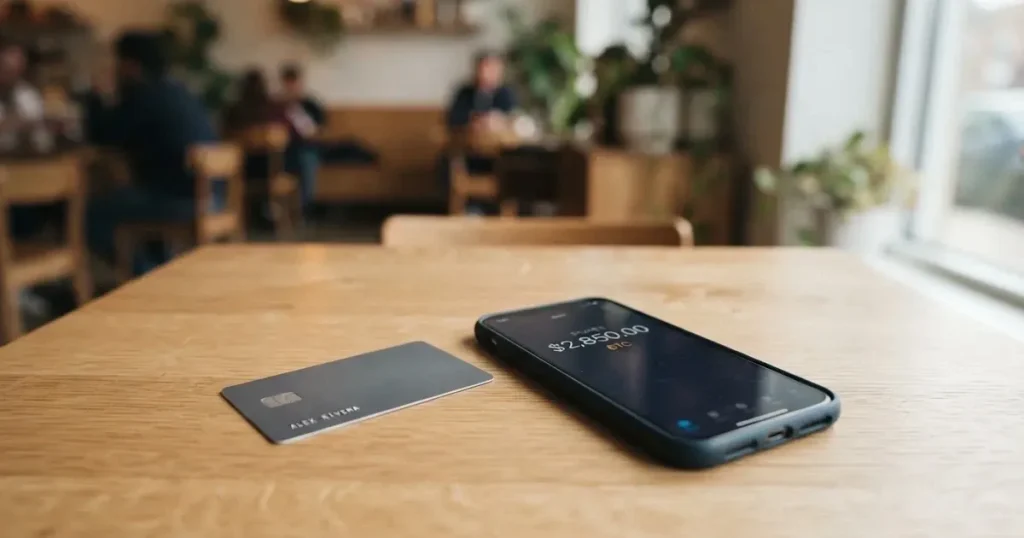
The Winity Exclusive is a Visa debit card whose balance is funded from cryptocurrency rather than from a bank account. You send USDT, USDC or a handful of other tokens to a wallet, the provider converts them into US dollars, and you spend the resulting balance anywhere Visa is taken. There is a virtual card for online use and a physical card with an ATM PIN, and the company also markets a higher Executive Metal tier. Loyalty is a points scheme rather than cashback.
Conditions are current as of October 28, 2026.
In this review I walk through who can actually get one, what it costs in real-world terms, how the top-up flow works, where it fits into an everyday spending pattern, and what can go wrong. I checked the public information Winity publishes and looked at what user reports exist (very few). Where the public pages don’t say, I say so plainly.
Conditions are current as of 2026-10-20.
Verdict
The card scores 7.6 out of 10. That is a solid mid-range result for a crypto-funded card. It is not a bank product, it is not a money-market account, and it is not anonymous. What it offers is a fairly direct way to convert stablecoins into spendable USD on a Visa, plus a small set of altcoins at a flat conversion fee. The strengths are reach (a very wide country list, though the restricted list is not published), a simple fee schedule on the stablecoin side, and a working Google Pay integration on the virtual card. The weaknesses are the ones that come with this corner of the market: the issuing partners are unnamed, the company behind it is a Hong Kong technology provider, there is essentially no public user feedback, and Apple Pay is not mentioned at all.
The card suits you if you already hold USDT or USDC, you want a simple way to spend those balances through Visa, you are comfortable with a young programme whose licence, issuer and safeguarding arrangements are not spelled out, and you do not need cashback, a multi-currency wallet, or a tier above Exclusive. It does not suit you if you are looking for a primary bank card, if you need Apple Pay, if you want a card with a track record of published user reviews, or if the kind of disclosure other programmes publish (FX margin, monthly caps, free ATM allowance) is important to you.
| Criterion | Mark | Why |
|---|---|---|
| Who can get it | 9 / 10 | 187+ countries, restricted list unpublished |
| Cost | 7 / 10 | Free first 6 months, then USD 20/year; key fees stated but not all |
| Top-up options | 9 / 10 | USDT/USDC at 0%, several altcoins at 5% across six networks |
| Reliability and complaints | 5 / 10 | Unnamed partners, “not a bank”, essentially no public feedback |
| Everyday use | 8 / 10 | Virtual and physical Visa, Google Pay, ATM with fee |
| Total | 7.6 / 10 |
Who will they give you the card
Winity describes availability in two ways on its public pages: the FAQ says “187+ countries” and the site footer says “180+”. The difference is small and likely comes from one count being the supported list and the other being a marketing rounding; either way, the reach is unusually wide for a crypto-funded card. Restricted countries are excluded from that figure, but the company does not publish the list of excluded countries. If you are reading this from a country you suspect might be restricted (for sanctions, issuer policy, or card-network policy), you have to find out by starting the application. Citizenship is not mentioned in the terms, only residence in a supported non-restricted country, which is the more important question in practice.
Age is 18 or over, and the company uses a standard identity check: passport, driving licence or national ID. Manual review, when it kicks in, takes one to two business days. The card is only issued after the check succeeds, and there are no tiered KYC levels — you go through the same flow whether you want the free virtual card or the paid physical one. Proof of address is not stated; you should not assume it is required, but you should also not assume it will never be asked for if a manual review is triggered.
For most readers the practical question is not “do I live in a supported country” but “will my country be on the excluded list when I actually try to apply”. Because that list is not published, the only way to find out is to start the sign-up and see whether your country of residence is rejected. Treat the country count as a marketing ceiling rather than a guarantee of access in your specific case.
How to get it
Sign-up is the standard flow for a programme manager sitting on top of a licensed card issuer: you download the Winity app on iOS or Android, create an account, and submit the identity documents. The check is usually completed in minutes, which means a fully automated screening rather than a human reading your passport. If the system flags you — for image quality, name match, or a sanctions hit — the case moves to manual review, which the company says takes one to two business days. Rejection reasons are not stated in the public pages, so if you are rejected you do not get a public list of why this might have happened.
There are three card tiers in the Winity line. The two relevant to this review are the Exclusive Virtual, which is the free starting product, and the Exclusive Physical, the USD 20/year card. A higher Executive Metal exists with a faster points rate, a concierge and a 24/7 relationship manager. Loyalty levels (Silver, Gold, Platinum) sit on top of the card tiers and are reached at higher spend, with Gold and Platinum kicking in around USD 5,000 in cumulative spend; the company also offers a Umi mobile data perk in some markets, with the Exclusive tier including 1 GB after USD 5,000 in spend.
A practical thing to know about the physical card: it is not free, but the first six months are waived on new activations (the free physical issuance is described as “limited”). After the waiver, the card costs USD 20 per year. The physical card is only ordered after you have spent at least USD 25 on the virtual card. Shipping the physical card may involve charges, and the company does not state the cost, the delivery time, or the replacement cost for a lost card. If a fast, predictable delivery matters to you, this is one of the gaps to ask support about before you commit.
The card itself runs on the Visa network, and the balance is held in US dollars. There is no multi-currency wallet and no other-currency balance — the card is paid in, and pays out, in USD. If you live in a euro or pound economy, the conversion from your local currency to USD happens at the card network’s exchange rate on the day the transaction is processed, and the fee Winity adds on top of that is not published.
Fees: what it really costs
The fee schedule is partly published and partly left to the app. The clearest numbers are the ones Winity states on its public pages; the gaps are the ones to ask support about, because the app can show you a number that the website does not.
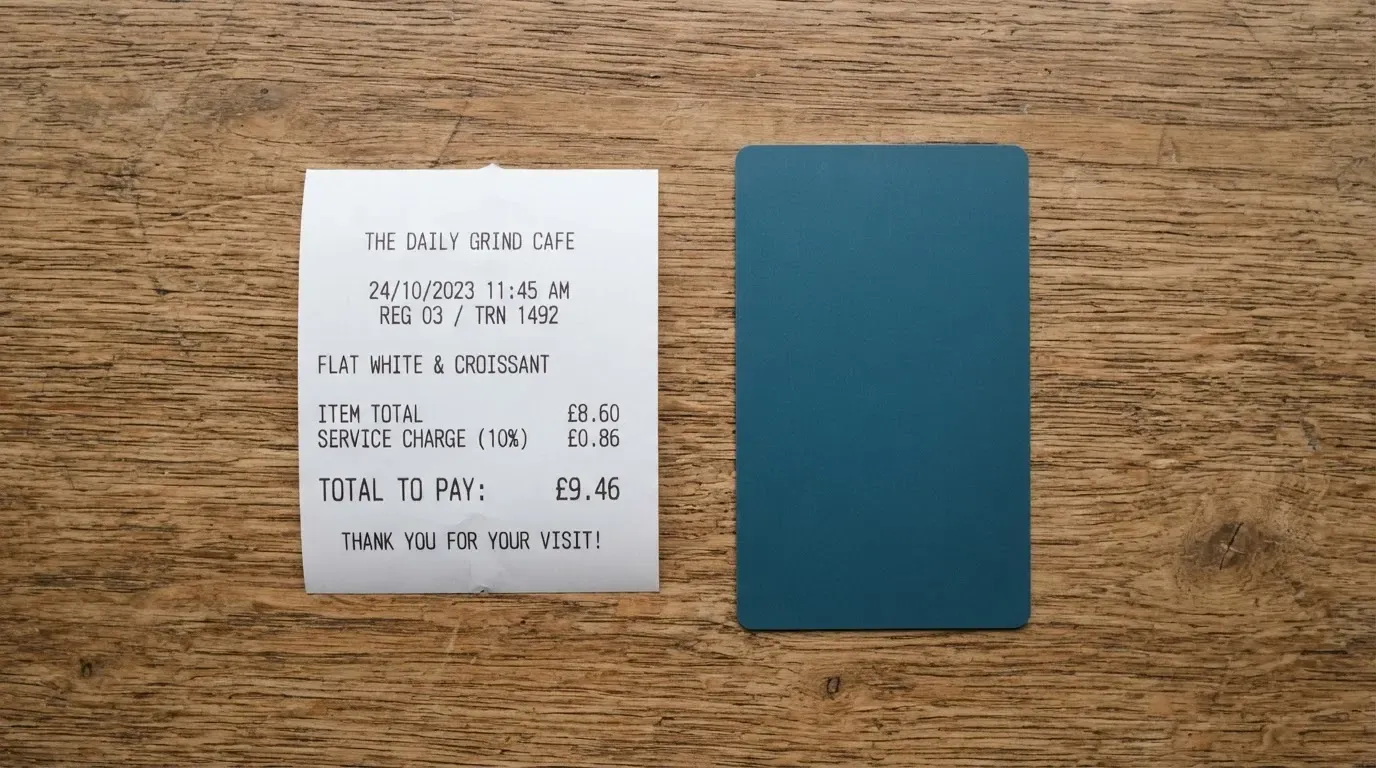
- Issuance. The Exclusive Virtual card has no stated issuance fee. The Exclusive Physical costs USD 20 per year, with the first six months waived on new activations. A free physical issuance is described as “limited”.
- Top-up conversion. 0% for USDT and USDC, 5% for non-stable assets including WCO, ETH, SOL, POL, TRX and BNB.
- Spending. A minimum spend fee of USD 0.10 applies to any transaction under USD 25. Other spend fees are shown in the app rather than on the website.
- ATM. USD 3 per withdrawal on the physical card, and a USD 5 fee for changing the PIN. Free allowance not stated.
- Network gas. Paid by the user for any on-chain transfer.
- FX and currency conversion. Not stated on the public pages.
- Disputes. Chargeback review fee USD 100.
- Statements. USD 5 per statement request.
- Minimum balance. USD 25 must be on the card before a transaction can run.
| Fee or limit | Amount | Notes |
|---|---|---|
| Virtual card issuance | not stated | Free virtual issuance is implied by the on-boarding flow |
| Physical card annual fee | USD 20 | First 6 months waived on new activations |
| Free physical issuance | limited | Time-bound promotion |
| Physical card eligibility | USD 25 spent on virtual | Required before ordering the physical card |
| Top-up conversion, USDT/USDC | 0% | |
| Top-up conversion, altcoins | 5% | Applies to ETH, SOL, POL, TRX, WCO, BNB |
| Spend fee under USD 25 | USD 0.10 minimum | |
| Other spend fees | shown in app | Not published on the website |
| FX fee | not stated | Card balance is in USD; other-currency conversion fee not published |
| ATM withdrawal | USD 3 | Physical card only, Visa ATMs in 180+ countries |
| ATM PIN change | USD 5 | |
| Free ATM allowance | not stated | |
| Minimum balance to spend | USD 25 | Virtual card deactivated if under USD 25 received within 14 days of activation |
| Daily and monthly limits | not published | Vary by user, tier and jurisdiction |
| Chargeback review fee | USD 100 | |
| Statement request | USD 5 | |
| Network gas | paid by user | Charged by the blockchain, not Winity |
What does this look like in everyday payments? Three worked examples.
Coffee for USD 4. The transaction is under USD 25, so a USD 0.10 minimum spend fee applies. You also pay gas to send the USDT to the card wallet in the first place. If the coffee is paid in a non-USD currency, the card network’s exchange rate applies and the FX margin Winity adds is not stated. The takeaway: a USD 4 coffee is not an efficient use of this card, and the small-ticket fees are exactly why the minimum spend fee exists.
Weekly groceries for USD 120. No minimum spend fee here, because the transaction is well over USD 25. The cost is the on-chain gas to fund the card, plus any FX margin if the merchant is in a non-USD country. If you are topping up from USDT, the conversion to USD inside the card wallet is at 0%. For a household that puts a few hundred dollars a month on the card, the stablecoin funding line makes the fees predictable.
Monthly subscription for USD 9.99. Below the USD 25 threshold, so the USD 0.10 minimum spend fee applies, on top of the network gas for the funding transfer. A subscription of this size is, again, the worst case for the fee structure. If you run several small subscriptions, those USD 0.10 fees add up.
A point that is easy to miss: the company states a “deposit conversion” fee of 0% for stablecoins and 5% for everything else. This is the fee on the top-up side, not on the spending side. The 0% does not mean the merchant receives your USDT for free — it means Winity does not charge you to convert it to USD inside the card balance. The merchant still receives USD via Visa, and the card network’s own rate applies if the merchant is in a non-USD country.
Top up: how the card is funded
Winity’s funding model is a pre-loaded balance. You send crypto to a wallet, Winity converts it to USD inside the card balance, and the card spends that balance. The card cannot overdraw, because the balance is what it is. This is the same model that most stablecoin-funded Visa and Mastercard programmes use, and it is the simplest way to combine an on-chain asset with a card payment.
The accepted tokens and the conversion fees are:
- USDT, USDC — 0% conversion fee.
- ETH, SOL, POL, TRX, WCO, BNB — 5% conversion fee.
The accepted networks are:
- Ethereum — for ERC-20 tokens (USDT, USDC, and the 5% altcoins on that standard).
- Solana — for SPL tokens.
- Tron — for TRC-20 tokens.
- Polygon — for the Polygon version of these tokens.
- BNB Chain — for the BEP-20 version.
- W Chain — Winity’s own chain, used for WCO.
A practical thing to know: each blockchain has its own wallet address, and you must send the asset on the network Winity supports for that asset. Circle stopped supporting USDC on Tron in February 2024, so the company cannot offer “USDC over TRC20” as a native option even if a search result suggests it. Network gas is paid by you, the sender, in the network’s native asset (ETH on Ethereum, TRX on Tron, and so on), and is charged by the blockchain, not by Winity. If your USDT wallet has no ETH, you cannot send the USDT — that is a property of ERC-20 tokens.
The flow looks like this in practice:
- Open the Winity app and copy the deposit address for the asset and network you want to use.
- Send the token from your own wallet to that address, paying the network gas yourself.
- Wait for the required number of confirmations (varies by network).
- The asset is converted to USD inside the card balance, at 0% for stablecoins and 5% for everything else.
- The card now has USD to spend.
A USD 25 minimum balance is required for card transactions, and the virtual card is deactivated if the balance has not received at least USD 25 within 14 days of activation. There is no fiat top-up option stated — you cannot, on the published pages, add money to the card from a bank account. If the price of the asset you are funding with moves sharply between the time you send and the time the conversion happens, the difference is borne by you.
One important limit on the way back out: withdrawals to crypto are not supported in the app. If you want your balance back in crypto, you cannot simply reverse the deposit. The reverse path is to spend the card, withdraw cash from a Visa ATM (at USD 3 per withdrawal), or contact support to discuss a refund of the most recent deposit, which the company says is reviewed only when requested immediately and with no card transactions after it.
Paying with it every day
Once the card has a balance, paying with it is the same as paying with any Visa debit card. The virtual card is provisioned into Google Pay; Winity describes the integration as “ready” for the Exclusive Virtual. Apple Pay is not mentioned in the public material, so on iPhone you should not assume tap-to-pay will work — that gap is the kind of thing to confirm with support before you commit if you live on Apple Pay.
For online payments, 3-D Secure is supported without a one-time passcode, using biometrics from your device instead. The app offers an instant freeze on the card, a PIN on the physical card, and optional biometrics for app login. There is no cashback on the Winity Exclusive; the rewards scheme is Winity Points, with 1 point for every USD 10 spent on eligible purchases, redeemable through a portal that the company describes as “coming soon” at the time of writing. The Executive Metal rate is not specified.
The card runs on USD, which means any non-USD merchant adds a layer of currency conversion. The card network (Visa) sets the rate, and the FX margin Winity adds is not published. For a user in a euro or pound economy, the safe assumption is that the published cost of the card plus the network rate plus an unknown margin from Winity is your all-in cost. If you live in a USD country, the FX question does not arise.
Blocked merchant categories are not stated. Many issuers block gambling (MCC 7995), some block cryptocurrency merchants, and some block cash advances, but the exact list for Winity Exclusive is not published. If the merchant category matters to your use case, ask support before you fund the card heavily.
There is no mention of mobile-wallet support for the physical card, and no mention of tokenised number restrictions beyond what the network itself enforces. A failed authorisation can leave a hold on the card balance for several days (typically up to seven); that is a property of card networks rather than Winity, but it is worth knowing if you are budgeting on a tight balance.
If something goes wrong with a transaction, the public process is: contact support, block the card in the app, and ask Winity to raise the issue with Visa. The company charges a USD 100 chargeback review fee per case, the outcome is not guaranteed, and the decision is described as “final and binding”. Unresolved disputes go to arbitration after 60 days under Hong Kong law, through the Hong Kong International Arbitration Centre.
What can go wrong
The reliability score in the verdict is the lowest of the criteria, and the reason is the shape of the disclosure rather than a specific incident. There is no licence number, no named card issuer, no published safeguarding statement, and essentially no user feedback to read.
Who is behind the card. Winity Life is the brand, WTY Technology Hong Kong Limited is the operating company, and the company describes itself as a “technology provider” and “programme manager” that is “not a bank”. The cards are issued by unnamed licensed partners. Services are issued in Hong Kong, the terms are governed by Hong Kong law, and disputes that cannot be resolved in 60 days go to arbitration at the Hong Kong International Arbitration Centre. None of this is unusual for a programme manager; the unusual part is that the issuer is not named on the public pages.
Safeguarding. The public material says assets are held temporarily in a “partner custody wallet” before being converted to the card balance. The exact custody arrangement, the segregation of customer assets from company assets, and whether any insurance covers the balance are not stated. The minimum USD 25 balance sits in this custody wallet while the card is active. If the partner custodian fails, the published information does not give a clear answer on what happens to that USD 25.
Public feedback. Winity’s Trustpilot profile carries a TrustScore of 3.7 (the star label reads 3.5) from a single review, a 5-star comment posted on 26 December 2025. The profile claims October 2025 as its starting point. There are no complaint themes because there is not enough volume to draw a theme. If the absence of complaints is a positive signal, it is also a thin signal.
Programme risk. Card programmes in this market have been shut down before. In 2018, Visa suspended WaveCrest, the issuer behind several crypto card brands, and every WaveCrest-issued Visa programme was closed. In November 2022, Visa terminated its global agreements with FTX, and the FTX US debit card was wound down by its issuer. Programme closures typically follow a notice pattern: new loads stop, then spending stops, then any remaining balance is returned. Winity Exclusive has not been involved in any such closure that I can find, but the structure — a programme manager on top of an unnamed licensed issuer — is the same shape as those that have been closed before.
Operational risk. The on-chain side of the funding flow is irreversible. Sending USDT on the wrong network, or to the address of a different network, can mean the funds are lost or need a manual recovery with no guarantee. Stablecoins can also be frozen at the issuer level: Tether has documented that it disables tokens in wallets on the OFAC sanctions list and has frozen funds tied to illicit activity. None of this is a Winity-specific issue, but it is the world in which this card operates.
What the public pages do not say. Winity’s documentation does not explicitly detail several key terms: FX margin, virtual card issuance fee, free ATM allowance, daily and monthly caps, restricted country list, proof of address requirement, delivery cost and time for the physical card, replacement cost for a lost card, blocked merchant categories, safeguarding arrangements, and the licence number of the issuing partner. These are questions a careful reader should verify with support before funding the card.
What to take instead
Three programmes in the same broad category — crypto-funded cards, prepaid-style balances, programme managers sitting on top of licensed issuers — are worth comparing against. None of them is a perfect substitute, and the trade-offs are different in each case.
Cardex — score 5.6/10. Cardex describes itself as covering “200+ countries” and runs a debit crypto card on Verve, Visa, Mastercard and UnionPay. The app store listing describes the card as a Naira product, which suggests the primary market is Nigeria. The interesting feature is an “AI-powered” conversion rate that scans exchanges at the moment of payment; the fee on that conversion is not stated, and the company does not publish issuance, monthly or ATM fees. Cardex is a reasonable comparison if you are in a country where Winity’s restricted list excludes you and where a multi-network card is useful, but the disclosure is thinner than Winity’s, not thicker.
TakeCard — score 5.5/10. TakeCard is the card product of the Takenos wallet, and the help articles point to Bolivia as the main market for the physical card, with a virtual card available in a wider set of countries (Argentina, Bolivia, Peru, Chile, Paraguay, Colombia, Ecuador, the United States, Spain, Italy in the starting data). The virtual card costs USD 5; the physical card in Bolivia costs USD 20 to issue plus USD 20 to ship, with one article in the same help centre quoting USD 10 for shipping in Bolivia. Commission is 1% per purchase, and US-dollar payments are at 1:1 with the card balance, with other currencies converted at the official Visa rate of the transaction day. TakeCard is the right comparison if you are in a Latin American market where the virtual card is available and the 1% per purchase is acceptable.
OkiCard — score 6.0/10. OkiCard claims “150+ countries” (some pages say “200+”) and explicitly markets “no geo-blocking based on your passport”. The card is virtual, with the pricing page listing USD 0 issuance, USD 0 monthly, and a USD 15 starting price for the virtual card (the FAQ mentions a one-time issuance fee, and the two pages disagree). The load fee is 3%, USD transactions are at 0%, and the company says there are “no hidden exchange spreads”. Funding is USDT on BSC, Ethereum, Tron and Solana, with USDC “soon” and BTC and altcoins “coming soon”. OkiCard is the right comparison if you are a USDT-on-Tron user and the 3% load fee is acceptable, and if the higher score (6.0 vs 7.6 for Winity) is the wrong way around for your priorities, that is a useful signal in itself: Winity’s stablecoin funding at 0% is the strongest part of its offer.
The honest summary of the alternatives section: Winity scores higher than each of these alternatives on the criteria above, but the gap is narrower than the headline numbers suggest, and each alternative has a use case (Nigerian Naira, Latin American USD spending, USDT-on-BSC) where it is the better fit.
Who I would recommend it to
If you already hold USDT or USDC in a self-custody wallet, you want a direct way to turn those balances into spendable USD on a Visa, and you are willing to fund a Visa debit card with a Hong Kong-domiciled programme manager, then the Winity Exclusive is a reasonable fit. The 0% stablecoin conversion is the single most important number on the page; it is the reason to choose this card over alternatives that charge 1% to 3% on the same operation. Google Pay on the virtual card adds the second-most value, especially if you are an Android user who would otherwise be topping up a prepaid card from a bank account.
If you need Apple Pay, multi-currency balances, cashback, a published FX margin, a named card issuer, a public user review base, or a card that can be funded from a bank account as well as from crypto, then this is not the card for you. The list of “not stated” items above is the honest reason: the disclosure is thin, and a reader who values disclosure will read those gaps as a sign to keep looking. A reader who values the simplicity of “USDT in, USD out, Visa network, 0% conversion” will read those same gaps as the cost of doing business in this corner of the market.
The card is best treated as a top-up card for stablecoin holders, not as a primary bank card. If you treat it that way — keep only the balance you plan to spend in the next few weeks, fund it from USDT or USDC, use the virtual card for online and the physical card at the ATM and the point of sale — the fee structure is straightforward and the experience should be predictable. The risk to manage is the disclosure risk: if the programme manager’s Hong Kong operating company changes terms, or if the unnamed card issuer’s licence is affected, the published information will not give you early warning.
Frequently asked questions
What is the Winity Exclusive card?
The Winity Exclusive is a Visa debit card whose balance is funded from cryptocurrency. You send USDT, USDC or a small set of other tokens to a wallet, the provider converts them to US dollars, and the resulting balance is what the card spends. There is a virtual card for online use and a physical card with an ATM PIN; a higher Executive Metal tier is also available.
Is Winity Exclusive a bank?
No. Winity describes itself as a technology provider and programme manager that is “not a bank”. The operating company is WTY Technology Hong Kong Limited (no registration number is given on the public pages), and the cards are issued by unnamed licensed partners. Services are issued in Hong Kong, and the terms are governed by Hong Kong law.
Who owns Winity Exclusive?
The brand is Winity Life, and the operating company behind it is WTY Technology Hong Kong Limited. No parent company, registration number, or named card issuer is given on the public pages. The terms of service put disputes that cannot be resolved in 60 days into arbitration at the Hong Kong International Arbitration Centre.
How do I apply for the Winity Exclusive card?
You download the Winity app on iOS or Android, create an account, and submit an identity document (passport, driving licence or national ID). The check usually completes in minutes; if it goes to manual review, the company says one to two business days. The card is issued only after the check succeeds. There is no proof of address requirement stated in the public pages.
Does the Winity Exclusive card require KYC?
Yes. The same identity check covers all card tiers, with no KYC levels to work through. The company does not state the rejection reasons, so if you are turned down you do not get a public list of why. Age 18 or over is required, and residence in a supported non-restricted country is checked, although the restricted list is not published.
How do I top up the Winity Exclusive card?
You open the app, copy the deposit address for the asset and network you want, and send the tokens from your own wallet. USDT and USDC convert to USD at 0%; ETH, SOL, POL, TRX, WCO and BNB convert at 5%. The supported networks are Ethereum, Solana, Tron, Polygon, BNB Chain and W Chain. You pay the network gas yourself, and the card needs a USD 25 minimum balance to spend.
Can I add the Winity Exclusive card to Apple Wallet?
The public pages mention Google Pay for the Exclusive Virtual card but do not mention Apple Pay. If you are an iPhone user who relies on tap-to-pay through Apple Wallet, ask support whether Apple Pay is supported on the tier you want before you fund the card. The absence of a published mention is the relevant signal.
How do I withdraw money from the Winity Exclusive card?
Two routes. You can spend the balance on the card, or you can take cash from a Visa ATM with the physical card, at USD 3 per withdrawal. The app does not support withdrawals back to crypto, so reversing a top-up is not a built-in feature. A refund of the most recent deposit is reviewed only when requested immediately and with no card transactions after it.
Where can I use the Winity Exclusive card?
Anywhere Visa is taken, in 180+ countries for ATM withdrawals and online or in-store for Visa merchants. The card balance is in US dollars, so non-USD merchants apply the card network’s exchange rate; the FX margin Winity adds on top of that rate is not stated. Blocked merchant categories are also not stated, which is worth confirming with support if it matters to your use case.
Is the Winity Exclusive card safe?
The card uses 3-D Secure without one-time passcodes (biometrics instead), instant freeze in the app, a PIN on the physical card, and optional biometrics for app login. The custody arrangement is described as a “partner custody wallet” with no published safeguarding or insurance detail. There is essentially no public user feedback to read: Winity’s Trustpilot profile carries one review, a 5-star, posted in December 2025. That makes it hard to judge reliability from the outside.
Virtual cards for online use – cryptocardselect
Content created by the «cryptocardselect» team