
Kardpay card review: who it suits, what it costs, and where it falls short
 Available in US

If you have crypto on the Tron or Ethereum networks and a bank card is hard to come by, the Kardpay card is built for exactly that situation. You load it with USDT or USDC, the balance converts in the background, and you pay with a Visa or Mastercard number in shops, online, or through Apple Pay and Google Pay. That convenience comes with annual subscription fees, top-up fees, and several things the company does not spell out publicly, including conversion costs, identity checks, and even the address of the registered company.
I have read through Kardpay’s public pages, its terms, and what the wider web has to say, and I will walk you through what I found, section by section, so you can decide whether it belongs in your wallet. The conditions in this review are current as of October 28, 2026.
Verdict
Kardpay earns a 6.8 out of 10 in my reading. That is a respectable score for a card that genuinely works in a wide set of countries, but it is dragged down by opaque costs and a corporate structure that is unusually thin on details. The card suits a specific kind of reader, and you will see, by the end of this section, whether you are that reader.
| Criterion | Mark | Why it matters |
|---|---|---|
| Who can get it | 9 / 10 | “180+ countries” with only sanctions and embargo territories excluded (DIFC framework) |
| Cost | 3 / 10 | Annual subscriptions, top-up fees of 3–5%, and conversion fees that are not disclosed |
| Top-up options | 8 / 10 | USDT and USDC on TRC-20 and ERC-20, usually credited in under 10 minutes |
| Reliability and complaints | 6 / 10 | Operating company has no visible registration number, issuer is unnamed, smart contract audited |
| Everyday use | 9 / 10 | Virtual card instant, mobile wallets on all plans, ATM up to $1,500 a day on the top tier |
Who it suits. A person who already holds USDT or USDC on Tron or Ethereum, lives in a country where getting a normal bank card is difficult, and is comfortable paying an annual subscription plus a percentage on every top-up in exchange for a working Visa or Mastercard number.
Who it does not suit. A person who needs cheap everyday spending, anyone who wants to know the conversion fee in writing before they sign up, a reader who needs to see who actually issues the card, and a user who plans to spend a stablecoin other than USDT or USDC.
Who will give you the card
Kardpay states, in one phrase on its public pages, that it is available in “180+ countries.” There is no list on the site, and no stated exclusions, but the terms reference the sanctions and embargo regimes recognised inside the Dubai International Financial Centre, so the practical exclusions are the usual sanctioned territories. If you are unsure where you stand, the safest thing to do is to ask support before you sign up, because the card’s own text does not spell this out.
Two details are not stated on the public pages and are worth knowing. The first is your age: the card does not say what minimum age it sets, although regulated card products in this category almost always require 18. The second is the depth of identity checks: the terms mention only “standard cardholder verification” for Apple Pay and Google Pay, and they confirm that anti-money-laundering records are kept for five years, but they do not describe what documents you will be asked for, or what tiers of verification exist for higher limits. If you need a card that can spend five hundred thousand US dollars a month, you should expect more paperwork than the basics.
For most readers in the target group, though, the headline figure is the real story: this is one of the broader geographical reaches in the crypto card space, and that is the main reason I gave the “who can get it” criterion a 9 out of 10.
How to get it
The signup flow is built around a web app at app.kardpay.app rather than a phone application. There is no App Store or Google Play listing on Kardpay’s site, so you sign up in a browser. From there, the steps look like this:
- Create an account on the web app, with the usual email and password.
- Complete verification. The terms only say “standard cardholder verification,” so I cannot tell you in advance exactly which documents will be asked for, but the AML record-keeping requirement is the legal backdrop.
- Choose a plan (Core, Pro, Elite, or Physical Elite) and pay the annual subscription.
- Receive a virtual card instantly after payment, with the card number visible in the app.
- Order a physical card if your plan includes one. Core and Pro cards come in green and white; Elite is a black Visa or Mastercard; Physical Elite is a black Mastercard.
- Add the card to Apple Pay or Google Pay on any plan. This works straight away with the virtual card.
- Top it up with USDT or USDC on TRC-20 or ERC-20 to start spending.
Validity is the one detail where the public materials contradict each other: the main features section says the physical card lasts five years, while the general card-validity line says one year. The terms set the virtual card issuance fee at 28 (currency not stated on the page I read), and the same page uses the phrase “one-time fee” without giving a currency. It is a small but telling sign of the kind of incomplete disclosure that runs through the product.
If you are not a regular user of Tron or Ethereum, stop here. Kardpay is not a multi-chain wallet; it accepts USDT and USDC on those two networks and nothing else, so if your crypto lives on Solana, Polygon, BNB Chain, or anywhere else, this is not the card for you.
What it really costs: the Fees section
The headline cost structure is a combination of an annual subscription, a top-up percentage, an issuance fee on the virtual card, and ATM fees that are not published. Conversion fees, the foreign-exchange margin, and any minimum top-up amount are not stated on the public pages, which is the main reason the cost score sits at 3 out of 10.
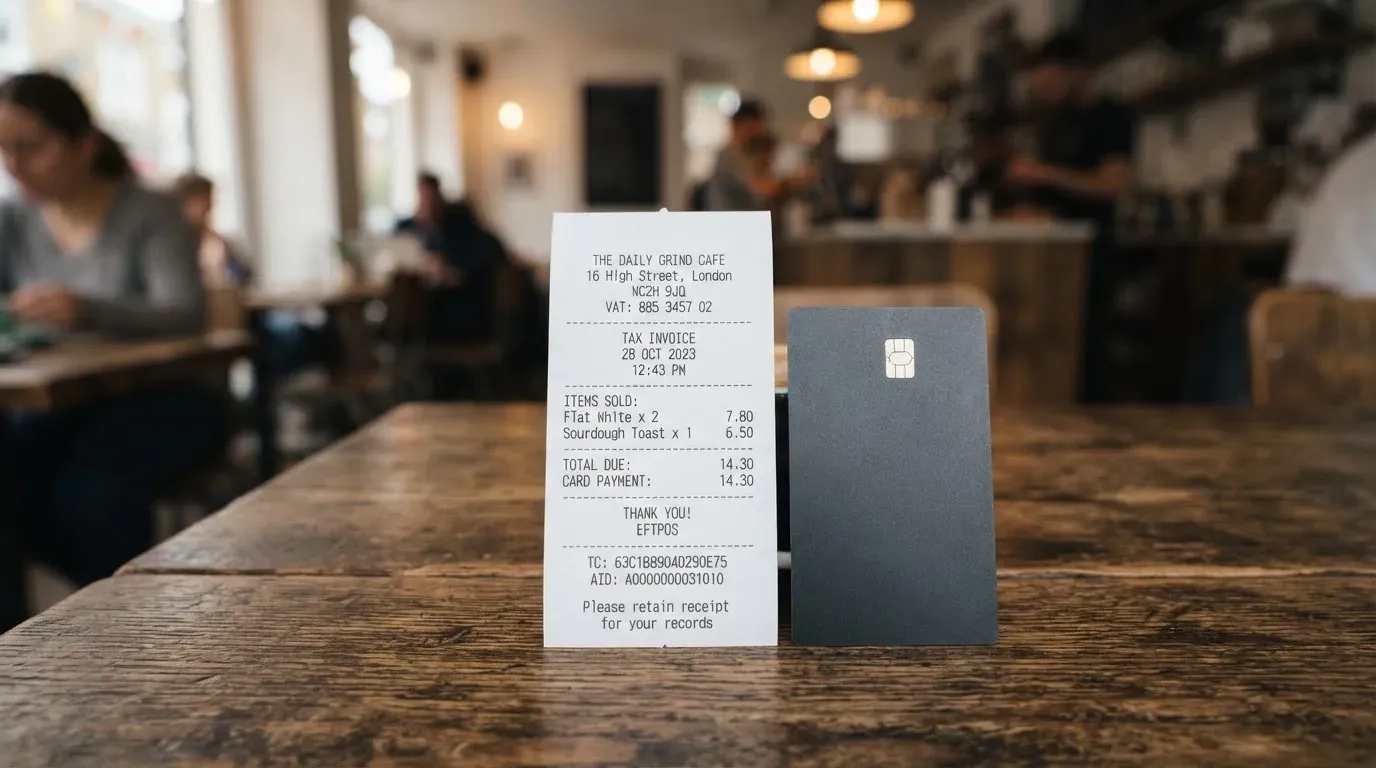
| Fee or limit | Core | Pro | Elite | Physical Elite |
|---|---|---|---|---|
| Monthly subscription (billed annually) | $2.42 | $8.25 | $16.58 | $24.92 |
| Top-up fee | 5% | 4% | 3% | 4% |
| Annual spending limit | $10,000 | $50,000 | $500,000 / month | $150,000 / month ($1M stated in one section) |
| ATM withdrawal | not stated | not stated | not stated | $1,500 / day |
| Virtual card issuance | 28 (currency not stated) | 28 | 28 | 28 |
| Conversion / FX | not stated | not stated | not stated | not stated |
Two real-world scenarios will help you see how this plays out.
A small monthly grocery shop. Suppose you load $200 onto a Core plan. The top-up fee is 5%, so $10 is taken before the balance is credited, leaving you with $190 to spend. On a Pro plan the same load costs you $8. The plan’s monthly fee is the bigger cost over a year: $29 for Core and $99 for Pro. The conversion fee on the actual payment is not disclosed, so I cannot price it in.
A larger annual purchase. If you load $5,000 once a year on a Pro plan, the top-up fee is 4%, or $200, and the subscription is $99. You will have $4,800 to spend, minus the unstated conversion margin. The contrast with the Elite tier is interesting: the same load on Elite would cost $150 in top-up fees but $199 in subscription, and the conversion margin is still unknown. On the highest tier, the top-up fee goes up again to 4%, which is easy to miss when you read only the headline prices.
Two other small details sit in the terms and are worth knowing. Authorisation attempts carry a fee of either USD 0.50 (Article 8) or USD 0.25 (Appendix 1), depending on which part of the terms you read, and the chargeback fee is a flat USD 30, with the company saying its fees are non-refundable. None of these numbers are large, but they tell you the same thing as the rest of the pricing: the company has not done the work of making the price list easy to read.
Top up: how to fund the card
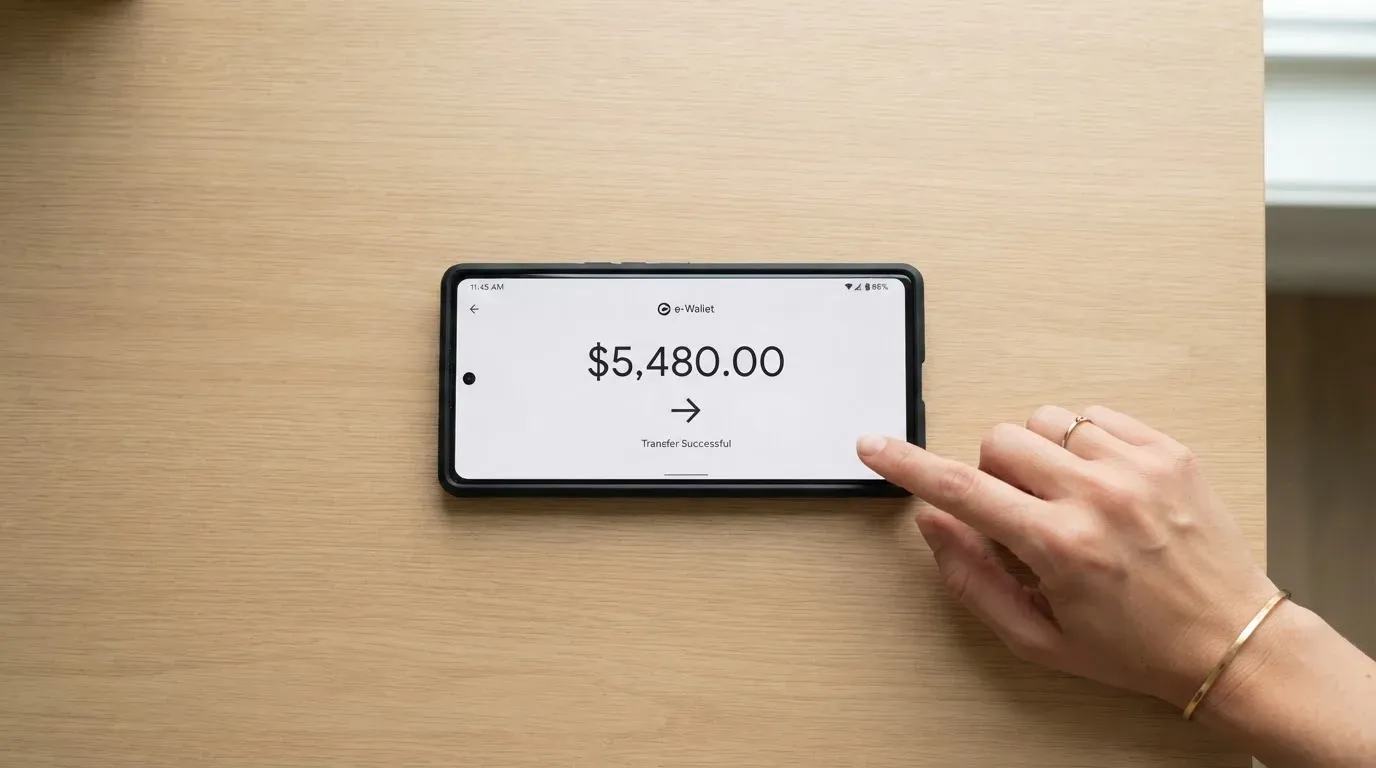
Kardpay takes a narrow but fast approach. The supported tokens are USDT and USDC, and the supported networks are TRC-20 (Tron) and ERC-20 (Ethereum). The site says the funds are usually credited in under ten minutes, which is faster than most on-chain card top-ups, and the only other rule that is spelled out is the top-up percentage, which I covered above. Minimum top-up amount and who pays the network fee (gas or bandwidth) are not stated.
Three things matter in practice:
- Tron is the cheaper network to send on. If you are sending USDT, the difference between TRC-20 and ERC-20 can be a few cents versus a few US dollars, especially when Ethereum gas spikes. Both networks are supported, so you have a choice.
- The same pair of networks is used for USDC. That said, Circle stopped supporting USDC on Tron in February 2024, so if you receive USDC from a Circle-native source, it will usually arrive as an ERC-20 token, and you should send it to the ERC-20 address Kardpay gives you. This is one of those cases where a “TRC-20 / ERC-20” line on a card product page hides a real-world wrinkle.
- The transfer is irreversible. Once your USDT or USDC is on the wrong network, or sent to an address of a different network, recovery is not automatic. The card’s own materials do not describe a recovery procedure, and the support channels I list later are the only route.
On the way out, the terms describe a closure process: the company may defer the net balance and deduct fees before paying it out, and it states clearly that no interest is paid on the balance. There is no published withdrawal procedure for spending balances, because Kardpay is a spending card, not a card you routinely cash out.
Paying with it every day
The everyday-use score of 9 out of 10 reflects three things that go well and one thing that is hard to check.
What works. A virtual card is issued instantly, so you can pay online or add it to a mobile wallet within minutes of signing up. Apple Pay and Google Pay work on all four plans. ATM withdrawals are possible on the Physical Elite card up to $1,500 a day. Staking $KDY (Kardpay’s own token) for 180 days unlocks cashback tiers: 1% at a $3,000 stake, 1.5% at $6,000, and 2% at $18,000. The blocked merchant categories are not stated, so I cannot tell you whether the card will be declined at a casino or at a crypto exchange’s payment gateway.
What is hard to check. The terms do not list blocked categories, and they do not state the card’s currency. If you spend in a currency other than the card’s underlying one, the FX margin is part of the conversion cost, and that margin is not disclosed. The authorisation fee in the terms has the two-figure discrepancy I mentioned above. The app, meanwhile, is only available as a web app, with no listing in the App Store or Google Play.
What to be ready for. Online merchants sometimes decline prepaid or foreign-issued card numbers because the BIN lookup reveals the card type and issuer country, so a payment that works in a physical store can fail on a first online attempt. When that happens, going through 3-D Secure (a one-time code or biometric check) usually clears it, but it is the kind of friction that the headline “Visa or Mastercard” line does not prepare you for.
What can go wrong
The product page is calm, but the legal and corporate backdrop is thinner than I would like.
The company. Kardpay is operated by KRDPAY FZE LLC, registered in Ajman in the United Arab Emirates, with an address in Amber Gem Tower. The company does not display a registration number on its public pages. The card’s issuer is described only as a “network-licensed issuer,” meaning a bank or e-money institution licensed by Visa or Mastercard to issue cards under their network, but the issuer is not named. Disputes are handled under DIFC law and in the DIFC Courts.
The audit and the contract. The smart contract behind the card has been audited by CTDSEC, which is a real audit firm and a useful sign. The contract also says the company can freeze funds, but the page does not describe how customer crypto is held. In practice, this means you are trusting the operator with the balance between the moment your top-up is confirmed and the moment you spend it.
The record so far. I did not find any official incidents on Kardpay’s part, and I did not find any user reports of complaints. There is no Trustpilot page, and I did not find a strong third-party review base. The company lists support channels on Telegram, X, Instagram, and LinkedIn, and it claims 24/7 support, but the languages are not stated. The lack of a long complaint trail is good news on the surface, but it is also the result of a small user base, so it is not the same as a track record.
The category risks. Crypto card programmes have been closed before. Visa terminated its global agreements with FTX in November 2022, and the FTX US debit card was wound down by its issuer. In 2018, WaveCrest, a Visa card issuer that supplied several crypto card brands, was suspended by Visa in Europe, and all WaveCrest-issued programmes were closed. The lesson is that a card programme lives and dies by its issuer’s standing with the network, and Kardpay does not name its issuer. If the issuer’s standing changes, you may have a short window to spend the balance and withdraw any residual funds.
The standard crypto risks. Blockchain transfers are irreversible, so a deposit to the wrong address or on the wrong network is not something the support team can always fix. Stablecoins, despite the name, are not necessarily stable: USDT and USDC have both held their peg over multi-year periods, but USDC temporarily lost its peg in March 2023 during the US banking crisis, and Tether says it has frozen funds tied to illicit activity.
What to take instead
Kardpay is not the only card aimed at readers who are outside the conventional banking system, and three alternatives are worth a look, each with a different emphasis. I will keep this short and focused, because the goal is to help you choose, not to write a second review.
| Card | Score | What it does well | Where it falls short |
|---|---|---|---|
| Cardex | 5.6 / 10 | One card across 200+ countries, real-time crypto-to-fiat conversion at the moment of payment, supports USDT, USDC, and BTC | App Store listing is Naira-focused, fees and limits are not stated on the public site, cashback is not stated |
| TakeCard | 5.5 / 10 | Virtual card available immediately, USD-denominated card, payments in USD at 1:1, 1% commission per purchase | Physical card available only to Bolivian users, the company does not name the coins you can top up with on its help pages, fees for non-USD currencies not detailed |
| OkiCard | 6.0 / 10 | “150+” to “200+” countries, USD or EUR-pegged card, 0% transaction fee in USD, 3% load fee, no hidden exchange spread claimed | Initial deposit 100 USDT, FX fee not stated, BTC and altcoins are “coming soon”, physical card not detailed |
Cardex and TakeCard are the closer comparisons. Cardex supports three coins and leans on a real-time conversion engine that scans exchanges to pick a rate at the moment of payment, which is a different model from Kardpay’s flat top-up fee. TakeCard is the cheaper and simpler card for users in its supported countries, but the physical-card geography is a hard limit if you live elsewhere. OkiCard is the closest in spirit to Kardpay, with multi-network USDT support, a no-monthly-fee structure, and a load fee in the same ballpark, but the 100 USDT initial deposit and the missing FX disclosure mirror Kardpay’s own gap.
Who I would recommend it to
If you hold USDT or USDC on Tron or Ethereum, you live in a country where opening a normal bank account is a struggle, and you are comfortable with an annual subscription plus a top-up fee, the Kardpay card will do what it says on the tin. The score of 6.8 out of 10 reflects a product that does the basics well and falls short on disclosure. You get a working Visa or Mastercard, mobile wallets on every plan, and a high spending ceiling if you upgrade, and you give up clarity on the conversion fee, the FX margin, the company’s registration number, and the name of the issuer.
I would not recommend it if you are paying in stablecoins other than USDT or USDC, if you need a low-cost everyday card, if you want a clearly named issuer and a clearly named regulator, or if you are uncomfortable with the possibility that an unnamed network-licensed issuer could change the programme’s status. In any of those cases, Cardex, TakeCard, or OkiCard is a better fit, with the caveat that each of them has its own gaps.
The final point is one most reviews skip: the card’s strength is also its constraint. By supporting only USDT and USDC on Tron and Ethereum, Kardpay keeps the top-up fast and the user experience simple, but it also cuts itself off from the wider crypto market. If your portfolio is concentrated in those two stablecoins, that is not a problem. If it is not, the card will not stretch to fit you.
Frequently asked questions
What is the Kardpay card?
The Kardpay card is a prepaid Visa or Mastercard that is funded by USDT or USDC sent to a TRC-20 or ERC-20 address. Kardpay offers a virtual card that is issued instantly, plus physical cards on its Elite and Physical Elite plans. The card is operated by KRDPAY FZE LLC, a company registered in Ajman in the United Arab Emirates.
How does the Kardpay card work?
You create an account on the web app, choose a plan, and pay the annual subscription. You then receive a virtual card, which you can add to Apple Pay or Google Pay. To spend, you top up the card by sending USDT or USDC on Tron or Ethereum to a deposit address, and the converted balance is credited in under ten minutes. The card spends from that pre-loaded balance, so it cannot overdraw.
Is Kardpay a bank?
No. Kardpay is operated by a UAE free-zone company, KRDPAY FZE LLC, and the card itself is issued by an unnamed “network-licensed issuer,” meaning a bank or e-money institution licensed by Visa or Mastercard. Kardpay markets and manages the card programme but is not described as a bank on its public pages.
Who owns Kardpay?
The operating company is KRDPAY FZE LLC, based in Amber Gem Tower in Ajman, UAE. The public pages do not give a registration number for that company, and they do not name the issuer that actually issues the cards. The terms say disputes are handled under DIFC law and in the DIFC Courts.
Is the Kardpay card available in my country?
Kardpay’s site says the card is available in “180+ countries,” without listing them. The terms reference sanctions and embargo regimes recognised inside the DIFC, so the practical exclusions are the usual sanctioned territories. If your country is not in a sanctioned-territory list, the card is likely available, but you should still confirm with support before signing up.
How do I get the Kardpay card?
You sign up on the web app at app.kardpay.app, complete the company’s verification steps, choose a Core, Pro, Elite, or Physical Elite plan, and pay the annual subscription. The virtual card is issued instantly, and the physical card is shipped separately if your plan includes one. Kardpay’s pages do not state the delivery time for the physical card.
Does the Kardpay card require KYC?
The terms say the company uses “standard cardholder verification” for Apple Pay and Google Pay, and that it keeps anti-money-laundering records for five years. The exact documents, the levels of verification, and the thresholds for higher limits are not described on the public pages, so you should expect a basic identity check at signup and possibly more if you upgrade.
How do I top up the Kardpay card?
You send USDT or USDC from a wallet you control to the Tron or Ethereum address Kardpay gives you in the app. The top-up is usually credited in under ten minutes. The top-up fee is 5% on Core, 4% on Pro, 3% on Elite, and 4% on Physical Elite. Minimum top-up amount and which party pays the network fee are not stated on the public pages.
How much does the Kardpay card cost?
The annual subscription is $2.42 a month on Core, $8.25 on Pro, $16.58 on Elite, and $24.92 on Physical Elite. The virtual card issuance fee is 28 in an unstated currency, and the top-up fee ranges from 3% to 5%. Conversion fees, foreign-exchange margins, ATM fees on most plans, and minimum top-up amounts are not stated on the public pages.
Is the Kardpay card safe?
The smart contract behind the card has been audited by CTDSEC, and the company has no public record of major incidents. The company can freeze funds under the contract terms, and customer custody is not described in detail. The card’s issuer is unnamed, so a key risk is the standing of that issuer with Visa or Mastercard; if the issuer’s status changes, the card programme could be wound down.
Virtual cards for online use – cryptocardselect
Content created by the «cryptocardselect» team