
COCA card review
 Available in US
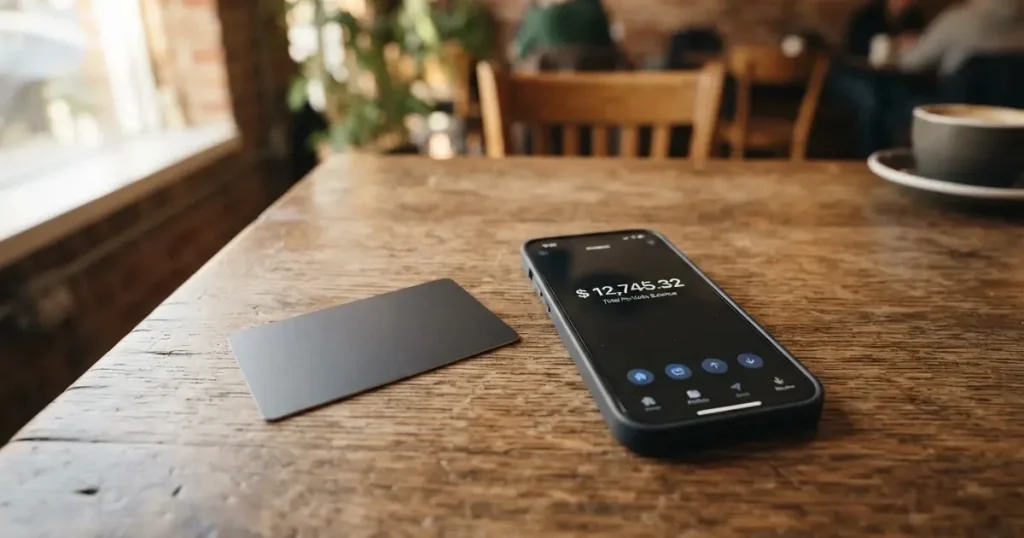
COCA is a payment card that spends from a crypto balance, with a non-custodial wallet under the hood and a Visa network on top. The pitch is simple: convert stablecoins or fiat, tap to pay, and earn cashback in stablecoins on the way. The reality, after reading the card’s own terms and what users have written about it, is more uneven. This review walks through who can actually get one, what it costs, where the fine print is silent, and what to compare it against.
Conditions are current as of October 28, 2026.
Verdict
COCA earns 6.4 out of 10 in our scoring. The everyday experience is good if you already live inside a crypto wallet and want to spend stablecoins without first cashing out: a real Visa card, a virtual one, free ATM withdrawals up to a monthly ceiling, and a cashback scheme that is genuinely generous on subscriptions. The weak points are the things COCA does not tell you. The card issuer is not named on the public pages. The card fee schedule is not published. The cost of issuing the physical card is hidden inside a mandatory first top-up. The “no KYC” line on the marketing site sits next to terms that require you to cooperate with the provider’s verification requests. And a series of user reports, some of them from 2026, describe funds stuck after app updates, deposits sent to the wrong network, and accounts closed after long waits. None of this is unusual for a young crypto card, but it is what you would be walking into.

The card fits a specific reader: someone who already holds stablecoins, is comfortable with a non-custodial wallet, and is willing to treat COCA as one tool rather than their main account. If you need a primary bank card with predictable fees, published limits, and a regulator behind it, this is not it.
Score breakdown
| Criterion | Mark | Reason |
|---|---|---|
| Who can get it | 8 / 10 | Wide geographic reach; the restricted-country list is the standard one, with a few additions |
| Cost | 6 / 10 | No maintenance fee, but the issuance price is folded into a mandatory first top-up and the fee schedule is not published |
| Top-up options | 5 / 10 | Three entry points are named, but coins, networks and minimums are not |
| Reliability and complaints | 4 / 10 | Issuer not named, mixed user reports, several complaints about stuck funds |
| Everyday use | 9 / 10 | Physical and virtual Visa, ATM withdrawals within a free monthly ceiling, cashback structure is strong on subscriptions |
Will they give you the card
COCA says the card is “currently available in the UK, EEA, Asia, South America, Middle East and Africa” and asks you to check the area in the app before signing up. The same terms list restricted jurisdictions: Afghanistan, Iran, Iraq, Cuba, Syria and others. If you live in one of the named regions, the door is open. If you do not, the app will tell you when you try.
The same paragraph is honest about why this matters. Country rules drive most of the friction in onboarding a crypto card, and COCA has not loosened them.
How to get it
The card itself comes in two forms, a physical Visa and a virtual one, and the currency is not stated on the public pages. The marketing site says “no KYC hassles” about the wallet, and the terms require you to cooperate with the provider’s verification requests when asked. Card-specific KYC documents, the list of accepted IDs, the verification time and the rejection reasons are not published anywhere on the site. A third-party walkthrough from October 2026 says you choose the country of your KYC ID and pass the issuer’s identity check; this is unofficial and not confirmed by COCA.
Delivery time for the physical card is not stated. The same unofficial source reports delivery as fast in at least one case, but it is a single anecdote, not a guarantee.
What it really costs
The fee schedule is the most opaque part of COCA. The terms say fees are “disclosed at the time you access the Service,” which is not the same as publishing a fee page. The App Store listing says “no maintenance fees” and “free ATM withdrawals up to $250/month” — those two numbers you can rely on. Beyond them, the rest of the picture comes from third parties and is unofficial.
A third-party review from October 2026 (penchan.co) reports that the card is free to issue with no minimum, the annual fee is US$0, and the physical card requires a first top-up of EUR 50, from which the production and shipping cost is deducted and the remainder stays on the card as balance. The amount of that production-and-shipping fee is not stated by COCA. The same source puts the FX fee at 0.5–1.5% by currency, with USD and EUR at 0%, and says top-ups are free apart from on-chain network fees. Another aggregator (cryptocardhub/spendnode) reports 0% FX and no annual fee. A September 2026 Trustpilot reviewer argues that the cost is hidden in the spread rather than in a published fee. All of this is unofficial and not confirmed by COCA.
Unofficially, sources report that withdrawals above the monthly free allowance incur a 2% fee, though the exact allowance amount at which this applies is not confirmed by COCA.
Spending limits are also not published. The unofficial reports split: one says there is no spending limit, another cites a EUR 30,000 daily limit with unlimited transactions (single source). Cashback, by tier, is claimable in a range reported by the same third party (US$15–350 a month depending on tier) but the tiers themselves are described only at a high level: Basic is automatic, higher tiers require $COCA held in wallet, the rate and the monthly cap depend on tier and region, and above the cap the rate drops to 1%. The names, thresholds and caps of higher tiers live in a “Tier System Terms & Conditions” that is not on the pages we read.
COCA cost at a glance
| Fee or limit | Official statement | Unofficial reports |
|---|---|---|
| Issuance | Not stated by COCA | Free with no minimum; physical card first top-up of EUR 50 covers production/shipping, balance remains |
| Annual / monthly fee | “No maintenance fees” (App Store) | US$0 annual |
| Conversion / swap | Footer advertises “fee-free swaps” | Costs said to sit in the spread (Trustpilot, Sep 2026) |
| FX markup | Not stated by COCA | 0.5–1.5% by currency, USD and EUR 0% (one source); 0% (another source) |
| ATM withdrawal | “Free ATM withdrawals up to $250/month” (App Store) | 2% above the monthly allowance; allowance amount not stated |
| Daily / monthly spending limit | Not stated | “No spending limit” (one source); EUR 30,000 daily (another, single source) |
| Cashback monthly cap | Amounts not given | US$15–350 a month by tier (third party) |
The honest reading is that the things COCA is willing to print in public — no maintenance fee, free ATM withdrawals up to $250, fee-free swaps — are the friendliest part of the picture. The cost of a physical card, the FX markup, the ATM allowance, the spending limit, and the cashback caps are all things the company has chosen not to publish.
Three everyday payments and what they cost
A subscription in USD. A EUR 30 dinner. A USD 100 ATM withdrawal.
- USD subscription: this is the case COCA was built for. Cashback up to 50% on Netflix, Spotify and similar services at the top tier, falling to 1% above the monthly cap. USD spending carries no published FX markup, so the cost is the on-chain fee for the top-up that funded the card and any spread inside the conversion. For Basic tier the cashback rate is lower but still meaningful.
- EUR 30 dinner: payment goes through Visa at the merchant’s rate. If your balance is in EUR, no FX. If it is in a stablecoin, COCA converts to EUR at the rate you see in the app, with the FX markup reported as 0% for USD and EUR in one unofficial source. Cashback applies on top, in stablecoins.
- USD 100 ATM withdrawal: free under the App Store allowance of $250 a month. Above that, one unofficial source says 2%. If your balance is in a non-USD stablecoin, conversion at the app’s rate applies.
How to top it up
The top-up routes are described in the same cautious way the rest of COCA is. The official documentation says you can fund the card by IBAN in EUR or USD, from other cards, or with stablecoins, and lists those three entry points. Coins and networks are not named on the page we read. Fees, minimum top-ups and who pays the network fee on a stablecoin transfer are not stated by COCA.
The non-custodial structure is what makes the top-up process different from a typical crypto card. Terms say your assets are transferred to a third-party linked smart contract wallet for fiat payments. In practice, that means a stablecoin top-up is an on-chain transfer from your wallet to a contract address COCA controls. The tokens then settle into a balance the card can spend. The “non-custodial” label here is partial: you hold your own keys in the wallet, but the moment you top up the card, the funds move into a contract you do not control.
Two consequences follow. First, on-chain fees (gas, bandwidth) are paid by you, the sender, and they are charged by the blockchain, not by COCA. Second, transfers are irreversible, so a stablecoin sent on a network COCA does not support, or to an address of another network, can be lost. A Trustpilot review from August 2026 reports a deposit on the correct network that did not arrive, with the support ticket open for over a week; a September 2026 review reports two USDC transfers via X Layer that were never refunded. These are user reports, not adjudicated findings, but they are the shape of the risk.
The IBAN route in EUR or USD is the boring one. It is a regular bank transfer to a COCA account, with whatever delay and fee your bank charges, and you should expect SEPA timing of a working day or two for EUR within the EEA.
The “from other cards” route is the third option and is not detailed in the public materials.
Paying with it every day
In a shop, the COCA card behaves like any other Visa. Tap, insert, or swipe, depending on the terminal. Online, you type the number in. The card currency is not stated; spending is described as in stablecoins and fiat, with the card drawing on the balance you have loaded.
Mobile wallets are not addressed in the official documentation. Third-party sources (penchan.co, October 2026; spendnode.io) report that both Apple Pay and Google Pay are supported, but this is unofficial and not confirmed by COCA. The card supports 3-D Secure for online payments, and your bank may add an identity challenge the first time you use a new merchant.
The cashback structure is where COCA tries hardest. Up to 8% in stablecoins on card spend, and up to 50% on subscriptions such as Netflix and Spotify. Basic tier is automatic; higher tiers require $COCA held in the wallet; above the tier’s monthly cap the rate drops to 1%; a 30-day grace period applies on downgrade. The terms also say higher-tier members can request increased card spending limits through the App Store listing, though the application process is not described.
The app is iPhone-only for the moment, with iOS 17.0+ and a visionOS 1.0+ build, version 3.10.0. The App Store rating is 3.9 out of 5 from 37 ratings (read on 2026-10-20). The Google Play package is listed as com.wirex.wallet, which hints at the operational history of the product (see below); the rating was not retrievable at the time of writing. App Store language is English only.
Disputes are governed by English law and the terms require individual claims only — class actions are excluded. The terms do not mention chargebacks at all, which is unusual for a card product. Time frames for raising a dispute are not stated.
What can go wrong
The risks with COCA fall into four buckets: company, wallet, support, and regulatory.
On the company side, COCA is run by CCA Labs – FZCO, registered at Dubai Digital Oasis, UAE, under DSO-FZCO-31557. The card issuer is not named on the public pages, which means the licensed institution behind the card programme is not visible to you before you sign up. An unofficial source (penchan.co, October 2026) suggests the issuer is Wirex, and the Google Play package is com.wirex.wallet, which is consistent with that. A January 2024 Trustpilot review describes Wirex accounts being moved into the Coca Wallet app, and a November 2024 press release advertised a limited-time zero-fees promotion on swaps, spending and FX. None of this is confirmed by COCA in the materials we read.
On the wallet side, the product uses a non-custodial wallet built on Multi-Party Computation. The FAQ says there is no seed phrase; the terms refer to a “Recovery Phrase” and state that COCA cannot recover access if you lose it. The two statements are not the same, and the gap is something you should think about before you put meaningful funds in. Swaps are protected by Flashbots to reduce front-running. Freeze in app, insurance and recovery procedures are not stated.
On the support side, the published channels are email at [email protected], a Discord “Need Help?” channel, a Telegram group at t.me/coca_card, and X at @coca_card. Hours are not stated. App Store language is English only. The Trustpilot score for the company is 2.8 out of 5 from 31 reviews (read on 2026-10-20), with 78% five-star and 16% one-star. The negative reviews cluster around a small number of themes: funds or cards inaccessible after an app update (a June 2026 report waited three months), deposits on the correct network that did not arrive, USDC transfers via X Layer that were not refunded, accounts closed after long waits with only part of the balance returned, and the SEPA transfer held for compliance. A September 2026 reviewer argues the “0% FX” line hides a spread. COCA answers many of the negative reviews, usually asking for a ticket number.
On the regulatory side, a crypto card depends on two licences: a payment licence for the card itself and a crypto licence for the custody and exchange side. The card issuer is not named, so the payment licence is not visible. Under MiCA, the EU’s crypto regulation, providers operating under national law can continue only until 1 July 2026 or until they receive or are refused a MiCA authorisation; a provider without an authorisation by that date is not a legal option in the EU. There is no public statement from COCA about a MiCA authorisation in the materials we read.
What to take instead
Three alternative cards come up in the same category, with different trade-offs. The score below is the internal one we use to compare options side by side; it is not a public rating from any of the providers.
| Card | Score | Geography | Card | Funding | Cashback |
|---|---|---|---|---|---|
| COCA | 6.4 / 10 | UK, EEA, Asia, South America, Middle East, Africa (with restricted-country list) | Visa, physical and virtual | IBAN in EUR/USD, other cards, stablecoins (coins and networks not named) | Up to 8% on spend, up to 50% on subscriptions, in stablecoins |
| Whop Cards | 5.2 / 10 | 31 US states for consumers (more for businesses); broad unsupported-country list | Visa | Spends from a Whop balance funded by stablecoin collateral from a linked wallet | 5% at select merchants, currently Uber |
| Stella | 6.5 / 10 | Countries not stated on the official site; sanctions bar; US and European users routed through affiliates | Virtual and physical Visa | Crypto deposit auto-tops-up the card (in-app wallet, custodial) | No card cashback stated (Earn product is separate yield) |
| UniFi Card | 4.7 / 10 | Not confirmed; send-money routes to PH, MX, eurozone, CO, BR, UK | Prepaid debit Visa, USD, issued by Lead Bank | ACH, wire, SEPA, SPEI, USDC | “3% rewards on balances” (card cashback not stated) |
Whop Cards is a US-shaped product with a long unsupported-country list and a Whop balance at the centre. If you are a US-based creator or buyer and you want a card that spends a Whop balance, it works; if you are outside the US or in one of the excluded jurisdictions, it is not a candidate.
Stella sits a half-point above COCA in our scoring. The card is virtual and physical, it is a Visa, and the funding flow is the simplest of the four: deposit crypto, the card tops up automatically. The trade-off is that the wallet is custodial, which means you do not hold the keys. Cashback is not part of the card product; the yield comes from a separate Earn product.
UniFi Card scores below COCA. The published information is thin, the funding options are mostly US-rail-shaped, and the rewards number on the listing (“3% on balances”) is a balance yield, not a card cashback.
Who I would recommend it to
I would recommend COCA to a stablecoin holder who already lives in a non-custodial wallet, who wants a real Visa to spend that balance without first cashing out to a bank, and who is happy to treat the card as one tool rather than the main account. The cashback structure on subscriptions is the strongest argument in its favour; if you pay for Netflix, Spotify and a handful of similar services every month, the rate at the top tier is genuinely generous.
I would not recommend COCA as a primary bank card, as a first crypto card for someone who has never held their own keys, or as a card for anyone who needs published limits, a named issuer, and a regulator in writing. The fee schedule is incomplete, the FX markup is described by users but not by COCA, the physical card price is hidden in a mandatory first top-up, and the Trustpilot pattern around stuck funds and account closures is real even if it is a small fraction of the user base.
The honest reading is that COCA is a workable product for a specific reader and an immature product for anyone else. If you fit the reader profile, the card does what it says. If you do not, the parts of the offer that are not in print are exactly the parts you would want to be in print.
Frequently asked questions
What is the COCA card?
The COCA card is a Visa debit card that spends from a crypto balance, paired with a non-custodial wallet built on Multi-Party Computation. It comes as a physical card and a virtual one, and it is operated by CCA Labs – FZCO, a company registered in Dubai Digital Oasis, UAE. The card issuer is not named on COCA’s public pages.
How does the COCA card work?
You fund a balance by IBAN in EUR or USD, from another card, or with stablecoins, and the card spends that balance at merchants that accept Visa. Stablecoin top-ups are on-chain transfers to a smart contract COCA controls. Spending in a currency other than your balance triggers a conversion at the app’s rate.
Is COCA a bank?
No. COCA is not a bank and does not hold a banking licence. The card programme depends on a payment licence held by an unnamed issuer, and the company behind the app, CCA Labs – FZCO, is registered in the UAE. Funds on the card are not deposit-protected.
Who owns COCA?
COCA is operated by CCA Labs – FZCO, registered at Dubai Digital Oasis, UAE, under company number DSO-FZCO-31557. The card issuer behind the programme is not named on COCA’s public pages. The Google Play package is com.wirex.wallet, which is consistent with reports that the issuer is Wirex; COCA has not confirmed this in the materials we read.
Is the COCA card available in my country?
COCA says the card is available in the UK, the EEA, Asia, South America, the Middle East and Africa, and asks you to check the area in the app. Restricted jurisdictions include Afghanistan, Iran, Iraq, Cuba, Syria and others. The app will tell you at sign-up whether your country is supported.
How do I apply for the COCA card?
You download the iPhone app (iOS 17.0+), check the area in the app to confirm your country is supported, complete the wallet setup, and pass the issuer’s identity check. A third-party walkthrough from October 2026 says you choose the country of your KYC ID; the list of accepted documents and the time the check takes are not published by COCA.
Does the COCA card require KYC?
The marketing site says “no KYC hassles” about the wallet. The terms require you to cooperate with the provider’s verification requests when asked, and the app routes you through the issuer’s identity check at sign-up. Card-specific KYC documents, time frames and rejection reasons are not published by COCA.
How do I top up the COCA card?
You can top up by IBAN in EUR or USD, from another card, or with stablecoins. Coins, networks, minimum top-ups and who pays the network fee on a stablecoin transfer are not stated by COCA. On-chain transfers are irreversible, and a stablecoin sent on a network COCA does not support can be lost.
Can I add the COCA card to Apple Pay or Google Pay?
The official pages do not address mobile wallets. Third-party sources from 2026 (penchan.co and spendnode.io) report that both Apple Pay and Google Pay are supported; this is unofficial and not confirmed by COCA. If mobile wallet support matters to you, the safest move is to confirm it inside the app before you fund the card.
Is the COCA card safe to use?
The wallet is non-custodial and uses Multi-Party Computation, which means you hold the keys rather than the company. The terms refer to a “Recovery Phrase” and state that COCA cannot recover access if you lose it. The card side is harder to judge: the issuer is not named, the fee schedule is not published, and a non-trivial fraction of Trustpilot reviews describe funds stuck after app updates, deposits on the correct network that did not arrive, and accounts closed after long waits. Treat it as one tool, not your main account, and never load more than you can afford to wait out.
Money-app cards – cryptocardselect
Content created by the «cryptocardselect» team