
The Exa card is self-custody spending on crypto collateral, virtual only, with a 1.5% fee on anything that is not dollars
 Available in US
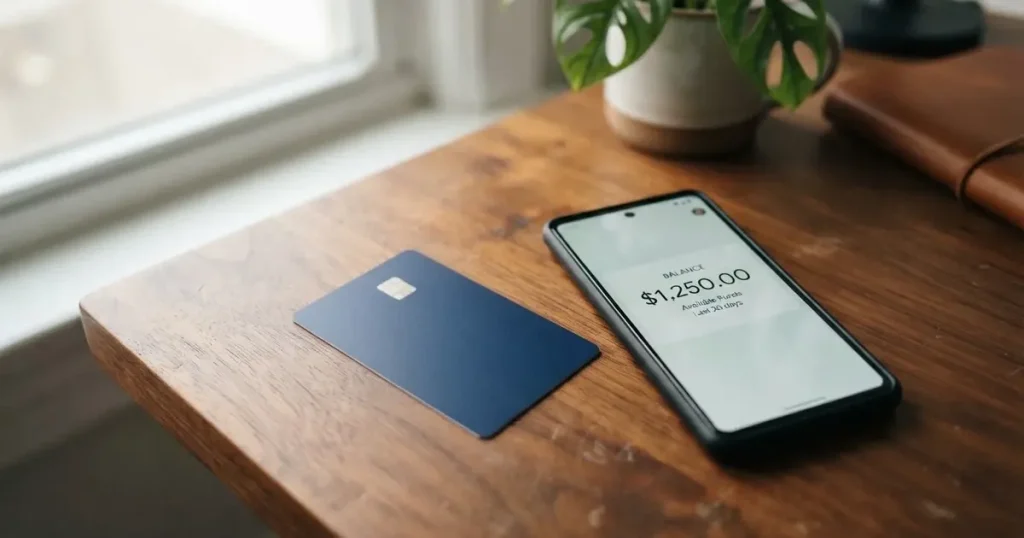
Exa is not a bank and not an exchange. It is a self-custody crypto app with a virtual Visa card attached to it, and a credit line that you spend against the crypto you already hold. That is the whole idea: your coins stay in your own wallet, the card borrows against them, and you get something that behaves like an ordinary Visa at the till. If you cannot open a normal bank card where you live, that idea is genuinely interesting. If you want a cheap debit card with cashback and predictable statements, this is not that product.
The conditions described below are current as of October 28, 2026. Country lists, fees and limits move; check them yourself before you commit anything.
My score for the card is 6.2 out of 10.
| Criterion | Mark | Why |
|---|---|---|
| Who can get it | 7 / 10 | Issued in 45 countries and 31 US states; 18 countries closed, including Russia |
| Cost | 7 / 10 | Officially a 1.5% fee on non-USD payments; card opening fee folded into the rate |
| Top-up options | 6 / 10 | Funding in USDC, ETH, wstETH, WBTC, OP; networks not named publicly |
| Reliability and complaints | 5 / 10 | Exa Labs SAS is the company, the issuer is unnamed, third-party complaint signals are weak to poor |
| Everyday use | 5 / 10 | Virtual only, but Apple Pay and Google Wallet both work |
| Total | 6.2 / 10 | A workable tool for a narrow situation, not a general-purpose card |
Who it suits, and who it does not
The card is built for self-custody users who already hold crypto and want to spend it without handing the keys to a platform. The collateral model means you are borrowing against assets you own, not loading a prepaid balance, and the app runs on non-custodial smart contracts. If that is your situation — you hold USDC or ETH, you want to pay for things without selling manually, and you are comfortable with the risk that crypto collateral can lose value while the spending limit still stands — then the fit is real.
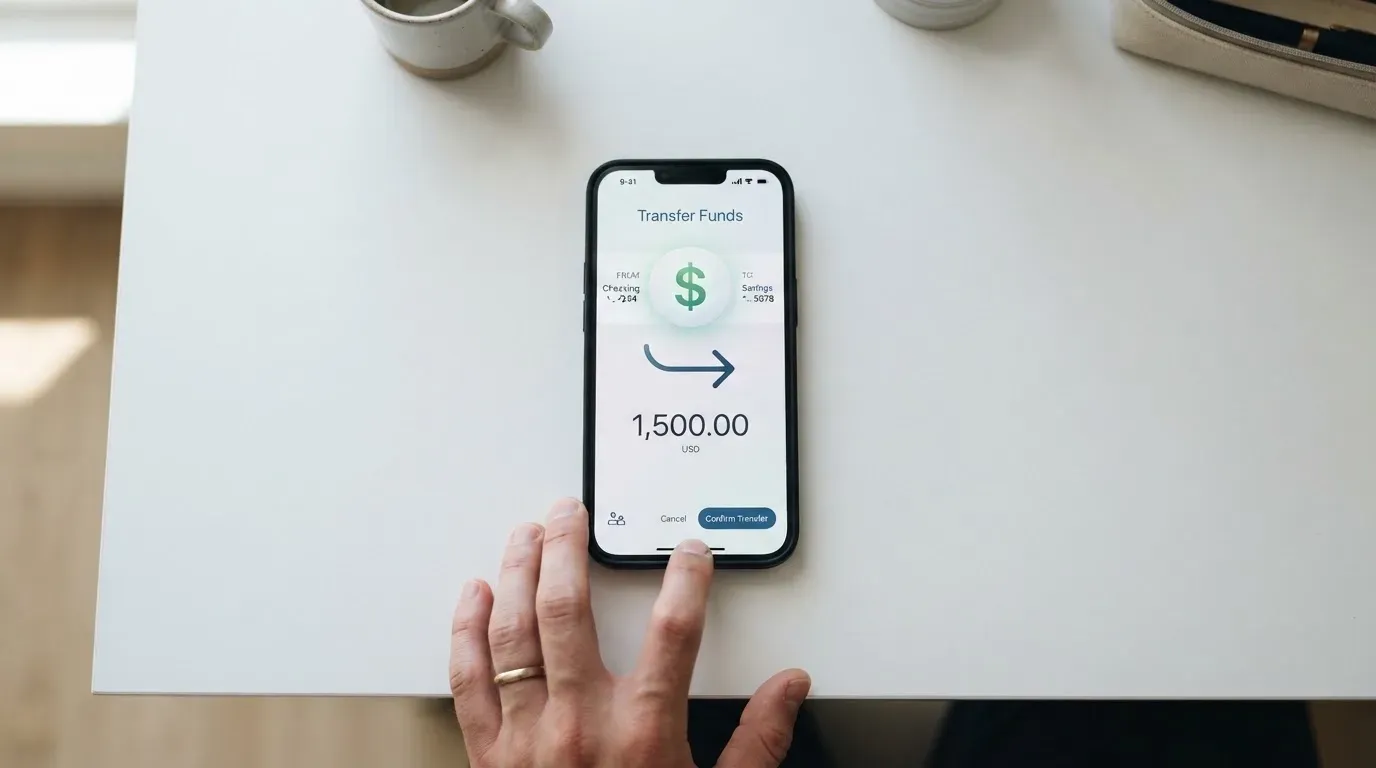
It is a poor fit for everyone else. There is no physical card, so if you pay in places that insist on a plastic card or need a card for a hotel deposit, you will hit a wall. There is no multi-currency balance, so every purchase that is not in dollars gets hit with the same fee. And if you cannot get a normal bank card for reasons of paperwork, address or banking history, you should understand that Exa’s answer to that problem has its own paperwork: identity checks, source-of-funds reviews, and a company whose support record third parties describe as thin.
The name “Exa” tells you nothing about a bank. The company behind it is Exa Labs SAS. The card is issued in the United States, and a US legal address in San Juan, Puerto Rico is provided by Rain. Rain supplies the issuing plumbing, not the card programme’s day-to-day service.
Will they give you the card?
Eligibility runs on residence, not citizenship. The card is issued in 45 countries, and the ones the company names include Argentina, Brazil, Japan, Kenya, Mexico, Singapore, South Africa and the UAE, with Nigeria available conditionally. In the United States it goes to 31 states. Eighteen countries are ineligible, and the named list includes Belarus, China, India, Iran, Israel, Turkey, Ukraine, Vietnam and Russia.
The Russian line is worth stating plainly because people ask it constantly: Russian residents cannot be issued a card, and the card is also not usable for spending in Russia. That is a closed door, not a technicality.
Spending is blocked in a separate set of countries entirely from the eligibility list — Cuba, Iran, North Korea, Russia, Syria, Ukraine and Venezuela. So a card you are offered in one country cannot be used in another, and the two lists do not match. Do not read the 45-country figure as “works almost everywhere.”
If you are outside the eligible set, none of the rest of this review applies to you, and no alternative reading of the rules changes that.
How to get it
The application is short. You download the app and add funds. The KYC check takes about 3 minutes, and the card request runs through a single validation step that the company puts at no more than 3 minutes. That speed figure is a marketing number on a page, not a promise about your particular file, and anyone who has dealt with automated identity checks knows that the honest answer to “how long” is “usually fast, sometimes not”.
What the public pages do not say is just as informative as what they do. The documents you will be asked for, the proof of address, the age requirements — none of that is stated. Nor are the reasons a request can be refused. You are not being told the rules in advance, which means you cannot pre-empt a rejection.
Above $10,000 in weekly purchases, an automated source-of-funds check starts: a form plus supporting documents. Raising your limits requires proof of address and proof of funds. So the ceiling is not a fixed number you negotiate once — it is a number that can move up when you supply paperwork and can be reached faster by someone whose documents verify cleanly.
The card itself is virtual. There is no physical version: the site states that no physical cards are available at the moment. It lives in Apple Pay or Google Wallet, which is why delivery and replacement questions do not really apply — you cannot lose the plastic, because there is no plastic.
The card currency is USD. Every purchase in another currency is charged a 1.5% foreign-exchange fee, folded into the exchange rate rather than billed as a separate line.
Fees, costs and limits
The card is marketed as free. The public page gives no amounts, and there is a help-centre article on associated fees that the page does not reproduce. So the honest position: the headline is “free”, and the detail lives behind a link. What is documented publicly is the fee you will pay most often.
| Fee or limit | What the card says | Confidence |
|---|---|---|
| Card issuance and annual fee | $0 | Unofficial (third-party, August 2026) |
| FX fee, non-USD purchases | 1.5%, included in the rate | Official |
| Loan origination fee | May apply, folded into installment interest | Official |
| ATM withdrawal | $1 plus 0.65% | Unofficial (third-party, August 2026) |
| ATM withdrawal limit | $250 per withdrawal, four per day | Unofficial (third-party, August 2026) |
| Weekly purchase limit | $10,000 | Official |
| Daily, monthly, ATM limits | Not stated on the pages read | Official, absent |
Three everyday payments, and what happens to each:
- Coffee in your own country, priced in dollars. The clean case. No FX fee, no conversion line, just the purchase. This is where the card behaves like a normal card.
- A subscription billed in euros, or anything bought while you are abroad. The 1.5% FX fee applies, folded into the rate. It is not hidden as a separate charge but it is also not avoidable while the currency is not USD. On a small purchase it is nearly invisible; on a large one it is a real line item.
- Anything on installments. The card’s own help material points to a loan origination fee that may be charged and is included in the installment interest. The exact rate depends on the protocol and the term, and neither is published on the page.
The ATM numbers are the ones to treat most carefully. They come from a third party, not from Exa, and they come with conditions: a contactless NFC ATM, a PIN from the app, and the ATM operator may add its own fee on top. Treat $1 plus 0.65% as a floor to check, not a promise.
There is one card, not a set of tiers. The Visa Signature Exa Credit Card is the product. No paid plans, no higher tier, no metal anything. That is either simplicity or a lack of ambition, depending on what you wanted.
How to top it up
You need funds in the account before the card works at all — the company’s own line is that you must have funds to enable the Exa Card. The account holds your collateral, and you spend either through Pay Now or in installments against that collateral, which is the credit line.
The supported assets, per the documentation, are USDC, ETH, wstETH, WBTC and OP. These are collateral in Exactly Protocol markets. Notice what is missing: the networks are not named. That single omission is the most likely cause of a lost deposit in this category, because a transfer sent on a network the provider does not support, or to an address belonging to a different network, can be gone.
What the help articles read do not state: the deposit fee, the minimum top-up, and what fiat on-ramp options exist and what they charge. The associated-fees article lists only the FX fee and the loan origination fee — deposit and top-up costs simply are not covered in what was readable.
Third parties say crypto deposits carry no stated fee and that fiat on-ramp fees vary by route and country. That is unofficial, dated August 2026, and not confirmed by the card.
Money can also leave: the site says funds can be sent to a bank account or digital wallet, and withdrawn from ATMs. The fees, limits and timelines for all three are not given. What happens to your balance if you close the account is not stated either, and that is the single question I would want answered before I ever funded this.
The general rule that applies to every crypto card: the network charges its own gas for a deposit. That cost belongs to the blockchain, not to Exa, and it is why sending a small amount of ETH is a bad idea when you hold USDT — fees on Ethereum are paid in ETH, so a wallet with the token and none of the gas token cannot send.
Paying with it every day
You add the card to Apple Pay or Google Wallet — both have help articles, so both work — and that is the whole physical arrangement. Restricted merchant categories are not stated.
On rewards, be clear about what exists. There is no cashback stated. The “Earn while you spend” line refers to yield on your assets, not to rebates on your shopping. What the help centre does list are Visa Signature benefits, 20% off Airalo eSIMs, and a US activation reward: spend $100, get $20 in XRP via Uphold. Third parties could not confirm any current cashback, and report an earlier 1.5% USDC cashback as historical and unverified. Treat the cashback question as answered: no.
The app is mobile, reached by QR-code link on the site, with a web version at web.exactly.app, and the documentation says iOS and Android. Store ratings are not shown on the official pages. Third parties report 5.0 out of 5 on the Apple App Store from 4 ratings, and 2.7 out of 5 on Google Play from 58 ratings. Four ratings is not a reputation; fifty-eight is a small sample with a bad average. Take the second number more seriously than the first.
One behaviour will surprise you the first time it happens. A purchase is placed on hold at authorization and usually completes one to three days later. The final amount can differ from what you expected — tips, hotel holds, exchange-rate moves. That is normal for card settlement, but it means your balance can move after the moment you paid.
Disputes, refunds and chargebacks: not stated. There is no published policy telling you what happens when goods do not arrive or a charge is wrong. That is a real gap, and in this category it is not unusual — but it is a gap nonetheless.
What can go wrong
Start with the support and complaints picture, because it is the weakest part of the offer. There is no Trustpilot page for exactly.app and no Reddit reviews found. A third-party aggregator gives Exa 5.7 out of 10 and cites KYC failures for users in African markets, especially Nigeria, no documented support service levels, and exclusion of 24 US states. That exclusion figure does not match the 31 states the company names, which is worth noticing in itself.
The company and the programme are also more layered than a single name suggests. Exa Labs SAS is the operator. The cards are described as issued by licensed third parties, and the issuer bank is not named. Exa Labs states it does not issue payment instruments. So the entity holding your card programme is not the entity whose app you use — that is normal in this industry, but it means you are trusting a chain of parties you cannot fully see.
The Exactly Protocol exploit of $7.3M in August 2023 comes from the same third-party aggregator and is not confirmed by the card. Your collateral sits in Exactly Protocol markets. Whatever the current state of that protocol’s security, the event is the reason to keep the position size you can survive losing.
On the security side, the account is self-custodial and secured with passkeys, with an optional second account owner, and borrowing and spending run on non-custodial smart contracts. Audits and insurance are not mentioned on the page. In-app freeze and spending controls are not stated.
Self-custody is a trade, not a free win. Control of your crypto belongs to whoever holds the key; a seed phrase is typically 12 to 24 words in plain form, and anyone who gets it can restore the wallet and spend the funds. Transfers are typically irreversible, and a stolen key has no built-in recovery. You accept that in exchange for the platform not being able to lose it.
Two more things to know before you are declined somewhere. Merchants can look up the issuing country from the card’s first digits and apply extra scrutiny when it differs from your billing address — which is why a card issued in one country can look foreign in another. Address verification is mostly a US, Canada and UK service and is generally unavailable for foreign-issued cards, which causes declines. And declined authorisations can leave a hold on funds for several days, typically up to seven.
What to take instead
| Exa | Nexo | Pay3 | Cardex | |
|---|---|---|---|---|
| My score | 6.2 / 10 | 6.3 / 10 | 6.3 / 10 | 5.6 / 10 |
| Card form | Virtual Visa only | Virtual and physical | Virtual, physical, Apple Pay and Google Pay | Virtual and physical, Naira-focused |
| Cost | $0 issuance (unofficial), 1.5% FX | No monthly, annual or inactivity fee; physical card needs Gold tier and balance above $5,000 | Issuance from $5; spend from $0.15 | Not stated |
| FX | 1.5% | 0.2% weekdays EEA/UK/CH, 0.7% weekends; 2% and 2.5% rest of world | From 1.15%, up to 3% cross-border | Conversion at payment, rate not published |
| Rewards | No cashback stated | Cashback in Credit Mode above $5,000: 2% Platinum, 1% Gold, 0.7% Silver, 0.5% Base | Not stated | Not stated |
Nexo scores a hair higher and is the most conventional of the four. It serves residents and citizens of selected European countries including the EEA and the UK, issues virtual and physical cards through DiPocket UAB, and has no monthly, annual or inactivity fee. Its catch is the physical card: free shipping, but you need a Gold tier and a balance above $5,000 in digital assets. Its FX pricing is much better than Exa’s for European users. Cashback is real but only in Credit Mode above $5,000. One warning, unofficial: Cointelegraph reported a 2025-era Bulgarian police raid on Nexo’s Sofia office over alleged Russia-sanctions and AML violations, with no official Nexo statement on Russians found.
Pay3 is the broadest on paper. It is open to anyone outside “Restricted Locations” — countries under trade sanctions, export controls or crypto and fintech prohibitions — though the list is not published and may change without notice, and you must attest you are not a US citizen and not OFAC-blocked. It offers virtual and physical cards plus mobile wallets. The pricing is the weak spot: issuance from $5, spend from $0.15, and FX from 1.15% with foreign-exchange and cross-border fees of up to 3%. It is collateral-based, like Exa, with stablecoins or fiat into a multi-currency account.
Cardex is the most opaque. It claims one card for 200+ countries with no exclusions published, runs on VERVE, Visa, Mastercard and UnionPay, and converts crypto to fiat at the moment of payment using what it calls an AI-powered conversion rate. No fee percentage is published anywhere on the page, and its App Store listing is Naira-focused. At 5.6, it is the weakest of the four on published information alone.
If your problem is specifically “no bank card”, the honest ranking of these four does not change the underlying difficulty: Exa and Pay3 are collateral-based and avoid a bank account, Nexo is a licensed platform with a fuller card range, and Cardex publishes too little to judge.
Who I would recommend it to
I would recommend Exa to someone who already holds crypto, keeps it in self-custody on purpose, lives in one of the 45 eligible countries or an eligible US state, mostly spends in dollars, and has accepted that this is a borrowing product with a self-custody key-management burden and a virtual card only. For that person it is a sensible tool and I can see why it scores where it does.
I would not recommend it to anyone who wants a physical card, who wants cashback, who lives outside the eligible set, or who needs a published dispute and chargeback policy before spending. I would also not recommend it as a first crypto product. The combination of an unnamed issuer, no published ATM or daily limits, no stated dispute process and a support record that third parties describe as poor is a lot to accept for someone who has not yet learned what a settlement hold feels like.
Before you fund anything, my own checklist would be: confirm your country is on the eligibility list and not on the blocked-spend list; ask which networks your deposit assets must use, and get that in writing; find out what the ATM and daily limits actually are; ask what happens to a balance on closure; and only then decide how much collateral to put in.
Frequently asked questions
What is the Exa card?
It is a virtual Visa Signature credit card attached to a self-custody crypto account, issued by Exa Labs SAS through third-party issuing partners. You spend either directly from your balance or against a credit line backed by crypto you hold as collateral. There is no physical card — the card lives in Apple Pay or Google Wallet, and its currency is USD.
How does the Exa card work?
Your crypto stays in your own wallet inside the app, and the card draws on it. A purchase is authorized, placed on hold, and usually settles one to three days later, and the final amount can differ from the first. Purchases in anything other than USD carry a 1.5% FX fee folded into the exchange rate. Spending above $10,000 in a week triggers a source-of-funds check with a form and documents.
Is Exa a bank?
No. Exa Labs SAS is not a bank and states that it does not issue payment instruments — the cards are issued by licensed third parties, and the help centre says the Exa Card is issued in the United States with a Rain-provided address in San Juan, Puerto Rico. The bank behind the issuing licence is not named on the public pages, so you are relying on a chain of parties you cannot fully see.
Who owns Exa?
Exa Labs SAS, which appears in the site footer as the copyright holder for 2026. Behind it sits the Exactly Protocol, whose markets hold your collateral, and Rain as the US issuing infrastructure provider. The stake in self-custodial smart contracts is the company’s own answer to not being a traditional custodian.
Does Exa card require KYC?
Yes. Requesting the card starts a validation process the company describes as no more than three minutes, and the docs and proof of address required are not stated publicly, nor are the rejection reasons. Above $10,000 in weekly purchases, a source-of-funds check adds a form and supporting documents. Third-party reports describe KYC failures for users in some African markets, particularly Nigeria.
How do I activate and use the Exa virtual card?
There is no physical activation step, because there is no physical card. You download the app, add funds so your account has balance, request the card, and add the number to Apple Pay or Google Wallet. Note that a purchase is held at authorization and settles later, and there is no stated cashback — the earn line refers to yield on your assets.
How do I top up the Exa card?
You fund the self-custody account with collateral. The supported assets are USDC, ETH, wstETH, WBTC and OP, held in Exactly Protocol markets. The critical catch: the networks are not named publicly, and a transfer on an unsupported network can be lost. Deposit fees, minimum top-up and fiat on-ramp costs are not stated in the help articles.
Is the Exa card free?
The card is marketed as free with no amounts on the public page, and third parties report $0 issuance and $0 annual. Documented officially is a 1.5% fee on non-USD purchases and a possible loan origination fee folded into installment interest. Unofficial ATM pricing is $1 plus 0.65%, $250 per withdrawal, four per day — treat that as a starting figure to verify, not a promise.
Is the Exa card safe?
Safer than a custodial card in one specific way: your keys are yours, and the account uses passkeys. Everything else is a trade. Transfers are irreversible, a stolen key has no recovery, audits and insurance are not mentioned, and the Exactly Protocol had a reported $7.3M exploit in August 2023 per a third-party source. Keep only what you can afford to have exposed.
Is Exa card worth it?
For someone already holding crypto who wants to spend it without selling by hand, lives in an eligible country, and mostly pays in dollars — plausibly yes. For everyone else, no: virtual only, no cashback, a 1.5% fee on foreign purchases, no published dispute policy, no Trustpilot presence, and a Google Play rating of 2.7 out of 5 from 58 ratings. Nexo scores 6.3 and has a physical card and better European FX pricing.
Credit and cashback cards – cryptocardselect
Content created by the «cryptocardselect» team