
A USD prepaid crypto card with a $60 annual fee and no named issuer
 Available in US
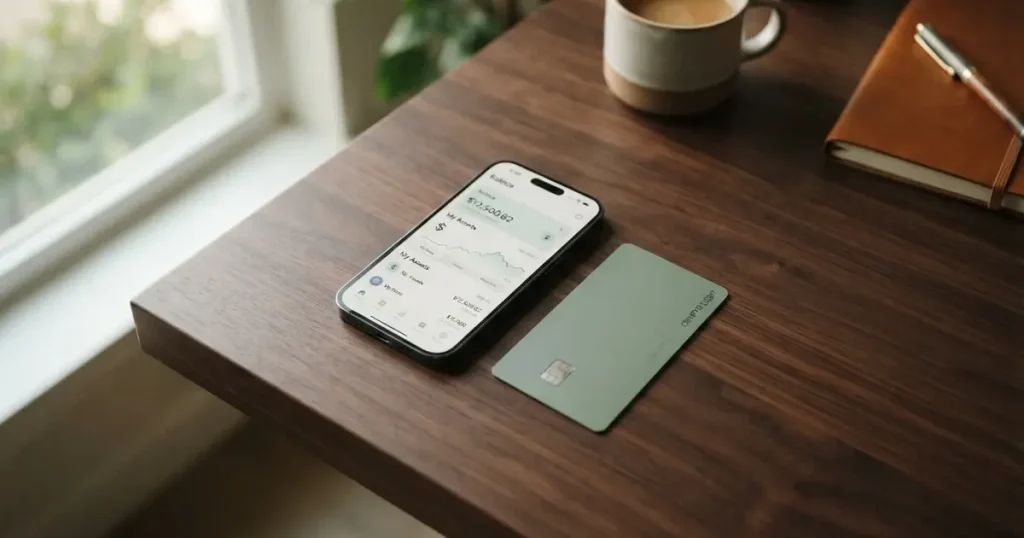
HPX is a prepaid card that spends from a crypto balance. You load it with USDT, BTC or ETH, the balance is converted into US dollars or euros, and you then pay with a physical or virtual card. The pitch is simple, and for someone who has no ordinary bank card — because of where they live, because their bank closed the account, or because opening one has become difficult — it solves a genuine problem. But this review is going to be blunt about the other side of that bargain: the physical card costs USD $60 a year, the card-opening fee is not published, the conversion and foreign-exchange fees are not published, the issuer and its licences are not named, and the app’s users are not happy.
Conditions are current as of October 28, 2026.
I scored HPX 4.7 out of 10. That is not a rounding error of a good score, and it is not a judgement about whether crypto cards as a category work. It is a judgement about how much you can verify before you hand over money to a prepaid card whose issuing institution you cannot name.
Conditions on this page are current as of October 2026.
Verdict: a useful shape of product, built on information you cannot check
HPX suits people who already hold crypto and want a US-dollar card to spend it from, particularly if the alternative is no card at all. It does not suit people who want to know what a payment costs before they make it, people who need a regulated bank behind the balance, or people who cannot risk a freeze at the wrong moment.
Let me show you the score criterion by criterion, because where the marks are low tells you more than the total.
| Criterion | Mark | Why |
|---|---|---|
| Who can get it | 6 / 10 | Applications are restricted in Mainland China, Russia, Turkey, Pakistan and others; the list changes and no other countries are named |
| Cost | 3 / 10 | The USD $60 annual fee for the physical card is taken from your first deposit, the card-opening fee is paid before review and its amount is not disclosed |
| Top-up options | 6 / 10 | USDT, BTC and ETH deposits are converted to USD or EUR on the card; the networks are not named |
| Reliability and complaints | 3 / 10 | Issuer and licences are not named, developer is CIPHERBC PTE. LTD., App Store rating 3.3 out of 135 ratings, with complaints about stuck coins and frozen accounts |
| Everyday use | 6 / 10 | Physical and virtual USD cards, “tens of thousands of ATMs worldwide”; Apple Pay and Google Pay are not disclosed |
That adds up to 4.7 out of 10. The three sixes are honest — this card works for some people. The two threes are where the risk lives: you cannot see what you are paying, and you cannot see who is behind it.
Before I go further, one thing worth saying plainly. The details in this review come from the card’s own public pages — the app listing, the help center, the developer description. Where those pages do not say something, I say so rather than filling the gap. Several things you would want to know simply are not stated, and no amount of reading around them will change that.
Will they give you the card?
Yes for many people, and no in a specific set of countries that includes yours if you are in one of them. The help center says applications are restricted in Mainland China, Russia, Turkey, Pakistan and other countries, and that the list changes with policy. Users who already had a card in restricted regions are generally unaffected, with one exception the card itself calls out: Russia.
That last detail matters more than it first appears. “Generally unaffected, except in Russia” means existing Russian users may find that a card they have used for years is treated differently from people applying today. I would not plan around that distinction holding steady.
The rule appears to be based on where you live rather than what passport you hold. Citizenship is not stated either way. If you are a citizen of a restricted country but resident elsewhere, you are guessing; if you are a resident of a restricted country, expect the answer. Where the card’s public pages list a restriction is not the same as it listing every restriction, so the practical version is: if your country matters to you, ask before you pay anything.
The age question is not stated. The app listing carries an age rating of 16+, but that is an app-store content rating, not a statement of the minimum age to hold the card. In this category prepaid and debit cards are generally issued to adults at 18 or over, sometimes with higher limits attached, but I would not treat any of that as HPX’s own rule.
How to get it
The route is passport, KYC submission, approval, card. That is the whole sequence as the help center describes it, and it has three practical consequences.
First, a passport is required and ID cards are not accepted. Your name must match the passport exactly. That is worth checking before you photograph anything, because a mismatch is the kind of thing that turns into a week of tickets.
Second, you pay a card-opening fee before the review happens. The amount is not stated anywhere I could find. So the order of operations is: money first, decision second. If you were hoping to find out whether you are eligible before paying, this is not the shape of the product.
Third, the card arrives within 30 days of approval. That is the only delivery information given. Which countries it ships to, what delivery costs, whether tracking is included, and what happens if it does not arrive — none of that is stated.
On the products themselves: a USD physical card and a USD virtual card exist, both linked to the crypto wallet in the app, converting crypto into USD or EUR. A USD virtual card PRO is mentioned, along with a time-limited zero-fee offer for it that may already be outdated — I would price that offer at zero until I saw it in my own account. A “Global Travel Virtual Card” is suspended for new applications according to a help notice, so if you came for the travel card, that route is closed. The card network is not stated anywhere in the public material I read, which is an unusual thing for a card to leave unsaid.
Beyond proof of passport and name, the pages say nothing about proof of address, about KYC tiers, about processing times for the review itself, or about the reasons a decision might go the other way. There is one unofficial third-party listing that describes virtual and physical types in both US dollars and euro; treat that as a starting point rather than confirmation, because the card’s own pages are what count.
Fees: what it really costs
This is the weakest part of the card, and it is weak in a specific way: the numbers that exist are clear, and the numbers that decide your actual cost are missing.

| Fee or limit | What the card’s public pages say |
|---|---|
| Card-opening fee | Charged before the review; amount not stated |
| Annual fee, USD physical card | USD $60, deducted from the first deposit |
| Virtual card PRO | A time-limited zero-fee offer is mentioned; may be outdated |
| Crypto-to-fiat conversion fee | Not stated |
| Paying in another currency | Not stated; deposits are converted to USD or EUR for the prepaid card |
| ATM fee and allowance | Not stated; “tens of thousands of ATMs worldwide” is claimed |
| Daily spending limit | Not stated |
| Monthly spending limit | Not stated |
The app store listing shows no fees at all, and no conversion or FX fee is disclosed. So the shape of your cost is this: you pay $60 a year for the physical card out of your first deposit, you pay whatever the conversion costs, and if you pay in a currency other than the one on the card, whatever that costs too. Two of those three are numbers you will have to discover at the point of use.
Let me walk three ordinary payments through it, because that is where an unstated fee becomes visible.
A coffee in your own country, with a USD card. The balance is already US dollars, the terminal offers to charge you in your local currency, and your card network converts it at the rate Visa or Mastercard sets. That rate is not HPX’s rate — it is the rate in the Visa or Mastercard section of the card’s terms. Whether HPX adds a markup on top, and how large it is, is not stated.
A subscription billed in euros, on a USD card. The card was funded in dollars. Paying in euros means one currency conversion on Visa’s or Mastercard’s side, and possibly a second one inside HPX. The card’s own material mentions EUR balances exist alongside USD, so the cheaper version of this payment may be to hold the balance in the currency the bill is in. Whether that is possible for you, and what it costs, is not stated.
Withdrawing cash from an ATM. The listing claims “tens of thousands of ATMs worldwide” and says nothing about what an ATM withdrawal costs or how many are included. The classic trap here is the ATM operator’s own surcharge plus a currency conversion on the way out plus a possible card fee — three charges, two of which are yours to avoid, one of which is not. Ask about the ATM fee before you rely on cash.
One unofficial third-party listing gives a daily spending limit of “50,000 US dollars / no limit”, which is not a sentence that clarifies itself. The card’s own pages say nothing about limits at all.
Top up: how money gets onto the card
You deposit crypto — USDT, BTC, ETH — and it is converted into USD or EUR balance that the card spends. That is the mechanism. What the public pages do not give you is the network list, and for a card funded with stablecoins that is not a technicality.
Here is why. USDT exists on several chains, and a deposit only works if you send it on a network the provider supports, to an address on that network. Circle lists USDC as natively supported on 38 networks, as of 16 September 2026. Tether describes USDT as a token built on multiple blockchains. If you send USDT on a chain HPX does not support, or to an address belonging to a different network, the transfer can be lost or need manual recovery with no guarantee — blockchain transfers are irreversible by design, and Tether itself says it disables tokens in wallets on the sanctions list and has frozen funds tied to illicit activity. So before your first deposit, find out the supported network from the card’s own current material, and check it twice. A wrong-network deposit is the single most expensive mistake available to you here, and it is the one most likely to be unrecoverable.
Two more things about funding are worth naming. On Ethereum, fees are paid only in ETH, so a wallet holding USDT and no ETH cannot send it — if the network you need is an Ethereum one, you need a little ETH as well. On Tron, fees are paid through bandwidth and energy resources, often burning TRX. Neither is HPX’s charge, but both are charges you will meet, and neither appears anywhere on a fee schedule.
Beyond the deposit itself, the pages say nothing about minimums, about withdrawal from the card, or about how long a top-up takes.
Paying with it every day
For day-to-day spending the card does the basic thing. It is a prepaid card, so it draws on a stored balance rather than on a bank account, and in that model it cannot overdraw. That is a genuine safety property when your balance is small.
Physical and virtual cards in US dollars exist. The app is on the App Store for the US — version 5.6.270301, iOS 15 and later, 420.5 MB, rated 16+ — and carries a rating of 3.3 out of 5 from 135 ratings as I read it. I could not retrieve the Google Play rating.
What you will be looking for in day-to-day use and will not find stated: whether the card can be added to Apple Pay or Google Wallet, whether any merchant categories are blocked, whether there are rewards or cashback, and what the dispute process is if a payment goes wrong. None of that is in the public material.
On Apple Pay specifically, the technology is ready — the card number would be replaced by a device-specific number in the Secure Element with a one-time code per payment, and the issuer can restrict that tokenised number to certain channels. But none of this helps if HPX does not support it, and HPX does not say.
Where you can expect friction with any prepaid or foreign-issued card: merchants can look up the issuer from the card’s first digits and apply extra scrutiny if the issuer country differs from your billing address, and some decline prepaid or foreign cards outright for that reason. Address verification compares the numeric parts of the billing address you typed with issuer records, and is generally unavailable for foreign-issued cards, which causes declines. Online payments usually go through 3-D Secure — Visa’s version being Visa Secure and Mastercard’s Identity Check — which may mean a one-time code rather than frictionless approval. And a declined payment can leave a hold on your money for several days, sometimes up to seven. None of these are HPX-specific; all of them are things you will meet if your card number reads as foreign.
What can go wrong
This is where the review turns serious, and I want to be careful to separate what the card says from what users say.
The issuer is not named. The app store developer is CIPHERBC PTE. LTD., with copyright held by HYPER BC PTE. LTD., and the site hyperpay.tech redirects to the HPX site. Neither the card issuer, nor the BIN sponsor, nor any licence is named in the public material. That is the structural problem underneath everything else on this page. A prepaid card in Europe is normally issued by an electronic money institution or a bank that is licensed and supervised; in the US, prepaid programmes sit under money transmission rules and state-level requirements. When you cannot find out which entity is responsible for your money, you cannot work out who to complain to, whether any deposit guarantee applies, or whether the balance is safeguarded at all. Note the category point here: safeguarded e-money funds are held in segregated accounts or insured, but they are not bank deposits, and a deposit guarantee scheme may not cover them.
The reviews are bad, and they cluster. App Store 3.3 out of 5 from 135 ratings. One analysis of those 135 reviews shows that a significant share of them are negative. The recurring themes, mostly from 2022 to 2024: coins stuck in “reviewing” for days with tickets unanswered, inability to withdraw or transfer, accounts frozen without explanation, one report of funds removed to an unknown address, one of an excessive fee. There is also praise for ease of use. A single 2022 review calls the product a scam and describes a card charge labelled as an airline ticket that the reviewer could not withdraw funds from; the developer’s response pointed at in-app and Telegram support. I want to be honest about the weight of that: one review is one review, and the developer answered it. But combined with the 3.3, it is a signal.
I could not find an independent complaints record. A search for Trustpilot and Reddit discussion of HPX found nothing — only results for HyperX and other HP-prefixed names. That cuts both ways. There is no pile of independent complaints, which some people would read as reassuring; I read it more as what you would expect from a small product with 135 US App Store ratings and no visible presence in the places people actually complain.
Support runs through Telegram and an in-app help desk. Replies point to the in-app Help Center, called “My Work Order”, or a Telegram “Contact Us” group. The help center exists at help.hpx.com with an English path, and the app lists English and 17 more languages, though the list itself is not shown and Russian is not confirmed. Hours are not stated. Telegram-based support is a weak foundation when your money is frozen — a compromised or impersonated account is a known Telegram problem, and if your account is frozen the group is the front door.
A freeze may come with no explanation attached. The complaints include accounts frozen without explanation. In this category that is not arbitrary: anti-money-laundering rules require ongoing monitoring and suspicious-activity reporting, and where due diligence cannot be completed, rules require the institution to hold off or end the relationship. So a freeze can be a rule working as intended, not a malfunction. That does not make it acceptable when nobody tells you why. If your funds sit with a provider, a frozen account is a live risk of the kind you cannot manage your way out of.
The security story is a claim, not a picture. The developer describes an off-chain wallet held by the platform with an “SBC risk control system” and multi-signature co-management, and an on-chain wallet with private keys stored locally under BIP32/39/44/45 derivations. The developer states it collects no data. Card freeze, two-factor authentication and insurance are not stated. That distinction matters: a custodial element exists, and by definition means trusting the platform completely with it. The history of this category is a reminder of what that means — Mt. Gox, Coincheck, Ronin Network, roughly $350 million, $400 million and $625 million in reported losses.
The brand has already moved once. It was HyperPay, and it became HPX in July 2025. That is not in itself a warning — brands get renamed — but a rebrand, a suspended product and a restriction list that changes with policy are three signs of a product still finding its footing.
Programmes like this close. WaveCrest, a Visa issuer that supplied crypto card brands, was suspended by Visa in Europe in 2018 and all its Visa programmes were closed. When Visa terminated its agreements with FTX in November 2022, the FTX US debit card programme was wound down by its issuer. Closures typically follow a pattern: a notice period, then loading and spending stop, then an instruction to withdraw remaining balances. I found one 2026 closure reported by a single secondary source, unconfirmed, where new loads ended on 8 July 2026 and spending stopped on 8 August 2026. Treat those dates as illustrative rather than established.
What to take instead
I want to be careful here. If your problem is that no bank will give you a card, the mainstream options are not available, and a prepaid crypto card may be the only thing on the table. Read this section as “if you have any choice, these are the ones that publish more.”
BloFin Wallet Card — scored 6.9 out of 10 here, the highest of the group. It is a Visa Platinum Wallet card. Every fee I could see is published: activation, annual, issuance and dormancy fees are $0.00 each, and cancellation is free. Spending costs “1% or lower” depending on VIP tier — 1.00% at VIP 0, 0.90% at VIP 1, 0.80% at VIP 2, 0.50% at VIP 3, 0.20% at VIP 4 and 0.00% at VIP 5 — charged at payment. You top up with USDT and USDC on Arbitrum and Base. What it does not publish is just as important: the FX fee, whether the card is virtual or physical, its currency, and the country list, which is only “select your country or region” in the app, though the starting data covers 35 countries including the US, Australia, Japan, the UAE, Brazil, Mexico, Malaysia and New Zealand. Citizenship versus residence is not stated. There is no cashback — the pitch is a lower spend rate instead.
Decaf — scored 6.2 out of 10. The clearest country policy of any card I looked at: not issued in Belarus, China, North Korea, India, Iran, Iraq, Israel, Myanmar, Nepal, Russia, Syria, Turkey, Cuba, Ukraine, Venezuela, Vietnam, Nicaragua, Puerto Rico or Nigeria, with a list of restricted US states including Arizona, Delaware, Georgia, Idaho, Louisiana, Maryland, Montana, Ohio, Oregon, Rhode Island, Washington and Wisconsin. Russia and Belarus are both on it, and whether the rule follows citizenship or residence is not stated. It is a Visa card, virtual or physical with tracked delivery. Activation costs $5 worldwide for virtual, $10 for physical in the US, $90 for physical elsewhere; there is no annual or monthly fee. On FX it adds nothing — “the FX is the one Visa offers”. You can pay a Decaf payment link or account details by card, bank transfer or USDC, and the app runs on Solana and Stellar; which coins and networks top up the card itself is not stated.
SafePal — also 6.2 out of 10. A virtual Mastercard debit, with spending limits given in euros against a Swiss Fiat24 account. No account creation or management fees, and the card issuance fee is not stated. Here is the honest part: this card publishes some of the most useful fee information in the category. Standard top-up fee 0%, a 1% FX fee on Mastercard non-USD settlement, refund processing at 1 USD, EUR, CHF or 7 CNH, swaps that include a spread which is not quantified — and elsewhere on its own site, crypto top-up “as low as 0.4%” on the top tier. That spread being unquantified is exactly the kind of thing I spent the Fees section above complaining about. Funding runs from 40+ blockchains converted to USDC or fiat, with transactions on Arbitrum. No cashback; instead, referral commissions of up to 40% of referred top-up fees and tier privileges tied to deposits, referrals and staking. Its region list page was empty when I fetched it, so I cannot tell you where it goes.
| HPX | BloFin Wallet Card | Decaf | SafePal | |
|---|---|---|---|---|
| Score here | 4.7 / 10 | 6.9 / 10 | 6.2 / 10 | 6.2 / 10 |
| Card | Network not stated | Visa Platinum Wallet | Visa | Virtual Mastercard |
| Physical or virtual | Both | Not stated | Both | Virtual only |
| Annual fee | USD $60 on the physical card | $0.00 | None | None stated |
| Activation / issuance | Opening fee paid before review, amount not stated | $0.00 | $5 virtual; $10 physical US; $90 physical elsewhere | Not stated |
| Conversion or FX | Not stated | Spend fee 1% or lower by tier; FX not stated | No added FX fee beyond Visa’s rate | 1% FX on non-USD Mastercard settlement; swap spread not quantified |
| Funding | USDT, BTC, ETH; networks not stated | USDT and USDC on Arbitrum and Base | USDC among options; networks for the card not stated | 40+ blockchains, converted to USDC or fiat |
| Country policy | Restricted in Mainland China, Russia, Turkey, Pakistan and others | 35 countries listed; rule not stated | Long published restricted list | Regions page empty when fetched |
If you are in the EU or EEA, there is one more avenue the card does not mention: an electronic money institution licensed in one member state may offer services across the EU/EEA, and a crypto-asset service provider authorised in one member state can serve the whole EU. You can check a provider against the interim register of authorised providers, white papers and non-compliant entities that ESMA keeps. A card depends on two licences — one for the payment side, one for the crypto side — and if you can establish both, you will know more about HPX than HPX’s own pages tell you.
Who I would recommend it to
I would recommend HPX to someone who already holds USDT, BTC or ETH, who genuinely has no alternative card, who is not in a restricted region, who can afford $60 a year for the physical card plus an unknown opening fee, and who will not be hurt by an unexplained freeze or a delayed withdrawal. That person should send a small test deposit first, on a network the card’s current material confirms, and keep the balance small until the card has proved itself to them.
I would not recommend it to someone spending their salary through it, to anyone who needs to know the cost of a transaction before making it, or to anyone planning a trip around the balance sitting there.
Three things would move my score, and you can check all three yourself:
- The issuer, the BIN sponsor and the licence, named in the card’s own material. That is the single biggest gap.
- A published fee schedule: conversion, foreign exchange, ATM, and the card-opening fee amount.
- A support channel with stated hours and a phone or email route, not only an in-app ticket and a Telegram group.
There is also a tax point that is not HPX’s business but is yours. In the US the IRS treats digital assets as property, so exchanging them for goods, services or dollars generally produces a taxable gain or loss, measured in local fiat currency at fair market value on the date of the transaction — which means each card payment funded from crypto may be a separate disposal. I am not going to advise you on your taxes; I am flagging that funding a prepaid card from crypto creates records worth keeping, and that rules vary by country. Keep your transaction history.
Frequently asked questions
What is HPX card?
HPX is a prepaid payment card that spends from a crypto balance. You deposit assets such as USDT, BTC or ETH, and they are converted into US dollars or euros on the card. It comes as a physical USD card and a USD virtual card, plus a virtual PRO version. The app store describes it as a prepaid card linked to a crypto wallet, and the physical card costs USD $60 a year.
How does the HPX card work?
You load crypto, it converts to a dollar or euro balance, and the card spends that balance like a prepaid card. Because the balance is stored rather than drawn on a bank account, the card cannot overdraw. The crypto side and the payment side are separate regulated layers, so a card like this normally depends on two licences — and HPX’s public pages name neither.
Is HPX a bank?
No, and nothing in its public material claims it is. The app store developer is CIPHERBC PTE. LTD. and the site redirects to the HPX site, but the card issuer, the BIN sponsor and any licences are not stated. That distinction matters to you: bank deposits usually carry deposit protection, while e-money balances are safeguarded in segregated accounts or insured and are not the same thing.
Who owns HPX?
The app store lists the developer as CIPHERBC PTE. LTD., with copyright held by HYPER BC PTE. LTD. The brand was called HyperPay and became HPX in July 2025, and the old domain hyperpay.tech now redirects to the HPX site. Beyond that, no ownership or corporate structure is stated publicly.
Does the HPX card require KYC?
Yes. A passport is required, identity cards are not accepted, and your name must match the passport exactly. You also pay a card-opening fee before the review, though its amount is not stated. Proof of address, minimum age and KYC tiers are not stated — only that the card arrives within 30 days of approval.
What does the HPX card cost?
The USD physical card carries a USD $60 annual fee, deducted from your first deposit. A card-opening fee is charged before review and the amount is not disclosed. Conversion fees, fees for paying in another currency, and ATM fees are all not stated, and the app store listing shows no fees at all. That is why I scored cost 3 out of 10.
Can I add the HPX card to Apple Wallet?
The public pages do not say. Whether Apple Pay and Google Pay are supported is not stated, and neither is whether any merchant categories are blocked. The underlying technology is ready — a tokenised device number with a one-time code per payment — but that only helps if the issuer enables it, and I found no statement either way.
How do I top up the HPX card, and which network do I use?
You deposit USDT, BTC or ETH and it is converted to USD or EUR. The supported networks are not named, and that is the detail to get right before your first transfer: sending on an unsupported network, or to an address on a different network, can mean lost funds or a manual recovery with no guarantee, because blockchain transfers cannot be reversed.
Is HPX card safe?
Safety is two separate questions. The developer describes platform-held and locally-keyed wallets with a multi-signature system and states it collects no data, but card freeze, two-factor authentication and insurance are not stated. And the user record is poor: an App Store rating of 3.3 out of 5 from 135 ratings, with recurring reports of stuck coins, withdrawal failures and unexplained account freezes.
Is HPX card worth it?
For someone with no ordinary bank card who already holds crypto, it fills a real gap, and that is worth something. For anyone who has a choice, it is worth comparing the alternatives first — BloFin Wallet Card, Decaf and SafePal all publish more of their fees and restrictions than HPX does. The $60 annual fee plus an undisclosed opening fee is also a high bar to clear before you have spent your first dollar.
Wallet-linked cards – cryptocardselect
Content created by the «cryptocardselect» team