
The card that costs $600 to open and tells you very little
 Available in US
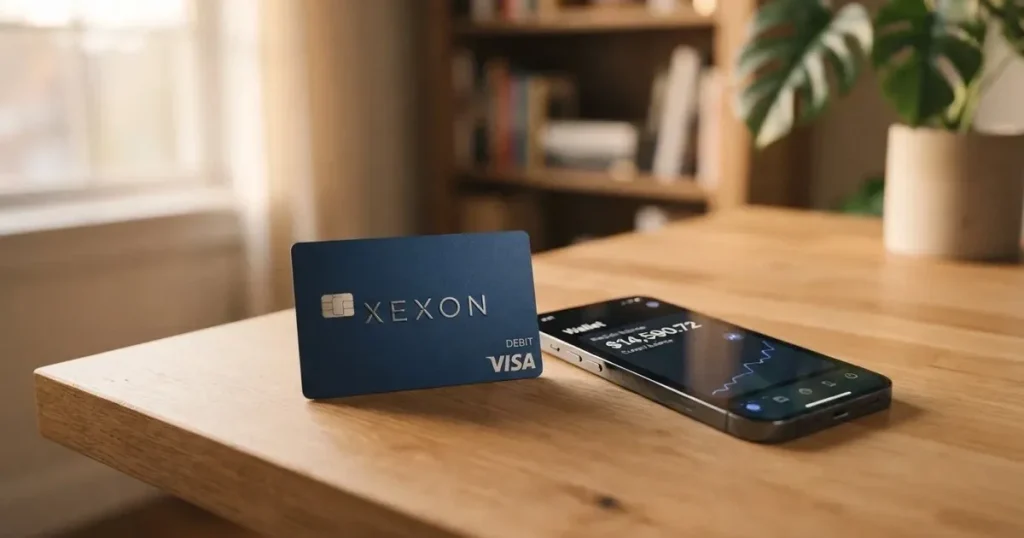
The Xexon card is not a free everyday payment card with crypto attached. It is a packaged offshore USD account with a physical Visa Platinum issued alongside it, and the packaging is expensive: the account opening fee is 450 USD, the minimum deposit is 150 USD, and the annual account maintenance fee is 50 USD. On top of that, card transactions are charged 0.75% and the exchange of crypto into dollars is charged 3%. Then there is the thing that stayed with me longer than any of the numbers: the card’s own public pages do not name who issues the card, do not name the licences behind it, and do not say what documents you need to prove your address. I read every page the site offers on this. Those answers are not there.
So who should look at this? Someone in Asia or Europe who wants an offshore US-dollar account, already holds Bitcoin or USDT, and treats the account as a place to sit funds rather than a place to run a monthly salary. For that person the card does what it promises. For anyone looking for a cheap card to pay the supermarket with, this is the wrong product — and it is wrong expensively, not cheaply. And for anyone who is cautious about where their money sits and who is legally responsible for it, the missing issuer and licence information is not a detail to skim past.
The conditions described here are current as of October 28, 2026.
Verdict: 4.8 out of 10
My score out of 10 is 4.8. That is not a rounding of something better; it is the average of six criteria that are genuinely uneven, and the unevenness is the story. The card is easy to get and cheap to fund, expensive to open, and almost impossible to evaluate on trust.
| Criterion | Mark | Why |
|---|---|---|
| Who can get it | 7 / 10 | Issued online, described as available “not only in Europe but throughout Asia”; no country list and no exclusions are published |
| Cost | 1 / 10 | Opening 450 USD, minimum deposit 150 USD, initial total 600 USD, 50 USD a year; 3% exchange and 0.75% per card payment. Labels on the site’s own pages contradict each other, though the totals agree |
| Top-up options | 7 / 10 | BTC and USDT on ERC20, BEP20 and TRC20 into the Xexon Wallet, exchanged to USD and loaded to the card; card loading 0.25 USD; USDT deposit fees vary sharply by network |
| Reliability and complaints | 5 / 10 | Operated by Silver Capital Financial s.r.o. in Prague; account at JDB Bank in Laos; wallet with Fireblocks. Card issuer and licences are not named. No reviews found at all |
| Everyday use | 5 / 10 | Physical Platinum Visa, ATMs worldwide up to 3,000 USD a day; no virtual card, and Apple Pay and Google Pay are not disclosed |
| Total | 4.8 / 10 |
The single mark that decides this for me is cost. One out of ten is not a rounding error in my arithmetic — it reflects that the entry price alone is 600 USD before you have spent anything, and that the 3% exchange fee is charged on the way in, not only on the way out. Everything else on this page is negotiable by comparison.
I want to be fair about what the card does well, because there is real something here. Getting in is easy: application online, no country list to fail against, delivery covered. Funding is straightforward if you already hold the two assets it supports. And a physical Visa Platinum that works at ATMs worldwide, with 3,000 USD a day, is a genuine utility for someone whose home banking is the problem.
What it lacks is the other half of that sentence. My score for reliability and complaints is 5 out of 10, and half of that is not because something bad happened — it is because I could not find anything at all. No reviews, no user reports, no incident history. When a financial product has zero third-party footprint, the absence is not evidence of safety. It is absence of evidence, and a person putting real money in is right to read it that way.
Will they give you the card?
Yes, most likely, and that is the easiest part of this review.
The card page says the card can be issued online and is “available not only in Europe but throughout Asia”. The offshore-account page puts it more broadly: the account “can be opened from Europe, Asia, and more”. Neither page publishes a country list, and neither publishes an exclusion list. There is no page telling me who is refused.
That is a double-edged fact, and you should hold both edges as you read the rest of this review. An open door with no list means fewer obvious refusals for people whose countries are not usually listed in card applications. It also means there is no published policy you can check yourself against — you cannot know in advance whether your nationality or your residence will be accepted, because the site does not say.
The site also states that it is not for users under 18. That is the only age condition it publishes.
Beyond that, the honest answer is that I do not know who gets refused, because the site does not say. No exclusions are listed for sanctioned jurisdictions, no residency test is described, no nationality screen is described. If your situation is sensitive — if you need to know precisely whether you are in scope before you start — the only way to find out is to ask them, and asking is the first thing I would do rather than the last.
How to get it
The route the site describes is four steps, and it is short:
- Apply online and sign up.
- Open the USD bank account and the card together, in one go.
- Exchange your crypto to USD inside the Xexon Wallet.
- Load the USD onto the card.
Then you wait. Xexon says it covers the cost of sending the card and that it arrives at home “within a few weeks”. Destination countries are not listed. If the card is lost or arrives damaged, the site’s instruction is to contact support for a reissue or a suspension — and the replacement cost is not stated.
On the card itself: it is a Visa debit card, “Platinum”, physical, shipped to you. The account is denominated in US dollars. The card’s own currency is not stated, and multi-currency support is not stated either. The comparison table on the pricing page lists Visa, Mastercard and UnionPay alongside each other as brands — which tells you what the comparison was for, not that you would get any of them.
What the site does not tell you is the part that should concern you most at this stage: the identity documents required, and whether proof of address is needed, are not stated. There is an AML Policy page on the site, which I did not read, so I cannot tell you what sits behind it. The verification levels are not stated either.
I want to be direct about why that matters. Every regulated provider I have ever read collects identity documents, because anti-money-laundering law requires it — in the EU, customer due diligence covers name, address, date of birth, nationality, identity documentation, a sanctions check and the purpose of the relationship, and if that due diligence cannot be completed the institution is required not to proceed. That is the general rule, not something I am inventing for this card. But the rule describes what a regulated provider must do, not what this particular provider does. Here, the specifics are simply not published. Anyone who tells you the checks are light or heavy would be guessing.
So: expect to be asked for documents, but do not assume you know which ones. Have a passport and something with your address to hand, and ask before you send money rather than after.
What it really costs: Fees
This is where the card is hardest to defend, and it is where you should spend the most of your own attention.
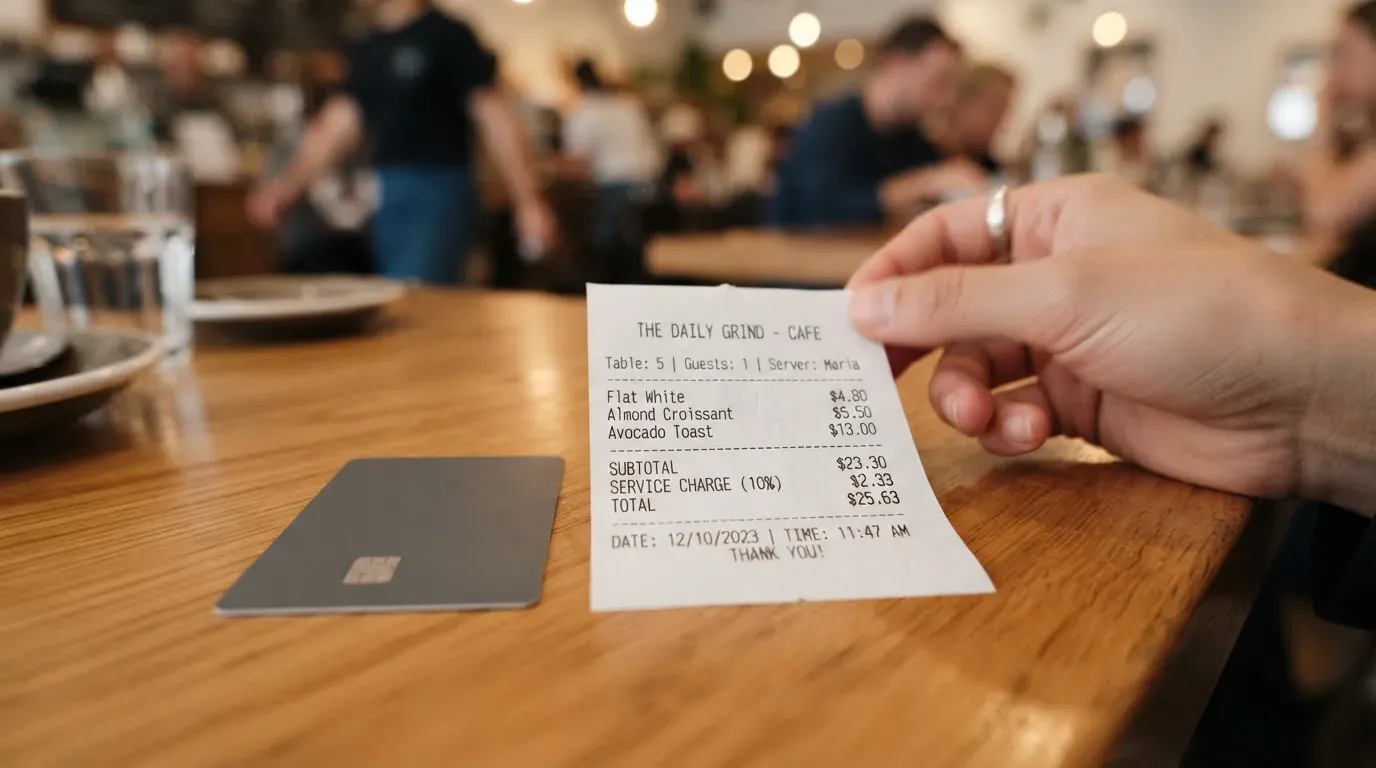
The pricing page gives the account-opening fee as 450 USD, the minimum deposit as 150 USD, the total initial cost as 600 USD, the annual fee as 50 USD for bank account maintenance, and the card issuance fee as free. The card page words the same thing differently: a card issuance fee of 450 USD plus a bank account deposit of 150 USD, making 600 USD including shipping.
Those two descriptions do not agree on labels — which of the 450 is the card and which is the account — but the total is 600 USD either way. That is a small mercy, and I would still read it as a sign that the pages were not edited against each other. Where a site disagrees with itself about what a fee is for, the total is the only number you can rely on, and even then only until the fee changes.
Alongside those sit the transaction charges: a card transaction fee of 0.75%, and an exchange fee of 3% on the price page. The card page says exchange fees are “low” without giving a figure, and repeats the 0.75% charge for card usage. ATMs are available worldwide with a 0.75% fee and a limit of 3,000 USD a day on the price page; the card page says the ATM fee is 1.5%, which is a direct conflict. A balance inquiry is free.
| Fee or limit | What the site says |
|---|---|
| Card issuance fee | Free on the price page; the card page bundles 450 USD into the opening total |
| Account opening fee | 450 USD |
| Minimum deposit | 150 USD |
| Total initial cost | 600 USD, including shipping |
| Annual fee | 50 USD (bank account maintenance) |
| Card transaction fee | 0.75% |
| Exchange fee | 3% (price page); the card page calls exchange fees “low” with no figure |
| ATM fee | 0.75% (price page); 1.5% (card page) — conflict |
| Balance inquiry | Free |
| Card loading fee | 0.25 USD |
| Payment limit | “No limit” |
| Deposit limit to bank account | No limit |
| ATM daily limit | 3,000 USD per day |
Let me put three ordinary payments through that table, because abstract percentages hide more than they show.
A 40 USD grocery shop. The 0.75% card transaction fee takes 0.30 USD. There is no conversion fee if the shop prices in dollars and the card spends dollars — but if the shop charges in your home currency, the price page names no FX figure at all, so I cannot tell you what that costs. What you can tell is that you have already spent 600 USD to get here, and the card’s own currency is not stated.
200 USD spent from a crypto balance. Here the 3% exchange fee is the number that matters, because that is the cost of turning what you hold into what you spend. On 200 USD that is 6 USD, before the 0.75% card transaction fee adds 1.50 USD. You are paying to convert and then paying again to spend.
120 USD from an ATM. The fee is stated twice and differently: 0.75% on the price page, 1.5% on the card page. On 120 USD that is either 0.90 USD or 1.80 USD. It is a small sum, and it is also a clean example of the pattern across this site — the same fee, described two ways, with no single figure you can plan against.
There is one more number that sits quietly in the pricing material and is easy to skim past: the offshore account pays 1.5% annual interest on USD. That is the only thing on offer in the way of return, there is a single product with no tiers at all, and the supported fiat currency is USD only. A 1.5% return does not offset a 3% conversion fee if you convert more than once a year, and I would treat the interest as a footnote rather than a reason.
How to Top up the card
Topping up is the part of this card that is straightforward, and it is worth saying so plainly.
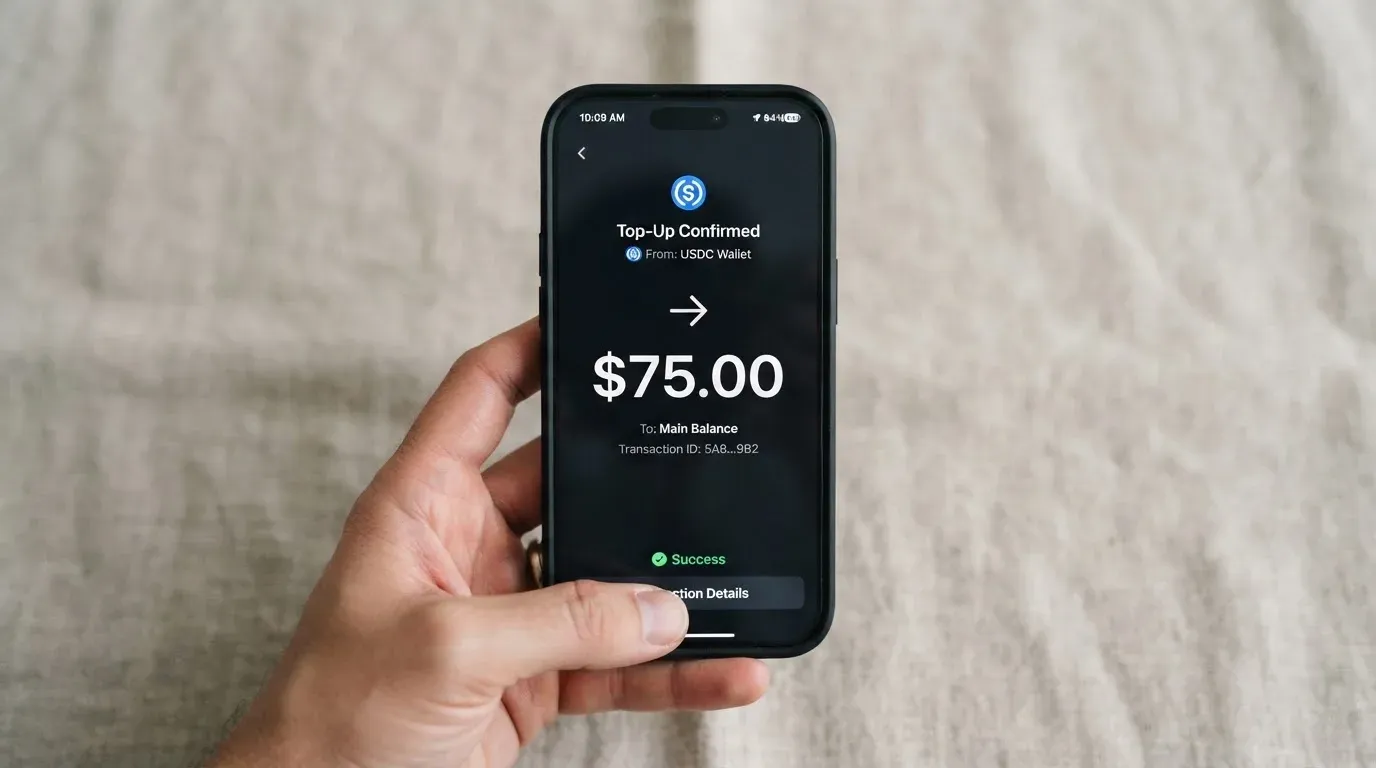
The flow is: send BTC or USDT to the Xexon Wallet, exchange it to USD inside the wallet, and load the USD onto the card. USDT is supported on three networks — ERC20, BEP20 and TRC20.
| Top-up detail | What it says |
|---|---|
| Assets accepted | BTC and USDT (ERC20, BEP20, TRC20) |
| Where it goes | Xexon Wallet, then exchanged to USD, then loaded to the card |
| Card loading fee | 0.25 USD |
| BTC deposit | Free |
| USDT deposit fee | 20 USDT on ERC20, 0.2 USDT on BEP20, 20 USDT on TRC20 |
| Exchange minimums | BTC 0.001, USDT 20 |
| Fiat top-up | Not stated |
Look at those USDT deposit fees again, because they are the most useful practical detail on this page. Sending USDT over ERC20 costs 20 USDT in fees. Sending the same asset over BEP20 costs 0.2 USDT. That is a hundredfold difference for an identical action, and it dwarfs every other optimisation available to you. Which network you pick matters more than anything else in the funding flow.
Which you can pick depends on what you hold and where it sits. One point of general knowledge that bears directly on this: ERC-20 is the Ethereum token standard, and gas on Ethereum is paid in ETH — so a wallet holding USDT with no ETH in it cannot send. Tron’s network prices internally through bandwidth and energy, often by burning TRX. Those are properties of the networks, not of this card, but they decide whether your transfer goes through at all.
Fiat top-up is not stated. So the account is a way to hold dollars converted from crypto, and on the published material I cannot find a route to put ordinary fiat in.
Now the withdrawals, because a card you cannot get money back out of is not an account. BTC withdrawal is 0.1% plus 0.001 BTC, with a minimum of 0.0025 BTC. USDT withdrawal is 0.1% plus 20 USDT, with a minimum of 70 USDT. What you are left with when you close an account is not stated, and that is worth asking about before you open one rather than after.
One warning about the funding step, which applies to anyone sending crypto anywhere. Blockchain transfers are irreversible. A deposit sent on a network the provider does not support, or sent to an address belonging to a different network, can be lost, or need manual support recovery with no guarantee of the outcome. Check the network twice. There is no undo button, and that is a property of the technology rather than a policy this card could change.
Paying with it every day
Day to day, this is a physical Visa Platinum debit card. You insert it, you tap it, you do not think about it. At ATMs it works worldwide, up to 3,000 USD a day.
That is the whole of the good news, and here is the rest of it.
There is no virtual card. If you want to pay online without handing over a card number you would type into a merchant’s site, this is not the card. There is no disclosed Apple Pay support and no disclosed Google Pay support — the site does not say either way, and I would not assume silence means yes.
There is a web dashboard at dashboard.xexon.io, and no app store listing was found. So the practical arrangement is a browser and your bank’s normal web security, rather than a phone application with biometric entry. Whether rewards exist is not stated. Whether there is a virtual card in the roadmap is not stated. Whether disputes are handled, and how, is not stated — no chargeback or complaint procedure is described anywhere I looked, and I would want to see one before I trusted this card with a large balance.
There is one small comfort in the general mechanics. If a card is lost, the site’s instruction is to contact support for a reissue or a suspension. That is a real answer, though the replacement cost is not stated and the suspension route means you are relying on a support agent rather than an app toggle.
And there is a wrinkle worth understanding before your first payment abroad, because it is not this card’s fault but it will feel like it. Merchants can look up the card’s issuer identification number and see which institution and country issued it, and may apply extra scrutiny if that issuer country differs from the billing address. That is why a card issued in one country can look foreign to a shop in another. Some merchants decline prepaid or foreign-issued cards for exactly this reason. Address verification is mainly offered in the US, Canada and the UK and is generally unavailable for foreign-issued cards, which can cause declines. If a payment is refused, that is often the reason — not your balance.
What can go wrong
Let me separate the risks into three, because they need different responses from you.
The money risk. The account is held at JDB Bank, in Laos. The company behind the service is Silver Capital Financial s.r.o., with an address in Prague — s.r.o. is a Czech legal form, though the registration country and the owners are not stated on the page. The wallet is described as being with Fireblocks, with 24/7 security operations and two-step authentication. The custody model itself is not stated: nobody says on the published pages whether the crypto is held in a pooled account, in accounts per customer, or in some arrangement between those. Xexon states that it “cannot be held responsible for a loss of funds” if a user falls for a scam. That sentence is not unusual, but it tells you where the responsibility is meant to sit.
The disclosure risk. The card issuer is not named. No licences are named. If you are in the EU and MiCA applies, the transitional period lets providers already operating under national law continue only until 1 July 2026 or until they receive or are refused a MiCA authorisation, whichever comes first; ESMA keeps a public register of authorised crypto-asset service providers and white papers, and non-compliant entities, which is where you would look. If you are in the US, FinCEN guidance treats administrators and exchangers of convertible virtual currency as money transmitters, while people merely buying goods with it are not. I am not telling you what Xexon’s status is — I am telling you that a card of this kind usually depends on more than one licence, one on the crypto side and one on the payment side, and that here you cannot check either, because neither is named.
The exit risk. There are none of the protections you might assume. EMIs must safeguard customer funds by segregating them in dedicated accounts or insuring them, but such funds are not the same as bank deposits and are not covered by deposit guarantee schemes. US reversal rights under Regulation E cover debit cards, and prepaid-card coverage varies and should not be assumed. And in this category, programmes do close: Visa terminated its global agreements with FTX on 13 November 2022, and WaveCrest, a Visa issuer that supplied crypto card brands, was suspended in Europe in 2018, closing every WaveCrest-issued Visa programme. When that happens the pattern is usually a notice period, then spending and loading stop, then you are asked to withdraw what remains. There is nothing you can do to prevent it. What you can do is not leave more on the card than you would mind waiting weeks to retrieve.
Add to that the ordinary crypto hazards. Custodial platforms have a history of failure — Mt. Gox at roughly 350 million US dollars reported stolen between 2011 and 2014, Coincheck at about 400 million in 2018, Ronin Network at 625 million in 2022. Holding funds with a custodian carries counterparty and hack risk by definition. A seed phrase is an unencrypted form of the private key, and anyone who obtains it can restore the wallet and spend its funds. Transfers are irreversible and a stolen key has no recovery path, because the network cannot freeze or return funds. Stablecoins can and have lost their pegs: TerraUSD collapsed in May 2022, and USDC briefly lost its peg in March 2023 during the US banking crisis.
One last thing, and it is the one I would raise first if you asked me for a single warning. There are no reviews. I searched for user reports and found nothing about Xexon — no Trustpilot page, no Reddit thread, no news coverage of problems, and no official incidents either. A two-sided product with a real user base leaves traces. This one has none, which means every judgement in this review rests on what the company says about itself, and on arithmetic you can check yourself.
What to take instead
None of these are straightforwardly better for everyone — the alternatives differ on the same axes, reach and cost. Here is how they compare, including where each one is silent.
Whop Cards — 5.2 / 10. The most geographically defined of the four. Consumer use is supported in 31 US states: Alabama, Alaska, Arkansas, California, Colorado, Connecticut, Florida, Hawaii, Illinois, Indiana, Iowa, Kansas, Kentucky, Maine, Massachusetts, Michigan, Minnesota, Montana, Nebraska, New Hampshire, New Jersey, New York, North Carolina, Oklahoma, Pennsylvania, South Carolina, Texas, Utah, Virginia, West Virginia and Wyoming. Business accounts cover 41 states. Unsupported consumer countries include Belarus, China (Mainland), Cuba, Hong Kong, India, Iran, Iraq, Israel, Myanmar, Nepal, Nicaragua, North Korea, Russia, Syria, Turkey, Ukraine, Venezuela and Vietnam; unsupported corporate countries include Russia and Belarus. Crucially, the basis for those lists — citizenship or residence — is not stated, so if you are not in a US state you may be in or out for reasons nobody has published. It is a Visa that works anywhere Visa is accepted; whether virtual or physical, and the card currency, are not stated. The page says “No extra fees” and lists no issuance or monthly amounts at all, which is not the same as a confirmed zero. It spends from a Whop balance, with pending balance usable as soon as a payment arrives while standard withdrawals use settled funds; the balance is backed by stablecoin collateral from a linked wallet, and the coins and networks are not stated. Rewards are 5% cashback at select merchants, currently Uber, with more planned, and the payout currency and conditions are not stated.
Stella — 6.5 / 10. The highest-scoring of the alternatives, and the one whose structure is closest to Xexon’s. Virtual and physical, VISA, working at what the site calls “over 40 million VISA merchants globally”. You deposit crypto into the account and the card tops up automatically from an in-app custodial wallet. The country list is not stated on the official site, but the terms bar users under economic sanctions programmes and route US and European users through affiliates — that routing is itself information, because it means the entity you contract with may not be the one holding your account. Fees are “described under this User Agreement and/or on the App” rather than stated, so you would be reading them in the app before you can compare. On the official card page no cashback is stated, and the Earn product is separate yield.
UniFi Card — 4.7 / 10. Close to Xexon’s score and close to its shape: a “Prepaid Debit Visa Card” issued by Lead Bank, spending from a USD balance. Support was not confirmed from official pages. The App Store lists send-money routes to the Philippines in PHP, Mexico in MXN and the eurozone in EUR, and recent release notes mention Colombia, Brazil via PIX and the UK in GBP; the app also supports Apple Pay, which Xexon does not disclose. Funding comes in through ACH, wire, SEPA (IBAN) or SPEI (CLABE), or by getting paid to a USDC wallet, with no coins or networks beyond USDC stated on the listing. Fees are simply “may apply — see the UniFi website”, so again no numbers. The listing claims “3% rewards on balances”, which is a balance reward rather than card cashback, and card cashback is not stated.
| Xexon | Whop Cards | Stella | UniFi Card | |
|---|---|---|---|---|
| Score | 4.8 | 5.2 | 6.5 | 4.7 |
| Card | Physical Visa Platinum; no virtual card | Visa; type not stated | Virtual and physical VISA | Prepaid Debit Visa, issued by Lead Bank |
| Who | Online; “Europe and throughout Asia”, no list | 31 US states for consumers; unsupported-country list published | Not stated; US and EU routed via affiliates; sanctions bar | Not confirmed; app routes to PH, MX, EUR, CO, BR, UK |
| Stated fees | 3% exchange, 0.75% card payment, 50 USD a year | “No extra fees” | Not stated; in terms or app | Not stated |
| Funding | BTC, USDT on ERC20/BEP20/TRC20 | Whop balance, stablecoin-backed | Crypto deposit, auto top-up | ACH, wire, SEPA, SPEI, USDC |
| Named issuer | Not stated | Not stated | Not stated | Lead Bank |
| Rewards | Not stated | 5% cashback at select merchants | None stated on card page | 3% on balances, per listing |
The pattern worth drawing from that table: Xexon is the only one of the four that names its prices. Everyone else is vague, but Xexon’s numbers are the ones I can check and the ones that came out badly. If you are outside the US, the comparison collapses to two real options, Xexon and Stella, and the choice turns on whether you will tolerate 600 USD to get in and 3% to convert, or whether you would rather read terms you cannot summarise.
Who I would recommend it to
Three groups, in order of how comfortably I would say it.
Someone who already has a crypto balance and a banking problem. You hold BTC or USDT, you need a US-dollar account outside your home banking system, and you are in Europe or Asia. The funding path is clear, the card is physical and works at ATMs worldwide, and delivery costs you nothing. If that is you, the awkward parts of this review — the 600 USD, the 3% — are costs you have already decided you can pay for a reason.
Someone sending BEP20. The 0.2 USDT deposit fee on BEP20 against 20 USDT on ERC20 is the single largest practical difference on this page. If your USDT is on BSC and you move it over Ethereum, you are burning a hundredfold more for nothing. Check which network your funds are on before you open anything.
Someone testing it with money you can afford to lose entirely. Treat the initial 600 USD as the cost of an experiment, not as a setup fee for a service you will use for years. Keep the loaded balance small. Know that you cannot verify the issuer, that there are no reviews to read, and that closure is a real category outcome. If a total loss would not hurt, this is a reasonable way to learn what the product actually does.
And three groups I would not steer toward it.
Anyone with ordinary day-to-day spending. A 0.75% fee per payment on top of a 600 USD entry cost is not a budgeting tool. If your reason for wanting a card is that your current card is declined somewhere, this solves that problem and creates a larger one.
Anyone who needs to know exactly who holds their money. The issuer is not named, the licences are not named, the custody model is not named. You are asked to fund an account in a country you may never visit, with a card from an unnamed issuer, on the strength of the operator’s own pages. I cannot tell you it is unsafe. I can tell you that you are not in a position to check, and that a person who wants their funds verifiable should not start here.
Anyone planning to convert more than a few times a year, or who needs to leave money parked. The 1.5% annual interest on USD does not beat a 3% exchange fee. If your plan involves repeatedly converting in and out, the fees are the plan.
One last practical point, and it belongs before any of these: get the answers in writing before you send anything. Ask which entity issues the card, which licence or registration it holds, what documents are required at onboarding, which countries are refused, what happens to a remaining balance at closure, and what the FX fee is on a non-dollar payment. Every one of those is currently not stated. A support agent who answers them clearly changes my assessment materially — a support agent who does not changes it in the other direction, and you will have lost nothing but an afternoon.
Frequently asked questions
What is the Xexon card?
Xexon is not a crypto wallet with a card attached; it is an offshore US-dollar bank account packaged with a physical Visa Platinum debit card. You open both together, exchange BTC or USDT into dollars inside the Xexon Wallet, load dollars onto the card, and spend them. It is aimed at users in Europe and Asia who want a USD account outside their home banking system.
Is Xexon a bank?
No, not on the published material. The service is operated by Silver Capital Financial s.r.o., a Czech form with a Prague address, and the account itself is held at JDB Bank in Laos. The card issuer and the relevant licences are not named on the site’s pages, so I cannot tell you which institution is regulated to do what. That absence is the single thing I would resolve first.
How much does it cost to open?
The pricing page gives an account opening fee of 450 USD, a minimum deposit of 150 USD, a total initial cost of 600 USD, and an annual account maintenance fee of 50 USD. The card page describes the same 600 USD differently — as a card issuance fee of 450 plus a deposit of 150 — so the labels conflict even though the totals agree. On top sit 3% exchange and 0.75% per card transaction.
Does Xexon require KYC?
The site’s pages do not say which documents are required or whether proof of address is needed, and the verification levels are not stated either; an AML Policy page exists but I did not read it. As a general rule, regulated providers verify identity and address under anti-money-laundering law, so expect to be asked. Only the provider can confirm the specifics — ask before you send money.
How do I top up the Xexon card?
Send BTC or USDT to the Xexon Wallet, exchange it to USD there, then load the card. USDT works on ERC20, BEP20 and TRC20. The card loading fee is 0.25 USD, BTC deposits are free, and USDT deposit fees differ sharply by network: 20 USDT on ERC20, 0.2 USDT on BEP20, 20 USDT on TRC20. Fiat top-up is not stated anywhere.
Can I use an Xexon card in my country?
The card page says it is available “not only in Europe but throughout Asia” and the account page says it can be opened “from Europe, Asia, and more”, but no country list and no exclusion list are published. You cannot check eligibility in advance from the site. Since Visa is accepted most widely, the practical question is whether Xexon will open the account for you, not whether the card would work once issued.
Is the Xexon card safe?
I would not call it unsafe — I would call it unverifiable. The wallet is described as being with Fireblocks with 24/7 security operations and two-step authentication, but the custody model is not stated, the card issuer and licences are not named, and there are no user reviews anywhere: no Trustpilot page, no Reddit reports, no incident history. Xexon also states it cannot be held responsible for losses from scams.
Does Xexon have a virtual card or Apple Pay?
There is no virtual card. Apple Pay and Google Pay are not disclosed either way, so I would not assume support. What exists is a web dashboard at dashboard.xexon.io with no app store listing found. If paying online without handing over your card number matters to you, this product does not currently address it.
Can I withdraw money from Xexon?
Yes, and the published terms are specific: BTC withdrawal is 0.1% plus 0.001 BTC, with a 0.0025 BTC minimum; USDT withdrawal is 0.1% plus 20 USDT, with a 70 USDT minimum. What you are entitled to if you close the account is not stated, so ask that question before opening one rather than afterwards.
Is the Xexon card worth it?
For most people, no — 600 USD to open, 50 USD a year, 3% to exchange and 0.75% per payment is expensive for everyday use, and the absence of a named issuer makes it hard to assess. It is worth it in a narrow case: you already hold BTC or USDT, you need an offshore USD account, you are in Europe or Asia, and you treat the balance as money you could lose. Judge it against that, not against a free debit card.
Money-app cards – cryptocardselect
Content created by the «cryptocardselect» team