
The EMCD virtual card is cheap to hold and expensive to use, and its own pages disagree about which card network it runs on
 Available in US
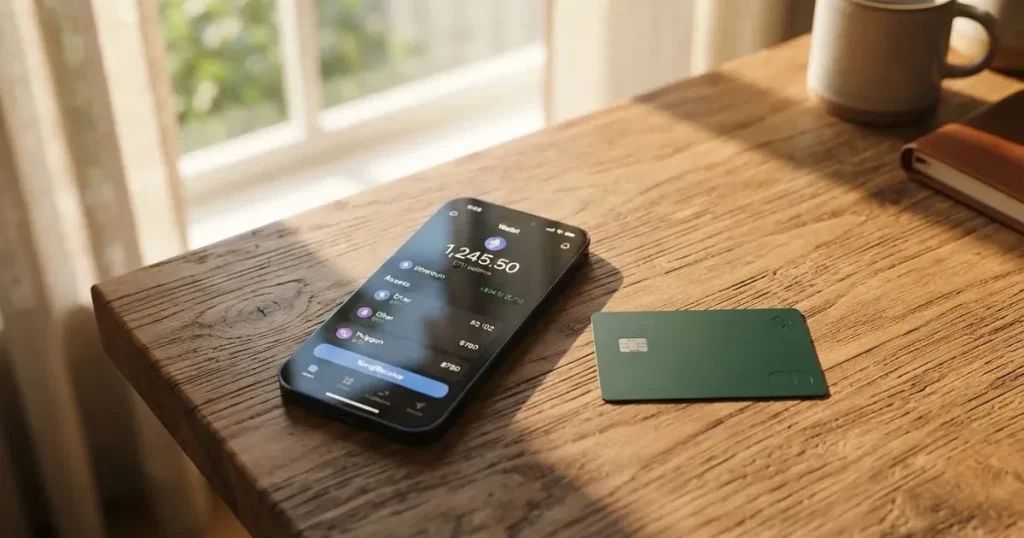
If you cannot get an ordinary bank card — because you live somewhere banks will not open one for you, or you are new in a country, or you hold crypto rather than a salary — the EMCD card is one of the tools people ask me about. It is a virtual card you fund with USDT and spend wherever Mastercard is accepted. That sounds like an answer to a real problem. I have read the card’s own pages carefully, and I have to tell you that what I found is thin, contradictory and, in places, expensive.
My score for this card is 4.9 out of 10. Before you read on: the conditions described on this page are current as of October 28, 2026.
Let me be clear about what kind of reader this is for. This is not a bank. It is not an exchange with a card bolted on. It is a crypto wallet product that issues a card number and converts your stablecoin into dollars as you spend. Who that suits and who it does not is the whole question, and it is a narrower group than the marketing suggests.
Verdict: who this card actually serves
I score EMCD 4.9 out of 10. The single highest mark in my assessment — 9 out of 10 — goes to reach: wherever cards are accepted, this one works, and that genuinely matters if your problem is not being able to open a bank account. Everything else falls well short of that. The costs earn 2 out of 10. Top-up options earn 4. Here is the breakdown, criterion by criterion, with my reasoning in plain words.
| Criterion | Mark | Why |
|---|---|---|
| Who can get it | 9 / 10 | Works wherever Mastercard is accepted, with 13 countries excluded |
| Cost | 2 / 10 | $19–$25 issuance, $5 a month, 1.5% to top up, 1.5% + $0.50 per purchase, up to 3% conversion |
| Top-up options | 4 / 10 | USDT only, from the main wallet account, network not disclosed, $20 minimum |
| Reliability and complaints | 4 / 10 | Issuer and legal entity unnamed, network named inconsistently, reports of blocked accounts |
| Everyday use | 5 / 10 | Virtual only, no ATM, no 3-D Secure, wallets listed as coming soon |
| Total | 4.9 / 10 | Strong reach, weak everything else |
Let me walk you through the marks, because the numbers alone will not tell you whether this card belongs in your life.
Reach scores 9, which is the highest single score here, and I do not hand those out lightly. EMCD’s own help centre says the card works wherever Mastercard is accepted, and that the exceptions are a list of 13 countries: Afghanistan, Belarus, Cuba, Iran, North Korea, Syria, Venezuela, Russia, Myanmar, Somalia, Ukraine, Yemen and China. If you are reading this from one of those countries, stop — payments will not work and no amount of verifying your identity will change that. If you are anywhere else, this is close to as universal as a card gets. But note the card’s own page says only that some EMCD services are unavailable in certain jurisdictions, without naming them, and the help-centre article on this was previously reported to list Russia as restricted. The 13-country list is the specific, current statement; treat it as the real boundary.
Cost scores 2, the lowest mark, and this is where the decision usually turns. Holding the card is cheap enough; using it is not. I will walk through the numbers in the cost section, but the short version is that issuance, a monthly fee, a top-up fee, a per-purchase fee and a possible bank conversion fee all stack on top of each other. A card that is free to issue and then takes roughly 3% of what you spend, plus 1.5% to load it, is not the cheap option it first appears to be.
Top-up options score 4 because the flexibility is thin. USDT is the only way in, it comes from your own Coinhold wallet’s main account, the network is not stated anywhere I could find, and the first deposit must be at least $20. One asset, one source, one unclear network. That is a narrow door into the product.
Reliability and complaints score 4, and this is the criterion I would weigh most heavily if I were choosing. The card’s own pages do not name the issuing bank or the legal entity behind it. They also do not agree on which card network it runs on — the card page says Visa Platinum, the help centre says Mastercard. On Trustpilot, EMCD’s own reviews are mixed, with recurring themes of accounts blocked after identity checks and slow support. I go into this in the risks section, because what I found there deserves more than a sentence.
Everyday use scores 5. It is a virtual card only, there is no cash withdrawal, no 3-D Secure, and the app itself marks Apple Pay and Google Pay as “coming soon” even though the FAQ says they work. That is a card for online spending and nothing else.
Who this card is genuinely for, then? Existing EMCD users who already hold funds in the Coinhold wallet and top up with USDT. For them the loop is closed and working, and the fees, while real, are fees on money they had already decided to move. For everyone else, you are choosing a card with an unnamed issuer, an undisclosed network for the deposit, and no cash access, in exchange for solving a problem — no bank card — that other tools solve more clearly. That is why my mark is where it is.
Will they give you the card?
Yes, in most countries, but there is a list of 13 where payments will not work at all. The card’s page says it works “worldwide” wherever cards are accepted. Alongside that sits a notice saying some EMCD services are unavailable in certain jurisdictions, without naming which. The help centre is more precise, and that is the version I would rely on: the card works everywhere Mastercard is accepted except that payments are not available in Afghanistan, Belarus, Cuba, Iran, North Korea, Syria, Venezuela, Russia, Myanmar, Somalia, Ukraine, Yemen and China.
This is the eligibility question, so let me separate the two things people conflate. Where you live determines whether the card functions. Who you are — your citizenship, your document — is a separate matter, handled at verification, and I cover that in the next section. The card page does not publish a clean country-by-country eligibility list, so if your country is not on the 13 above, the honest answer is that EMCD has not said no to you, which is not the same as saying yes.
One more thing to check before you invest time: the help centre’s article on where the card works has itself changed before, having been reported to list Russia among restricted places. Policies in this area move. If your country is near that boundary, re-read the help centre at the moment you apply rather than trusting any summary, including mine.
How to get it
You verify your identity with a government ID, the card arrives as a virtual number within minutes, and it is not a physical card you can hold. Standard EMCD identity verification is described on the card as needing an ID document and 5 minutes. Your order requires $15 of funding that stays in your balance — it is not a temporary hold, it sits there.
Then the terms get more specific. Identity verification is mandatory after your first top-up, not before it: you present a valid government ID, it “usually takes a few minutes”, and the card activates automatically once it passes. If it fails, you retry with a different document. The card’s pages do not state what verification levels exist, whether proof of address is required, or what age threshold applies.
The card itself is virtual, and the help centre is explicit: “Currently, we only offer virtual cards.” There is no delivery, because there is nothing to deliver. Cards are valid for two years; after expiry a new card with a new number is opened, so anything you have saved to a merchant’s stored cards will need re-entering. The help centre also says the card runs on Mastercard and is denominated in US dollars — which contradicts the card page, which describes a Visa Platinum. I flag this as a genuine inconsistency in the product’s own documentation rather than trying to guess which is current.
What this means practically: if you are someone who needs a card number for online subscriptions and websites, this setup works. If you need something in your hand for a market stall or a reader who wants to tap, this is not that.
Fees: what it really costs
The card is cheap to hold and expensive to use: $5 a month, 1.5% to top up, 1.5% plus $0.50 per purchase, and up to a further 3% if the issuing bank converts a non-dollar purchase. Here are the actual figures the card publishes.
| Fee or limit | Amount |
|---|---|
| Issuance, Active tier | Free |
| Issuance, Plus tier | $19 |
| Issuance, Premium tier | $25 |
| Monthly maintenance | $5 |
| Account closure | $15 |
| Top-up fee | 1.5% |
| Purchase fee | 1.5% + $0.50 per transaction |
| Declined transaction | $1.50 |
| Refund | $0.50 |
| Reversal | $2.00 |
| Chargeback | $35 |
| Non-USD purchase | Possible 3% bank conversion fee |
Now let me put three everyday payments through that table, because a percentage list never tells you what a purchase actually costs.

A $30 grocery shop in dollars. The purchase fee is 1.5% plus $0.50, so roughly $0.95 on top of $30 — call it just over 3% of your money before you have loaded the card. To get that $30 onto the card you also paid 1.5% to top up. And if the shop prices in your local currency rather than dollars, the issuing bank may add a 3% conversion fee on top. That is a single basket costing you several percent, and none of it is the thing you were reading about when you first looked at a “free” card.
A $10 streaming subscription. The purchase fee of $0.50 plus 1.5% is $0.65. The monthly $5 maintenance is the real weight here — unless your plan already covers it, that $5 is half the subscription. Small recurring payments are exactly where a flat monthly fee hurts most, and there is no statement from EMCD that the fee is waived at any balance level.
A $200 online purchase in euros. Purchase fee $3.50. Possible bank conversion 3%, about $6. Top-up 1.5%, about $3. All in, this purchase costs you roughly $12.50 to spend $200 — over six percent. This is the case where the card’s reach advantage stops mattering, because a different card with a cheaper FX rate may simply be better even if it is harder to get.
Two limits on these numbers worth knowing. The card’s Active tier page advertises “0% fees” on standard purchases, which does not square with the help-centre schedule above; the help article does not say which tier it applies to. And a third-party site, not confirmed by EMCD, lists a 2.5% top-up and conversion fee with no monthly or annual fee — which contradicts the official $5 monthly and 1.5% top-up. Where unofficial sources and the card’s own pages disagree, I go with the card’s pages, and so should you.
Top up: how the money gets in
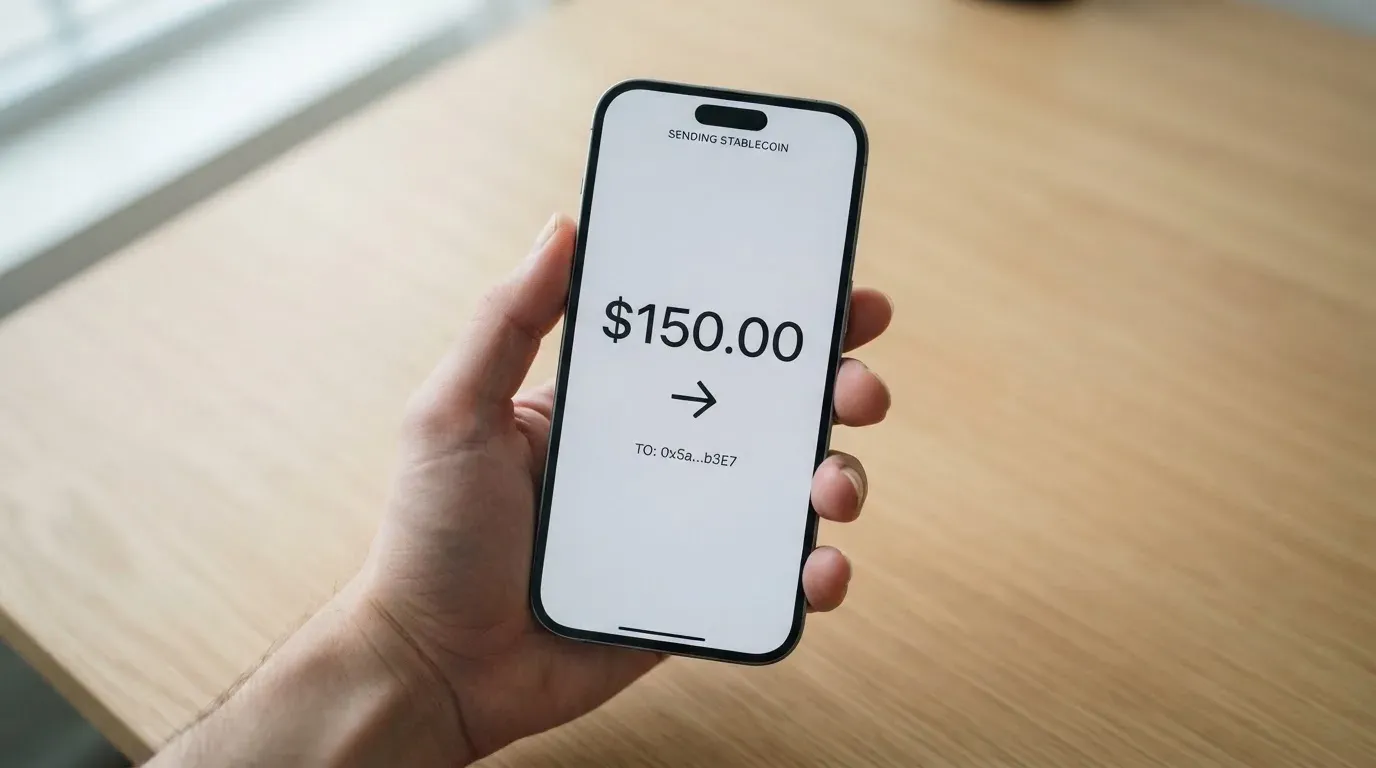
One way in: USDT, transferred from the main account of your Coinhold Wallet, starting at $20. That is the whole story, and it is worth sitting with, because “one way in” is unusual. There is no top-up by card number. The network for the USDT transfer is not stated anywhere I could find — this is the single most important omission on this page, and I will come back to it in the risks section.
The terms that do exist: the minimum first top-up is $20. The top-up fee is 1.5%. Of that first deposit, $15 is held as a reserve until your total card spending exceeds $2,500. Transfers come from USDT held in the Main account and typically take three to five minutes. The terms depend on your card plan and may change.
That $15 reserve deserves a second look. It is not a security deposit you get back on request; it is released only once you have spent $2,500 through the card. If your card is for small everyday spending, a person who never reaches $2,500 in total may simply never have that $15 back. Treat it as tied up until you cross a fairly high threshold.
There is one asymmetry I want to put plainly, because people discover it at the worst moment. A free transfer from the card balance back to the Main account is not supported. In the other direction, when you close the account, the remaining US-dollar balance is converted to USDT and credited to your main EMCD account. So the route out is: close the account, and take your money as USDT. The issuing bank may also close the card if the balance is $20 or less, or if there has been no activity for 30 days.
That $20 threshold matters because it equals your minimum top-up. A card funded with exactly the minimum, then lightly used, sits at the edge of being closed automatically. Keep a margin.
On network fees for the USDT transfer: the card does not say who pays them. In this category the network fee is charged by the blockchain, not by the card provider, and if your wallet holds USDT with no small amount of the network’s own token, a transfer can be prepared but unsendable. Since the network is not disclosed, I cannot tell you which token to hold a balance of. Ask support before your first deposit, and treat the answer as the thing to verify.
Paying with it every day
It is an online card first: virtual, no cash machine, and the mobile wallets you would want for tapping are marked as not yet available. The card is managed in the EMCD app. There is no ATM: cash withdrawals are not supported, and the FAQ frames them as something that will become available once a physical card launches. So “every day” here means websites and online merchants, not the counter at a shop.
Apple Pay and Google Pay are the awkward part. The FAQ says the card works with both. The feature list marks them “Coming soon”. The help centre says they work. I would not plan around either until you have added the card yourself and seen it succeed. That is a conflict in the card’s own material, and I would rather flag it than resolve it for you.
Some merchant categories are blocked, which is where a lot of first-time surprises will come from: fuel, ride-hailing, AI subscriptions, money transfers, crypto exchanges, gambling, brokerage, and most entertainment except cinemas and theatres. Note what that list excludes from your daily life — much of the app-based spending that makes a virtual card attractive in the first place. Cashback is not mentioned anywhere on the card’s pages.
If a payment goes wrong, the fee schedule tells you the price of each outcome: a refund costs $0.50, a reversal $2.00, and a chargeback $35. What it does not tell you is the procedure or how long any of it takes — dispute procedure and time frames are not stated. A $35 chargeback fee is worth weighing before you decide to pursue a small disputed purchase; it may cost more to argue than to accept.
One practical habit that costs you nothing: keep the card’s spending limits set low in the app while you are learning which merchants accept it. The app lets you set limits and freeze and unfreeze the card instantly, and that is a genuine comfort when the issuer is not named and 3-D Secure is absent.
What can go wrong
The real risks here are the unnamed issuer, the undisclosed deposit network, the missing 3-D Secure, and a documented pattern of accounts being closed after verification. I want to take these one at a time, because they are different in kind — some are inconveniences, some are structural.
The structural one is that this card’s own pages never name the issuing bank or the legal entity behind it. EMCD and Coinhold Wallet are the names you see; the registration country, the issuer and the licences are not stated on the card page. In a category where that information is normally published, its absence is the finding. I could not find it elsewhere either — a third-party site lists the network as Mastercard, the platform as Coinhold, offered by EMCD.io, and still does not name the issuer. That means if something goes wrong with your card, I cannot tell you which regulated institution to complain to, or which deposit-guarantee or safeguarding regime your balance sits under. Some providers in this category are required to segregate customer funds; EMCD’s pages do not say whether it does.
The second structural risk is the network. Your USDT deposit goes to a specific blockchain, and the card does not say which. Transfers are irreversible. If you send on a network the provider does not support, or to an address belonging to another network, the funds can be lost or need manual recovery with no guarantee. This is not a rare edge case; it is the most common way people lose money in stablecoin deposits, and EMCD making you guess is the problem, not the technology.
The third is that the card does not support 3-D Secure. Merchants that require it will decline the payment. Some also decline foreign-issued or prepaid card numbers because the issuer’s country shows up in the merchant’s lookup. Both of these are ordinary mechanics of card payments, not accusations about EMCD; they simply mean this card will fail at some online checkouts and the failure will look like the shop’s problem.
Then the pattern in the reviews. Trustpilot’s page for EMCD the company — not the card specifically — had 190 reviews, with the headline score hidden “due to a breach of guidelines” when I looked on 2026-10-20. The visible breakdown was 83% five-star and 11% one-star; EMCD says it removed fake reviews. The negative themes, from user reports: accounts blocked or banned after KYC or AML review between November 2025 and April 2026; slow KYC and document checks in November 2025; referral and welcome bonuses unpaid without completed verification in November 2025; slow or missing support replies between November 2025 and March 2026; and US users blocked since 1 May 2025. One one-star review describes login and email-verification errors, inability to add a UK phone number and no support reply. Positive reviews cite 12% annual interest and fast payouts, and a 2025 review says payments were always made. No complaint specific to the Coinhold/EMCD card itself was found, no Reddit threads, and no official incidents. I want to be precise about that absence: the complaints are about the company and its verification process, not about this card being misused at a shop. But since verification is the gate you pass through to get the card at all, the pattern matters.
One more practical trap, category-wide but worth knowing here: a declined payment can leave a hold on your funds for several days, sometimes up to seven. With a $20 minimum and a $15 reserve, a couple of declined attempts can freeze a meaningful share of your balance.
And the custody point, which applies to every card of this kind. The wallet here is custodial — EMCD holds the credentials, so the coin is only as safe as the provider. That is not a criticism unique to EMCD; it is the trade you make for convenience. But the sector has a history: Mt. Gox, Coincheck and the Ronin Network between them lost hundreds of millions of dollars, and stablecoins themselves have broken their peg before. Nobody can promise you safety here, and I will not.
What to take instead
If EMCD’s 4.9 does not clear your bar, the honest question is what you are solving. If it is “I cannot open a bank account”, the answer may not be another card from the same category — the three below at least publish more about who they are and what they charge. If it is “I want to spend crypto without converting it myself”, a card with published fees and a named issuer is a better bet than one with neither.
| Card | Score | Card type | Issuance | Standing fees | Notable |
|---|---|---|---|---|---|
| EMCD | 4.9 | Virtual only | Free / $19 / $25 | $5 a month; 1.5% top-up; 1.5% + $0.50 purchase | 13 countries excluded; no ATM, no 3-D Secure |
| MSX | 6.4 | Not stated officially | Not stated | Not stated | Little published |
| Bybit Card | 6.0 | Virtual and physical | Free virtual; physical varies | No annual fee; 0.9% crypto conversion; FX 2% and up | Cashback tiers to 10%, but crypto-funded only |
| MEXC | 5.6 | Virtual only | 20 USD | Service fee 0% | Cashback 4%–10% by M-Score tier |
Bybit Card scores highest of the three alternatives at 6.0 and publishes the most. It has both virtual and physical cards in most regions, no annual fee, and a crypto conversion fee of 0.9% — noticeably below EMCD’s 1.5% plus $0.50. Its catch is reach in the other direction: it is region-limited to places like Argentina, AIFC in Kazakhstan, Georgia, Kazakhstan, Australia, Mexico, Brazil, Peru and Asia Pacific, and its cards page states plainly that the product is not meant for European Economic Area customers and that all EEA participation is strictly prohibited. That is a real limit, but it is a published one. Its cashback tiers are generous — 2% up to 10% depending on tier — but from 2026-10-05 only crypto-funded transactions earn them, so if you were planning to spend fiat, that ladder does nothing for you.
MEXC sits at 5.6, just above EMCD, with a virtual card only, a 20 USD issuance fee, a 0% service fee and cashback of 4% to 10% by M-Score tier paid by the 15th of the following month. Its limits are less clear: the eligible-country list runs behind a “Details” link, the network and card currency are not stated, and the fee guide behind its own link I did not read.
MSX scores 6.4, the highest of the four I looked at, and I want to be honest about why: I could not read official pages stating its card type, its costs, its fees or its funding method. A high mark on thin documentation is not the same as a good card, and I would not switch to it on the strength of a score alone.
The pattern across all of them is worth naming. Every one of these cards is virtual-first, every one funds from a custodial crypto balance, and every one makes you choose where your money is exposed. None of them is a bank account. If your real problem is access to ordinary banking, a regulated e-money institution in your own jurisdiction may serve you better than any of them — those are required to safeguard customer funds, though such funds are not bank deposits and may not carry deposit guarantee.
Who I would recommend it to
I would recommend EMCD to one group only: people already inside the EMCD and Coinhold ecosystem who hold USDT and spend it in dollars. For them the card does a specific job, the top-up path is already understood, and the fees are paid on money they had already decided to move.
I would not recommend it if you need cash, if you travel to any of the 13 excluded countries, if you plan to pay for fuel, ride-hailing, transfers or crypto exchange fees with it, if you want Apple Pay or Google Pay to work on day one, if you are relying on 3-D Secure at a merchant that demands it, or if what you need is a card whose issuer you can name in a complaint.
The question I would ask you before anything else is: why does an ordinary bank card not work for you? If the answer is bureaucracy, nationality, a recent move, or a frozen traditional account, this card’s 9-out-of-10 reach is genuinely valuable and the trade-offs become worth weighing. If the answer is simply that you would prefer to hold crypto, then you are choosing this over cheaper and clearer options, and I would want you to make that choice with the fee table open in front of you.
Frequently asked questions
What is the EMCD card?
The EMCD card is a virtual payment card that spends a US-dollar balance you load with USDT from the Coinhold Wallet. It is not a bank account and it does not give you a bank. You convert or deposit stablecoin first, and the card draws down that stored balance, so it cannot overdraw. The card’s own pages describe it as working wherever cards are accepted, minus a list of 13 countries.
How does the EMCD card work?
You transfer USDT from your Coinhold wallet’s main account, the amount converts to a dollar balance on the card, and each purchase draws it down. EMCD takes 1.5% to top up and 1.5% plus $0.50 per purchase. Money loaded is effectively your own balance rather than credit, and the card’s fee page does not describe it as a credit line. The first $15 of your first top-up is held as reserve.
Is EMCD a bank?
No. EMCD’s own card page does not name the issuing bank or the legal entity behind the card, and does not state a registration country or licences. EMCD and Coinhold Wallet are the brand names you see. This is a crypto wallet product with a card programme attached, which is a different thing from a bank, and it means you cannot point to a named regulated institution if you need to complain.
Which countries can use the EMCD card?
The card works wherever Mastercard is accepted, except that payments are not available in Afghanistan, Belarus, Cuba, Iran, North Korea, Syria, Venezuela, Russia, Myanmar, Somalia, Ukraine, Yemen and China. The card page itself only says some services are unavailable in certain jurisdictions without naming them. If your country is near that list, re-read the help centre before you apply, because the article has changed before.
Does the EMCD card require KYC?
Yes. Standard identity verification is described as needing an ID document and 5 minutes, and it is mandatory after your first top-up rather than before. The card activates automatically once verification passes, and if it fails you retry with a different document. The pages do not state what verification levels exist or whether proof of address is required.
How much does the EMCD card cost to use?
Issuance is free on the Active tier, $19 on Plus and $25 on Premium. Beyond that, $5 a month in maintenance, 1.5% to top up, and 1.5% plus $0.50 on every purchase. A non-USD purchase may add a 3% bank conversion fee. A declined payment costs $1.50, a refund $0.50, a reversal $2.00 and a chargeback $35.
Can I get cash from an EMCD card?
No, not now. Cash withdrawals at ATMs are not supported, and the FAQ says withdrawals “will be” available once a physical card launches. There is no physical card at present — the help centre says only virtual cards are offered. Note also that a free transfer from the card balance back to your Main account is not supported; on closure the remaining dollar balance converts to USDT.
Is EMCD card safe to use?
Safely is the wrong word — nobody can promise that. It is custodial, so EMCD holds the wallet credentials and you are trusting them, and the card’s own pages do not name the issuer or describe any safeguarding of your balance. There is no 3-D Secure, and Trustpilot reviews of the company include recurring reports of accounts blocked after KYC review and slow support. The card also does not say which USDT network to deposit on.
How do I add the EMCD card to Apple Wallet?
Uncertain, and I would not assume it works. The EMCD FAQ says the card works with Apple Pay and Google Pay, but the feature list marks both as “Coming soon,” and the help centre says they work — the product’s own pages contradict each other. If tap-to-pay matters to you, add the card yourself in the app and confirm a small test payment before relying on it anywhere important.
Can I top up the EMCD card with anything other than USDT?
Not as far as the card’s pages say. Top-up is USDT transferred from the Main account of the Coinhold Wallet, with no top-up by card number, and the first deposit must be at least $20. Crucially, the network for that USDT transfer is never stated, which matters because transfers on the wrong network can be lost. Ask support which network to use before your first deposit.
Trading-platform cards – cryptocardselect
Content created by the «cryptocardselect» team