
A metal card, a $1,000 membership, and a fee sheet with holes in it
 Available in US
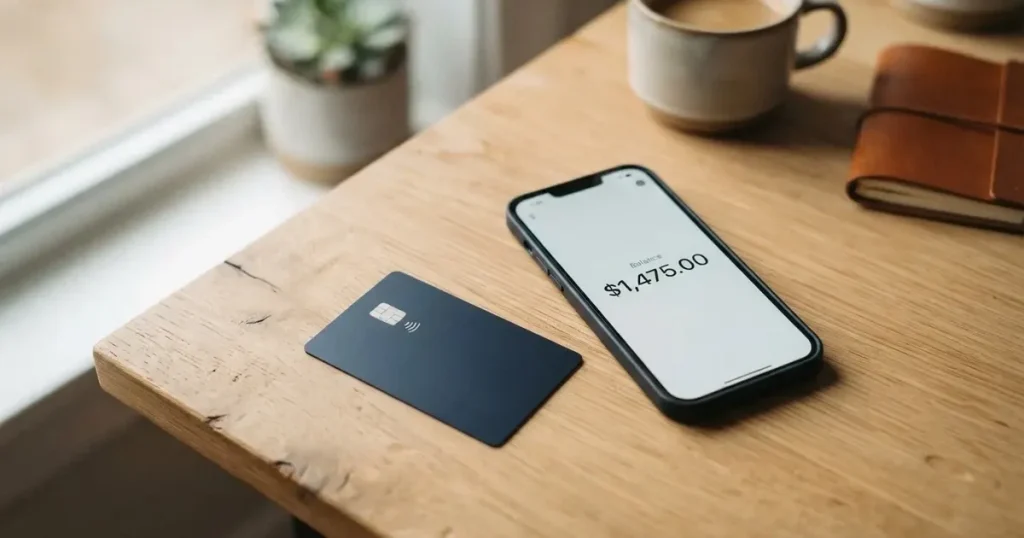
Xapo Bank is one of the more interesting things to come out of the crypto-card category in years: a real bank, incorporated in Gibraltar, regulated as a credit institution, issuing a physical metal Visa debit card that spends directly from a balance you can hold in dollars, pounds, euros or bitcoin. On paper it is the thing crypto-card users have been asking for since the first wave of prepaid crypto cards collapsed — banking licence, deposit protection, a card you can hold in your hand.
Conditions are current as of October 28, 2026.
And yet the numbers do not hold together. The membership costs USD 1,000 a year. The card’s own public pages do not say which countries you can order it from, whether citizenship or residence is what counts, or what many of the fees actually are. Third-party reviewers, working from materials the card does not publish, list a handful of limits and countries; none of that is confirmed by Xapo. Meanwhile the user reviews that exist are a 3.9 out of 5 from roughly 1,141 reviews, with 31% of them one-star, and the recurring theme is the same one: accounts frozen, compliance reviews dragging for weeks, balances that will not move.
My score is 5.8 out of 10. That is not a dismissal. This is a genuinely capable product with real weaknesses in the two places where a payment card lives or dies: what it costs and who can actually get one.
| Criterion | Mark | Why |
|---|---|---|
| Who can get it | 7 / 10 | Officially no country list at all; unofficially 50 countries, with 28 restricted including the United States |
| Cost | 2 / 10 | USD 1,000 annual membership, refundable within 30 days; 2% of ATM withdrawals above USD 100 a month |
| Top-up options | 6 / 10 | Spends the account balance; USDC and USDT auto-convert to USD; SWIFT, ACH, SEPA, Faster Payments, Lightning |
| Reliability and complaints | 7 / 10 | Gibraltar FSC credit institution, Permission No. 23171; USD deposits covered to GBP 120,000 equivalent; Trustpilot 3.9 from 1,141 reviews |
| Everyday use | 8 / 10 | Metal, standard and virtual debit cards; ATMs in 100+ countries; Apple Pay and Google Pay not disclosed |
| Total | 5.8 / 10 | Strong card, weak economics, unexplained access rules |
*Conditions described are current as of October 2026.*
Will they give you the card
The honest answer is: I cannot tell you from the card’s own materials, and neither, it seems, can anyone else who is not guessing.
The terms page that governs the card carries the title “Cards Issued Outside Europe Region”. Inside it, the country list is not stated. Whether Xapo decides on your citizenship or on where you live is not stated either. That distinction matters more than it sounds: sanctions screening and issuer risk policy are applied to citizenship and country of birth as well as to your address, so two people living in the same city can get different answers. Xapo reserves the right to refuse a card at its discretion, and people whose accounts were previously suspended cannot order one at all.
What exists outside the official pages is a third-party list, and I am giving it to you as exactly that — unofficial, not confirmed by the card. One comparison site, updated 11 August 2026, says the card is available in 50 listed countries including the United Kingdom, Canada, Germany, Japan and Singapore, and that 28 countries and jurisdictions are restricted, including the United States, Russia and Ukraine. That same site frames eligibility by residence. Another source says the card reaches over 100 countries but excludes US residents and holders of a US passport.
The practical upshot for you: if you live in the United States, the unofficial reading is that this is not for you. If you live in Europe, the terms heading suggests there is a separate European track whose own conditions I have not seen here. Anywhere else, you are relying on a list maintained by someone else, and the list may not be what Xapo applies on the day your application is reviewed.
How to get it
The route is straightforward, and the checks are the ordinary ones.
You must be at least 18. You need a Xapo Account first — the card is linked to it and cannot exist without it. Verification requires a valid passport or national ID, personal details confirming your identity and residence, and a real-time photo or short video in the app. That is the whole stated list. The terms do not specify which KYC documents or proof of address are acceptable, there are no tiers, no stated processing time, and no stated reasons a verification might be rejected — you find out by being told.
Three card types come with membership: metal, standard and virtual debit cards. Visa terms apply to cards issued outside the Europe region; the card network is not named on the terms page as published. The card spends your USD balance.
Delivery is the part to read twice. Cards are posted only to the verified address. An alternative address is at your own risk and is not guaranteed. Countries served, delivery time and delivery cost are not stated. On replacements, an additional replacement within a calendar year is USD 25; other lost, stolen or damaged re-issues “may apply”, with the amounts sitting in a Fees Information Sheet I have not read. Unofficial, from a comparison site in August 2026: delivery times vary by region, an emergency replacement costs USD 100 plus address-dependent shipping, and the first replacement per year is free. Treat all of that as a lead to check, not a quote.
Fees: what it really costs
This is the section that decides the review. Start with the number that is stated plainly: the membership is USD 1,000 per year, with a 30-day full-refund window. The metal card itself is currently free to order. There is one membership, not a ladder of tiers — you are not choosing between a basic and a premium version, you are choosing whether to pay a thousand dollars at all.
After that, the picture is patchier, and I want to be straight about where it is patchy rather than filling the gaps with typical industry figures, which are not facts about this card.
| Fee or limit | What the card states |
|---|---|
| Membership | USD 1,000 per year, full refund within 30 days |
| Card issuance | Metal card currently free to order; standard and virtual also included |
| Additional replacement card | USD 25 within a calendar year; other re-issue fees “may apply”, amounts in the Fees Information Sheet |
| Foreign exchange | “no FX fees and no hidden markups” |
| Bitcoin spending | “no fees and competitive spreads”; dynamic currency conversion discouraged |
| ATM | 2% of the withdrawal amount above USD 100 per month; the first USD 100 a month free; ATM operator fees may apply |
| Default monthly spending and withdrawal limits | Exist, adjustable in the app; amounts not stated |
| Deposit and withdrawal fees | Not stated |
Two everyday payments, so this is not abstract. Pay for a coffee in a country whose currency you do not hold, for USD 12. The card converts and debits your balance, and by its own terms with no FX fee and no hidden markup; the spread you pay is whatever the conversion rate gives you, and the terms discourage you from letting the merchant’s own currency conversion do it instead. Now take USD 150 out of a cash machine in Lisbon. The first USD 100 of your monthly withdrawals is free; 2% of the withdrawal amount applies above that, so USD 1 on this one, plus whatever the machine’s operator charges — and operator fees “may apply” means they often do. The ATM network spans 100+ countries.
The third case is the one to actually test yourself against. Someone who draws cash twice a month for small amounts is fine. Someone who pulls a few hundred dollars in currency each month is paying 2% on everything above USD 100, forever, on top of a thousand-dollar membership. The card’s own copy calls the limits “high spending limits” while not publishing them; unofficial figures from an August 2026 comparison site put in-store and online spending at USD 50,000 a day, ATM withdrawals at USD 2,000 a day, with larger temporary purchases considered case by case up to USD 750,000. Unconfirmed by the card, but it tells you the scale, and the scale is not the problem. The thousand dollars a year is.
Top up: how money gets into the card
The card spends the Xapo Account balance only. That is the whole model, and it is a pre-loaded balance: you convert or deposit first, and the card can never overdraw because there is nothing to overdraw against.
Deposit rails, as stated: stablecoins USDC and USDT auto-convert to USD, and the fiat rails are SWIFT and ACH for USD, Faster Payments for GBP, SEPA for EUR, RTP and FedACH for USD, with Lightning for bitcoin. Withdrawals run back out over SWIFT, ACH, Faster Payments, SEPA and Lightning.
The deposit fee and the minimum top-up are not stated. Neither are withdrawal fee amounts. That is a real gap: if you intend to move money in and out regularly, you are working without a fee schedule.
What I would not do is treat the stablecoin route as interchangeable with the others. A USDC deposit is an on-chain transaction, and blockchain transfers are irreversible — a deposit sent on a network the provider does not support, or to an address belonging to a different network, can be lost or need manual recovery with no guarantee. Network fees for your deposit are charged by the blockchain, not by the card provider. And stablecoins are stable only in the way the word usually implies: Tether’s USDT and Circle’s USDC are dollar-pegged, and the BIS put about 90% of stablecoin market capitalisation in those two, but USDC briefly lost its peg in March 2023 during the US banking crisis, and USDT has been issued across Ethereum, Tron, Solana, Polygon, Avalanche and others. One more thing worth knowing before you plan around it: Circle stopped supporting USDC on Tron in February 2024, so “USDC over TRC20” is not a native option here.
On closing down: closing the account cancels the card, and the card can be cancelled on its own. What happens to a remaining balance on closure is not stated. Xapo may end the agreement with two months’ written notice.
Paying with it every day
The day-to-day picture is the strongest part of this card.
Three cards come with the membership — metal, standard and virtual. The metal one is described as complimentary to order, and it is the sort of object people keep on the desk. The virtual card is the one for online-only spending, which is where virtual cards earn their keep. ATMs work in 100+ countries.
Your balances are USD, GBP, EUR and bitcoin, and each payment can draw from the USD balance or the bitcoin balance. If you pay in a currency you do not hold, the card converts and debits your balance, with no FX fee and no hidden markup by the card’s own wording. Declining the merchant’s dynamic currency conversion — letting the shop’s terminal do the conversion instead — is explicitly discouraged, because that rate is the shop’s, not yours.
Apple Pay and Google Pay are not stated on the pages I checked. I would not plan around contactless phone payments until you have confirmed it in the app yourself. This is a notable gap: mobile wallets are the standard way most people pay today, and the card’s silence on the subject is a gap in the documentation, not proof of absence.
Two more practical notes. Xapo blocks a list of merchant category codes, and the list is not published on the page — so some categories may simply not work, and gambling code 7995 is the classic one issuers block. Recurring pre-authorised payments, self-service petrol pumps and cash-like transactions may be declined; that last one catches people at car parks and self-checkout terminals. If a payment declines, a hold can remain on your funds for several days.
On rewards, there is a specific campaign and no general offer: 3% cashback in bitcoin on rideshare and taxi spending, 1 July to 31 October, requiring an active metal card, and the card says cashback is available for selected spending only. From 1 July 2026 general everyday cashback was replaced by targeted campaigns. Separately, an intro offer of 4.6% p.a. on the first USD 100,000 of Savings for 90 days is stated for members paying between 22 September and 23 November 2026 — that is a savings product, not card rewards, and it expires.
The app is one app for iOS and Android, available 24/7, with support through the app or customersupport.xapo.com, a contact page and a dedicated relationship manager. Store ratings I did not read.
What can go wrong
Two risks here are structural and worth naming plainly. The first is that Xapo is a custodial bank: your funds sit with a Gibraltar institution rather than in a wallet you control, so you are trusting them with both the money and the access. USD deposits are covered by the Gibraltar Deposit Guarantee Scheme up to the USD equivalent of GBP 120,000, which is real protection for dollars. Bitcoin and crypto are not covered by that. The bank lists PCI DSS, SOC 2 Type II and SOC 3 certifications and describes bank-grade security with fraud monitoring, a card freeze and unfreeze in the app, and 2FA is not mentioned in the card terms.
The second risk is the one the reviews keep describing. On Trustpilot, Xapo Bank sits at 3.9 out of 5 from 1,141 reviews, and 31% of those are one-star. Support gets praised in some reviews; one 1-star calls the bank fraudulent over a year of failed transactions. The recurring themes, with dates from the reports, are account freezes and closures in November 2025, July and August 2026; inability to withdraw or close in August 2026 and a USD 1,000 annual fee not refunded in July 2026; slow compliance reviews in one case reportedly seven weeks across June to August 2026; high fees in June to September 2026; and templated support in June and September. On Reddit’s r/CryptoHelp in 2025, one user reported an ID verification problem unresolved for more than three years with unresponsive support. I found no official incidents on record.
Read that pattern as a category risk, not a prediction. Compliance reviews and freezes are what happen when an institution runs sanctions and anti-money-laundering checks that it cannot complete — under EU rules an institution that cannot complete due diligence must hold back from the transaction or relationship, and where necessary end it. So a freeze is not automatically a scandal, and it is not automatically your fault either.
Two things the card leaves to you. There are no dispute or chargeback timeframes in the terms, and refunds are “usually up to 10 Business Days”. If a refund comes back in an unsupported currency it is converted at the payment-system rate and Xapo is not liable for the loss. If a payment fails and you want it reversed, that is the row of the table you will be reading most often, and it is blank.
There is also history here, from a different product: in 2014 Xapo faced backlash over the fee schedule on its old debit card, blamed its issuer and promised reimbursement. Different card, different era — but it shows the company has been here before.
Regulation, for context: Xapo Bank Limited holds credit institution Permission No. 23171 under the Gibraltar Financial Services Commission; Xapo VASP Limited holds DLT provider Permission No. 26061. The bank is incorporated in Gibraltar, Company No. 111928, at 2 Irish Town, Gibraltar GX11 1AA, regulated as a credit institution under the Financial Services Act 2019.
What to take instead
None of these is clearly better on every axis. I am showing you the shapes, and the point is that you are choosing between different compromises.
Whop Cards — 5.2 / 10. Visa, usable anywhere Visa is accepted, online and in stores. Geography is the stark part: 31 US states for consumers (Alabama, Alaska, Arkansas, California, Colorado, Connecticut, Florida, Hawaii, Illinois, Indiana, Iowa, Kansas, Kentucky, Maine, Massachusetts, Michigan, Minnesota, Montana, Nebraska, New Hampshire, New Jersey, New York, North Carolina, Oklahoma, Pennsylvania, South Carolina, Texas, Utah, Virginia, West Virginia, Wyoming) and 41 states for businesses. Consumer countries listed as unsupported include Belarus, China (Mainland), Cuba, Hong Kong, India, Iran, Iraq, Israel, Myanmar, Nepal, Nicaragua, North Korea, Russia, Syria, Turkey, Ukraine, Venezuela and Vietnam; corporate exclusions include Russia and Belarus. Whether eligibility runs on citizenship or residence is not stated. The page says “No extra fees” with no issuance or monthly amounts listed, and conversion and FX amounts are not stated. Spending draws on a Whop balance, with a pending balance usable as soon as a payment arrives and standard withdrawals using settled funds; starting data says it is backed by stablecoin collateral from a linked wallet, with coins and networks not stated. Rewards: 5% cashback at selected merchants, currently Uber, with payout currency and conditions not stated. In short: cheap-looking, US-centric, and just as silent on the numbers that matter.
Stella — 6.5 / 10. The highest-scoring of the three. Virtual and physical, VISA, working at what the card page calls “over 40 million VISA merchants globally”. Official countries are not stated. The terms bar users under economic sanctions programmes and route US and European users through affiliates. Fees are not stated officially — they are “described under this User Agreement and/or on the App”. Funding is the cleanest model of the three: deposit crypto into the account and it automatically tops up the card, through an in-app custodial wallet. No cashback stated on the card page; the Earn product is a separate yield thing. If your priority is “deposit crypto, card just works”, Stella’s structure is the simplest here.
UniFi Card — 4.7 / 10. A prepaid debit Visa card issued by Lead Bank, USD, spending from a USD balance, with Apple Pay support in the app. I could not confirm eligibility from official pages; the App Store listing shows send-money routes to the Philippines (PHP), Mexico (MXN) and the eurozone (EUR), with release notes mentioning Colombia, Brazil (PIX) and the UK (GBP). Funding via ACH, wire, SEPA (IBAN) or SPEI (CLABE), plus getting paid to a USDC wallet. Fees are not stated — “Fees may apply. See UniFi website for more details.” The listing claims 3% rewards on balances, which is a savings rate, not card cashback; card cashback is not stated.
| Xapo Bank | Whop Cards | Stella | UniFi Card | |
|---|---|---|---|---|
| Score | 5.8 / 10 | 5.2 / 10 | 6.5 / 10 | 4.7 / 10 |
| Geography | Not stated officially; unofficial 50 countries, 28 restricted | 31 consumer US states | Not stated; affiliates for US/EU | Not confirmed officially |
| Card | Metal, standard, virtual | Visa, type not stated | Virtual and physical, Visa | Prepaid Visa, USD |
| Price | USD 1,000 a year, 30-day refund | “No extra fees”, amounts not stated | Not stated | Not stated |
| Funding | Account balance; USDC/USDT, SWIFT, ACH, SEPA, Faster Payments, Lightning | Whop balance, stablecoin-collateral backed, coins not stated | Crypto deposit auto-tops-up card | ACH, wire, SEPA, SPEI, USDC |
| Cashback | 3% bitcoin on taxi/rideshare, 1 July–31 October | 5% at select merchants, Uber | None stated | Not stated for card |
One thing worth understanding about how any of this works. A card number starts with a 6 or 8 digit issuer identification number that tells a merchant which institution and country issued it — and merchants can look that up and apply extra scrutiny when the issuer country differs from your billing address. That is why a Gibraltar-issued card can look “foreign” in a local shop. Some merchants decline prepaid or foreign BINs for exactly that reason. It is a category-wide irritation, not a Xapo problem, but it belongs in your mental model of any crypto card.
Who I would recommend it to
I would recommend this card to someone who already has a reason to hold dollars with a regulated counterparty and wants a bank behind it — a person whose ordinary bank has been awkward about crypto, who has a real need for USD, EUR and GBP balances plus bitcoin in one place, and who treats the USD 1,000 membership as the price of a relationship rather than the price of a payment method. If that is you, the metal card is genuinely good, the deposit protection is real up to GBP 120,000 equivalent, and “no FX fees and no hidden markups” is a better-than-average promise on foreign spending.
I would not recommend it to someone trying to fix a card that was declined, or to anyone under the age of eligibility who is looking for the cheapest way to spend crypto. The membership alone puts this out of reach as an everyday spending card for most people, and if your reason for wanting a card is that you do not have one, a thousand-dollar annual fee plus an unpublished country list is the wrong shape of problem to solve. I would also wait, if I were you, until the Apple Pay and Google Pay question and the published fee schedule are answered, because both are things you should not take on faith from a page that is silent on them.
And I would be careful, carefully, about the complaints pattern. Freeze after freeze, seven-week compliance reviews, a fee not refunded — these are reports from users, not findings, and I have no way to weigh them against an equally large pile of uneventful months. But they are the reason this is a 5.8 and not a 7.
Frequently asked questions
What is Xapo Bank card?
It is a debit card that spends the balance of a Xapo Account rather than a traditional bank account. Membership includes metal, standard and virtual debit cards, and you can hold USD, GBP, EUR and bitcoin in the account. A payment can draw from your USD balance or your bitcoin balance, and the card converts automatically if you pay in a currency you do not hold.
Is Xapo Bank actually a bank?
Yes. Xapo Bank is incorporated in Gibraltar, Company No. 111928, and is regulated by the Gibraltar Financial Services Commission as a credit institution under the Financial Services Act 2019, with Permission No. 23171. USD deposits are covered by the Gibraltar Deposit Guarantee Scheme up to the USD equivalent of GBP 120,000. Bitcoin and other crypto held in the account are not covered by that scheme.
Who owns Xapo Bank?
Xapo Bank is a separate Gibraltar company from the crypto platform brand, though both sit under Xapo. The bank is the regulated entity that issues the card; Xapo VASP Limited, Permission No. 26061, is the separately licensed DLT provider. The card is issued by the bank, not by the crypto app.
How much does the Xapo Bank card cost?
The membership is USD 1,000 per year, refundable in full within 30 days. The metal card is currently free to order, and standard and virtual cards are included. An additional replacement within a calendar year is USD 25. ATM withdrawals cost 2% of the amount above USD 100 per month. The card states no FX fees and no hidden markups, but several fee amounts sit in a document I could not read.
Is the Xapo Bank card free?
Not in any useful sense. The card itself is free to order, but you cannot have the card without the membership, and the membership is USD 1,000 a year. There is a 30-day full-refund window, so you could cancel within a month, but the card is not a free-standing free card.
Does the Xapo Bank card require KYC?
Yes. You must be at least 18 and supply a valid passport or national ID, personal details confirming your identity and residence, and a real-time photo or short video in the app. These checks are standard anti-money-laundering requirements, and an institution that cannot complete them may hold back or end the relationship — which is one reason accounts get frozen.
Where can I use the Xapo Bank card?
The metal, standard and virtual cards work wherever the relevant network is accepted, and ATMs work in more than 100 countries. Some merchant categories are blocked — the list is not published — and recurring pre-authorised payments, self-service petrol pumps and cash-like transactions may be declined. Apple Pay and Google Pay support is not stated on the pages I checked.
How do I top up the Xapo Bank card?
The card spends the account balance only, so you top up the account. Depositing USDC or USDT converts automatically to USD. Fiat rails are SWIFT, ACH, RTP and FedACH for USD, Faster Payments for GBP, SEPA for EUR, and Lightning for bitcoin. Deposit and withdrawal fees and the minimum top-up are not stated.
Is the Xapo Bank card safe?
The bank lists PCI DSS, SOC 2 Type II and SOC 3 certifications, fraud monitoring, and card freeze and unfreeze in the app. USD deposits are protected to GBP 120,000 equivalent. But it is a custodial bank, so you depend on it, and the user reviews show real friction: 3.9 out of 5 on Trustpilot from 1,141 reviews, with 31% one-star, and recurring reports of freezes and long compliance reviews.
Is the Xapo Bank card worth it?
Only if you were already going to hold substantial dollars with a regulated bank and wanted bitcoin in the same account. As a pure spending card, a USD 1,000 annual fee is hard to justify against cards that charge nothing, particularly since the country list, the limits and part of the fee schedule are not published. Judge it as a banking relationship, not as a cheaper way to buy coffee.
Money-app cards – cryptocardselect
Content created by the «cryptocardselect» team