
A Spanish-issued Mastercard you spend straight from crypto, free to hold, with real cashback if you climb the tiers
 Available in US
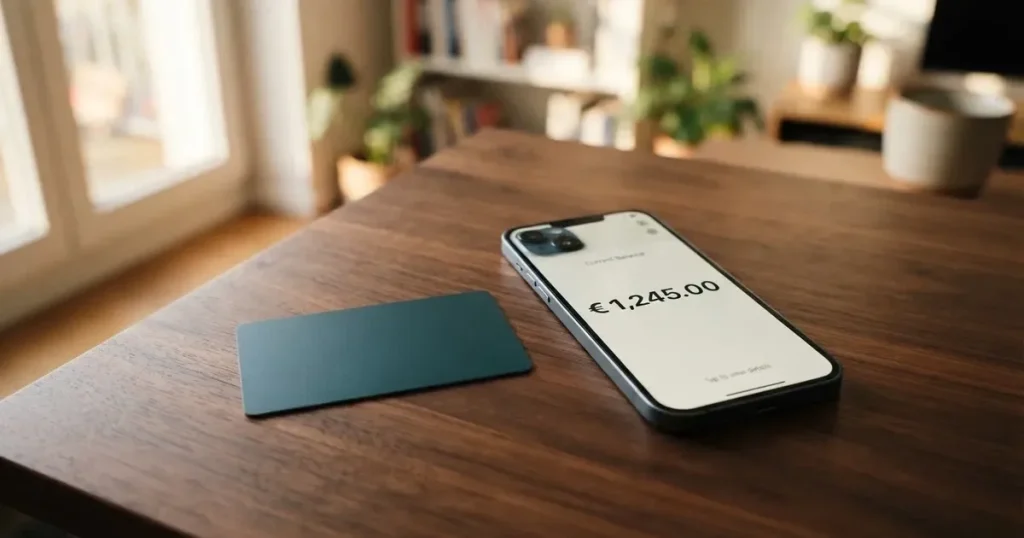
Bit2Me’s card is a Mastercard that spends from your crypto balance, offered by a Spanish platform that has been around long enough to have a reputation to defend. The pitch is simple: convert or hold your balance once, then pay anywhere Mastercard is accepted, with cashback that climbs as your activity grows and no monthly fee. The parts that decide whether that suits you are narrower than the marketing suggests. Eligibility turns on tax residence rather than citizenship, the useful cashback lives behind a tier ladder that the public card page never spells out, and the entity that actually issues the card is not Bit2Me itself.
Conditions are current as of October 28, 2026.
Verdict: 6.8 out of 10
I gave it 6.8 out of 10. It is a competent, properly regulated way to turn a crypto balance into everyday spending money, and in daily-use terms it is the strongest thing here — a real Mastercard, physical or virtual, in Apple Pay and Google Pay, with cash withdrawals around the clock. What holds the score down is not the product but the information around it: the card’s own page does not publish the fee schedule, the limit table, the verification requirements or the country list, so most of what you need to decide anything concrete has to come from third parties that Bit2Me does not confirm.
| Criterion | Mark | Why |
|---|---|---|
| Who can get it | 5 / 10 | The official card page lists no countries at all; third-party sources say 29 countries, mostly in the EEA, with tax residence required and several countries excluded. |
| Cost | 7 / 10 | No maintenance fee is stated in the company’s own words; the schedule behind that — issuance, conversion, foreign currency — comes from unofficial sources only. |
| Top-up options | 7 / 10 | “Dozens of currencies”, your choice of which wallet pays, and the option to link a stablecoin; the actual coin list lives on a separate support page. |
| Reliability and complaints | 7 / 10 | The card comes from PECUNIA CARDS EDE, S.L.U. under Bank of Spain supervision, and Bit2Me holds MiCA authorisation; Trustpilot shows 3.9 out of 5 from 2,484 reviews, with delays and account blocks as the recurring themes. |
| Everyday use | 9 / 10 | Physical, virtual or both, Mastercard everywhere, Apple Pay and Google Pay, and cash withdrawal 24/7. |
Who this suits: residents of the EEA and a handful of other countries who want a Mastercard, want cashback that rewards ordinary spending rather than crypto staking, and are comfortable being inside a regulated Spanish platform’s system. Who it does not suit: anyone outside the supported countries, anyone who needs an ordinary bank card that draws on a salary rather than a balance you load yourself, and anyone who wants the exact fee table in advance without digging through other people’s write-ups. My audience note for this card is short: EU residents who want a Mastercard with high cashback. That is the case where it earns most of its marks.
Will they give you the card?
The honest answer is that Bit2Me’s own card page does not tell you. No countries are listed there, and it does not say whether the test is citizenship or residence — only unofficial sources do that, and they do not fully agree.
What the third-party picture looks like: the card is reportedly available in 29 countries, mostly within the EEA — Austria, Belgium, Germany, Poland, Spain, Sweden and others — with tax residence in a supported country required. Restricted countries listed include Canada, Ireland, Japan, Tajikistan, the United States, Iran and Cuba. One competitor source frames it slightly differently, describing it for EEA tax residents excluding Ireland, plus Argentina for virtual cards only. Treat all of that as unofficial and unconfirmed by Bit2Me, because the card’s own public pages do not say it.
That difference between citizenship and residence matters more than it sounds. Sanctions screening and issuer risk policy are typically applied to citizenship and country of birth as well as to where you live, which is why a card aimed at European residents will not simply follow you around the world. If you are outside the EEA, the practical move is to ask Bit2Me directly before you build anything around the card. If you are in the EEA but in one of the excluded countries, expect a no.
How to get it
The application route is not described in detail on the pages I could read — what the card requires is a Bit2Me account, and the verification steps are not stated officially. So this section is short on mechanics and long on what third parties report.
From unofficial sources (CryptoCardHub in August 2026, and DPL News): you need a registered and verified Bit2Me account, and tax residence in a supported country. The base tier reportedly needs a government photo ID plus a liveness check, with proof of address for higher tiers. Users also report extra document requests and manual reviews — which is ordinary in this category, since anti-money-laundering rules require regulated businesses to verify customers, keep monitoring transactions and report anything suspicious, and EU customer due diligence covers name, address, date of birth, nationality, identity documents, a sanctions check, and whether you are a politically exposed person.
Here is why an account can sit in review rather than move forward. If due diligence cannot be completed, EU rules require the institution to hold off on the transaction or the relationship, and where necessary end the relationship. That is the mechanism behind a lot of the complaints you will read about in a moment.
You can have a physical card, a virtual one, or both — Mastercard, working at any online or physical store that accepts Mastercard payments. The currency the card is denominated in is not stated. Shipping countries, delivery time and delivery cost are not stated on the card page either.
One practical note for anyone planning ahead: identity checks on cards like this are a fixed step, and I am not going to describe ways around them. If the document asks are too heavy for your situation, the honest answer is that this card is not for you rather than that you need a trick to get past it.
Fees: what it really costs
The costs picture splits cleanly in two. What Bit2Me states is genuinely attractive: an issuance fee is not stated, and there is no maintenance fee, in the company’s own words — “Don’t pay anything for the maintenance of your virtual or physical cards”. Beyond that, the card page publishes no conversion fee, no foreign-exchange fee, no cash-withdrawal fee, no free allowance and no limits at all. Those numbers exist in the wild, but only as unofficial material.

Here is the unofficial table, from CryptoCardHub on 11 August 2026, with Bleap’s blog (a competitor) broadly agreeing on the percentages. Take it as a good indication, not as a quoted price list.
| Fee or limit | What is stated officially | Unofficial figure |
|---|---|---|
| Issuance, virtual card | Not stated | 0 EUR |
| Issuance, physical card | Not stated | 20 EUR at levels 0-2, 10 EUR at level 3, 5 EUR at level 4, 0 EUR at levels 5-7 |
| Delivery | Not stated | 5 EUR outside Spain |
| Monthly or annual fee | None — “Don’t pay anything for the maintenance of your virtual or physical cards” | No monthly or annual fee |
| Replacement virtual card | Not stated | 0 EUR |
| Spending from crypto | Not stated | 0.95% |
| Spending from the euro wallet | Not stated | 0% |
| SEPA payment in a non-euro currency | Not stated | 1.75% |
| Other foreign currency | Not stated | 2% |
| ATM withdrawal, Spain | Fee not stated; “withdraw cash 24/7” | 0 EUR from Bit2Me |
| ATM withdrawal, rest of the eurozone | Not stated | 2.50 EUR |
| ATM withdrawal, outside the eurozone | Not stated | 0.55 EUR plus 1%, minimum 0.75 EUR |
| ATM limits | Not stated | 300 EUR per day, 3,000 EUR per month, 30,000 EUR per year; 5 per day, 50 per month, 150 per year |
| Purchase limits | Not stated | 2,500 EUR per transaction and per day, 20,000 EUR per month, 200,000 EUR per year |
Note the one internal contradiction in the unofficial material: Bleap’s blog gives ATM limits as 3,000 EUR per day and 5 per day, which conflicts with the figures above. Nobody has published an official reconciliation, so if ATM limits decide anything for you, ask before you rely on them.
Now, three everyday payments, and which fees apply to each.
Buying coffee in a Spanish café. You pay in euros from the euro wallet, which the unofficial schedule puts at 0%, and there is no monthly fee riding on top. This is the cheapest way to use the card, and it is the scenario the “maintenance costs nothing” line is really describing.
Paying for something in US dollars while your balance sits in euros. Here you are into the 1.75% or 2% territory — a SEPA payment in a non-euro currency at 1.75%, other foreign currency at 2%. On a 100 EUR purchase (an unofficial figure, not confirmed by the card) that is roughly 1.75 to 2 EUR for the privilege of not converting beforehand, which is a reasonable comparison point against converting at home and paying 0%.
Paying for a subscription directly from crypto. That is the 0.95% case. It is the fee the card exists to justify, and it is also where the crypto side of the tax question quietly attaches to your statement — I am not going to advise you on that, but you should know that in the US the IRS treats digital assets as property, so each payment funded from crypto can be a separate disposal measured at that day’s value.
One more fee belongs to the category rather than the card: on-chain network fees for your deposit are charged by the blockchain, not by Bit2Me. If you fund by sending crypto, the network’s own cost comes out of your deposit before the balance arrives.
Top up: how money gets onto the card
Topping up is the part Bit2Me describes most plainly, and the reason it gets a 7. Dozens of currencies, you choose which wallet pays the balance, and you can optionally link a stablecoin. The full coin list sits on the support site rather than on the card page.
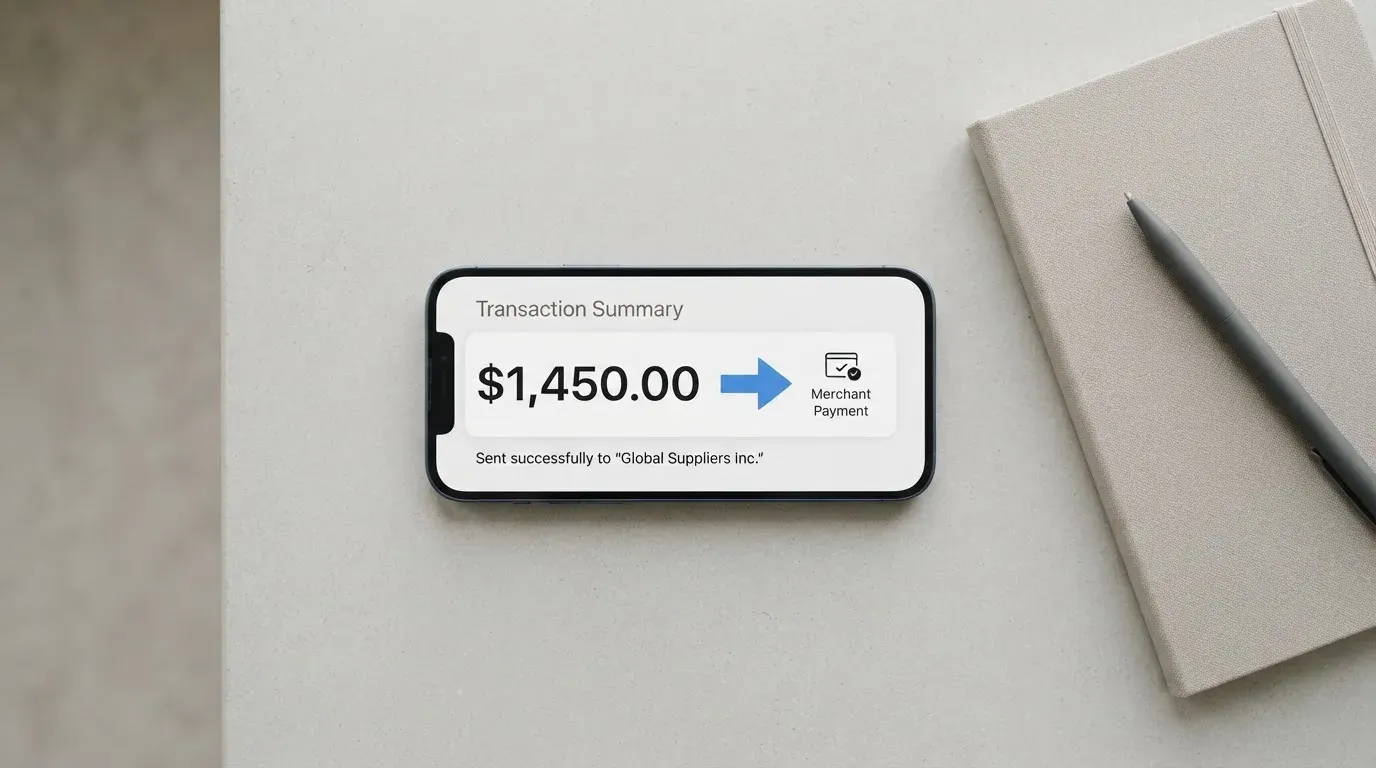
The flow in one line: you convert or transfer first, and the card then spends only that loaded balance. That is the “pre-loaded balance” model many crypto cards use, and its practical virtue is that the card cannot overdraw — if the balance is empty, the payment simply fails rather than leaving you in the red.
What is not stated: the deposit fee, the minimum top-up, and network fees. What is stated about cost is that you can “Pay in euros without any commission”. Your funding choices are crypto or the euro wallet, plus a linked stablecoin if you want the balance to sit in a dollar-pegged token instead.
Two things to keep in mind when you move funds in. Blockchain transfers are irreversible, so a deposit sent on a network the provider does not support, or to an address belonging to a different network, can be lost or need manual support recovery with no guarantee. And the network has to match the token: ERC-20 gas is paid only in ETH, so a wallet holding USDT with no ETH cannot send; Tron fees are paid via bandwidth and energy and often burn TRX; and since February 2024 Circle has stopped supporting USDC on Tron, so “USDC over TRC20” is not a native option. Getting this wrong on a first transfer is the most common expensive mistake in this whole product category.
Paying with it every day
This is where the card is strongest, and the 9 out of 10 is not generosity. Physical, virtual or both, always Mastercard — “any online or physical store that accepts Mastercard payments”. Apple Pay and Google Pay are supported, with the card page’s own wording being that it is “Compatible with Apple and Google Pay”. Cash withdrawal is offered 24/7. The apps cover iOS, iPad, Mac on M1 or later, and Android; the App Store listing in Spain showed 4.5 out of 5 from about 3.8K ratings when I read it on 20 October 2026, and a Google Play listing exists though I did not read its rating.
On the phone, Apple Pay replaces the card number with a device-specific Device Account Number held in the Secure Element rather than on Apple’s servers, and each payment uses a one-time dynamic security code — which is why adding the card to a wallet is a genuinely better habit than tapping a plastic strip.
The rewards side is where you need to read carefully, because the headline and the fine print differ. The card page says “We refund up to 7%* on all your purchases”, with an asterisk whose conditions are not spelled out on the page, mentions “up to 39% cashback” combined with other products, says linking a stablecoin earns up to 7% yield on purchases, and offers up to +25% extra with Bit2Me Life at 10 or more merchants. The payout currency and the conditions behind that asterisk are not stated.
Also not stated on the card page: which merchant categories are blocked. That matters in practice because gambling, casinos, lotteries and betting are commonly restricted on cards in this category — merchant category 7995 covers gambling, and many issuers block it by policy rather than by law, with the list differing per issuer. The unofficial tier breakdown does name casinos, lotteries and betting as excluded from cashback. Treat that as guidance, not as a published rule.
The tier structure itself is unofficial throughout. Reported “Space Center” levels 0 through 7 are earned by points: level 0 pays 0% cashback, level 1 pays 0.25% capped at 7.50 EUR per month, level 2 pays 0.5% capped at 15 EUR, level 3 pays 1% capped at 30 EUR, level 4 pays 2% capped at 100 EUR, level 5 pays 3% capped at 175 EUR, level 6 pays 5% capped at 250 EUR, and level 7 pays 7% capped at 300 EUR and requires 9,000 points. Cashback is reportedly paid in B2M rather than on euro-wallet purchases, and the caps are per month. The card page confirms only the general shape of this: benefits depend on your tier, with no tier names or amounts on the page itself.
What you have not been told anywhere on the official pages: how a purchase dispute works. Whether you can raise a chargeback, and how, is not stated — and a chargeback is the mechanism by which an issuer orders a refund to settle a dispute with a reason code such as fraud, duplicate billing or goods not received. If that matters to you, ask before you assume it.
One thing to expect in normal use: a declined authorisation can leave a hold on your funds for several days, typically up to seven. That is not a fault in the card, just how card networks behave.
What can go wrong
The structural risk first, because it is the one nobody can fix for you. The card and the payment account are issued and managed by PECUNIA CARDS EDE, S.L.U., an electronic money institution supervised by the Bank of Spain and trading as PECUNPAY. Bit2Me is the brand and the platform; the entity that holds your card balance is the regulated institution. That is reassuring, and it is also the honest description of the arrangement. Electronic money institutions must safeguard customer funds by segregating them in dedicated accounts or insuring them, but such funds are not the same as bank deposits and may not sit under a deposit guarantee scheme.
Then the platform. Bit2Me holds MiCA authorisation from the Spanish regulator CNMV — the registry lists 31 October 2025, though press dates conflict, and press describes it as the first Spanish platform to receive it. MiCA, the EU’s markets-in-crypto-assets regulation, took legal effect in June 2023; its rules on stablecoins applied from 30 June 2024 and the remaining provisions, including the crypto-asset service provider rules, from 30 December 2024. Under it, e-money tokens may be issued only by a credit institution or an electronic money institution. Separately, the card itself is a payment service regulated under e-money and payment-services law — which is why a crypto card like this tends to rest on two licences. Bankinter also joined the capital table in a EUR 30 million round with Tether taking a minority stake.
The custody question is the one people skip. Whoever holds the private key or seed phrase controls the crypto; with a custodial wallet, the provider holds the credentials and you have to trust them completely. A seed phrase is typically 12 to 24 words and unencrypted, so anyone who gets it can restore the wallet and spend the funds — and blockchain transfers are typically irreversible, meaning a stolen key has no built-in recovery: the network cannot freeze or return anything. This is not theoretical for this category. Mt. Gox reported about US$350 million stolen in 2011-2014, Coincheck about US$400 million in 2018, and the Ronin Network US$625 million in 2022. Against that, the card page links to a security page listing certifications, which I did not read; the custody model, two-factor authentication, card freeze and insurance arrangements are not stated there.
Now the user reports, which are the part people actually want. On Trustpilot, Bit2Me overall shows 3.9 out of 5 from 2,484 reviews as of 20 October 2026, with 26% one-star and replies to 97% of negative reviews. I found no card-specific complaints, which is worth something — these are platform-level signals. The recurring themes: withdrawals and transfers held under review (July 2026, April 2026), account lockouts, or a hack with calls going unanswered (March to April 2026), slow support (February to April 2026), and high fees on a small purchase (July 2026). An earlier reading of roughly 3.8 from about 2,300 reviews included a one-star review from May 2025 reporting an account locked with funds held for over a year, which Bit2Me answered by saying it prioritises security. Plenty of reviewers praise the phone and WhatsApp support (May to August 2026). I found no Reddit threads and no official incidents.
Read that pattern fairly. The complaints cluster on exactly the two places where a custodial platform cannot be casual: money leaving, and documents arriving. Both are the predictable consequences of the compliance duties described earlier, not evidence of misconduct — but they are the things you will live with.
Two more structural facts worth keeping in view. Visa and Mastercard do not issue crypto cards to consumers themselves; they license issuers and can suspend a programme. Visa said in November 2022 that it had “terminated our global agreements with FTX”, and the FTX US debit card was wound down by its issuer. WaveCrest, a Visa issuer that supplied crypto card brands, was suspended by Visa in Europe in 2018, closing all its programmes. Closures typically run in an order: notice first, then loading and spending stop, then users are asked to withdraw remaining balances.
None of this means your funds are at risk here. It means you should check where balances sit, and not treat the card as if the brand name on it is the counterparty.
What to take instead
Three alternatives came up, and the honest comparison is that none of them is clearly better — they trade Bit2Me’s strengths for different ones.
| Bit2Me | Whop Cards | Stella | UniFi Card | |
|---|---|---|---|---|
| Score | 6.8 / 10 | 5.2 / 10 | 6.5 / 10 | 4.7 / 10 |
| Card | Mastercard, physical, virtual or both | Visa, works anywhere Visa is accepted online and in stores | Virtual and physical Visa, “over 40 million VISA merchants globally” | Prepaid Debit Visa Card issued by Lead Bank |
| Where | Not stated officially; unofficial reports say 29 countries, mostly EEA | 31 US states for consumers, 41 for businesses | Not stated on the official site; terms bar users under economic sanctions programmes and route US and European users through affiliates | Not confirmed from official pages; send-money routes to the Philippines, Mexico, the eurozone, Colombia, Brazil and the UK appear in the listing |
| Fees | No maintenance fee; other fees unofficial | “No extra fees”, no amounts listed | Described in the User Agreement or the app; amounts not stated officially | “Fees may apply. See UniFi website” |
| Funding | Crypto or euro wallet, dozens of currencies, optional stablecoin link | Whop balance, backed by stablecoin collateral from a linked wallet | Deposit crypto into a custodial in-app wallet that tops the card up | ACH, wire, SEPA, SPEI; get paid to a USDC wallet |
| Rewards | Up to 7% on purchases, tier ladder unofficial | 5% cashback at select merchants, currently Uber | No cashback on the official card page | “3% rewards on balances” claimed; card cashback not stated |
Whop is the geographic opposite of Bit2Me — a US-states proposition with Canada, Ireland, Japan, the UK and most of Europe closed to consumers — and it pays 5% cashback at a small merchant list rather than across the board. Choose it if you are in one of those 31 states and want Uber money back, not if you are in Madrid.
Stella is the closest structural rival: virtual and physical Visa, custodial in-app wallet, crypto deposits that top the card automatically. Its drawback is opacity — fees live in the agreement rather than on the page — and no cashback is stated. Bit2Me’s “up to 7%” claim is the better pitch; Stella’s terms are cleaner to find in one document.
UniFi scores lowest at 4.7 because almost nothing is confirmed from official pages and the funding lines (ACH, wire, SEPA, SPEI) read more like remittance routes than a crypto card. Its USD denomination and a USDC wallet are the draw if you are paid into US rails.
For anyone reading this who mainly needs a normal bank card that draws on a salary, none of these four is the right instrument. Say so plainly and use a bank card.
Who I would recommend it to
I would recommend the Bit2Me card to a resident of the EEA who already holds crypto, wants to spend it without converting at a separate exchange rate, and will climb the tier ladder — the ladder is where the value is, and at level 0 you are paying 0.95% for the convenience and getting nothing back. I would also recommend it to anyone who wants Apple Pay and Google Pay with a Mastercard behind them and does not want to hand a crypto exchange a card of their own.
I would not recommend it if your balance is in euros and you live in Spain or the eurozone, because spending from the euro wallet at 0% and withdrawing in Spain at 0 EUR from Bit2Me leaves the crypto side of the product doing nothing for you. I would not recommend it if you are anywhere outside the supported countries, and I would not recommend it at all if the 0.95% crypto spending fee is not offset by cashback in your tier, since that fee alone is most of the benefit at low levels.
The last group I would push hardest away from it: people who need certainty about fees, limits and eligibility before committing. Those numbers exist, but the card’s own pages do not publish them. Get them in writing from Bit2Me first — that is not distrust, it is the only sensible response to a page that leaves the fee table blank.
Frequently asked questions
What is the Bit2Me card?
The Bit2Me card is a Mastercard that spends from a balance you load yourself, either from crypto or from a euro wallet. The card and payment account are issued and managed by PECUNIA CARDS EDE, S.L.U., an electronic money institution supervised by the Bank of Spain and trading as PECUNPAY, while Bit2Me runs the platform you see and holds. You can have it physical, virtual, or both.
Is Bit2Me a bank?
No — Bit2Me is not a bank. The card comes from an electronic money institution, which in the EU can issue e-money, payment cards and wallets but cannot lend. Its client funds must be safeguarded, by segregation in dedicated accounts or insurance, but such funds are not bank deposits and may not fall under a deposit guarantee scheme.
Who owns Bit2Me?
Bit2Me is a Spanish company, and Bankinter joined the capital in a EUR 30 million round in which Tether took a minority stake. Bit2Me holds MiCA authorisation from the Spanish regulator CNMV, listed in the registry at 31 October 2025, though press dates on that authorisation conflict.
Does the Bit2Me card require KYC?
Yes, in practice, though the card page does not spell out the steps. Unofficial sources say a registered and verified Bit2Me account is needed, with tax residence in a supported country, a government photo ID and a liveness check at the base tier, and proof of address for higher tiers. Anti-money-laundering rules require identity, address, date of birth, nationality and a sanctions check.
Is the Bit2Me card free?
Keeping it is: there is no maintenance fee, in Bit2Me’s own words. Unofficial figures put the virtual card at 0 EUR and the physical card at 20 EUR at levels 0-2, falling to 0 EUR at levels 5 and 7, with 5 EUR delivery outside Spain. Spending from crypto is reported at 0.95%, the euro wallet at 0%, and foreign currency at 1.75% to 2%.
Can I use the Bit2Me card in my country?
That depends on tax residence in a supported country, not citizenship. Bit2Me’s card page lists no countries at all; unofficial sources say 29 countries, mostly in the EEA, with Canada, Ireland, Japan, Tajikistan, the United States, Iran and Cuba restricted. Since the official page is silent, ask Bit2Me directly before planning around the card.
How do I top up the Bit2Me card?
You convert or transfer first, and the card then spends only that loaded balance. Bit2Me says there are dozens of currencies, you choose which wallet pays, and you can optionally link a stablecoin; the full coin list is on the support site. Deposit fees, minimum top-up and network fees are not stated, and blockchain transfer fees are charged by the network.
How do I add the Bit2Me card to Apple Wallet?
Open the Bit2Me app and add the card as Apple Pay, which the card page supports alongside Google Pay. Apple Pay replaces the card number with a device-specific number stored in the Secure Element on your device, never on Apple’s servers, and each payment uses a one-time dynamic security code, so paying by phone is safer than tapping the card.
Is the Bit2Me card safe?
The issuing side is regulated: PECUNIA CARDS EDE, S.L.U. is supervised by the Bank of Spain, and Bit2Me holds MiCA authorisation. But the platform’s user record is mixed — Trustpilot shows 3.9 out of 5 from 2,484 reviews, with 26% one-star, and the recurring complaints are withdrawals held under review, account lockouts and slow support. Custody details are not stated on the card page.
Is the Bit2Me card worth it?
Worth it if you climb the tier ladder — reportedly up to 7% cashback at level 7 — and if converting crypto at 0.95% a purchase beats converting less often yourself. Not worth it at level 0, where cashback is 0% and you simply pay 0.95% to spend crypto, nor if you spend mainly from the euro wallet, where the reported fee is 0% and the card adds little.
How do I withdraw money from Bit2Me?
The card lets you take cash out around the clock, and unofficial figures put ATM withdrawals at 0 EUR from Bit2Me in Spain, 2.50 EUR elsewhere in the eurozone, and 0.55 EUR plus 1% outside it, with limits of 300 EUR a day. Moving a balance out of the platform entirely, or closing the account, is not described on the card page — the search terms ask about it a lot, so raise it with support directly.
Money-app cards – cryptocardselect
Content created by the «cryptocardselect» team