
A virtual-only, US-only crypto card with unpublished fees
 Available in US
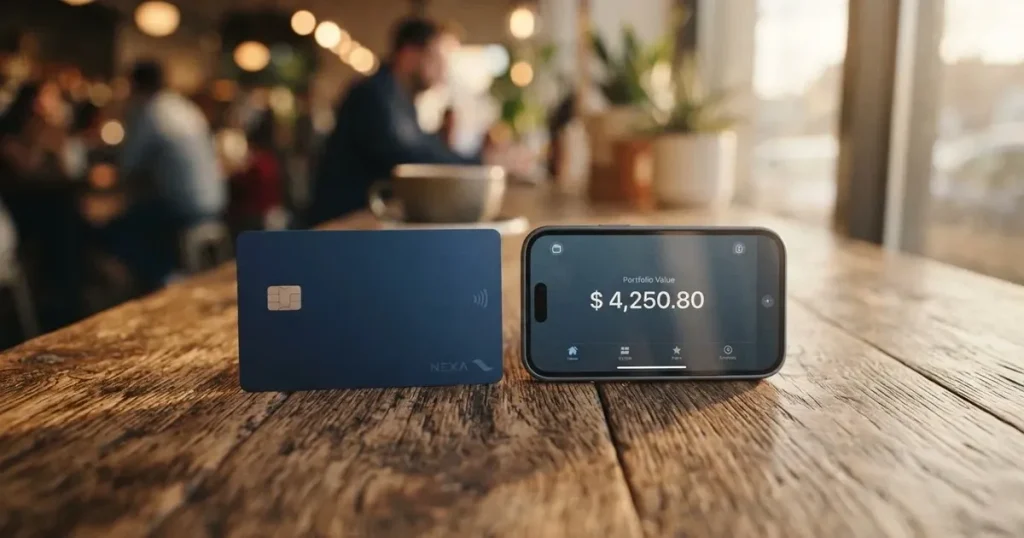
Phantom Cash is a virtual prepaid Visa debit card that spends a balance you hold inside the Phantom wallet app. That single sentence contains almost every important fact about the product, including its appeal and its ceiling. There is no physical card mentioned anywhere in the card’s own material. The card is offered in the United States only, and even there the state of New York is excluded. And when you look for the numbers that normally decide whether a payment card is worth having — the issuance fee, the foreign-exchange fee, the spending caps — the official pages do not give them. They say only that “fees may apply” and point to a cardholder agreement.
That combination is why my score lands where it does. This is not a card I would call dangerous or badly built; it is a card that is narrow, thin on published information, and mid-way through a change of issuer. For the person it actually fits — a US resident who already holds dollar stablecoins in Phantom and wants to spend them at ordinary shops without moving them off the platform first — that is a real job, done adequately. For anyone who needs a physical card, travels with the card, or wants to know the exact cost of a purchase beforehand, the gaps are not cosmetic. They decide the outcome.
If you are weighing several crypto cards at once, keep reading: I go through eligibility, sign-up, the fee picture, top-up routes, day-to-day use, the issuer change, and then four alternatives worth comparing. I do not claim to have held or used this card. Everything below comes from the card’s public pages and from third-party listings, and I mark clearly which is which.
The conditions described here are current as of October 28, 2026.
The score, and who it is really for
| Criterion | Mark | Why |
|---|---|---|
| Who can get it | 4 / 10 | United States only, excluding New York, by place of residence |
| Cost | 7 / 10 | Officially undisclosed; unofficial listings say issuance, replacement and inactivity are free, top-ups are free, and an international transaction costs 1% + $0.30 |
| Top-up options | 4 / 10 | The card spends a CASH balance; top up by Apple Pay, Google Pay, debit card or bank, withdraw to a bank or a Solana wallet; no direct crypto top-up named |
| Reliability and complaints | 6 / 10 | Issued by Lead Bank, programme managed by Bridge Ventures LLC, processed by Stripe; the virtual card is being replaced during an issuer change, no dates given; no complaints found |
| Everyday use | 5 / 10 | Virtual Visa only, plus Apple Wallet and Google Wallet; unofficial listings say there is no ATM |
| Total | 5.3 / 10 | A narrow product with real gaps in published information |
Two marks here deserve unpicking, because they look contradictory until you understand the structure.
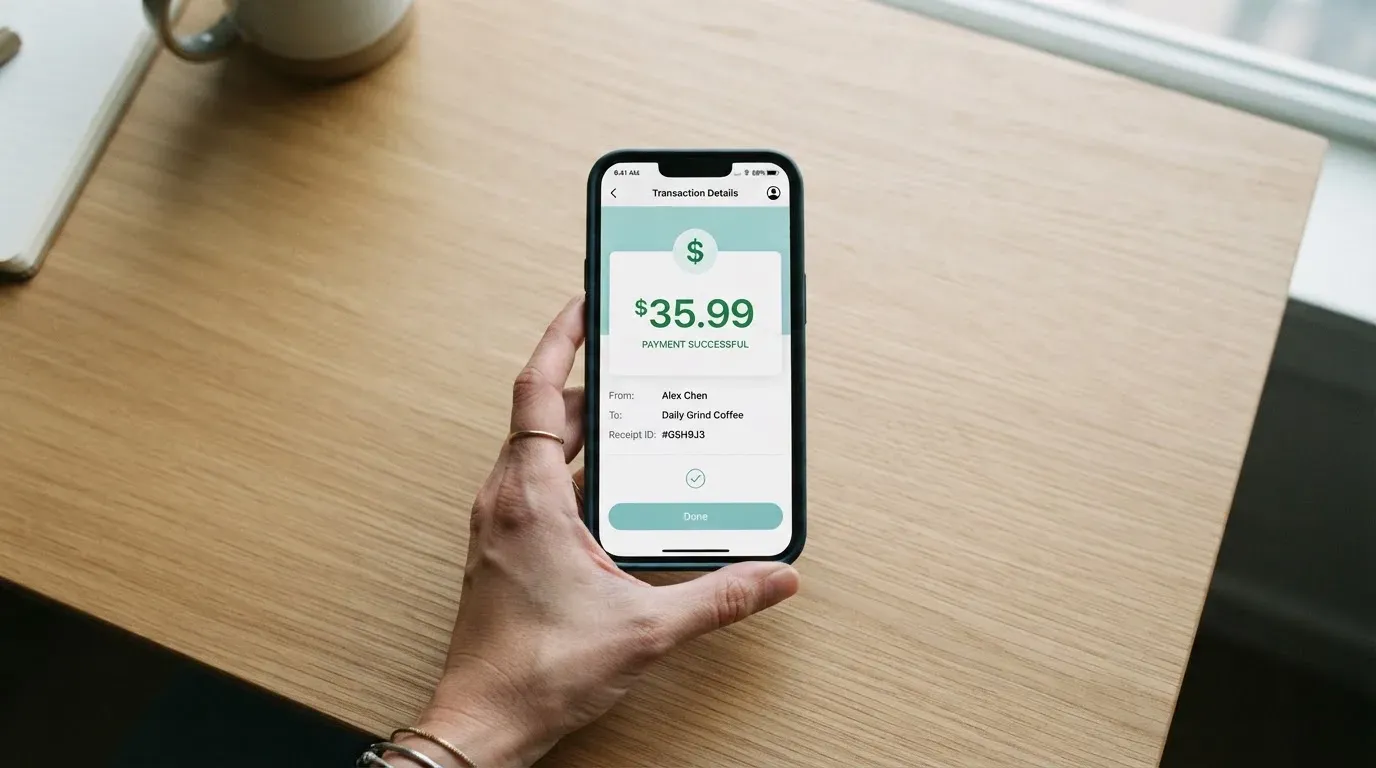
Cost scores 7 out of 10, which is the highest mark in the table, and the reason is uncomfortable rather than flattering: the card’s own pages say “fees may apply” without amounts, so the cost picture comes almost entirely from third-party listings. Those listings report no issuance fee, no replacement fee, no inactivity fee, free cash loads, and free US purchases; and for international transactions, 1% plus $0.30. I have marked cost at 7 because the unofficial picture is genuinely competitive for domestic spending. But I would not build a budget on it without reading the cardholder agreement yourself.
Eligibility scores 4, and that is the harder ceiling. The rule is United States only, excluding New York, judged by residence. Note the word “residence” — that is what the card states, and it is narrower than a citizenship test but wider than nothing at all. If you live in the United States but hold a passport from elsewhere, this does not appear to disqualify you. If you live outside the United States and merely bank there, it does. Either way, this is a US product, and calling it a general crypto card is a misreading.
The audience it serves is narrow and specific: US residents who hold dollar stablecoins in Phantom already. If you have never used Phantom, there is no reason on this card’s pages to start. If you have, the logic is short — your balance is already sitting there, and this turns it into something you can hand over at a till.
Everyday use scores 5. Virtual only, Apple Wallet and Google Wallet, and third-party listings say no ATM withdrawals. That combination is workable for phone-first spending and thin for cash, for shop assistants who want to see a physical card, and for anything that reads the magnetic stripe.
Reliability scores 6, and most of that score is the issuer change described later in this review. No complaints specific to Phantom Cash surfaced in the searches I ran, which is mild positive evidence — a young product with no public complaint history is either young or quiet, and I cannot tell you which from here.
Who will they give you the card to
They will give it to United States residents, and not to residents of New York. That is the whole eligibility rule the card publishes, and it is narrower than most of the field. Several cards in this category publish a list of thirty-odd countries; this one publishes one, with a carve-out.
Two further conditions sit alongside it. Applicants must be 18 or over, which is standard for prepaid and debit products generally rather than anything specific to Phantom. And the card says something that sounds reassuring but deserves careful reading: KYC is not required for Phantom or Phantom Cash in general. Then it draws the line. Identity verification is required for bank transfers, direct deposit and the debit card, and it is handled through Link, with the marketing page attributing verification to Stripe for those three features.
So the honest version is: holding a Phantom wallet needs no identity check, but the card does. “No KYC required” is a statement about the wallet, not about the card you are reading this review about. If avoiding identity verification is part of why you are looking at crypto cards, Phantom Cash is not the product that gives you that.
What the card does not publish is just as relevant as what it does:
- No proof-of-address requirement is stated for the virtual card.
- No verification tiers, no expected time, no list of reasons a person might be rejected.
- No statement of which documents are accepted.
- No published statement of whether residence is checked against address documents or something else.
None of that means the checks are lax. It means you will find out the rules by going through them. For most applicants that is a short process either way.
How to get it
The route the card describes is short, and worth reading as a sequence because the order matters: fund the Cash balance, complete verification, get the virtual card, then add it to Apple Wallet or Google Wallet.
That first step is the one people skip past. You do not apply for the card and then think about where the money comes from — you fund the balance, and the card spends what is already there. This is a prepaid model, not a debit model. There is no overdraft, no credit line, and no month-end bill. Whatever is not in the Cash balance does not exist as spending power.
On the card itself: it is a virtual prepaid Visa debit card, and it works wherever Visa is accepted. Whether a physical card exists is not stated. Delivery timing is not stated either, which follows from the same fact — the pages describe a virtual card only. Currency is not stated either; the balance is the CASH stablecoin and the card is USD in practice, but the pages do not say so in those words, and I would rather flag that than pretend the pages confirm it.
One thing you will want to know before you start: identity verification is not optional for this card, and the entity you deal with is Stripe. That matters more than it sounds, because it tells you where your documents go and who decides whether they pass.
Fees and limits: what it really costs
This is the weakest section of the card’s published material, and I am going to be blunt about it rather than dress it up. The official position is two sentences: fees may apply, and stablecoin trades inside the product are described as fee-free. Amounts are not stated, and the reader is referred to the cardholder agreement. ATM fees are not stated. Spending limits are not stated. Tiers are not stated — there is a single card and a single Cash account, with no tier structure mentioned. Currencies are not stated beyond the CASH stablecoin.

What follows comes from a third-party card-details listing dated September 2026, partly carried forward from an older dataset. I am giving it to you because it is the best available picture, and labelling it because the card has not confirmed it.
| Item | What the official pages say | What a third-party listing reports |
|---|---|---|
| Issuance fee | Not stated | No fee |
| Replacement fee | Not stated | No fee |
| Inactivity fee | Not stated | No fee |
| Cash load / top-up | Fees and minimum not stated | Free |
| US purchases | Not stated | Free |
| International transaction | Not stated | 1% + $0.30 |
| ATM withdrawal | Not stated | Not available; fee not disclosed |
| Daily spending limit | Not stated | $2,000 by default, up to $5,000 on request |
| Monthly limit | Not stated | Not disclosed |
Now let me take three everyday payments through that table, because abstract fees mean nothing until you see them land.
A $40 grocery shop in California. On the unofficial figures this costs you $40, with no conversion at all if you are spending from a dollar-pegged balance. This is the case the card is genuinely good at, and it is the case most people in the US will actually have.
A $60 dinner in a restaurant in Rome. On the unofficial figures: 1% of $60 is $0.60, plus $0.30, so about $0.90 on top of the bill — and that assumes the exchange rate itself passes through cleanly, which no page here promises you. There is a second, harder question: the default daily limit is reportedly $2,000, well above $60, so the amount is not the problem. Whether a foreign-issued BIN gets declined at the table is. Merchants can read the issuer country off the card number and apply extra scrutiny, and some decline prepaid or foreign cards on that basis alone. This is a general property of how card numbers work, not a quirk of Phantom, and it is the most likely reason a trip abroad goes badly.
A large purchase, near the card’s unofficial daily limit of $2,000, is worth thinking about. If it is slightly over, you are in request territory for a higher limit, and there is no stated turnaround. If you are near the limit and a payment is declined, a hold on funds can remain for several days — typically up to seven — even though you never completed the purchase. On a $2,000 card balance that is money you cannot spend while the bank decides what to do.
Two further fees sit outside the card entirely and belong in the same mental account. If you move value onto a blockchain to use it, the network charges its own fee — gas on Ethereum, bandwidth and energy on Tron — and that comes from the blockchain, not from Phantom. And on the other side, blockchain transfers are irreversible: a deposit on a network the provider does not support, or sent to an address belonging to a different network, can be lost outright or need manual support recovery with no guarantee. The card does not advertise crypto top-up, which sidesteps some of this by accident; but withdrawals to a Solana wallet are explicitly offered, and that route carries exactly these properties.
How to top it up
Top up the Cash account, and the card spends that. The funding routes the card names are Apple Pay, Google Pay, debit cards or bank accounts, depending on region — and it is worth pausing on that, because it means the default path into this card is not crypto. It is ordinary payment rails.
Withdrawals work in the other direction: out to a bank account in the US, or out to a Solana wallet. Fees and timing are not stated on the pages I read. Neither is what happens to a balance if you close the account.
Here is what I could not find, and it is the single most useful thing in this section if you were hoping to move crypto directly onto the card: any named direct crypto top-up. Not forbidden, not priced, simply not described. If your plan is “I hold USDT, I want it spendable at a shop tomorrow,” the routes this card documents all involve a fiat rail in between, and you should work out what that rail costs before you commit.
One more thing worth knowing about the category, because it bites people: swapping crypto within a platform is often described as fee-free, and Phantom describes its stablecoin trades that way — but on-chain movement is never fee-free. Network fees are charged by the blockchain. The distinction matters the moment you move anything between a wallet and an exchange rather than inside one app.
Paying with it every day
The good part is small and real: the card can be added to Apple Wallet and Google Wallet, and it lives in the Phantom mobile app. Restricted categories are not stated, which in this category is unusually pleasant news — some issuers block gambling and similar merchant codes by policy rather than law, and this card makes no such claim.
How the wallet part works in general, so you know what you are relying on: Apple Pay replaces the card number with a device-specific number held in the phone’s secure hardware, never on Apple’s servers, and each payment carries a one-time code. The issuer can still restrict a tokenised card — blocking it on magnetic-stripe, phone or website use, for instance. And online payments usually go through 3-D Secure, Visa’s version being Visa Secure, where the issuer decides whether to wave you through or challenge you with a code or a biometric. Some of these mechanics shift liability for a fraudulent online payment away from the merchant, and critics argue too far toward you.
The weak part is the physical world. No physical card is mentioned. No ATM is available, per the third-party listing. So: tap your phone to pay in a shop that takes contactless, or present a virtual card number in an app that accepts it, and you are fine. Anything requiring a physical card, a signature on a printed slip, or cash from a machine is not what this card is for.
On money back: no card cashback is stated. The card does describe holding CASH as earning passive income without lockups, but no rate is given, and I would treat an unquantified yield claim as marketing rather than as income you can plan around.
Disputes run through Stripe, which handles card disputes for debit transactions. The process and the time frames are not stated, which is where you find out whether prepaid coverage applies to you. In the US, debit reversal rights come from Regulation E and credit card rights from Regulation Z; prepaid coverage varies and should not be assumed. If a charge goes wrong, you are relying on a process whose shape you have not been told.
What can go wrong
Four things, in rough order of how likely they are to affect you.
The issuer change. This is the live one. The Help Centre carries an official notice: your virtual Phantom debit card is being replaced as Phantom moves to a new card issuer. Users are told to add the replacement to their Apple or Google Wallet. No dates are given. The current arrangement is Lead Bank as issuer, Bridge Ventures LLC as programme manager, and Stripe processing transactions and disputes — and the card says that is changing. So at some point your card number stops working and a new one appears in your wallet. The card tells you what to do about the number. It does not tell you when, whether the replacement keeps your balance, or what happens to an in-flight dispute. Read this section as: a mid-transition product, not a settled one.
Spending outside the US. The card reads foreign to merchants, and prepaid or foreign BINs get declined. Add the fact that no ATM is available, and a trip abroad means paying ordinary card prices in a currency you did not plan to hold, at a moment when your card is in the middle of an issuer migration.
Nobody to call. Support is a Help Centre with a “Start a chat” option. Languages and hours are not stated. Card freeze, two-factor authentication and insurance are not stated either. I want to be careful here: absence of a published feature is not proof it is absent, and a well-run chat can be better than a phone line. But if your money is on a card with an unofficial daily cap of $2,000 and a migration in progress, you are entitled to know who answers and in which language before you load it.
Nothing public about how failures are handled. I found no Trustpilot or Reddit complaints specific to Phantom Cash in the searches I ran, and no user reports worth quoting. On a card this new, read that as absence of evidence. It is not evidence of absence, and it is also not a complaint.
On the positive side of risk: your balance is secured on-chain as CASH, Phantom states it does not store KYC information because verification is handled by Stripe, and Phantom describes itself as “not a bank” — Lead Bank issues the card under Visa’s licence. Whether your funds sit in a safeguarding arrangement protected from the platform’s own balance sheet is not something these pages tell you, and I would not assume it. Visa itself can suspend a programme; it terminated its global agreements with FTX on 13 November 2022 and the FTX US debit card was wound down by its issuer. WaveCrest, a supplier of crypto card brands, was suspended by Visa in Europe in 2018 and all its Visa programmes closed. Closures typically follow a pattern: notice, then spending and loading stop, then you are asked to withdraw what is left. One 2026 closure reported by a secondary source stopped new loads on 8 July 2026 and spending on 8 August 2026 — a single unconfirmed report, but the shape of it is worth knowing before you are the one holding the balance.
And the category background behind all of this: a card payment involves three parties. The network routes messages and sets rules, the issuer is a bank or e-money institution licensed to issue under that licence, and the crypto brand is often only a programme manager or front end. Phantom Cash is the third one. That is normal, and it is also why the phrase “not a bank” on their site is doing more work than it appears to.
What to take instead
None of the four alternatives below is automatically better; they trade away the things that make Phantom Cash work. Here is the comparison on what the pages publish.
| Phantom Cash | BloFin Wallet Card | Decaf | SafePal | |
|---|---|---|---|---|
| Score | 5.3 / 10 | 6.9 / 10 | 6.2 / 10 | 6.2 / 10 |
| Who can get it | US only, excluding New York, by residence | Country list not published on the page; starting data lists 35 countries | Not in a long list of restricted countries and restricted US states | “Citizens of supported regions who live in supported areas”; the regions list was empty when fetched |
| Card | Virtual prepaid Visa | Visa Platinum; virtual or physical not stated | Visa, virtual or physical with tracked delivery | Virtual Mastercard |
| Card cost | Not stated | Activation, annual, issuance and dormancy fees $0.00 each | Virtual $5; physical $10 US / $90 elsewhere; no annual fee | No account or management fees; issuance fee not stated |
| Spend fee | Not stated | 1% or lower by VIP tier, down to 0.00% | Not stated | Not stated |
| FX | Not stated; unofficial 1% + $0.30 | Not stated | No added fee; Visa’s own rate | 1% on non-USD settlement |
| Cash back | None stated | None; reduced rate instead | Not stated | None |
| Top up | Apple Pay, Google Pay, debit card, bank | USDT and USDC on Arbitrum and Base | Card, bank transfer or USDC via payment link; Solana and Stellar apps | Crypto from 40+ chains, converted to USDC or fiat, on Arbitrum |
Three contrasts are worth spelling out.
If direct crypto top-up is your requirement, Phantom Cash is the odd one out. BloFin funds with USDT and USDC on Arbitrum and Base; SafePal takes crypto from more than forty blockchains and converts to USDC or fiat. Phantom Cash documents fiat rails. That is a design choice, not a flaw, but it means the card is not the natural home for a crypto balance.
If you want your costs on the page in advance, BloFin is more forthcoming than Phantom. Activation, annual, issuance and dormancy at $0.00 each, and a spend fee of 1% or lower scaled by VIP tier from 1.00% down to 0.00%. Its catch is a spend fee at all: Phantom’s unofficial domestic picture is free. BloFin also does not publish an FX fee.
If you want a physical card, Decaf is the one here that mentions it — with tracked delivery, $10 in the US, $90 elsewhere, and $5 for the virtual version. Decaf also adds no FX fee of its own and passes through Visa’s rate. Its price is the card itself, and its eligibility list is the longest, covering restricted countries and restricted US states. Decaf is not available in, among others, Russia and Belarus; whether the rule follows citizenship or residence is not stated, which is exactly the ambiguity to watch.
SafePal I would put in a different category. Its top-up fee is 0% on the standard tier, but swaps include an unquantified spread, and a 1% fee applies to Mastercard non-USD settlement. Its region list was empty when fetched, which is a documentation gap of the same species as Phantom’s.
Who I would recommend it to
I would recommend Phantom Cash to one person: a United States resident, outside New York, who already keeps dollar stablecoins in Phantom and wants to spend them at ordinary merchants without giving up the phone-first setup they already use. For that person, a virtual Visa, Apple Wallet and Google Wallet support, no stated issuance fee and free domestic purchases on the unofficial listings add up to a competent small tool.
I would not recommend it to you if any of the following is true:
- You live outside the United States. The card is not offered there.
- You need a physical card, a card that works at an ATM, or anything you can hand over in a shop that distrusts phones.
- You travel regularly and want predictable costs abroad. The FX fee is unofficial, and the decline risk of a foreign BIN is real.
- You intend to top up with crypto directly. That route is not described.
- You need published limits, fees and timelines to plan around. The card’s own pages do not provide them.
- You are averse to holding funds through a platform mid-way through an issuer migration.
If you are outside the US or in New York, the alternatives above are the only sensible place to start. If you are inside the US and simply want a card with fewer blank spaces on its pricing page, that is the whole argument for reading the cardholder agreement before you fund anything — the missing numbers are the deciding fact here, and no third-party listing can fill them in for you.
Frequently asked questions
What is the Phantom Cash card?
It is a virtual prepaid Visa debit card offered inside the Phantom crypto wallet app. You fund a Cash account, and the card spends that balance wherever Visa is accepted. It is virtual only — no physical card is mentioned in the card’s own material — and it is offered in the United States only, excluding New York. The card describes itself as prepaid rather than as a card linked to your bank account.
How does the Phantom Cash card work?
You top up a balance, and each payment draws that balance down, so the card cannot overdraw. The funding routes named are Apple Pay, Google Pay, debit cards or bank accounts, depending on region. Withdrawals go out to a US bank account or to a Solana wallet. The balance is the CASH stablecoin, and stablecoin trades inside the app are described as fee-free — on-chain network fees are separate and charged by the blockchain.
Is Phantom Cash a bank?
No. Phantom describes itself as “not a bank” and as the platform provider. Lead Bank issues the card under Visa’s licence, Bridge Ventures LLC is the programme manager, and Stripe processes transactions and card disputes. That arrangement is standard for this category: the crypto brand is usually a front end over someone else’s licence. It also means the Help Centre, not a bank, is where your questions land.
Who owns Phantom Cash?
Phantom, the wallet platform, is the provider. The card itself sits with a separate stack of regulated partners — Lead Bank as issuer, Bridge Ventures LLC managing the programme, and Stripe handling verification, processing and disputes. None of these ownership details are on the card’s pages, by the way; they come from the issuer and programme structure the card itself describes, and all of it is stated to be changing as Phantom moves to a new issuer.
Does the Phantom Cash card require KYC?
For the card, yes. Phantom states that KYC is not required for Phantom or Phantom Cash in general, but identity verification is required for bank transfers, direct deposit and the debit card, handled through Link, with the marketing page crediting Stripe. Applicants must be 18 or over. Proof of address, verification tiers, expected timing and rejection reasons are not stated on the pages I read.
How much does the Phantom Cash card cost?
Officially, the card says only that “fees may apply” and refers you to the cardholder agreement; amounts are not stated. A third-party listing dated September 2026 reports no issuance, replacement or inactivity fee, free top-ups and free US purchases, and 1% plus $0.30 per international transaction. Treat those numbers as unofficial until you read the agreement yourself.
What are the spending limits?
Not stated on the card’s pages. A third-party September 2026 listing reports a default daily spending limit of $2,000, increaseable to $5,000 on request, with no monthly limit disclosed and no stated turnaround for a higher limit. Remember that a declined payment can leave a hold on funds for several days, typically up to seven, even though nothing was bought.
How do I top up the Phantom Cash card?
Through the Cash account, using Apple Pay, Google Pay, a debit card or a bank account, depending on your region. Fees and minimums are not stated. Notably, no direct crypto top-up is described anywhere on the pages I read — which is the main difference from cards in this category that accept USDT or USDC directly on specific networks.
Can I use Phantom Cash abroad?
You can, in the sense that it is a Visa and works where Visa is accepted. Expect friction. There is no official FX figure; a third-party listing reports 1% plus $0.30 per international transaction, no ATM access at all, and merchants can decline foreign or prepaid card numbers outright. Any fees are unofficial, so check the cardholder agreement before you rely on them.
Is the Phantom Cash card safe?
It has real safeguards in structure: the balance is secured on-chain as CASH, Phantom says it does not store identity documents because Stripe handles verification, and the card rides Visa’s network with 3-D Secure for online payments. What is missing is documentation — card freeze, two-factor authentication, insurance, support hours and languages are all unstated. And the card is mid-migration to a new issuer, so expect a new card number arriving in your wallet.
Wallet-linked cards – cryptocardselect
Content created by the «cryptocardselect» team