
Bleap card review — a fee-free Mastercard for EEA residents who want to spend stablecoins
 Available in US
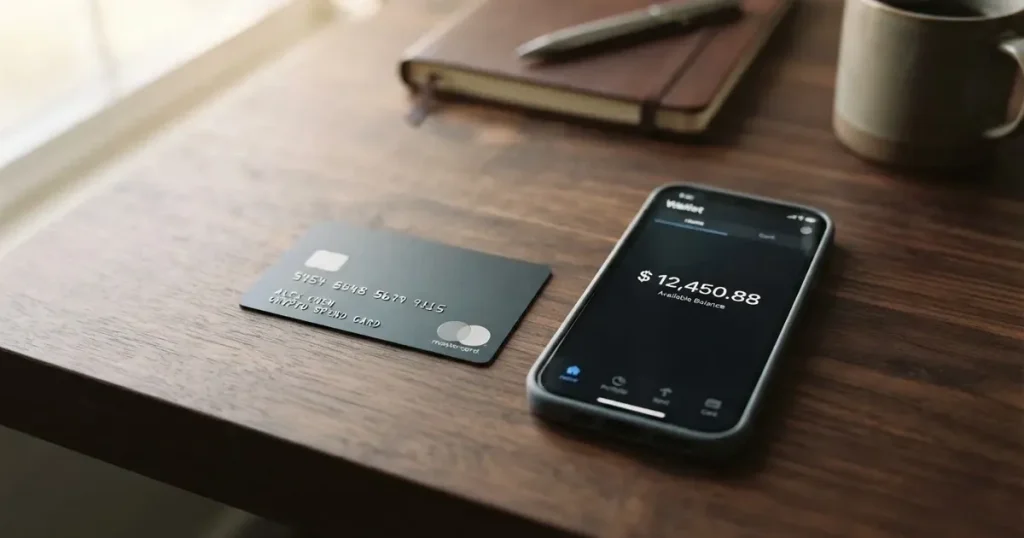
The Bleap card is a Mastercard debit card that spends from a crypto or fiat balance you hold inside the Bleap app. You fund it with a bank transfer or by sending stablecoins from an external wallet on Solana, Base or Arbitrum, and the card itself is free to get and to keep. Bleap SIA, the Latvijan company behind it, holds a MiCA crypto-asset service provider (CASP) licence from Latvijas Banka (25 June 2026), and cashback is paid in USDC.
Conditions are current as of October 28, 2026.
The conditions in this review are current as of October 2026. Where the card’s own pages don’t state a figure, that is flagged in the text rather than guessed.
Verdict
Bleap scores 7.5 out of 10 in my assessment. The headline is simple: if you live in the EEA and you want a card that has no issuance, monthly or maintenance fee, charges 0% on foreign-exchange markup, and pays you USDC cashback up to 20% in selected categories, the Bleap card is one of the most generous zero-fee crypto cards on the market today. The reason the score is not higher comes down to reach and trust signals: availability is still limited to roughly 31 countries (unofficial), support is a known weak spot, and the company is still young.
| Criterion | Score | Why |
|---|---|---|
| Who can get it | 6/10 | EEA and Latin America (Mexico and Brazil live, more “coming soon”); not yet global |
| Cost | 9/10 | 0% FX, 0% on conversion from bank transfers, free ATM up to EUR 400/month |
| Top-up options | 8/10 | Bank transfer EUR/USD, or stablecoins from Solana, Base, Arbitrum; other currencies route to USDC |
| Reliability and complaints | 6/10 | MiCA CASP licence held; Trustpilot only 3.5/5; slow support, occasional card blocks |
| Everyday use | 9/10 | Instant virtual card, Apple Pay and Google Pay, free ATM allowance, no annual fee |
The card suits an EEA resident who already holds stablecoins, wants zero platform fees, and is comfortable being an early customer of a young company. It suits you less if you are outside the supported regions, if responsive support is a deal-breaker for you, or if you want a wide ATM allowance beyond EUR 400 per month.
Who they will issue the card to
Bleap’s own pages say the card is available to residents of the European Economic Area and Latin America. Mexico and Brazil are live, with more Latin American countries listed as “coming soon” in the Help Center. The full country list is in the Help Center rather than on the card’s marketing page, so the practical answer is: you need to live in one of the countries Bleap has already opened, or wait for the next country to come on stream.
A third-party comparison site (CryptoCardHub, 11 August 2026, unofficial) lists 31 supported countries and states that residence in the EEA or Switzerland is required. The same source flags that citizens of several countries, including the US, the UAE, Turkey and Nigeria, are excluded regardless of where they live. Treat that citizenship list as unofficial, since Bleap’s own pages do not confirm it.
The rule is residence-based, not citizenship-based, but the issuer still screens nationality separately. If you are a dual national or have moved country recently, that is worth checking directly with support before you start the application.
How to get the card
The sign-up path runs through the Bleap mobile app, available on iOS and Android. The flow is short: download the app, complete identity verification, and you receive a virtual card instantly. You can then order a physical card, which the homepage says ships “within 2 working days”. A Bleap blog post on the topic gives a wider window of “instant to 2-4 weeks” for physical delivery, and a third-party source notes that, in some cases, physical card ordering has been referral-gated. Expect the virtual card to be immediate and the physical card to take a few business days, possibly longer.
The eligibility requirements are: 18 or older, living in a supported country, and able to complete the identity check. Verification is described on the homepage as taking “usually under 5 minutes”; the help center article on verification timelines was not read for this review, so the exact upper bound is not stated by me. The accepted identity documents and proof-of-address requirements are listed in the Help Center.
Unofficial sources (CryptoCardHub, 11 August 2026) describe the highest verification tier as requiring a selfie, a government-issued ID and a proof of address, and say the issuer may also request a residence permit or evidence of source of funds. Bleap’s own pages do not spell out the different verification levels or the specific rejection reasons, so I am not stating them as confirmed. One tier is described officially, and the help center lists accepted documents; the rest is not stated on Bleap’s public pages.
The card is a Mastercard debit card. It exists in two forms: a virtual card (issued instantly in the app) and a physical card (shipped to your address). Fiat balances are held in EUR and USD; the EUR balance is held as EURe and the USD balance as USDC, both 1:1.
What the Bleap card really costs
The headline is that the Bleap card has no issuance, monthly, maintenance, subscription or minimum-balance fee. You can hold it indefinitely at no charge, and there is no paid tier to upgrade into. A “metal card” is listed as “coming soon” by one unofficial source, but Bleap’s own pages do not confirm it, so I would not budget for it yet.
Foreign-exchange markup is 0% on the Bleap side, meaning Bleap does not add a spread on top of the rate it receives. Mastercard’s own wholesale rate is used, and third-party charges (for example, ATM operator surcharges) can still apply but are not Bleap’s fees. Converting a bank-transfer top-up from one currency to another is free inside the app, and converting a stablecoin that is already in your Bleap wallet is a one-tap action with no Bleap fee.
ATM withdrawals are free up to EUR 400 per month. The card’s marketing pages describe “free withdrawals worldwide” without a cap, while the FAQ states the EUR 400/month ceiling, so I would plan to the cap. What happens above the cap is not stated: Bleap’s own pages do not publish the over-limit ATM fee. One unofficial source (CryptoCardHub, 11 August 2026) says the free allowance is also limited to three withdrawals per rolling month and warns that ATM operators can still add their own surcharge. Treat the three-withdrawal cap as unofficial.
Card spending limits, in terms of how much you can put through the card per transaction, per day and per rolling month, are not published on Bleap’s own pages, and I am not stating them. Unofficial numbers (CryptoCardHub) suggest EUR 10,000 per transaction, EUR 15,000 per day and EUR 30,000 per rolling 30 days, and outgoing transfer limits of EUR 3,000 single, EUR 5,000 daily and EUR 10,000 per rolling 30 days, but I would not rely on those figures without confirming them in the app once your account is set up.
Cost snapshot
| Fee or limit | Bleap |
|---|---|
| Card issuance | Free |
| Monthly / annual fee | None |
| Maintenance / subscription | None |
| Minimum balance | None |
| FX markup | 0% (Bleap side) |
| Bank-transfer conversion | 0% |
| In-app stablecoin conversion | Free, one tap |
| ATM withdrawal | Free up to EUR 400/month |
| ATM above cap | Not stated |
| Spend limits | Not stated on official pages |
What three everyday payments actually cost
A coffee abroad. You pay in a non-EUR currency; Bleap applies 0% markup on top of the Mastercard wholesale rate, so the only cost is the rate spread between Mastercard’s wholesale rate and the rate your bank would have offered. For a tourist-style transaction there is no Bleap fee.
A monthly streaming subscription. The 20% USDC cashback category covers streaming (alongside gaming and AI subscriptions), so on a EUR 10 subscription you would receive roughly EUR 2 back in USDC once the merchant confirms the transaction. The cashback terms in the app describe the conditions and any caps that apply.
An ATM withdrawal while travelling. Inside the EUR 400/month free allowance there is no Bleap fee. The ATM operator may still levy its own surcharge, which Bleap cannot waive. Above EUR 400 in a month, the fee Bleap applies is not stated on its own pages, so I would treat the EUR 400 as a hard budget for the month and pull the rest from another source if you need to.
How to top up the Bleap card
Bleap accepts two top-up paths, and both are free of Bleap fees.
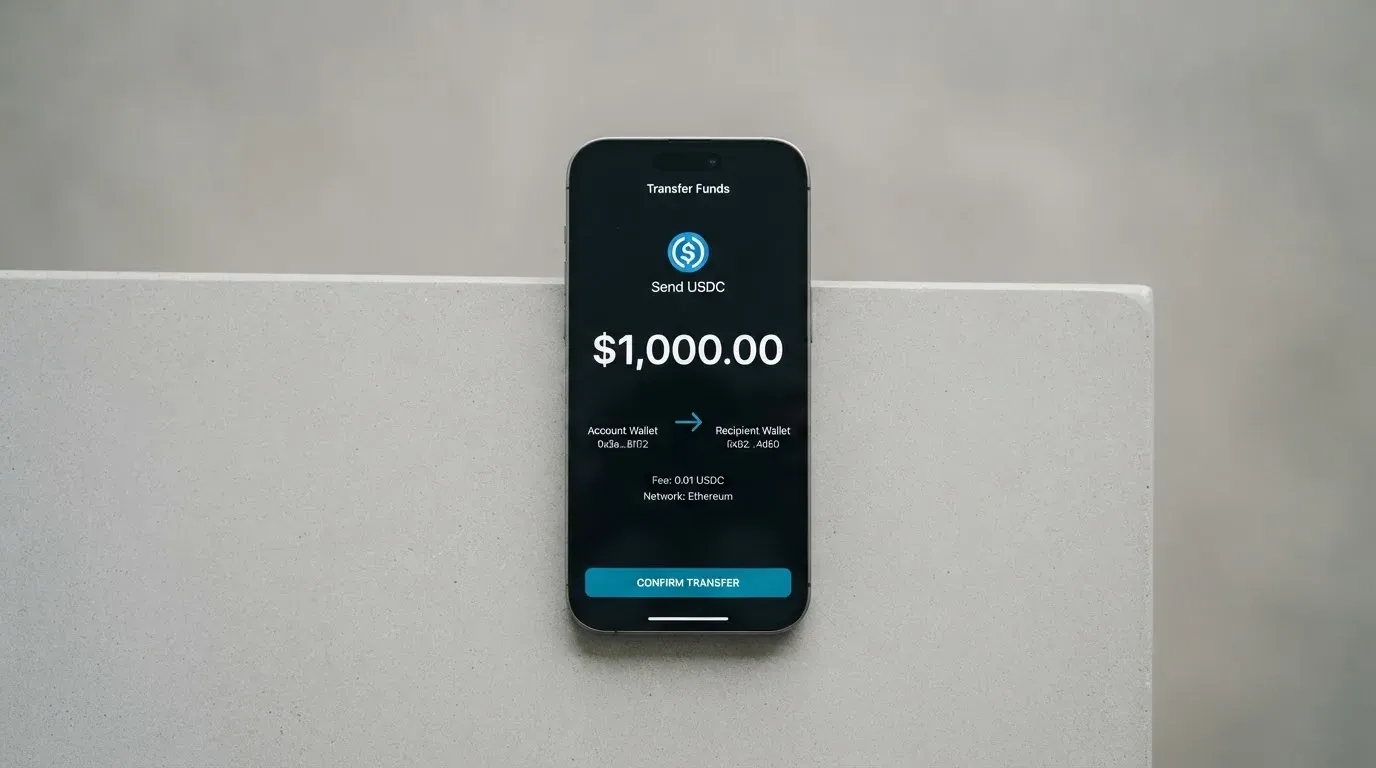
The first is a bank transfer in EUR or USD, which Bleap holds as EURe or USDC respectively at a 1:1 ratio. Other currencies sent in by bank transfer are converted to USDC. The minimum top-up amount is not stated on Bleap’s own pages, and there is no published processing time beyond “instant” once the transfer lands. On-chain network fees for any crypto leg are charged by the blockchain, not by Bleap.
The second path is sending tokens from an external crypto wallet on one of three networks: Solana, Base or Arbitrum. Bleap’s wallet is non-custodial in the sense that it uses a multi-party computation (MPC) setup where the key is split into shares so no single party, including Bleap itself, ever holds the full key, and there is no seed phrase for the user to manage. Recovery runs through a secure email sign-in. The one-tap conversion inside the Bleap app is free on Bleap’s side; on-chain gas still has to be paid by whichever network you are sending from.
Buying crypto inside the app with a bank card, Apple Pay or Google Pay incurs a 1% processing fee per one unofficial source (CryptoCardHub, 11 August 2026). Bleap’s own pages do not publish that fee, so I am flagging it as unofficial.
The savings-vault product, which lets you set aside funds in a USDC vault (with a EUR vault listed as “coming soon”), has a 0% withdrawal fee and no lock-in period. Because savings are outside the MiCA-regulated services, MiCA investor protections (such as the safeguards that apply to a regulated custody or exchange service) do not apply to the savings feature.
| Top-up method | Fee on Bleap side | Notes |
|---|---|---|
| Bank transfer EUR | Free | Held as EURe 1:1 |
| Bank transfer USD | Free | Held as USDC 1:1 |
| Bank transfer in other currency | Free | Converted to USDC |
| Stablecoin from Solana, Base or Arbitrum | Free on Bleap side | On-chain gas applies |
| Buy crypto with bank card / Apple Pay / Google Pay | 1% per unofficial source | Not confirmed on Bleap pages |
Paying with the card day to day
The card is accepted anywhere Mastercard is taken, online or in store. The virtual card is available the moment your account is verified, and the physical card arrives a few business days later. Both the virtual and the physical card can be added to Apple Pay and Google Pay. The full list of merchant categories Bleap blocks is not stated on its public pages, so I cannot tell you in advance which types of merchant would be refused, and I would not assume a specific category is open or closed without testing it.
Cashback is the most distinctive feature of the card, paid in USDC after the merchant confirms the transaction. The headline rate is up to 20% in USDC, broken down as:
- 20% on streaming, gaming and AI subscriptions
- 3% on rides and food delivery
- 2% on restaurants and supermarkets
- 1% on everything else
Conditions, caps and merchant category assignments are in the cashback terms inside the app. The 20% bracket is generous by industry standards; the 1% baseline is competitive but not unique. Cashback is paid after merchant confirmation, which can take a day or two.
The app is rated 4.8 on the App Store and 4.5 on Google Play according to Bleap’s own homepage. The number of reviews and the date range are not given on the homepage, so I cannot tell you how stable those scores are. The dispute process (what you do if a charge is wrong, or if a merchant does not deliver) is not stated on Bleap’s public pages.
What can go wrong
No card is risk-free, and Bleap’s risks fall into three buckets: company and regulatory, support responsiveness, and operational quirks.
On the company side, Bleap SIA is registered in Latvia (reg. 40203714425, Riga) and is wholly owned by Bleap Ltd, a UK company (14918472, London, founded 2023). Bleap SIA holds a MiCA CASP licence from Latvijas Banka (No. 27-55/2026/14, granted 25 June 2026). One unofficial source (CryptoCardHub, August 2026) names Unlimit (Unlimit EU Ltd) as the card issuer; Bleap’s own pages do not name the issuer or BIN sponsor, so I would not state that as confirmed. A CASP licence covers the crypto services, while a separate licence is needed to issue the card, so a card issuer behind the scenes is normal.
On support, Bleap runs a help center at help.bleap.finance, a contact page, a status page and in-app support. Trustpilot data, read on 2026-10-20, shows 3.5/5 across 72 reviews (59 in the last 12 months). Recurring themes in user reports (July-September 2026) include support replies taking two to three weeks or never arriving, cards or transactions blocked without clear reason, withdrawal of cashback only to crypto with EURe described as hard to exchange, and SMS messages for adding the card to Google Wallet not arriving. Bleap has not replied publicly to negative Trustpilot reviews. Earlier in the data I pulled, a 2.5/5 average across 46 reviews was visible; the more recent 3.5/5 across 72 is the figure I am quoting.
On operations, the published limit of EUR 400/month for free ATM withdrawals is the one constraint you are most likely to hit. The card’s blocked merchant categories are not stated, so discovering that a particular subscription or merchant is refused is something you would find out at the till. Cashing a card balance back out to a bank account on account closure is not stated on Bleap’s public pages, so the practical exit path is through crypto on the supported networks.
On security, the MPC key-splitting design means a single breach at Bleap would not give an attacker the full key, and there is no seed phrase for a phishing scammer to steal. Two-factor authentication, in-app card freeze, granular spending controls and any insurance coverage are not stated on Bleap’s public pages. The savings vault is outside the MiCA-regulated perimeter, so the protections that apply to a regulated crypto-asset service do not extend to balances held in savings.
What to take instead
If Bleap does not fit — wrong country, you need a different fee profile, or you want a more established brand — these are the three alternatives I would look at first. None of them is a direct substitute; each trades off something different.
| Card | Score | Best for | Notable trade-off |
|---|---|---|---|
| BloFin Wallet Card | 6.9/10 | Wide country list (35 incl. US, Australia, Japan, UAE, Brazil, Mexico) | 1% spend fee at base VIP tier; FX fee not stated |
| Decaf | 6.2/10 | A Visa card with no FX markup from Decaf itself | Activation fee USD 5 (virtual) or USD 10 / USD 90 (physical); long restricted-country list |
| SafePal | 6.2/10 | Crypto from 40+ chains, converted to USDC | 1% Mastercard FX fee on non-USD; cashback absent in favour of referral commissions |
BloFin Wallet Card is a Visa Platinum card from BloFin. Its country list is not on the card page; the data starts from 35 countries including the US, Australia, Japan, the UAE, Brazil, Mexico, Malaysia and New Zealand. Citizenship versus residence rules are not stated. Activation, annual, issuance and dormancy fees are all zero, and the cancellation fee is zero. The spend fee is “1% or lower” by VIP tier, ranging from 1.00% at VIP 0 to 0.00% at VIP 5, and is charged at payment. The FX fee is not stated, so I would not assume zero. Top-up is in USDT and USDC on Arbitrum and Base. There is no cashback; BloFin’s pitch is “no waiting for cashback or rebates”, meaning the rate reduction takes its place.
Decaf is a Visa card with no annual or monthly fee. The activation fee is USD 5 for a virtual card (worldwide) and USD 10 for a physical card in the US or USD 90 elsewhere. Decaf states it adds no FX markup of its own and uses the Visa exchange rate; the crypto conversion fee is not stated. The top-up flow runs through a Decaf payment link or account details, payable by card, bank transfer or USDC, with the app built on Solana and Stellar. Which coins and networks top up the card itself is not stated. The restricted-country list is long: Belarus, China, North Korea, India, Iran, Iraq, Israel, Myanmar, Nepal, Russia, Syria, Turkey, Cuba, Ukraine, Venezuela, Vietnam, Nicaragua, Puerto Rico and Nigeria, plus a list of restricted US states. Cashback terms are not stated.
SafePal is a virtual Mastercard debit card (physical availability is not stated), with spending limits in EUR tied to a Swiss Fiat24 account. There are no account creation or management fees, though the card issuance fee is not stated. The standard top-up fee is 0%; Mastercard charges a 1% FX fee on non-USD settlement; refund processing is USD/EUR/CHF 1 or CNH 7; swaps include an unquantified spread; and the bank page elsewhere quotes crypto top-up “as low as 0.4%” on the top tier. Crypto from 40+ chains can be converted to USDC (the default) or to fiat, with transactions on Arbitrum. There is no cashback; referral commissions are up to 40% of referred top-up fees, with tier privileges tied to deposits, referrals and SFP staking.
The trade-off in each case is clear. BloFin gives you country reach and a tiered fee structure but adds a spend fee Decaf and SafePal each charge a one-off activation or issuance fee that Bleap does not, and SafePal’s 1% FX fee on non-USD settlement is the kind of charge Bleap does not levy. None of the three matches Bleap’s combination of zero recurring fees, 0% FX markup and USDC cashback, which is why Bleap scores higher overall.
Who I would recommend the Bleap card to
If you are an EEA resident with a stablecoin balance or a EUR/USD bank account you want to spend from without giving up to a platform’s spread, the Bleap card is one of the more attractive options I have looked at. The fee structure is the cleanest in this corner of the market, the cashback rates are competitive, and the MiCA licence is in place.
I would hesitate to recommend it as your only card. Support responsiveness is the practical weak spot, the ATM free allowance is modest, and the company is still young. For a primary daily card I would pair it with a second card from a more established issuer until Bleap’s Trustpilot trajectory and support response times improve.
I would not recommend it at all if you are outside the supported regions, if the EUR 400/month ATM cap is too tight, or if your spending pattern depends on a merchant category you cannot confirm is unblocked. In those cases, one of the alternatives above is a better fit.
Frequently asked questions
What is the Bleap card?
The Bleap card is a Mastercard debit card issued through the Bleap app. You hold a EUR or USD fiat balance, or a crypto balance in tokens sent from an external wallet, and the card spends from that balance. There is no issuance, monthly or maintenance fee.
How does the Bleap card work?
You sign up in the app, verify your identity, and receive a virtual card immediately. You fund the card with a bank transfer in EUR or USD, or by sending stablecoins from an external wallet on Solana, Base or Arbitrum. The card then pays anywhere Mastercard is accepted, with 0% FX markup and USDC cashback on selected categories.
Is Bleap a bank?
No. Bleap SIA is a Latvian company authorised as a crypto-asset service provider under MiCA by Latvijas Banka (licence 25 June 2026). The card itself is a payment service issued under a separate licence held by an issuer Bleap’s own pages do not name.
Who owns Bleap?
Bleap SIA, based in Latvia, is wholly owned by the UK entity Bleap Ltd, which is registered in London under company number 14918472 and was founded in 2023. As a corporate structure, this parent-subsidiary setup supports its EU-facing operations, with the Latvian branch holding the necessary MiCA-regulated licensing.
Is the Bleap card available in my country?
Officially, the card is available to residents of the EEA and Latin America (Mexico and Brazil live, more “coming soon”). One unofficial source lists 31 supported countries and notes that residence in the EEA or Switzerland is required, with citizens of certain countries excluded regardless of residence. The full official list is in the Bleap Help Center.
How do I apply for the Bleap card?
Download the Bleap app on iOS or Android, complete identity verification (18+, resident of a supported country, with accepted ID and proof of address), and you receive a virtual card immediately. The physical card can be ordered once verification is complete.
Does the Bleap card require KYC?
Yes, identity verification is a mandatory part of the Bleap sign-up process. Verification is performed directly through the app and is described on Bleap’s homepage as usually taking under five minutes. Full details regarding accepted documents, proof of address, and other requirements are listed in the official Help Center.
How do I top up the Bleap card?
Two ways: a bank transfer in EUR or USD (held as EURe or USDC 1:1), or by sending stablecoins from an external wallet on Solana, Base or Arbitrum. Other currencies are converted to USDC. Bleap does not charge a top-up fee; on-chain network fees still apply to crypto transfers.
How do I add the Bleap card to Apple Wallet or Google Pay?
In the app, open the card detail view and choose “Add to Apple Wallet” or “Add to Google Pay”. The virtual card is the one typically tokenised. If the SMS for Google Wallet verification does not arrive, several user reports in mid-2026 describe the same issue, so contact in-app support.
Is the Bleap card safe?
The card is operated by a MiCA-licensed CASP and uses MPC key-splitting so no single party holds the full key. Features like insurance or granular spending controls are not detailed on Bleap’s public pages. As with any card, blocked categories and declined authorisations have been reported; additionally, the savings vault operates outside MiCA regulations.
Wallet-linked cards – cryptocardselect
Content created by the «cryptocardselect» team