
A virtual card funded through a Telegram bot, with a short official page and a thin licence story
 Available in US
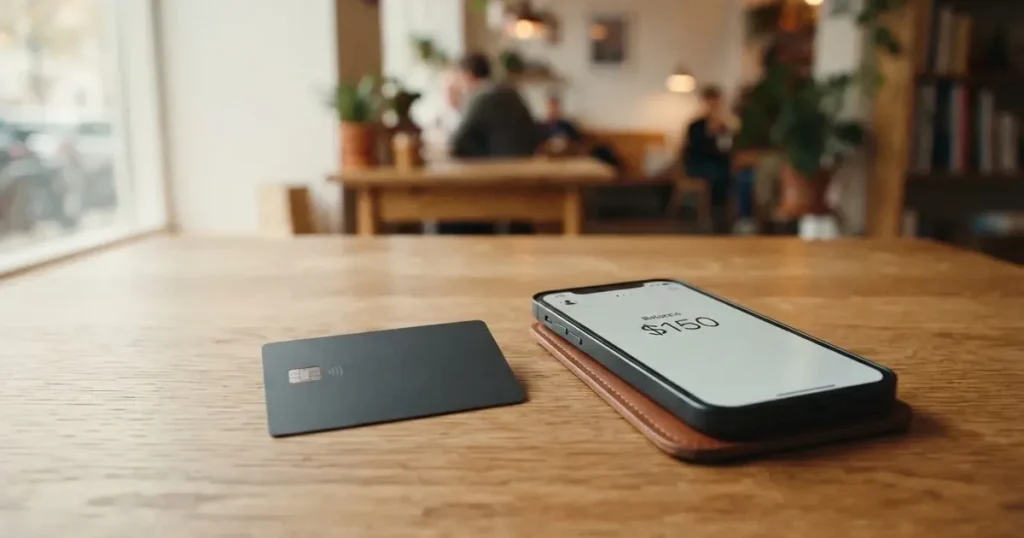
CinCin is a virtual payment card that holds a balance in USDT and is opened and run through a Telegram bot rather than a standalone app. The card works wherever Mastercard is accepted, and you can add it to Apple Pay. What is unusual, in 2026, is how little the company publishes about who is behind it: the card is “issued and managed by a licensed third-party card issuer” that is not named, the parent company is registered in the Marshall Islands, and no licence numbers appear on the public site. The pricing story is equally split: the company advertises “no hidden fees” yet does not publish a top-up percentage, a conversion fee or an ATM charge. That combination of a thin disclosure and a 3.1-out-of-5 Trustpilot score, with users reporting unrefunded first deposits, is the reason this review lands at 5.4 out of 10.
The conditions below are current as of October 28, 2026.
Verdict
CinCin suits people who already keep a balance in USDT, are comfortable working through a Telegram bot, and need a virtual Mastercard for online spending or Apple Pay. It does not suit people who want a physical card, a published fee schedule, a regulator they can look up, or any of the major developed-market licences that come with a mainstream card. If you live in the United Kingdom, the UAE, Japan or the United States, the card is simply not offered; ten further countries are restricted for sanctions reasons. The company reserves the right to add more countries “at any time”. The score reflects those trade-offs.
| Criterion | Mark | Why it lands there |
|---|---|---|
| Who can get it | 6 / 10 | Not offered in the UK, UAE, Japan or the US; ten more countries restricted; FATF-blacklist users barred |
| Cost | 4 / 10 | $25 to issue, $55 minimum to open; “no hidden fees” headline with no published top-up, conversion or FX percentage |
| Top-up options | 9 / 10 | Balance on a USDT TRC20 address; 24 supported coins including USDC and USDT |
| Reliability and complaints | 4 / 10 | Operator is a Marshall Islands company; issuer and licences not named; Trustpilot 3.1/5 from 17 reviews, with users reporting unrefunded first deposits |
| Everyday use | 5 / 10 | Virtual only; Apple Pay supported; Google Pay not mentioned; ATM fees not disclosed |
| Total | 5.4 / 10 | A workable Telegram-bot card for someone who already lives in USDT, but disclosure is thin and a physical card is not on offer |
Who CinCin will issue a card to
CinCin maintains an explicit country list rather than a vague “most countries” claim. The card is not offered in the United Kingdom, the United Arab Emirates, Japan or the United States. A second group of countries is restricted: Iran, North Korea, Syria, Venezuela, Afghanistan, Belarus, Cuba, Myanmar, Somalia and Ukraine. Users from FATF-blacklisted jurisdictions or who appear on OFAC sanctions lists are barred. The terms add a one-line clause that CinCin “may add countries at any time”, so today’s eligible list is not a guarantee for tomorrow.
A few things are not stated. The rules are framed by the country of the user, but the terms do not separate citizenship from residence, which matters because sanctions screening often applies to both. The minimum age, the documents CinCin asks for and the proof-of-address standard are also not stated. The site advertises “~2 minutes” to set up and “no complex verification”, while the terms say CinCin “does not independently perform KYC verification for Users” but does run anti-money-laundering checks with third-party providers and may apply enhanced due diligence or restrict access. That is a normal arrangement for this category, but it leaves the user with no public checklist of what might later be requested.
Russia is not on the terms’ country list. An earlier check of an Apple Pay variant reportedly saw it blocked in Russia; that detail is not confirmed in the current research and should not be treated as a current rule. If your situation depends on a specific country, the safest move is to test the Telegram bot from that location before sending any funds.
How to get the card
There is no app store download and no web form to fill in. The whole flow runs through CinCin’s Telegram bot:
- Sign in to the CinCin Telegram bot.
- Create a USDT TRC20 deposit address inside the bot.
- Send at least $55 in USDT TRC20 to that address.
- Open the card inside the bot.
The $55 is the minimum to open; $25 of it is the card-issuance fee and the remaining $30 lands on the card balance, ready to spend. The site frames the setup as “no delays, no complex verification”, and the bot-side flow is consistent with that. The terms soften the marketing: CinCin “does not independently perform KYC verification for Users” but reserves the right to run third-party AML checks, apply enhanced due diligence or restrict access at any time. In practice that means the quick start is real, but a future request for documents is also real, and the criteria are not published.
The card you get is virtual. The FAQ says it works “wherever Mastercard is accepted”, which puts it in line with most online and point-of-sale use, but it rules out the offline patterns that need a physical piece of plastic. A physical card is mentioned only by third-party aggregators, not in the official CinCin materials reviewed here.
What CinCin really costs
The headline cost is simple to state and the rest is opaque, which is why this section pulls apart the published numbers from what is missing.
| Fee or limit | What CinCin publishes | Notes |
|---|---|---|
| Issuance | $25 | Charged when you open the virtual card |
| Minimum to open | $55 total | $25 fee + balance |
| Monthly fee | Not stated | No figure in the public materials |
| Conversion | Not stated | Quoted rates described as “indicative”; final rate is the one shown before confirmation |
| FX | Not stated | No percentage published for non-USD spending |
| ATM | Not stated for the virtual card | Not relevant unless a physical card is later offered |
| Single transaction | $50,000 | Hard cap per transaction |
| Daily limit | $200,000 | Hard cap per day |
| Monthly limit | $2,000,000 | Hard cap per month |
| Internal volume / frequency caps | Terms reserve the right to decline above unpublished internal limits | No thresholds published |
The site says “no hidden fees”, and the terms back that up with the right structure: fees are shown in the Telegram bot before you confirm, quoted prices are indicative, and the final price is the rate shown at confirmation. That is reassuring in principle, but it is not a fee schedule. A user cannot, before signing up, see what they will pay to top up, what the conversion spread is on a non-USD purchase or whether an ATM withdrawal (if a physical card appears later) carries a charge. The only third-party figure in circulation is from a card-aggregator site that puts the top-up fee at 4.5% and the per-transaction fee at $1.025 plus 0.4% on the physical card; those numbers are unofficial and are not confirmed in CinCin’s own materials.
A second unofficial detail: the same aggregator lists five CinCin products, including a $100 physical card, a $79 Mastercard Apple/Google Pay card with a $30 deposit, and a $39 Visa “for AI services” card with a $30 deposit, plus Premium and VIP Concierge tiers with monthly limits up to $2 million. None of these tiers appear in the current official CinCin pages I worked from, so treat them as third-party claims rather than current offers.
Three everyday payments and the fees that touch them
To make the abstract numbers real, here is what a fee could look like at the point of use. CinCin does not publish the percentages, so the line items below are the limits and the structure you would meet, with the actual fee left as “not stated” where CinCin has not published one.
- A $50 online subscription paid in USD. This sits well below the $50,000 single-transaction cap. The fee that would apply is the conversion fee, which is not published. With a USDC-funded card the conversion path is short; with a BTC-funded card the conversion is double, from BTC to USDT and then USDT to USD, so two spreads can apply.
- A $200 in-store payment through Apple Pay, in a non-USD currency. The card currency is not stated, so this would trigger both a conversion and an FX path. Neither percentage is published. The $200,000 daily cap is not a constraint; the published $50,000 single-transaction cap is not a constraint. The hard cap that matters is the unpublished internal volume or frequency threshold CinCin reserves the right to apply.
- A $5,000 one-off online purchase, again in a non-USD currency. The transaction is well under the per-transaction cap and the daily cap. The unknown is the FX percentage, which is the line that typically surprises users of crypto-funded cards. An FX gap of 1% on $5,000 is $50; a higher gap would be proportionately more. Without a published rate you cannot pre-judge this.
The honest summary is that CinCin publishes enough to tell you the card will work and what the hard caps are, and not enough to tell you what a given purchase will cost before you confirm it.
How to top up the card
Top-up is the strongest part of the package. The card balance lives on a USDT TRC20 address, and CinCin accepts 24 coins for funding, including USDC and USDT. The full list of supported coins is: ADA, ALGO, AVAX, BCH, BNB, BTC, DOT, ETH, HBAR, HT, KRRX, LINK, LTC, MATIC, NEAR, SHIB, SUSHI, TON, TRX, UNI, USDC, USDT, XLM and XRP. Exchanges are made through the Telegram bot, and the company describes the conversion as happening “within seconds”.
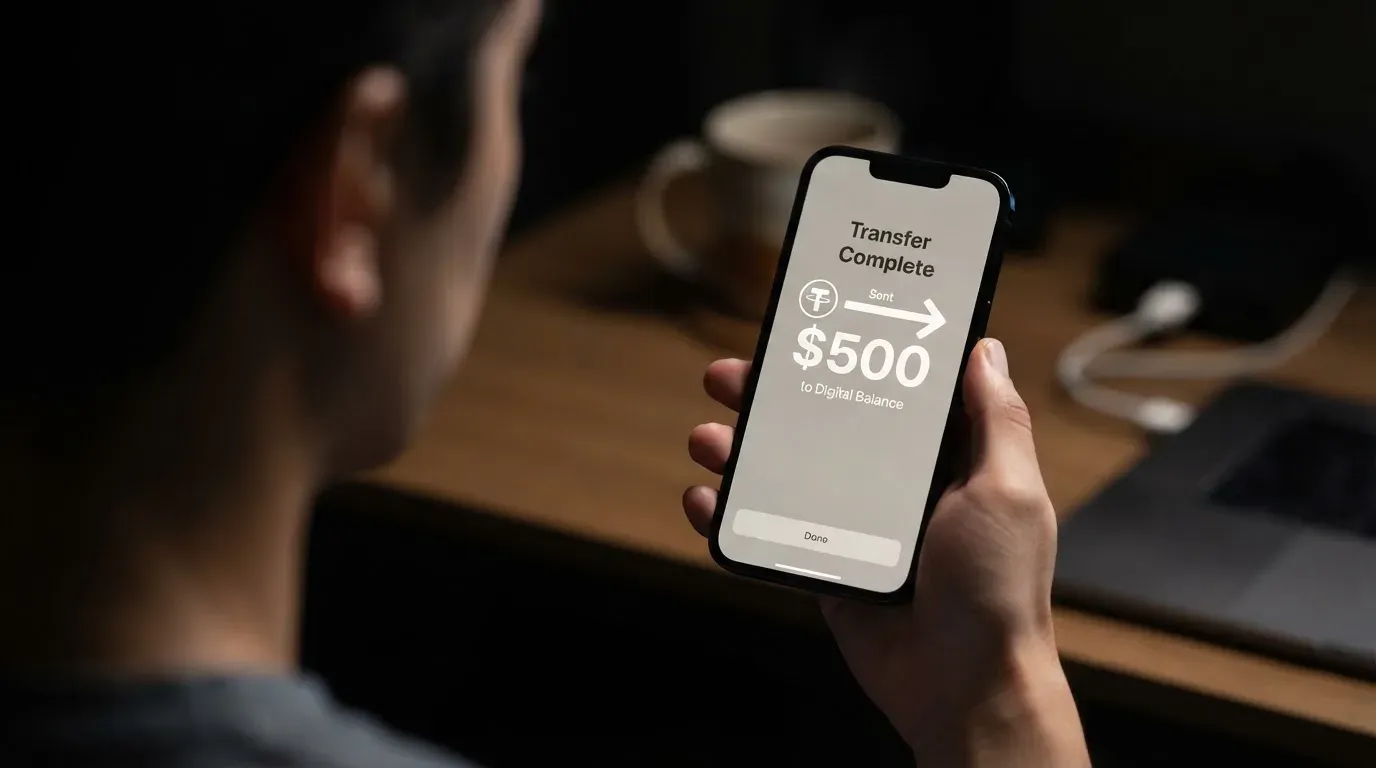
A few practical points follow from the network design:
- The base address is USDT TRC20 (Tron). If you want the cleanest, cheapest route, send USDT on Tron. Tron network fees are paid in TRX or in bandwidth and energy credits, and they are typically a fraction of a cent per transfer; the user pays the network, not CinCin, for that gas.
- Sending USDC on Tron is not a native option: Circle stopped supporting USDC on Tron in February 2024, so the USDC you fund with will arrive on a different network than the USDT TRC20 base address. The bot will still convert it, but check which network the bot’s USDC deposit address uses before sending.
- Sending USDT on Ethereum (ERC-20) is supported in the coin list, but Ethereum gas is paid only in ETH, so a wallet holding USDT without a small ETH balance for gas cannot send. If you fund from a hardware wallet or an exchange, make sure the sending side covers the gas.
- Blockchain transfers are irreversible. A deposit sent on a network CinCin does not support, or to an address of a different network, can be lost or require manual support recovery with no guarantee. The card provider’s address, not the user’s habit, decides which chain is correct.
Three things are not stated: the top-up fee (the official pages say “no hidden fees” but do not publish a percentage), who pays the network fee on the inbound transfer, and whether fiat top-up is supported at all. The terms also note that “executed transactions are final, non-cancelable, and non-reversible”, and that on termination users “are not refunded” (section 9.3). If a top-up arrives on the wrong network or in a coin the bot cannot convert, that clause is the backdrop.
Paying with CinCin every day
The everyday-use story is shaped by three constraints: the card is virtual, the only wallet mentioned is Apple Pay, and there is no standalone app.
Adding the card to Apple Pay is officially supported: the site has a clear “Add your virtual card to Apple Pay” prompt. Google Pay is not mentioned in the official materials, which is a meaningful gap for Android users in regions where Apple Pay is not available. The card currency is not stated, so a non-USD purchase will pass through whatever conversion and FX path CinCin’s bot displays at confirmation. The 3-D Secure flow for online payments is handled by Mastercard’s Identity Check under the issuer’s policies; the user sees whatever challenge the issuer shows, such as a one-time code or a biometric prompt.
Two further everyday details come from third-party feedback rather than the official pages. The card has been declined for online-game donations, with the company pointing users to its “authorized services” list. That list is not published, so a user has to test or contact support before they can be sure a subscription or a donation will go through. The card-issuance fee is also non-refundable once paid, and the support response time has been reported, in Trustpilot reviews, at up to an hour; CinCin’s own materials do not commit to a target response window.
On disputes, the user-facing flow is to contact support first. CinCin has up to 30 calendar days to respond. Unresolved disputes go to LCIA arbitration in London under English law, and refund requests for unauthorized or incorrectly executed payments caused by a CinCin error must be raised within 12 months (section 15 of the terms). “Chargeback” is not a word the terms use; the user is pointed at arbitration, not at a card-network chargeback right. There is no cashback, rewards or staking programme published in the official materials.
What can go wrong
The risks fall into four groups: company structure, regulatory disclosure, the support experience, and the limits of the product itself.
The company behind CinCin is Sonder INC, a digital assets services provider incorporated in the Marshall Islands, with a registered office at Trust Company Complex, Ajeltake Road, Ajeltake Island, Majuro MH96960, registration number 130414. The footer brand reads “Cin-Cin Pay”. The cards are “issued and managed by a licensed third-party card issuer”, and that issuer is not named. No licence numbers are listed on the public site. A user cannot, from the public page, confirm a regulator, look up an authorisation in a public register, or identify the institution that holds the card programme. That is unusual for a Mastercard-issued product in 2026, where the issuer is normally identifiable in the cardholder agreement.
The security claims are short. The site says the service uses end-to-end encryption and that sensitive payment details are not stored. The balance is custodial: CinCin holds the USDT on the user’s behalf, and the card is managed through the Telegram bot, so the user is depending on CinCin’s security for both halves. Two-factor authentication, an in-app freeze and a fund-safeguarding statement are not stated in the public materials. The support channels are Telegram and a support email; hours are not published, and the site is translated into English, Ukrainian, Russian, Spanish and Portuguese.
The Trustpilot score is 3.1 out of 5 from 17 reviews, with 23% of reviewers giving one star. The company responds to approximately 25% of negative reviews. The recurring themes, from user reports, are:
- Unrefunded first deposits. A reviewer from April 2026 reported being unable to get an initial deposit back; the company asked the reviewer to contact support, in May 2026, and the public thread does not record a resolution.
- Card refunds and allowed-service limits. A reviewer from October 2025 reported that the card itself is not refunded and that some categories (online-game donations) are not on the allowed-services list.
- Slow support. A reviewer from September 2025 reported waiting up to an hour for a support reply.
A few of the structural risks are worth naming in their own words, because they sit underneath the marketing:
- The card is not offered in the UK, UAE, Japan or the US, and the country list can change without notice.
- The issuer is unnamed and unlicensed in the public materials, so a user has no external regulator to escalate to. Disputes route to LCIA arbitration in London under English law.
- The balance is custodial. If CinCin or the issuer pauses the programme, the standard pattern is a notice period, then spending stops, then a window to withdraw the remaining balance; a 2026 closure reported by a secondary source set new-load and spending cut-offs in July and August 2026 (single source, unconfirmed here).
- Top-up and conversion fees are not published, so a user cannot pre-judge the cost of a given purchase.
- “Executed transactions are final, non-cancelable, and non-reversible” and on termination users “are not refunded” (section 9.3). A wrong-network deposit has no guarantee of recovery.
For someone comparing this card to a regulated e-money institution in the EU, the gap is the licence. EU e-money institutions must safeguard customer funds by segregation or insurance, and the funds are not the same as bank deposits and may not be covered by deposit guarantee schemes; the point is not that CinCin’s arrangement is automatically worse, but that the user has no published safeguarding statement to check.
What to take instead
CinCin is not the only Telegram-bot virtual card in 2026, and it is not the only one with thin disclosure. The three alternatives below are taken from the same research pool, so the score and the facts come from the same source and use the same criteria. If CinCin’s gaps put you off, one of these may fit better.
| Card | Score | What it is | Where it differs from CinCin |
|---|---|---|---|
| Ape Wallet | 5.5 / 10 | Virtual Visa (service card for subscriptions and online; separate Apple Pay / Google Pay card) | Russian-facing product with SBP payments and Russian-passport KYC; issuance price is not published and depends on promo codes; wallet balance in USDT; two-level referral programme |
| MaxSwap | 5.2 / 10 | Virtual Mastercard | Site claims “no geographical restrictions”; card $50, first deposit $25, total issuance $77.125; top-up 4.5% + $1; transaction 0.25 USD + 0.4%; same 24-coin funding list as CinCin |
| AnoCard | 5.9 / 10 | Virtual cards (VCC) — reloadable and one-time, several BINs | Network and currency depend on the BIN, chosen with filters in the SORN web dashboard; fees shown inside SORN before payment; referral pays $5 per card creation and 0.25% of referred top-ups |
The honest reading of this table is that none of the three alternatives offer a clean win on every dimension. Ape Wallet is closer to a full wallet and adds Google Pay, but its disclosure is similarly thin and the country rules are not listed. MaxSwap publishes its top-up and transaction fees (4.5% + $1 on top-up, $0.25 + 0.4% per transaction) but its card is more expensive to open and the geographic story is “no restrictions” rather than a list. AnoCard is the most transparent on fees-at-point-of-payment (shown in SORN before you confirm) but the underlying site was down at the time of the page check, so the country list is unverified.
Who I would recommend the card to
I would recommend CinCin to a reader who already lives in USDT, is comfortable running their card from a Telegram bot, and needs a virtual Mastercard for online spending and Apple Pay. The 24-coin funding list is the strongest reason to pick CinCin over a more conventional card: if you hold a mixed bag of coins, including SHIB, TON or HBAR, the bot will accept them and the conversion runs through USDT. For that reader, the missing top-up fee is an irritant rather than a deal-breaker, because the user is funding from a balance they already want to convert.
I would not recommend it to a reader who needs a physical card, a published fee schedule, or a regulator they can look up. I would also not recommend it to a reader in any of the restricted countries, or to a reader whose main use case is donations, gaming top-ups or any category the company’s “authorized services” list might block, because that list is not published. And I would not recommend it as a primary card: the custodial balance, the unnamed issuer and the LCIA arbitration clause are the kind of structure that is fine for a small working balance and uncomfortable for a salary’s worth of spending.
If your situation is closer to “I want a card, I have a small crypto balance, I am happy to live in a Telegram bot”, CinCin is workable. If your situation is “I want a card I can defend to my bank, my tax authority or my future self”, one of the more transparent alternatives will serve you better.
Frequently asked questions
What is the CinCin card?
CinCin is a virtual Mastercard issued through a Telegram bot run by Sonder INC, a digital assets services provider incorporated in the Marshall Islands. The card balance sits on a USDT TRC20 address, and the company says it works wherever Mastercard is accepted. The issuer behind the card is a “licensed third-party card issuer” that is not named in the public materials.
How does the CinCin card work?
You open the CinCin Telegram bot, generate a USDT TRC20 deposit address, send at least $55 in USDT (or one of 24 supported coins), and the bot opens a virtual card. From then on, the card is a prepaid Mastercard: each payment is converted from the on-platform balance through the bot. You can add the card to Apple Pay; Google Pay is not mentioned in the official materials.
Is CinCin a bank?
No. CinCin is not a bank. The parent company, Sonder INC, describes itself as a digital assets services provider in the Marshall Islands, and the cards are issued by an unnamed “licensed third-party card issuer”. The site does not list a banking licence or an e-money licence, and no licence number appears on the public materials.
Who owns CinCin?
CinCin is operated by Sonder INC, registered in the Marshall Islands (Trust Company Complex, Ajeltake Road, Ajeltake Island, Majuro MH96960, registration number 130414). The footer brand on the site reads “Cin-Cin Pay”. The card-issuing institution is a third party and is not named in the public materials.
Is the CinCin card available in the United States / United Kingdom / UAE?
The card is not offered in the United Kingdom, the UAE, Japan or the United States. A further ten countries are restricted for sanctions reasons: Iran, North Korea, Syria, Venezuela, Afghanistan, Belarus, Cuba, Myanmar, Somalia and Ukraine. The terms also reserve the right for CinCin to add more countries at any time.
How do I get the CinCin card?
The flow runs entirely through the CinCin Telegram bot. Sign in to the bot, create a USDT TRC20 deposit address, send at least $55 to it, and open the card. The card-issuance fee is $25 and the remainder of the $55 lands on the card balance. There is no standalone app and no web form.
Does the CinCin card require KYC?
The site advertises “~2 minutes” to set up and “no complex verification”. The terms say CinCin “does not independently perform KYC verification for Users” but runs anti-money-laundering checks with third-party providers and may apply enhanced due diligence or restrict access. Documents, proof of address and the minimum age are not stated in the public materials.
How do I top up the CinCin card?
You send crypto to a USDT TRC20 address generated inside the Telegram bot, or send any of 24 supported coins to the relevant address the bot gives you. The bot converts the deposit to the card balance “within seconds”. The top-up fee is not published, fiat top-up is not stated, and transfers on a network the bot does not support cannot be recovered.
Can I add the CinCin card to Apple Pay or Google Pay?
Apple Pay is officially supported: the site has an “Add your virtual card to Apple Pay” flow. Google Pay is not mentioned in the official materials. The card is virtual, so the only physical-world spend path is via a tokenised mobile wallet.
Is the CinCin card safe?
The site says the service uses end-to-end encryption and does not store sensitive payment details, and the balance is custodial (held by CinCin). Two-factor authentication, an in-app freeze and a fund-safeguarding statement are not stated. Trustpilot gives CinCin 3.1 out of 5 from 17 reviews, with users reporting unrefunded first deposits, restrictions on allowed services and slow support. Disputes that the company cannot resolve go to LCIA arbitration in London under English law.
Virtual cards for online use – cryptocardselect
Content created by the «cryptocardselect» team