
Higlobe's virtual Visa, viewed by a freelancer in mind
 Available in US
Higlobe is a fintech account built around receiving money from abroad and spending it through a virtual Visa card. If you are a freelancer in Latin America or Southeast Asia who is paid in USDC or in dollars and euros by foreign clients, that is exactly the use case Higlobe has shaped itself around. The pitch is simple: receive stablecoins, hold a USD balance, tap to pay anywhere Visa is taken. The reality, once you start reading the small print, is more uneven. Some numbers are clear, others are simply not stated, and a few of the things a card user normally expects to see (an ATM withdrawal allowance, an issuance fee, a published list of supported coins and networks) are missing from the public pages.
This review is written for someone who is choosing whether to use Higlobe as a daily spending tool. I have gone through the company’s regulations page, the pricing details and the cardholder agreement, and pulled out what is confirmed, what is unofficial, and what you should ask support before you rely on the card for anything important.
Conditions are current as of October 28, 2026.
Verdict
Higlobe scores 6.4 out of 10 in my reading. That number is a balance of strengths (a clear regulatory footprint, an account that genuinely does what it says for receiving USDC, Apple Pay and Google Wallet support, no monthly fees) and gaps (the cost of getting the card, ATM and FX fees, and a list of supported top-up coins and networks are not stated publicly). It is a useful tool for the audience it is built for, but you should not assume it is a general replacement for a bank card.
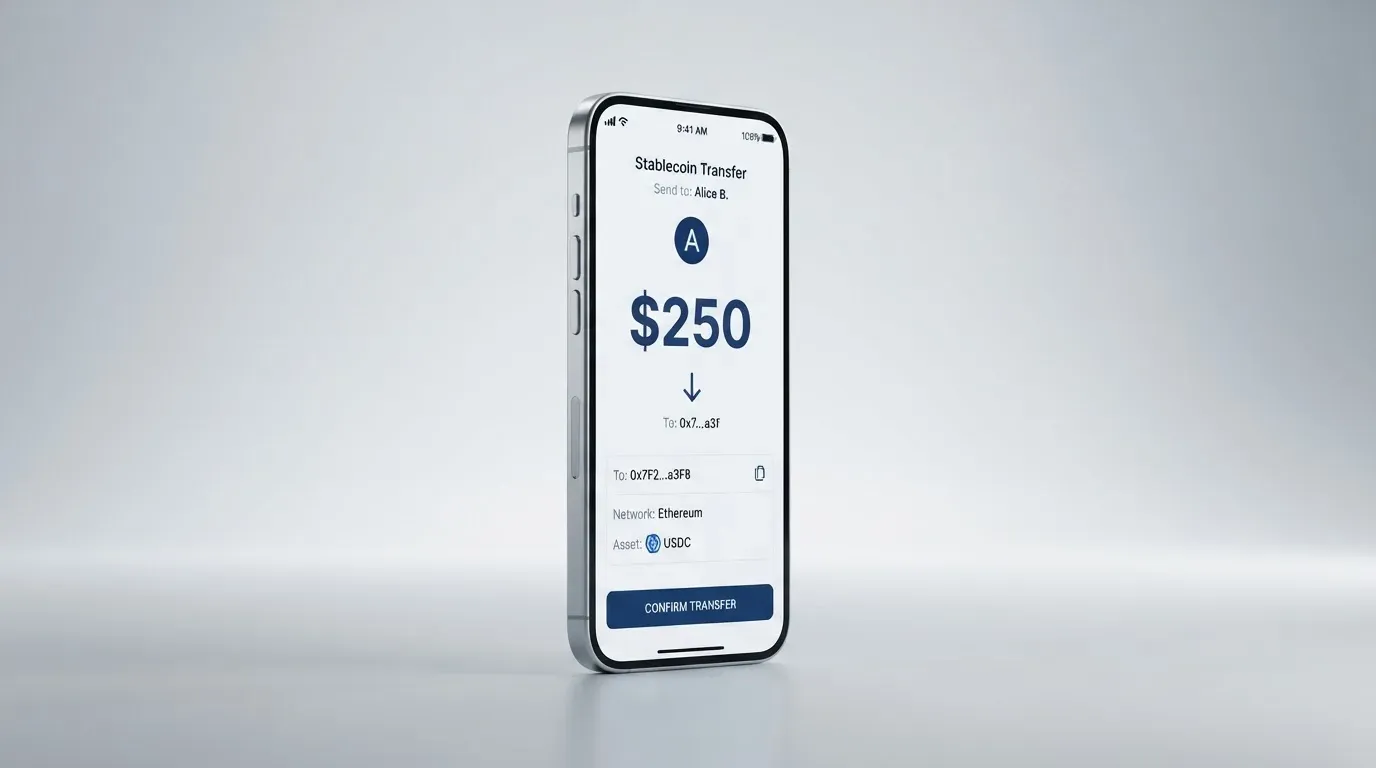
The breakdown below summarises the score for each area.
| Criterion | Mark | Why it scored where it did |
|---|---|---|
| Who can get it | 6/10 | Higlobe names seven countries and a clear residence test, but the United States is on the list and yet excluded from actually opening an account |
| Cost | 7/10 | No monthly fees and a zero transaction fee, but the issuance fee is not stated and the FX markup varies sharply by country (0% in Mexico, 0.60% in the Philippines) |
| Top-up options | 5/10 | The card holds a USD balance funded by USDC, but the coins and networks accepted for top-up are not published |
| Reliability and complaints | 8/10 | Higlobe Inc. is FinCEN-registered, the card is issued by a licensed Visa member (Nimbus LLC, doing business as Third National), the operation is SOC 2 Type II audited, and Trustpilot sits at 4.7 from 407 reviews |
| Everyday use | 5/10 | The virtual card is ready in minutes and works with mobile wallets, but there is no physical or metal card and ATM access is not documented |
The audience the card is built for is straightforward: freelancers in Latin America and Asia who are paid by foreign clients and want a USD balance to spend from. If you fall outside that picture, you should look elsewhere. If you fall inside it, the card is workable but only after you confirm a few specifics with support that the public pages do not spell out.
Who Higlobe will give the card to
Higlobe’s regulations page lists seven countries where it operates: Mexico, Brazil, the Philippines, Argentina, Colombia, India and the United States. The same page is also clear about a rule that surprises a lot of people reading it: an account holder has to be “a legal, permanent resident of a country other than the United States”, and “U.S. residents are not permitted to open a Higlobe account”. So the United States is on the list of supported countries, but only as a place you can send money from, not as a place you can open an account in.
Outside those seven countries, the card is not available through Higlobe’s own front door. There are also the standard exclusions: the terms bar anyone “embargoed or blocked by any government”, which is shorthand for following OFAC and other sanctions lists, and nationality and country of birth are normally screened alongside residence for that reason. If your situation involves a sanctioned country or a recent move, the headline list of countries is not the whole answer.
The residence-based rule is the one that matters most in practice. The card is built for people who live in the listed countries and have a permanent status there. If you are a citizen of one country but a resident of another, it is your country of residence that decides whether you can open an account.
How to get the card
Sign-up starts on the web. You open a free account, complete identity verification, and the virtual card is issued “in minutes”, according to the company. There is no physical or metal version of the card mentioned in the public material; the card is virtual only and you add it to a mobile wallet for in-store spending.
For identity, the company lists: full name, address, email, tax identification number, valid bank account details, and a passport or national ID plus a selfie. Business accounts need entity-level information on top. A few things the public page does not say: whether proof of address is required, what the minimum age is, and how many tiers of verification exist. The page notes that limits “vary by account type and verification level” but does not publish what those tiers are or what each one allows.
In day-to-day terms, the onboarding story is: web form, document upload, selfie, then a card on your phone. The verification levels and any extra documents for higher limits are something you only find out when you ask.
What it really costs: fees, markups, and what isn’t published
Higlobe’s pricing story has a strong opening line and a few open questions. “No monthly fees” is stated, and the transaction fee on the pricing table is $0. What is not on the public page: the cost of issuing the card, the ATM withdrawal fee, the standard foreign exchange markup on card spending, and the daily or monthly card limits. The company says ATM and FX-related fees are “disclosed before you accept them”, which means you will see a number before a transaction confirms, but you will not see a number on a pricing page in advance.
The published FX markup on the pricing table is for transfer corridors, not for card spending. Mexico shows 0 bps, Brazil 20 bps (0.20%), the Philippines 60 bps (0.60%), and Argentina and Colombia 0. In other words, when you receive money into a Mexican peso, Brazilian real or Philippine peso balance, the rate that arrives is the mid-market rate for Mexico and Colombia, with a small premium for Brazil and a more noticeable premium for the Philippines. That is for incoming transfers, not for paying with the card in a foreign currency, where the markup is not stated.
| Fee or limit | Amount or status |
|---|---|
| Issuance fee | Not stated |
| Monthly fee | None |
| Transaction fee | $0 |
| FX markup (Mexico) | 0 bps (transfer corridor) |
| FX markup (Brazil) | 20 bps / 0.20% (transfer corridor) |
| FX markup (Philippines) | 60 bps / 0.60% (transfer corridor) |
| FX markup (Argentina) | 0 (transfer corridor) |
| FX markup (Colombia) | 0 (transfer corridor) |
| ATM fee | Disclosed before acceptance; amount not published |
| Card spending FX markup | Not stated |
| Card daily and monthly limits | Not stated |
| Send/withdraw limits | “No fixed limits”; vary by account type and verification level |
There is one product tier. The card is a USD card, and the page advises choosing the local currency at checkout where the merchant gives you the choice. Balances can be held in USD, EUR and GBP.
To put that in a normal spending week:
- A coffee bought in pesos in Mexico with a peso balance: no transaction fee, no FX markup (Mexico is 0 bps on incoming transfers, and the local-currency advice applies). Cost: the price of the coffee.
- A subscription billed in euros to a EUR balance: no transaction fee; FX from EUR to whatever the merchant charges in is whatever the card network applies, and Higlobe’s markup on top of that is not stated.
- A cash withdrawal at an ATM: no monthly fee, but the ATM fee is shown to you only at the moment of acceptance, and the maximum you can take out is not published. If you rely on ATM cash, this is the first thing to ask support.
If you spend mainly in your home currency from a local balance, the cost story is simple and low. The moment you start moving between currencies or taking cash out, you are working with fees that the public page does not name.
How to top it up
The card spends from a USD balance, and that balance is held in USDC, the USD-backed stablecoin. The way the flow is described: you receive USD, EUR or GBP from clients into your Higlobe account, the deposit is held as a USD-backed stablecoin, and the card draws on the USD balance at the point of sale. In other words, the card is “preloaded” in the sense that the crypto is converted into a balance first, and the card only spends that balance.
Transfers from US and EU clients into a Higlobe USD or EUR account are described as free, with no minimum stated. What is not on the public page is the list of coins and networks you can use to top up directly. Because the balance is held in USDC, USDC is the assumed top-up, but the network choices (Ethereum, Solana, Base, Polygon and so on) are not spelled out. That matters because sending the right token to the wrong network is the most common way people lose money with stablecoin transfers, and the recovery story for an irrecoverable transfer is poor.
Withdrawals are the other half of the funding flow, and the published details here are concrete. Withdrawals to a local bank are free, and the company gives corridor-by-corridor times: Mexico SPEI under 30 seconds, Brazil PIX under 10 seconds, the Philippines InstaPay under 20 seconds, Argentina under 25 seconds, Colombia PSE under 60 seconds. There is a Bitso off-ramp for converting the balance to local currency. If you close the account, you need to withdraw the funds first; the company may then transfer any remaining balance to your registered local bank, and dormant balances can be subject to escheat after six months, which is the legal term for balances that get turned over to the state as unclaimed property.
If your day-to-day is “I invoice a US client, they pay me in USDC, I spend the result locally”, the funding model is built for you. If your day-to-day is “I want to move a mix of coins and networks in”, the missing coin and network list is something to check with support before you send anything.
Paying with it every day
Once the card is in your phone, the day-to-day experience is narrow but works. The virtual Visa is added to Apple Pay and Google Wallet, and you tap to pay wherever contactless Visa is accepted. The card carries Visa Signature benefits, which is a tier that gives you a set of travel and purchase protections, and access to a 24/7 Visa benefits portal. Whether the card is accepted in a particular store is really a question of whether the merchant accepts Visa contactless, not Higlobe.
Two things to be aware of. First, the public pages refer to a “card prohibitions list” for blocked merchant categories, but the list itself is not published. Most cards block high-risk categories like gambling by policy rather than by law, but the specific block list varies by issuer, and you would have to test or ask. Second, there is no cashback or rewards scheme published for spending; the only yield-related product mentioned is a “listed as 3% annual yield” earn product on the balance, which is not the same thing as a card cashback.
For disputes (a charge you do not recognise, a service you paid for that did not arrive), the cardholder agreement is held in a separate document and Higlobe is not the issuer, so the actual dispute path is with the issuing bank, Nimbus LLC, doing business as Third National. The website does not describe that process in any detail. If you are the kind of person who keeps a careful eye on card statements and expects a clear dispute path, this is a gap worth probing before you put the card in the middle of a high-volume routine.
For mobile access, the company describes a web app; a mobile app is not confirmed in the public material. An App Store search for “higlobe” in the US returned no results at the time of writing. The Google Play listing was not read for this review. If you are a phone-first user, the web-app framing is worth confirming before you rely on it.
What can go wrong
A few categories of risk are worth taking seriously here, because they are the kind of thing that bites only when something goes wrong.
Regulatory and counterparty risk. Higlobe, Inc. is a fintech, not a bank, and the terms describe customer funds as “an unsecured claim against us” that is not FDIC-insured. The pooled customer funds are held separately from corporate funds, but “segregated” is not the same as “guaranteed”. The card is issued by Nimbus LLC, doing business as Third National, a Visa Principal Member with a Money Transmitter licence in Puerto Rico (license number TM-0207, NMLS 2612780). The local partners in each country are supervised by their own regulators: CNBV in Mexico, BCB in Brazil, BSP in the Philippines, BCRA in Argentina, SFC in Colombia, RBI in India. The regulatory footprint is real; the thing to remember is that you are trusting a non-bank custodian with the balance between receipt and spending, and that the issuing bank, not Higlobe, is the entity behind a chargeback.
Security. The wallet is custodial, which means Higlobe holds the keys to the USDC that backs the balance. The public pages do not mention two-factor authentication or an instant card-freeze feature, which are standard for this category. If you have a strong preference for self-custody (you keep your own seed phrase and your funds are in your own wallet until the moment of payment), this is not that model.
Stablecoin risk. USDC is a regulated, audited stablecoin, but stablecoins are not guaranteed to hold their peg. The TerraUSD collapse in May 2022 and the short USDC depeg in March 2023 show that depegging is possible. USDC is redeemable 1:1 for USD and monthly reserve attestations are published, but this is a Circle process, not a card feature. The card holds its balance in USDC, so a depeg event poses a risk to the balance itself.
Reversibility. Crypto transfers are not reversible. If you send the right token to the wrong network, or send a token Higlobe does not support, the funds can be lost. Manual recovery is not guaranteed. For a “preloaded” card model, the move that hurts is at the top-up step, not at the spending step.
Reputation. Trustpilot sits at 4.7 from 407 reviews, with 81% of reviewers giving five stars (as of 2026-10-21). That is a strong number for a fintech in this category. The recurring complaints I noted in the reviews are about exchange rates on USDC-to-BRL withdrawals (one user reported a rate worse than Wise or Nomad, in October 2026) and about the lack of outbound ACH, wire and SWIFT options (also October 2026). No major incidents or news events were found for the company itself.
Programme risk. A crypto card depends on the card network, the issuer and the crypto brand. The history of the category is that programmes get shut down: Visa ended its global agreements with FTX in November 2022, and WaveCrest-issued Visa programmes in Europe were closed in 2018. The card you have today can be wound down by a partner you do not have a direct relationship with.
Limits and ATM access. Daily and monthly card limits are not published, and the ATM fee is shown only at the moment of acceptance. If a specific number matters to you, support is the only place to get it.
What to take instead
Higlobe is one option in a category where the right card depends on where you live, what coin you are paid in, and how much of your life goes through the card. Three alternatives come up naturally:
- Whop Cards (5.2/10). A prepaid-style Visa that draws on a Whop balance backed by stablecoin collateral. Available to consumers in 31 US states and to businesses in 41. The list of unsupported consumer countries is long and includes Belarus, China (mainland), Cuba, Hong Kong, India, Iran, Iraq, Israel, Myanmar, Nepal, Nicaragua, North Korea, Russia, Syria, Turkey, Ukraine, Venezuela and Vietnam. The site says “no extra fees”, but specific amounts are not listed. Rewards: 5% cashback at select merchants, currently Uber, with more planned.
- Stella (6.5/10). A virtual and physical VISA that works at “over 40 million VISA merchants globally”. The site does not state which countries it serves; the terms bar sanctioned users and route US and European users through affiliates. The funding model is deposit crypto into the in-app wallet, and the card tops up from there. No card cashback is stated; the earn product is a separate yield.
- UniFi Card (4.7/10). A prepaid debit Visa issued by Lead Bank, with an app that supports Apple Pay. Card currency is USD. Receiving routes include ACH, wire, SEPA (IBAN) and SPEI (CLABE), and you can also be paid to a USDC wallet. Coins and networks beyond USDC are not stated on the listing. The app Store listing claims 3% rewards on balances; card cashback is not stated. The country list is not confirmed from official pages.
If you are choosing between these, the deciding factors are: country availability (Higlobe’s seven-country list is narrower than Whop’s 31-state US list, but it covers markets Whop does not), how much you care about a physical card (Higlobe is virtual only, Stella offers both, UniFi offers a physical), and whether your day-to-day is receiving from clients (Higlobe’s strength) or spending inside a closed ecosystem (Whop’s strength).
Who I would recommend it to
I would recommend Higlobe to a freelancer or small business in Mexico, Brazil, the Philippines, Argentina, Colombia or India who is paid in USDC or in dollars and euros by foreign clients, and who wants a USD balance and a virtual Visa to spend from. The funding model lines up with that workflow, the corridor-by-corridor withdrawal times are genuinely fast, and the regulatory footprint is real.
I would not recommend it to:
- A US resident. The regulations page is explicit that US residents cannot open an account, and the United States is on the list only as a sending country.
- Someone who needs a physical card. There is no plastic and no metal mentioned; the card is virtual.
- Someone who needs a published ATM allowance. The fee is shown at acceptance, and the maximum is not stated.
- Someone who wants to choose which coin and network to top up from. The list is not published.
- Someone who wants to hold their own keys. This is a custodial product.
- Anyone outside the seven listed countries. The card is not available through Higlobe’s own onboarding elsewhere.
If you fall in the recommended group, the practical pre-flight is short: ask support for the issuance fee, the ATM fee, the card FX markup on foreign currency spending, the daily and monthly card limits, the list of supported coins and networks for top-up, and the dispute path with the issuing bank. Those are the questions the public pages do not answer, and they are the ones that determine whether the card fits the way you actually spend.
Frequently asked questions
What is the Higlobe card?
The Higlobe card is a virtual Visa linked to a USD balance on a Higlobe account. The balance is held in USDC, a US-dollar-backed stablecoin, and the card spends the USD balance wherever Visa is accepted, including through Apple Pay and Google Wallet.
How does the Higlobe card work?
You open a Higlobe account, complete identity verification, and a virtual card is issued “in minutes”. You receive USD, EUR or GBP from clients (or stablecoins that are credited as a USD balance), and the card draws on that balance at the point of sale. Withdrawals to local banks are free and are typically instant on SPEI, PIX, InstaPay and PSE.
Is Higlobe a bank?
No. Higlobe, Inc. is a fintech company, not a bank. Customer funds are described in the terms as “an unsecured claim against us” and are not FDIC-insured. The card is issued by Nimbus LLC, doing business as Third National, a Visa Principal Member and a licensed Money Transmitter in Puerto Rico.
Who owns Higlobe?
Higlobe is operated by Higlobe, Inc. The card programme is run with Nimbus LLC (doing business as Third National) as the issuing bank. The company is registered with FinCEN as a Money Services Business.
Is the Higlobe card available in my country?
According to the regulations page, the card is available in Mexico, Brazil, the Philippines, Argentina, Colombia, India and the United States, with the rule that US residents cannot open an account. If you live outside those seven, the card is not available through Higlobe’s own onboarding.
How do I get a Higlobe card?
You open a free account on the web, complete verification (passport or national ID plus a selfie, name, address, email, tax ID and bank account details), and the virtual card is issued in minutes. There is no physical or metal card mentioned in the public material.
Does the Higlobe card require KYC?
Yes. The verification step requires name, address, email, tax identification number, valid bank account details, and a passport or national ID plus a selfie. Business accounts need entity information on top. The exact tiers of verification and the limits at each tier are not published.
How do I top up the Higlobe card?
The card spends from a USD balance that is held in USDC. The public pages describe receiving USD, EUR or GBP from clients and topping up via transfers into the Higlobe USD or EUR account. The list of supported coins and networks for direct top-up is not published on the public site.
Is the Higlobe card free?
The pricing page says “no monthly fees” and the transaction fee is $0. The issuance fee, ATM fee and FX markup on card spending are not published; ATM and FX-related fees are described as “disclosed before you accept them”.
Is the Higlobe card safe?
Higlobe, Inc. is FinCEN-registered and SOC 2 Type II audited, and the card is issued by a licensed Visa Principal Member. Customer funds are held in a segregated pool, but they are an unsecured claim against the company and are not FDIC-insured. The wallet is custodial, so Higlobe holds the keys to the USDC that backs the balance. As with any custodial product, the card carries counterparty and stablecoin risk that an account holder should understand.
Money-app cards – cryptocardselect
Content created by the «cryptocardselect» team