
A practical look at the HoneyCoin Visa card: who can get it, what it costs, and where it fits among crypto cards
 Available in US
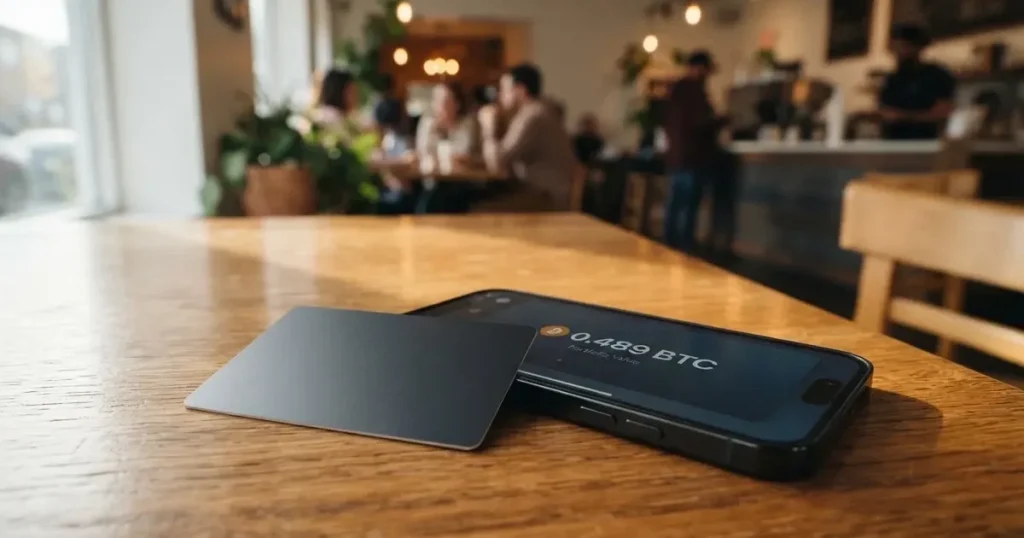
A crypto card is only as good as the boring details: where it works, what it costs on a Tuesday morning, and what happens when something goes wrong. I went through HoneyCoin’s public pages, its app listing, recent company news and the third-party sources I could find, and I want to walk you through what I learned so you can decide whether the card makes sense for your situation. The product is a Visa prepaid card, USD-denominated, and you fund it with mobile money, a bank transfer, a regular card, or stablecoins on-chain. HoneyCoin is best known as a payments and on/off-ramp company based in Nairobi, and the card is one of several products it runs.
The card fits a specific reader: someone in Africa or an emerging market who already has crypto or stablecoins and wants a Visa they can spend at the supermarket, online or through Apple Pay or Google Pay. If you are in a country where getting an ordinary bank card is hard, or where local cards are rejected online, that is exactly the use case HoneyCoin is built for. If you live somewhere with easy access to a normal Visa or Mastercard debit, the reasons to pick HoneyCoin thin out quickly.
Conditions are current as of October 28, 2026.
Verdict
HoneyCoin earns 6.7 out of 10 in my scoring. That is a respectable, middle-of-the-pack score for a crypto card, and it reflects a real tension: the product is well-positioned for its target audience, but the disclosure on some everyday details is thin, and the company has had at least one serious incident that any reader should know about before signing up.
Here is how the score breaks down:
| Criterion | Mark | Why |
|---|---|---|
| Who can get it | 8/10 | Accepted wherever Visa is accepted; “live in 45+ countries”; no public list, and “some countries, merchants, and MCCs may be restricted” |
| Cost | 7/10 | Card issuance, monthly and yearly fees are free; USD payments cost 0%; FX spread up to 3% in other currencies; crypto conversion fee is not stated |
| Top-up options | 6/10 | Mobile money, bank transfer, card, on-chain stablecoins; the token table lists only USDC on Base, with USDT also mentioned in places |
| Reliability and complaints | 5/10 | The company is HoneyCoin, Inc. in Nairobi; the issuing bank is not named; consumer card payments were paused for months in 2025 after card-testing attacks; the App Store rating is essentially zero data (1.0 from 1 rating) |
| Everyday use | 7/10 | Virtual card available instantly, physical card in about 2-3 weeks; Apple Pay and Google Pay supported; ATM fee not disclosed |
| Total | 6.7/10 | A practical card for a specific reader, weighed down by gaps in disclosure and a recent reliability scare |
The card suits you if you are in an emerging market, already use stablecoins, and want a Visa you can load in your local currency through mobile money or with USDC. It does not suit you if you want a feature-rich metal card with cashback, if you want every fee listed upfront, or if you prefer a card from a household-name issuer whose banking partner is publicly named.
Who HoneyCoin will give the card to
The card is accepted wherever Visa is accepted, which is the easy part of the answer. The harder part is geography, and here the disclosure is sparser than I would like. HoneyCoin says it is “live in 45+ countries” and that “some countries, merchants, and MCCs may be restricted”, but the public pages do not list which countries those are, which merchants are off-limits, and which merchant category codes (MCCs) the card declines. If you are reading this from a specific country, you will need to confirm with support whether your country is on the list before you go through identity verification.
Identity verification is required before you can use the card. The card pages state that documents and proof of address are part of the process; the specific documents, the minimum age and the different KYC tiers (if there are any) are not stated publicly. In practice that means you can expect a government-issued ID and something showing where you live, and you should not be surprised if the company asks for more later, especially if you start moving larger amounts.
The card is denominated in US dollars. The platform’s funding layer holds a USDC balance, and the card spends from that balance. If you live outside the United States, the card will still be a USD card; HoneyCoin handles the conversion to local currency at the point of sale and applies an FX spread of up to 3% (more on that in the costs section).
How to get the card
Sign-up is through the HoneyCoin app. You create an account, complete identity verification, and once that is approved you can request a card. HoneyCoin offers both a virtual Visa and a physical Visa. The virtual card activates instantly once it is issued; the physical card takes about 2 to 3 weeks to arrive. The cost of the physical card, if any, is not stated on the public pages, so I would not assume it is free even though the digital issuance and the monthly and yearly fees are listed as free.
Apple Pay and Google Pay are supported, so you can add the virtual card to your phone wallet right away and start tapping to pay before the plastic arrives in the post. The company describes itself as licensed in the US, Canada, the EU and “several African jurisdictions”, and the issuing bank is referred to only as “licensed partners” without naming the partner. For a card product, that is a meaningful gap: in a category where programme managers and issuers are different companies, knowing who actually holds the banking licence matters for your protection if the programme ever has problems.
Fees: what the HoneyCoin card really costs
The headline is friendly: the card is free to issue, with no monthly fee and no yearly fee. USD transactions cost 0%. On the surface that is a strong proposition, especially compared to cards that charge €5 or €10 a month.

The less friendly part is what happens when your payment is not in USD, or when you convert crypto to load the card. The card charges a foreign-exchange spread of up to 3% on transactions in currencies other than USD. That is not a separate line-item fee, it is built into the exchange rate you see on the receipt, which is how most prepaid cards present their FX margin. The crypto conversion fee (the cost of turning your USDC into USD balance on the card) is not stated, so I cannot tell you whether that is a free conversion, a small spread, or a meaningful chunk. This is the kind of detail I would want to see clearly before relying on the card for regular spending.
Cash withdrawal from an ATM is not described on the public pages, which is another gap. Many crypto cards waive ATM fees up to a monthly limit, or charge a flat fee plus a percentage, or simply do not support ATM use at all. With HoneyCoin, you should treat ATM use as “check with the app first” until you have a clear answer.
The card has default limits of 10,000 USD per day for both spending and loading, and these “increase with usage”, meaning the company will raise your limits if you demonstrate a consistent history. You can also set lower custom limits in the app, which is a useful control if you want to cap your own exposure on a daily basis.
Here is a summary of the costs and limits as I found them:
| Fee or limit | Amount |
|---|---|
| Card issuance | Free |
| Monthly fee | Free |
| Yearly fee | Free |
| USD transactions | 0% |
| FX spread (other currencies) | Up to 3% |
| Crypto conversion fee | Not stated |
| ATM fee | Not stated |
| Daily spending limit | 10,000 USD (increases with usage) |
| Daily loading limit | 10,000 USD (increases with usage) |
| Card tiers | Single tier; limits scale with usage |
To put the FX spread in real terms: imagine you are paying a hotel bill in Thailand for 30,000 THB. At an interbank rate of roughly 35 THB to 1 USD, that is about 857 USD. A 3% FX spread adds about 26 USD to the cost of the stay, which is a meaningful expense on a longer trip. For a coffee in London, the same 3% on a £4 cup is about 15 cents, which most readers will not notice. The spread matters most on large foreign-currency transactions and on recurring subscriptions priced in a non-USD currency.
Top up: how to load the HoneyCoin card
The card supports four top-up methods, which is one of the product’s strengths and one of the reasons it is positioned for emerging markets.

- Mobile money. In countries where mobile money is the dominant payment rail (much of East Africa, parts of West Africa and South Asia), this is the most practical way to fund the card. HoneyCoin’s home market of Kenya is one of the world’s most active mobile-money markets, so this is the use case the product was designed around.
- Bank transfer. A standard bank transfer into your HoneyCoin account, which then tops up the card.
- Card. You can top up from another Visa or Mastercard, which is convenient for moving money in but typically the most expensive route because of issuer cash-advance fees on credit cards.
- On-chain stablecoins. You send crypto from your own wallet to a HoneyCoin deposit address, and the platform credits the equivalent to your card balance. The token table on the public site lists only USDC on Base as the supported token, which is a narrower list than many competitors; the FAQ also mentions USDT, and the funding section references “select other assets where enabled”, so the supported list may be wider in practice than the headline table suggests.
A few things to flag on the on-chain route. The blockchain charges a network fee (gas) for the transfer, and that fee is set by the network, not by HoneyCoin. On Ethereum mainnet, gas can be many dollars during busy periods; on Base, fees are typically a few cents. If you send a stablecoin on a network HoneyCoin does not support, or to an address belonging to a different network, the deposit can be lost, because crypto transfers are irreversible and manual recovery is not guaranteed. The single most common mistake in this category is sending USDT on Tron to a USDC-on-Base address; do not be that person.
The fees for the top-up methods, the minimum top-up amount and the question of who pays the network fee are not stated. In practice I would expect mobile money to have a small percentage fee, bank transfer to be free or near-free, card top-up to cost the most, and on-chain to depend on the network. Until the company publishes these numbers, treat the “free” headline as referring to the card itself, not necessarily to the funding rail.
The platform also offers “payout to local accounts or wallets on demand”, which is about getting money out of HoneyCoin rather than loading the card. The card-balance withdrawal fee (if you wanted to unload card balance back to a bank or wallet) is not stated.
Paying with HoneyCoin day to day
In normal use, the card behaves like a prepaid Visa. You tap to pay in shops through Apple Pay or Google Pay, or insert or swipe the physical card. Online, you type in the card number, expiry and CVV like any other Visa. Because it sits on the Visa network, it works at any merchant that accepts Visa, subject to the country and MCC restrictions the company does not publish.
There is no cashback or rewards programme stated. If you are weighing HoneyCoin against cards that offer 1% to 5% back on spending, that is a clear difference in your favour for the other cards. The company’s focus appears to be utility, not rewards.
The mobile app is the central tool. HoneyCoin, Inc. publishes “Peer – the everything app.” on the US App Store; as of 2026-10-21 it had a 1.0 average from 1 rating, which is essentially no data. Google Play was not read in the same way. App Store ratings are not a perfect signal (early users and unhappy users are over-represented), but a 1.0 from a single rating tells me almost nothing about the app’s quality. If you can, ask someone in your country who uses HoneyCoin about the app experience before you commit.
A few practical points on daily use:
- Online merchants sometimes decline prepaid cards or cards issued outside the buyer’s country, because the BIN lookup reveals the issuer country. If you are paying for an online service from a country HoneyCoin’s card is not local to, expect occasional declines.
- Address Verification Service (AVS), which lets merchants check your billing address against the issuer’s records, is mainly available in the US, Canada and the UK and is generally unavailable for cards issued elsewhere. That can cause legitimate-looking orders to be declined.
- 3-D Secure (Visa Secure) may prompt you with an extra check on online payments. The issuer approves, challenges or declines based on its risk model, and the experience is usually smooth on a phone.
- A declined authorisation can leave a temporary hold on your balance for several days (often up to 7), even though the money was not actually spent. This is industry-wide, not HoneyCoin-specific.
What can go wrong with the HoneyCoin card
This is the section I find myself writing more carefully than the others, because there is one specific incident in the company’s recent past and a few general risks that any reader should weigh.
The 2025 consumer-app incident. In August 2025 HoneyCoin published a company blog post about a $4.9 million funding round, the card’s availability in 45+ countries, and a serious operational issue: card payments on the consumer app had been paused for months because of card-testing attacks. Card-testing is a form of fraud where criminals try many small authorisations on a merchant or platform to figure out which card numbers are valid, and it tends to force a programme to slow or stop new card activity while the operator tightens controls. A multi-month pause on consumer card payments is a meaningful disruption, and it is the kind of event that pushes the reliability score down to 5/10.
No public reviews to weigh. There is no Trustpilot page for HoneyCoin that I could find (the search returned results for an unrelated “Honeycard”), and I did not find substantive Reddit threads either. That absence is two-sided: it could mean the product is too small or too new in English-language markets to have a review footprint, or it could mean people are not posting publicly about their experience. Either way, the lack of third-party review data is itself a signal, and not a positive one.
The issuing bank is not named. HoneyCoin describes the issuer as “licensed partners” without naming the bank. In the EU, issuers are typically visible in the card terms; in the US, prepaid programmes are run by banks like Lead Bank, Pathward or Sutton Bank, and the BIN identifies the issuer. If you want to know which bank is actually behind the card and which regulator supervises it, you have to ask.
Custodial risk. HoneyCoin is a custodial platform. When you load the card, you are trusting HoneyCoin (and through it, the issuing bank and any partners) to hold your balance. The company says “client money is safeguarded and held completely separate from ours” and that it uses PCI DSS Level 1 controls, plus 2FA on login and on privileged actions. That is reassuring language and a strong security certification, but it is not a guarantee. The history of the crypto industry is full of custodial failures: Mt. Gox (about US$350 million stolen between 2011 and 2014), Coincheck (about US$400 million in 2018), and the Ronin Network bridge hack (US$625 million in 2022). With a self-custody-linked card the funds stay in your own wallet until the moment of payment, and you keep the private key. With a custodial card like HoneyCoin’s, you accept the counterparty risk in exchange for the convenience of mobile-money funding and a hosted card programme.
On-chain risk. Even on the on-chain funding route, you face the usual risks: sending on the wrong network, sending to the wrong address, and clipboard-hijacking malware that swaps copied addresses. The card provider is not responsible for these errors in most cases.
Regulatory risk. Visa can suspend card programmes. In November 2022 Visa terminated its global agreements with FTX and the FTX US debit card was wound down; in 2018 Visa suspended WaveCrest in Europe, closing every WaveCrest-issued programme. None of this is specific to HoneyCoin, but it is the category’s structural risk, and a reader in 2026 should treat any crypto card as a programme that could be paused or shut down with notice.
Card freeze and disputes. The public security page does not mention an instant card-freeze feature, and the dispute process is not stated. If your card is lost or stolen, you want to be able to freeze it from the app in seconds; if a transaction is wrong, you want a clear dispute path. I would test both of these as soon as you receive a card.
Support. 24/7 support is described for institutional and corporate clients. For retail users, the listed contacts are [email protected] and [email protected], neither of which sounds like a first-line retail help channel. Expect to rely on in-app support for retail issues.
What to take instead of the HoneyCoin card
HoneyCoin is not the only option in the stablecoin-to-Visa space, and three alternatives cover different priorities. I will walk you through each one briefly so you can compare.
Whop Cards (5.2/10) is available to consumers in 31 US states and to businesses in 41 states, with a published list of unsupported countries that includes Belarus, China (mainland), Cuba, Hong Kong, India, Iran, Iraq, Israel, Myanmar, Nepal, Nicaragua, North Korea, Russia, Syria, Turkey, Ukraine, Venezuela and Vietnam. The card is a Visa, and the product is built around a Whop balance funded by stablecoin collateral from a linked wallet. The headline perk is 5% cashback at select merchants (currently Uber, with more planned). The trade-off is geographic coverage: outside the US the card is not available. If you are in the US, want cashback, and can live with the state list, Whop is worth a look; if you are in an emerging market, it is not an option.
Stella (6.5/10) is a Visa product (virtual and physical) accepted at “over 40 million VISA merchants globally”. It is a custodial setup where you deposit crypto into the account and the card tops up automatically. The official pages do not list supported countries explicitly and route US and European users through affiliates, with a hard bar on users under economic sanctions programmes. There is no cashback stated on the card product, although there is a separate yield product. If you are in a country where you can verify access with support and you want a custodial Visa with crypto funding, Stella is comparable to HoneyCoin on the utility side, with a different (and more limited) published country story.
UniFi Card (4.7/10) is a prepaid Visa debit card issued by Lead Bank, with the app supporting send-money routes to the Philippines (PHP), Mexico (MXN) and the eurozone (EUR), and recent release notes mentioning Colombia, Brazil (PIX) and the UK (GBP). The card spends from a USD balance and the app can receive funds via ACH, wire, SEPA (IBAN) or SPEI (CLABE), plus a USDC wallet. The listing claims “3% rewards on balances”, although the card’s own cashback is not stated. The score is held down by limited public information and a less mature product. UniFi fits if you want a US-issued prepaid Visa and your funding flows match ACH/SEPA/SPEI; it is a smaller, less documented option.
Across the three, the pattern is similar: each card is a prepaid Visa (or Visa-like) on the same network, with crypto or stablecoin funding, a different feature mix and a different geographic story. HoneyCoin’s edge is the mobile-money funding rail, which the alternatives do not match.
Who I would recommend the HoneyCoin card to
I would recommend the HoneyCoin card if you are in one of the 45+ countries it supports, you already have or are comfortable holding USDC (or USDT) on a network HoneyCoin accepts, and you want a Visa you can load through mobile money or a bank transfer. The card is a clean fit if your local banking is unreliable, if online merchants reject your domestic cards, or if you simply prefer to hold and spend stablecoins without converting to a local bank account first.
I would not recommend it if you live in a country with strong, well-priced traditional banking and you already have a Visa or Mastercard debit. The FX spread of up to 3% and the missing details on the crypto conversion fee mean the card is not the cheapest way to spend, and there is no cashback to offset that. I would also hesitate if you are uncomfortable with a custodial product whose issuing bank is not named publicly, or if your spending depends on resolving disputes through a published process (the dispute process is not stated). And if you want the reassurance of thousands of public reviews, HoneyCoin is not there yet: there is no meaningful Trustpilot or Reddit footprint to lean on, and the App Store data is essentially zero.
In short, HoneyCoin is a useful tool for its intended audience and a less obvious choice for everyone else. If you fit the intended audience, the card can do real work for you. If you do not, there are better-priced or better-disclosed alternatives on the market.
Frequently asked questions
What is the HoneyCoin card?
The HoneyCoin card is a prepaid Visa card denominated in US dollars, issued through a partnership with a licensed card issuer, and funded through the HoneyCoin app. The platform holds a USDC balance and the card spends from that balance. HoneyCoin is a payments and on/off-ramp company headquartered in Nairobi, and the card is one of its products.
How does the HoneyCoin card work?
You create an account, complete identity verification, and request a card. You load the card with mobile money, a bank transfer, another card, or on-chain stablecoins (USDC on Base is the headline-supported token, with USDT also mentioned). When you pay, the card converts the USD balance to the merchant’s currency at the prevailing rate, applying an FX spread of up to 3% on non-USD transactions.
Is HoneyCoin a bank?
No. HoneyCoin is a payments and crypto on/off-ramp company, not a bank. The card is issued by a licensed partner bank that is not publicly named. The company describes itself as licensed in the US, Canada, the EU and several African jurisdictions, but the actual issuer of the Visa programme is not disclosed on the public pages.
Who owns HoneyCoin?
HoneyCoin, Inc. operates the product. The starting data references Quicknode Technologies Ltd as a related entity, and the company is headquartered in Nairobi, Kenya, at The Cube on Riverside Drive. The company was founded in 2021. In August 2025 HoneyCoin announced a $4.9 million funding round.
Is the HoneyCoin card available in my country?
HoneyCoin says it is “live in 45+ countries” but does not publish a full country list, and notes that “some countries, merchants, and MCCs may be restricted.” The practical answer depends on your country, your citizenship and the specific merchant categories you want to use. You will need to confirm with HoneyCoin’s support before going through identity verification.
How do I apply for the HoneyCoin card?
You apply through the HoneyCoin app: create an account, submit the required identity and address documents, and once verification is approved, request a virtual or physical card. The virtual card is issued instantly; the physical card takes about 2 to 3 weeks to arrive.
Does the HoneyCoin card require KYC?
Yes. Identity verification is required before you can use the card. The card pages state that documents and proof of address are part of the process, but the specific documents, the minimum age and the various KYC levels (if any) are not stated on the public pages.
How do I add the HoneyCoin card to Apple Wallet or Google Pay?
After your virtual card is issued, open the Apple Wallet or Google Pay app on your phone, choose to add a card, and either scan the card details from the HoneyCoin app or type them in manually. The tokenised card then works for contactless payments in shops and in supported apps.
How do I top up the HoneyCoin card?
You can top up with mobile money, a bank transfer, another card, or on-chain stablecoins (USDC on Base is the supported token in the token table, with USDT also referenced). The platform’s other top-up fees, minimum amounts and the question of who pays the network fee on the on-chain route are not stated publicly.
Is the HoneyCoin card safe?
The platform uses PCI DSS Level 1 controls, holds client funds separately from its own and supports 2FA on login and on privileged actions. The card is custodial, which means you are trusting HoneyCoin and its issuing partner to safeguard your balance; the company has also disclosed a months-long pause on consumer card payments in 2025 due to card-testing attacks. There is no public Trustpilot or Reddit footprint, so the third-party review data is thin.
Money-app cards – cryptocardselect
Content created by the «cryptocardselect» team