
A Visa debit card you fund with stablecoins, priced on the conversion side
 Available in US
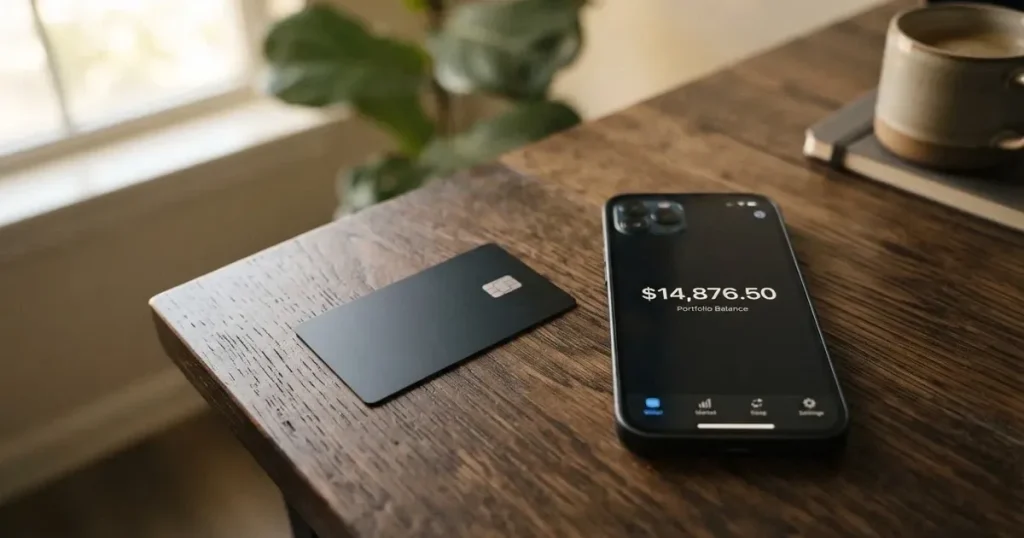
The MaaarPay card is a digital Visa that you load with crypto — USDT or USDC, most obviously — and then spend like an ordinary debit card, in shops, online or through Apple Pay and Google Pay. The company behind it, MAAAR PAY FZCO, is a Dubai free-zone entity that describes itself as a technology service provider, not a bank, with the card issued under a Visa licence by a third-party institution called Third National. If you have ever been turned away from a normal bank account, or you simply live where getting one is awkward, this is the pitch in a nutshell: a payment card number that arrives in your app almost immediately and spends a crypto balance you control the timing of.
That is the appeal. The friction is real too, and it sits mostly in one place: the cost of moving crypto into spendable money. The card’s public pages disclose a foreign-exchange fee of up to 2% and a so-called Cross Border Fee of up to 3%, but they do not publish an issuance price, a monthly fee, or what it costs to convert the crypto itself. So the number you would most want before signing up — the all-in cost of turning $200 of USDT into $200 of groceries — is the number the card does not put on the page. You can get the app, you can get the card in seconds; the arithmetic you mostly have to assemble yourself.
The conditions described here are current as of October 28, 2026.
Verdict: 6.7 out of 10
A 6.7 is a “works, with caveats” — not a warning, not an endorsement. For the specific person who already holds stablecoins, wants a Visa number today without a traditional account, and is comfortable watching fees line by line, the MaaarPay card is a genuinely useful tool. For everyone else, the same tool comes with a cost side that stays partly hidden and a physical card that does not yet exist.
Let me show the working, criterion by criterion, because a single number tells you less than the shape behind it.
| Criterion | Mark | Why |
|---|---|---|
| Who can get it | 8 / 10 | Available in 150+ countries; no country list published; US citizens are excluded and the terms lean on OFAC sanctions |
| Cost | 4 / 10 | FX fee up to 2%, Cross Border Fee up to 3%; issuance and crypto-conversion charges not disclosed |
| Top-up options | 8 / 10 | USDT, USDC and other supported crypto (BTC listed too); stablecoin collateral on Ethereum, Polygon, Optimism, Arbitrum |
| Reliability and complaints | 8 / 10 | MAAAR PAY FZCO in DMCC, Dubai (licence DMCC-981512); issuer named as Third National under a Visa licence; no complaints found |
| Everyday use | 6 / 10 | Instant digital card, Apple Pay and Google Pay, freeze in the app; physical card and ATM withdrawals marked Coming soon |
| Total | 6.7 / 10 | A stablecoin-to-Visa card for users who fund a digital card with USDT or USDC |
The two halves of that table tell the story. Where the card is about access and reliability — who can get it, how it behaves, what you can fund it with — it scores well. Where it is about what a payment costs you in the moment, it scores poorly, because the disclosure is thin. That imbalance is the whole review in miniature.
The card suits you if you are funding a digital Visa with USDT or USDC, you want a card number in minutes rather than a mailed plastic card in weeks, you mostly spend online or through a phone wallet, and you are the kind of person who notices a fee line. It does not suit you if you need a physical card today, if cash withdrawal from an ATM is part of your routine, if you want a known monthly price, or if you would rather not think about which blockchain your deposit is riding on.
Will they give you the card?
The short answer is: probably yes, unless you are a United States citizen, and the card says so plainly enough that you can rule yourself in or out before you spend an afternoon on it. MaaarPay describes the card as available in 150+ countries. That is a wide claim, but it is a claim — the specific countries are not listed on the public pages, so “150+” is the level of detail you get.
The one firm exclusion is citizenship. The terms require users to attest that they are not a United States citizen, and the terms refer to OFAC sanctions. That distinction matters more than it first appears. Sanctions screening in this industry is usually applied to citizenship and country of birth as well as to where you live, which is why a resident of, say, Germany could still be told no if their passport is from a sanctioned country. The card does not spell out how it treats citizenship versus residence — that specific line is not stated on the pages I could read — so if your situation is one where the two differ, you are in genuinely uncharted territory and should expect to find out by trying.
Two practical notes. First, “150+ countries” is a marketing-shaped number; the absence of a published country list means you cannot pre-check eligibility from a list, only from the application form’s verdict. Second, if your own country has its own rules on crypto cards, that sits on top of the card’s own rules — this review tells you what MaaarPay states, not what any local authority permits.
So the answer to “will they give me the card?” is: if you are not a US citizen and you clear identity verification, the card’s own rules point to yes. The verification itself is where the next section picks up.
How to get it
The sign-up is described as including “secure identity verification.” That is the card’s own phrasing, and it is about as precise as the public pages get. Which documents are required, whether proof of address is among them, and what age floor applies are not stated on the pages I read. There is an AML & KYC Policy published at a separate address on the site, which is where the detail presumably lives, but I did not read it, so I am not going to guess at its contents.
That gap is worth a moment of your attention. Identity checks at regulated institutions are not arbitrary: in the EU, customer due diligence normally covers name, address, date of birth, nationality and identity documentation, a sanctions check, the purpose of the relationship, and whether you are a politically exposed person. In the US, the customer identification programme requires name, date of birth, address and an identification number. MaaarPay’s card is issued under a Visa licence by a named third-party issuer, so it sits inside that kind of framework whether or not the marketing page spells it out. Which KYC tier you land in is not stated either — whether some applicants get a lighter check than others is simply not something the public pages answer.
What you do get, in concrete terms, is fast. The digital card is instant in the app. The physical card is marked “(Coming soon)” — so at the time of writing, plastic is a promise, not a product. The card runs on Visa, and the card’s own terms describe the cards as issued by third-party licensed institutions rather than by MaaarPay itself. One more conversion fact to file away for later, because it explains a fee: foreign transactions are converted to USD by the card association, which is the machinery behind the cross-border charge discussed in the costs section.
In short: the getting-it part is the easy part. Apply, verify, and the card number is in your app. The hard part is what it costs to keep it full.
Fees: what it really costs
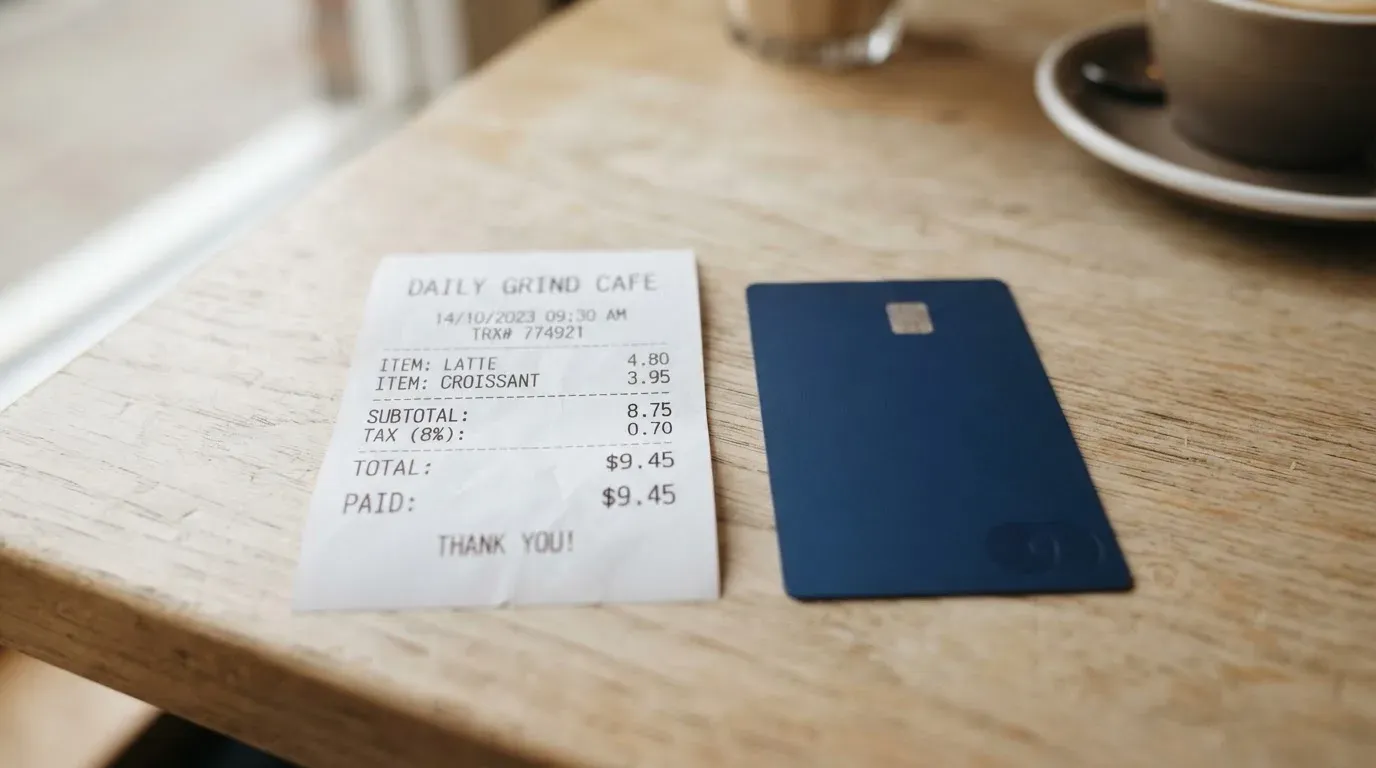
This is where the card is weakest, and I want to be direct about why. The card discloses what it charges in the two places it can — the currency layer — and says nothing in the two places you would most want — the card layer and the crypto layer. I cannot tell you what the card costs to issue, because the price is not stated. I cannot tell you its monthly cost, because that is not stated either. And I cannot tell you what converting USDT into spendable balance costs, because the crypto conversion fee is not stated. What I can give you is the fee schedule as published, and the shape of an ordinary day’s spending on top of it.
| Fee or limit | What the card says |
|---|---|
| Issuance fee | Not stated |
| Monthly fee | Not stated |
| Foreign exchange fee (non-USD) | Up to 2% |
| Cross Border Fee | Up to 3% |
| Crypto conversion fee | Not stated |
| Late payment fee | Up to $40 |
| Returned payment fee | Up to $29 (one section of the terms says $00.00 — the card’s own pages conflict) |
| Interest | 0% APR for now |
| ATM withdrawal fee | Not stated; ATM withdrawals described as coming soon |
| Cash advances and balance transfers | Not available |
| Purchase limits | No amounts published; issuer may cap by type, number and dollar amount |
| Cash-like transactions | Restricted (money orders, crypto purchases, gambling) |
Read that table and you see the pattern: every “not stated” is a place where the cost might be zero, or might not be. The card publishes its limits on the FX and cross-border side because those are regulated, visible numbers; the parts it does not publish are the parts that would tell you what a dollar of spending really costs in practice.
Now, three everyday payments, to make the percentages feel like money rather than percentages. I am not inventing rates — I am applying the published figures to ordinary situations so you can see which line item bites.
- Buying coffee in a local currency. You are outside the US, the merchant charges you in, say, euros or naira, and the card association converts to USD. That is the foreign exchange fee, up to 2%. It is the quiet one: it does not feel like a fee, it just quietly lowers what arrives.
- A purchase that crosses a border — an online merchant billed in a different currency from your balance, or a transaction the card classifies as cross-border. The Cross Border Fee, up to 3%, is the one that can turn a cheap purchase expensive. Combined with the FX fee, a badly-timed payment can carry both.
- Paying with the crypto itself. This is the real number, and it is the one the card does not print. Converting USDT or USDC into the balance the card spends draws a conversion charge that is not stated, plus the on-chain network fee for your deposit, which the blockchain charges rather than the card provider. Add the two hidden items to a stated 2%–3% and you can see why I will not pretend to a single total.
Two smaller money facts to keep: a late payment runs up to $40 and a returned payment up to $29 (with the card’s own pages disagreeing about that one figure), while interest is 0% APR for now — a “for now” that is doing honest work in that sentence. And a structural point about limits: the card publishes no purchase amounts, saying only that the issuer may cap purchases by type, number and dollar amount. Some caps are normal and sensible; that they are not quantified means your real ceiling is whatever the issuer decides, not whatever the marketing suggests.
How to Top up the card
Topping up is the part of this card that is genuinely good, and it is good in the way you would want: you send crypto to the card’s wallet, and the card converts it into the balance you spend.
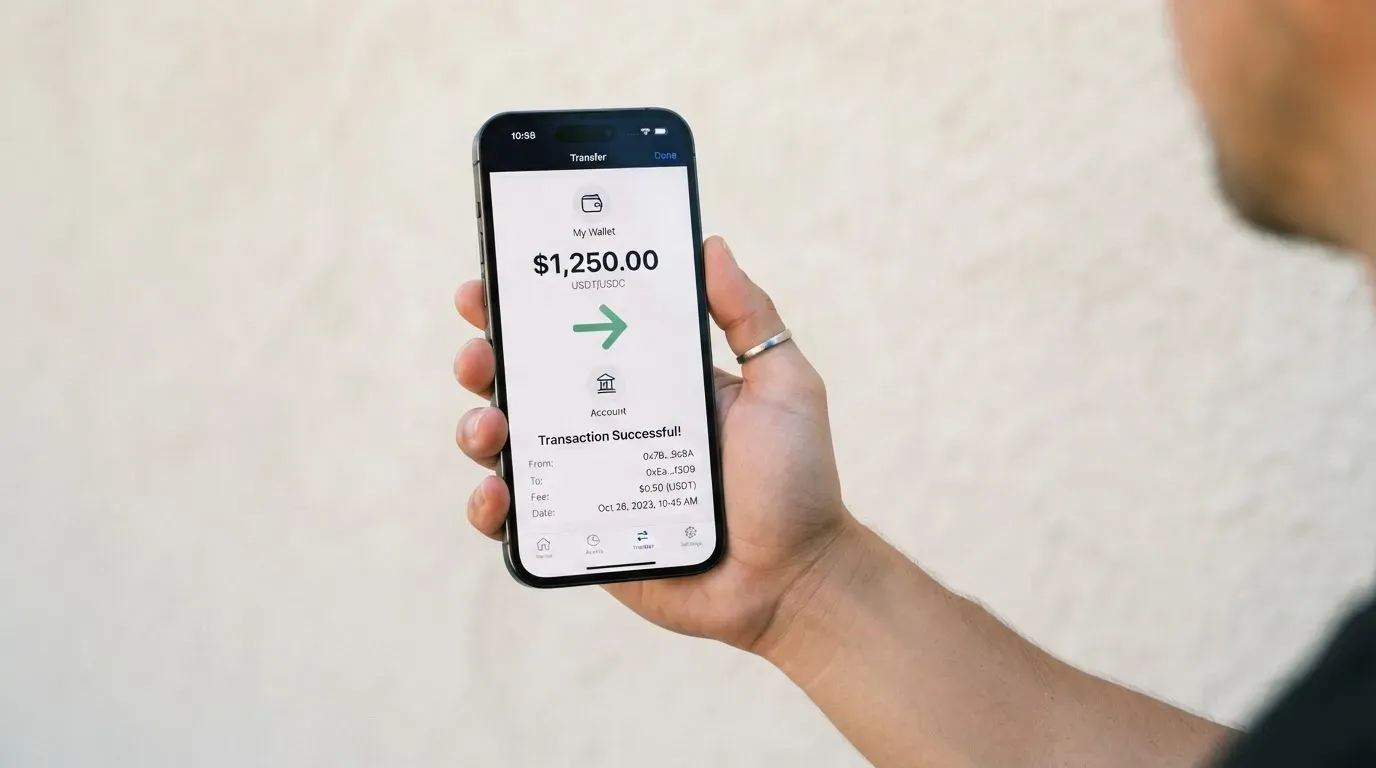
The wallet is loaded with USDT, USDC or other supported crypto; BTC is also listed on the home page. Card collateral is held in stablecoins on Ethereum, Polygon, Optimism and Arbitrum — those are the networks the card names. Which networks are supported for your particular deposit is not stated on the main pages; the deposit instructions live in a help-centre article called “Deposit crypto,” which is the document to consult before you transfer anything.
And here is the warning that deserves more space than a fee line. Blockchain transfers are irreversible. A deposit sent on a network the card provider does not support, or sent to an address belonging to a different network, can be lost outright or need a manual support recovery with no guarantee. This is not a card-specific quirk; it is how the rails work. The same applies to a wrong address generally. So the single most valuable habit with this card is to send a small test amount first, on a network you have confirmed the card supports, and only then send the rest. A few cents of patience here can protect a meaningful balance.
On the other side, the wallet supports withdrawing crypto to an external wallet, with a linked help article; the withdrawal fees were not read, so I will not quote them. One term to file away now rather than discover later: the issuer may suspend or cancel the card “with or without cause,” and what happens to a balance at closure is not stated. Programme closures in this category typically run a sequence — a notice period, then loading and spending stop, then users are asked to withdraw what remains — but the card’s own position on your balance at the end is the thing the terms leave open.
Paying with it every day
Day-to-day use is where this card is at its most convincing, and also where its “coming soon” labels start to matter.
The digital card works with Apple Pay and Google Pay. That covers the majority of ordinary spending for most people: a tap in a shop, a checkout on a phone, a subscription billed online. You add the card to your phone wallet and use it as you would any other card — the number is tokenised to your device, so what sits on your phone is not the raw card number.
Two features make the day-to-day feel safe. You can freeze and unfreeze the card at any time, straight from the app, which turns the whole card off in an instant if it goes missing. And the app is on both Google Play and the Apple App Store; the ratings on those stores were not read, so I am not going to rate them for you.
What you cannot do yet is hold plastic or take out cash. The physical card is “(Coming soon)” and ATM withdrawals are also marked coming soon, though the card advertises ATM withdrawals “in over 150 countries” for when they arrive. The terms make the position on borrowing unambiguous: cash advances and balance transfers are not available. So if your week includes withdrawing local currency from a machine, this card does not cover that yet.
Certain transactions are restricted by policy rather than by hardware: cash-like transactions — money orders, crypto purchases, gambling — are limited. This is common across the category. Merchants classify a business with a four-digit merchant category code, and gambling, for instance, has its own code that many issuers block on specific cards. Some shops and websites also treat a prepaid or foreign-issued card more warily and decline it, and a card issued in one country can look “foreign” to a merchant in another.
And when something goes wrong with a payment, the route is defined: resolve with the merchant first, then start a chargeback in your account, and report within 60 days of the transaction posting. The terms describe AAA arbitration and waive class actions. That 60-day clock is the one number to remember here — it is short enough to miss if a disputed charge sits unnoticed on a statement.
What can go wrong
Nothing I found reads as alarming, and that is worth saying plainly, because absence of complaints is not the same as presence of track record. The company details are specific: MAAAR PAY FZCO, in DMCC, Dubai, Licence No. DMCC-981512, Reg. No. DMCC202616, with a subsidiary MAAAR CIRCLE PAYMENTS LTD. in British Columbia, Canada (BC1585437). The company describes itself as a “technology service provider and does not provide banking or money transmission services,” the issuer is defined as “Third National” under a Visa licence, and BANEX MICROFINANCE BANK LIMITED is named for Nigerian users. That is a real structure with real named parties, not an anonymous logo. I found no complaints, and no Trustpilot page either.
What the pages claim about security is real but high-level: “advanced security protections,” the freeze-and-unfreeze control, secure virtual card details, and institutional-grade SaaS infrastructure. Two things the card does not specify are two-factor authentication and how customer funds are safeguarded — both are stated as not stated. That second one is the one to ask about, because in this category the difference between “your crypto is with a custodian” and “your balance is safeguarded in a segregated account” is the difference between a question of trust and a question of law.
The risks I would actually flag, in rough order of how likely they are to affect you:
- The cost you cannot see. The unstated crypto conversion fee, sitting on top of a stated 2%–3% on the currency side. This is the everyday risk, and it is a budgeting one.
- A transfer on the wrong network. Irreversible, and up to you. Test first.
- A balance when the programme closes. The issuer may suspend or cancel “with or without cause,” and your balance at that moment is not stated. Programmes in this space have closed before; closures typically mean loading stops, spending stops, and you are asked to withdraw.
- Custody risk, if your crypto sits with a provider. The wallet model here is custodial: control of the crypto belongs to whoever holds the credentials, so you are trusting the provider completely. Transfers are irreversible and a stolen key has no recovery path. Custodial platforms have a real history of failure — Mt. Gox, Coincheck and the Ronin Network bridge are the names that come to mind.
- Being abroad with a card that looks foreign. Merchants can look at the issuer country encoded in the card number and decline or scrutinise a prepaid or foreign-issued card. Online, some of these declines trace to address-verification checks that are mainly a US, Canada and UK thing and often unavailable on a foreign-issued card.
One structural point about who stands behind the licence: Visa and Mastercard license their issuers and can suspend a programme — they do not issue crypto cards to consumers themselves. So the entity on your statement and the brand you recognise are not the same entity, and when you want to know who you are actually dealing with, the answer is the named issuer, not the card’s front end.
What to take instead
If the fee disclosure is the thing that pushes you away — and for many readers it is — the honest comparison is not “which card is better” but “which card tells you more.” Three alternatives came up in the same research, and each answers the transparency problem a little differently. All scores are on the same ten-point scale, so you can line them up against the 6.7 above.
| Card | Score | What stands out |
|---|---|---|
| MaaarPay | 6.7 / 10 | Stablecoin funding on Ethereum, Polygon, Optimism, Arbitrum; up to 2% FX and up to 3% cross-border; physical card and ATM coming soon |
| Cardex | 5.6 / 10 | One crypto card, 200+ countries; runs on VERVE, Visa, Mastercard and UnionPay; an “AI-Powered Conversion Rate” that picks a rate at the moment of spend; no fee percentage published |
| TakeCard | 5.5 / 10 | Virtual card USD 5, physical (Bolivia) USD 20 plus USD 20 shipping; 1% commission per purchase; physical card currently Bolivia-only |
| OkiCard | 6.0 / 10 | Issuance listed as $0 with a starting price of $15 for the virtual card (pages disagree); 3% load fee, 0% USD transaction fee, “no hidden exchange spreads”; USDT on BSC, Ethereum, Tron, Solana |
Two patterns jump out. First, none of these cards publishes a clean all-in cost, which is less a knock on any one of them than a description of the category — with one exception. OkiCard is the only one that quotes a concrete transaction fee (0% on USD) and a concrete load fee (3%) and even claims “no hidden exchange spreads,” though its own issuance pricing is contradictory between pages. Second, the top-up rails are broadly similar: USDT and USDC on the big networks, everywhere.
The differences that should decide it for you:
- If you want the widest country reach on paper, Cardex claims 200+ countries (no exclusions listed), versus MaaarPay’s 150+ with the US-citizen exclusion.
- If you want a physical card you can hold, TakeCard ships one — but currently only to Bolivia, and its pricing is USD 20 plus USD 20 shipping, with the card’s own pages conflicting on the shipping figure.
- If you want the clearest fee story, OkiCard’s published numbers beat the field, even with the page-versus-page inconsistency on issuance.
- If you want the deepest stablecoin network support in the collateral, MaaarPay names Ethereum, Polygon, Optimism and Arbitrum explicitly.
I will not pretend any of these is unambiguously the safer choice. They trade the same unknowns — undisclosed conversion economics, custodial wallets, programmes that can end — for different partial answers.
Who I would recommend it to
I would recommend the MaaarPay card to three kinds of person, and to nobody else.
The first is someone who already holds stablecoins and wants to spend them without first converting through an exchange into a bank account — the card is built for exactly the flow of “funding a digital Visa with USDT or USDC,” and if that sentence describes your week, this is a tool that fits. The second is someone who cannot get or does not want a traditional bank card, and who values a card number in minutes over the reassurance of a plastic one; for them the instant digital card and the freeze control are the features that matter. The third is someone who spends online or through a phone wallet and treats their card as a spending instrument rather than a cash instrument — because Apple Pay, Google Pay and the digital card are the finished part today.
I would not recommend it if any of the following is true. You need a physical card or regular ATM cash. You want a known monthly price and a known conversion cost, because the two most important numbers are the ones the card does not publish. You are a US citizen. You are the kind of person who prefers not to think about which network a transfer rode in on — the fee math is only half the story, the rest is blockchain mechanics and irreversibility. Or you want to hold your crypto yourself and spend from it, because this wallet is custodial: you are trusting the provider with the credentials, and that is a different risk profile from a self-custody card where the funds stay in your wallet until the moment of payment.
If you read the fees section and the top-up section and still want it, you are the person this card is for. If you read them and hesitate, that hesitation is the card’s own disclosure working as intended.
Frequently asked questions
What is the MaaarPay card?
The MaaarPay card is a digital Visa payment card that you fund with crypto rather than from a traditional bank account. You load its wallet with USDT, USDC or other supported crypto, and the card converts that into a spendable balance you use in shops, online, or through Apple Pay and Google Pay. It is issued under a Visa licence by a third-party institution called Third National, with MaaarPay acting as the programme front end.
How does the MaaarPay card work?
You sign up, pass identity verification, and a digital card number appears instantly in the app. You send crypto to the card’s wallet — USDT or USDC, on networks including Ethereum, Polygon, Optimism and Arbitrum — and the balance converts into spendable money. The card then behaves like an ordinary Visa. You can freeze and unfreeze it from the app at any time.
Is MaaarPay a bank?
No. The company behind it, MAAAR PAY FZCO in DMCC, Dubai (licence DMCC-981512), describes itself as a technology service provider and explicitly says it does not provide banking or money transmission services. The card itself is issued by a separate licensed institution, Third National, under a Visa licence. A subsidiary, MAAAR CIRCLE PAYMENTS LTD., is registered in British Columbia, Canada.
Who owns MaaarPay?
The card is operated by MAAAR PAY FZCO, a Dubai free-zone company registered in DMCC under Licence No. DMCC-981512 and Reg. No. DMCC202616. It has a subsidiary, MAAAR CIRCLE PAYMENTS LTD., in British Columbia, Canada (BC1585437). The Visa card programme itself is issued by Third National under a Visa licence, so the brand you see and the entity that issues the card are not the same legal body.
Is MaaarPay available in my country?
The card says it is available in 150+ countries, but it does not publish the list. The firm exclusion is citizenship: the terms require you to attest you are not a United States citizen, and they refer to OFAC sanctions. How the card treats citizenship versus residence is not stated. Some users are also named to a specific bank, BANEX MICROFINANCE BANK LIMITED, in Nigeria.
Can I use the MaaarPay card in my country?
Almost certainly, if you hold it — the card is built for spending in foreign currencies, and the merchant is paid in the local currency automatically, with the card association converting non-USD amounts to USD. The catch is cost: the foreign exchange fee is up to 2% and the Cross Border Fee is up to 3%, so cross-border spending is where the fees concentrate. It works best for online and phone-wallet spending rather than cash.
Does the MaaarPay card require KYC?
Yes. Sign-up includes what the card calls “secure identity verification,” and there is a published AML & KYC policy. The public pages do not state which documents are required, whether proof of address is among them, or what age applies — those details sit in the policy document. Because the card is issued under a Visa licence by a licensed institution, expect standard regulated due diligence rather than a light check.
How do I top up the MaaarPay card?
You send crypto to the card’s wallet — USDT, USDC or other supported crypto, with BTC also listed. Collateral is held in stablecoins on Ethereum, Polygon, Optimism and Arbitrum. Before your first transfer, confirm in the help-centre article called “Deposit crypto” which networks the card supports, and send a small test amount: blockchain transfers are irreversible, and a deposit on an unsupported network or to a wrong address can be lost.
Is the MaaarPay card free?
Partly, and nobody can tell you the whole thing. No issuance fee and no monthly fee are stated — but “not stated” is not the same as “zero.” What the card does publish is a foreign exchange fee of up to 2% on non-USD spending, a Cross Border Fee of up to 3%, a late payment fee up to $40 and a returned payment fee up to $29, with 0% APR interest for now. The crypto conversion fee is not stated.
Is the MaaarPay card safe?
There is no history of complaints I could find, the company publishes a real licence and named issuing institution, and the app lets you freeze the card instantly. But the card’s security claims are high-level: it mentions “advanced security protections” without stating whether two-factor authentication is offered, and it does not say how customer funds are safeguarded. The wallet is custodial, so crypto control rests with the provider — a different risk from self-custody, where the funds stay in your own wallet.
Virtual cards for online use – cryptocardselect
Content created by the «cryptocardselect» team