
A virtual Visa prepaid card for stablecoin balances, with a thin track record and a few open questions
 Available in US
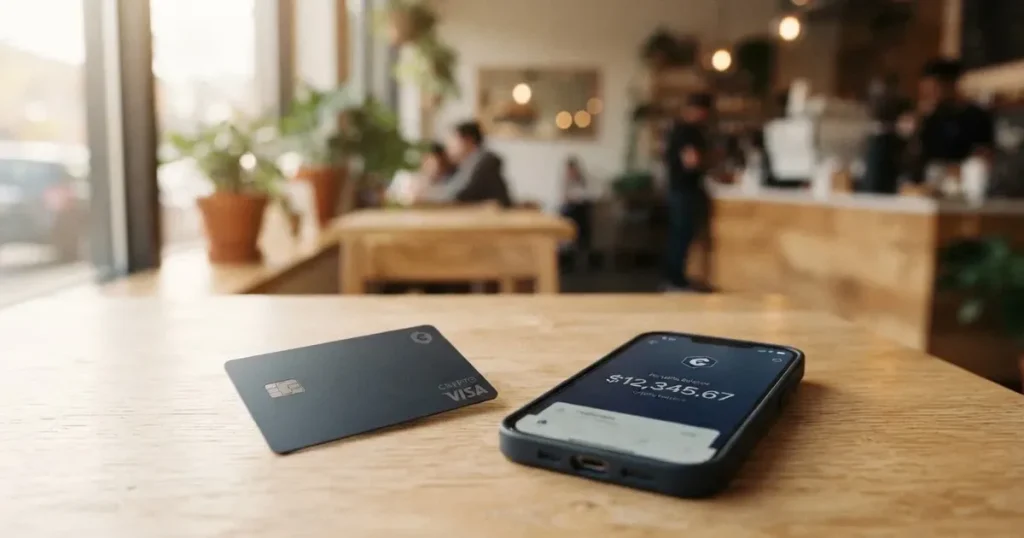
The Trustee Plus card is a Visa prepaid card that draws on a crypto balance held inside the Trustee Plus app. In practice it is a thin product: one virtual card denominated in US dollars, no physical card available today, no ATM access, and a small fee on top-ups. The most interesting thing about it is the funding side. Trustee Plus is built around a non-custodial-style crypto wallet (the separate “Trustee Wallet” product aside) with support for 30 or more coins across networks including TRC20, ERC20, Solana and NEAR, plus fiat on-ramps through Smart P2P and a personal SEPA IBAN. If your problem is getting an ordinary bank card and you already hold stablecoins, the question is whether the card adds enough on top of the wallet to justify the friction of verifying your identity, paying 10 US dollars for a virtual card, and accepting that the legal paperwork behind the card is unusually complicated for a product this small.
The score I land on after going through the official pages, the terms of service and the user reports is 5.7 out of 10. That number reflects a real strength in funding flexibility offset by weakness in everyday use and a regulatory picture that is still in motion.
The conditions described below are current as of October 28, 2026.
Verdict
A quick summary of where the card stands, with the marks I gave each criterion. The total comes out to 5.7 out of 10.
| Criterion | Mark | Why it scores there |
|---|---|---|
| Who can get it | 3 / 10 | Ukrainian residents and citizens regardless of where they live; the published Terms also ask for a “country we support” but never publish that list; news reports say the National Bank of Ukraine barred the Lithuanian operator from offering payment services in September 2025 and new registrations in Ukraine were halted. |
| Cost | 8 / 10 | 10 USD to open the virtual card, no monthly maintenance, 0% on payments, 0.5% on top-up, and a 20 USDT inactivity fee after a year of no wallet transactions. |
| Top-up options | 9 / 10 | Stablecoin wallet in USDC and USDT, 30+ coins and networks including TRC20, ERC20, SOL and NEAR, plus fiat through Smart P2P and a personal IBAN for SEPA. |
| Reliability and complaints | 5 / 10 | The card is issued by Wirex Limited in England, with the operator listed in the Terms as MIKEPAY INC. in Panama; the company itself is not named on the page; user reports describe slow USDT transfers, frozen balances after source-of-funds reviews and unclear complaint paths. |
| Everyday use | 4 / 10 | Apple Pay and Google Pay work, but the physical card is on a waitlist and cash from ATMs is currently unavailable. |
| Total | 5.7 / 10 |
The card suits a narrow audience: people who can confirm they are eligible under the Terms, who want a virtual USD card funded from stablecoins, and who are happy to live without a physical card or cash access. For anyone who already has a normal bank card, the convenience of the Trustee Plus card is marginal at best, and for anyone who needs a card they can swipe at a shop or insert into an ATM, the product does not yet deliver.
Who they will give the card to
The eligibility story is the first thing I would check, because it is also the part that the official pages handle least clearly.
The Ukrainian FAQ on the Trustee Plus site is unusually direct on one point: Ukrainians can get the card regardless of their country of residence. That is a meaningful statement for a displaced population, and it is the part of the marketing that most directly addresses the reader who has trouble getting an ordinary bank card.
The Terms of Use, however, add a second condition. The user must reside or be incorporated “in countries and territories We support” and must not be a citizen or resident of any country on the relevant sanctions lists. The rule covers both citizenship and residence, which is worth knowing for anyone who holds a passport from a sanctioned country even if they live elsewhere. I looked for the “countries we support” list and could not find it on the public pages. The English card page has no eligibility FAQ at all, and the list itself is not stated on the site. Some third-party card comparison sites describe the product as offered to residents of the European Economic Area, which would be a wider pool than the Ukrainian framing, but that is unofficial and contradicts the official source.
A regulatory development is worth taking into account before you apply. In September 2025, the National Bank of Ukraine barred the Lithuanian operator from offering payment services in Ukraine, and the company’s director said existing clients were unaffected. New registrations in Ukraine were halted on 22 May. If you are reading this from Ukraine, the safest assumption is that sign-ups in Ukraine are paused and that you should confirm your own case with support before starting KYC.
The remaining eligibility requirements that the site does state are: you must be at least 18, or the legal age in your jurisdiction if higher, and you need a passport or national ID plus a selfie, with a partner called Kycaid handling the check. Proof of address is not stated, so you should not assume you will be asked for a utility bill.
How to get it
The signup path is short: install the Trustee Plus app, complete KYC, order the virtual card, top it up. The whole flow lives inside the app, and the only piece you cannot skip is identity verification.
The KYC step is a single flow through Kycaid, an external verification provider that Trustee Plus partners with. The published guidance mentions a passport or ID card photo plus a selfie. The Terms say the user must be at least 18 or the legal age in their country, and that the provider can refuse without stating the reason. Processing time, the existence of multiple KYC levels, and the specific grounds for rejection are not stated on the public pages.
After KYC, you can order a virtual card. The product is a Visa Prepaid, denominated in US dollars, valid for three years, and it draws on a card balance that is separate from the wallet balance. That is worth pausing on: even though the wallet can hold 30 or more coins, the card itself only spends in USD, and you need to top up the card balance from the wallet before you can pay. The physical card is not orderable today, and the page places it on a waitlist; delivery countries, shipping time, replacement cost and any physical-card-specific fees are not stated. There is no activation step described for the virtual card beyond ordering it in the app.
If you fail KYC or you are in a country where the company has stopped registering users, the public pages do not tell you what to do next, and there is no second-chance or appeal mechanism described. That is one of the practical gaps worth weighing.
What it really costs — Fees
This is the part of the product that reads well on paper. The headline numbers are simple and small.

| Fee or limit | Amount |
|---|---|
| Virtual card opening | 10 USD |
| Card maintenance | 0 USD |
| Payments | 0% |
| Card balance top-up | 0.5% |
| Conversion markup on non-USD payments | not stated (Visa rate, automatic) |
| ATM withdrawal | currently unavailable |
| Monthly operations limit | 30,000 USD / USDC |
| Per-transaction limit | not stated |
| Daily limit | not stated |
| Physical card | unavailable, waitlist |
| Wallet inactivity fee | 20 USDT equivalent per month after 12 months without transactions |
Three everyday payments show how the numbers behave. Suppose you pay a 100 USD subscription with your virtual card. The card balance is in USD, the merchant is in the US, so the network settles in dollars, and the 0% payment fee applies; your 100 USD card balance becomes 100 USD charged, minus the 0.5% you paid when you originally moved funds from the wallet to the card. Now suppose you pay a 100 EUR invoice for a European SaaS tool. The card balance is in USD, so the Visa rate is applied automatically to convert EUR to USD, and any markup the issuer adds on top of the Visa rate is not stated on the public pages; you will see the final amount only at the moment the transaction settles. Third, suppose you top up the wallet with 1,000 USDT and then top up the card with that 1,000 USDT. The wallet receives the stablecoin at the network’s on-chain fee, which is paid to the blockchain, not to Trustee Plus, and the 0.5% card top-up fee applies when funds move from the wallet to the card balance.
The English card page adds a line that is easy to miss: payments are advertised as “0% fees on transactions” and no other fees are listed. The Ukrainian page, by contrast, lists the 0.5% top-up fee explicitly. If you read only the English version, you will not see the top-up fee at all. The 20 USDT inactivity fee is also easy to miss: it kicks in only after 12 months without a wallet transaction, and it is written in the Terms rather than on the pricing page, so the practical effect is that an abandoned wallet quietly loses 20 USDT a month, not that a casual user gets billed.
The product is single-tier. There is no premium card, no metal card, no tiered cashback, and no second tier with higher limits. The 30,000 USD monthly operations limit is the only cap on volume that the public pages publish, and that figure appears in both the limits table and the FAQ.
How to top it up — Top up
Topping up is the strongest part of the product, and it is what makes the card worth considering if you already hold stablecoins.
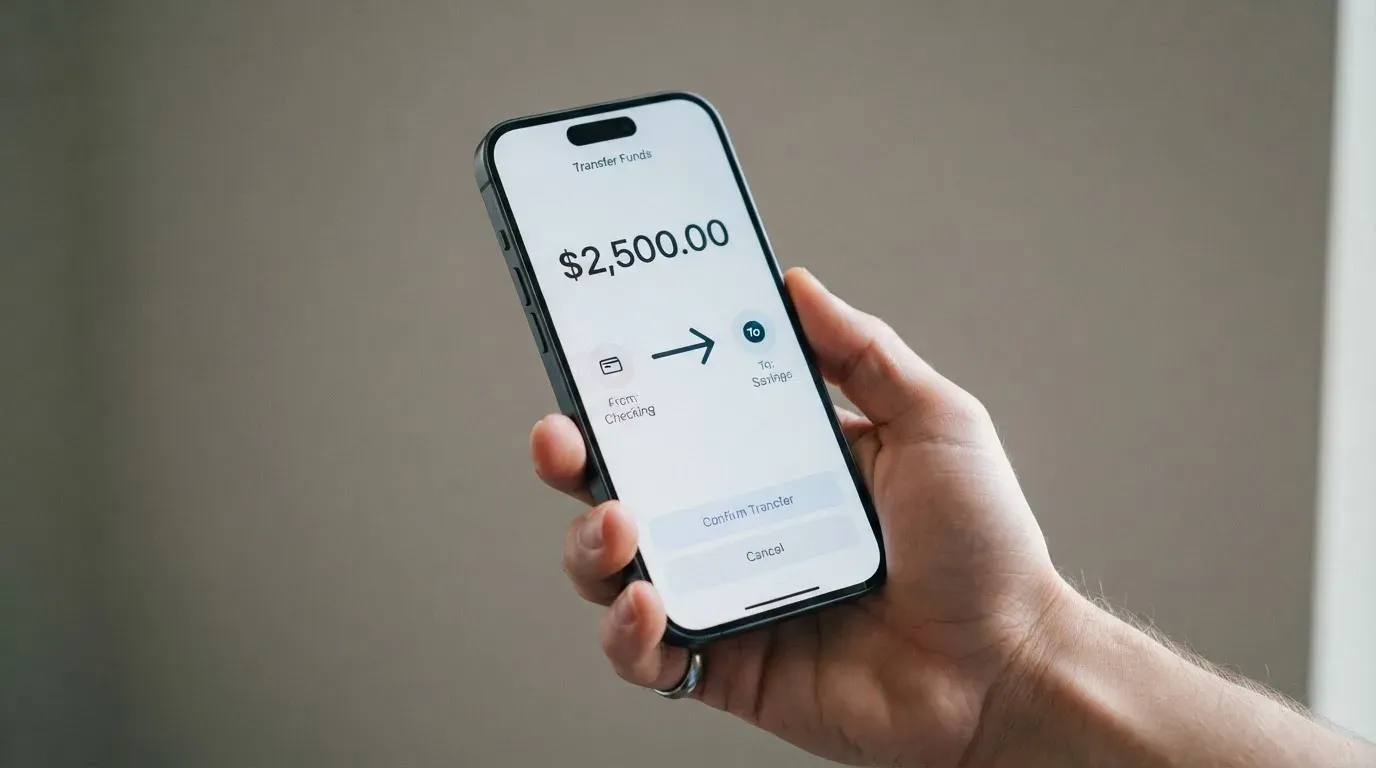
The flow runs in two stages. You top up the Trustee Plus wallet in USDC (the English guide also names USDT), then you open the card section and tap “Top up” to move funds from the wallet to the card balance. The wallet supports 30 or more coins and networks, including TRC20, ERC20, SOL and NEAR, which means you can fund it from most of the chains where stablecoins actually trade. The card balance itself is single-currency (USD), and any non-USD balance in the wallet needs to be converted before it can land on the card.
Fiat works through two channels. Smart P2P lets you buy crypto with a bank card through a peer-to-peer market inside the app, and a personal IBAN is provided for SEPA transfers in and out. The P2P rates, the spreads and the KYC requirements on the bank-card side are not stated on the public pages, so the practical cost of the fiat leg depends on which counterparty you match with.
A few things the company does not publish: the minimum top-up amount, who pays the on-chain network fee on a stablecoin deposit, the time it takes for a top-up to clear, and the fee (if any) for moving the card balance back to crypto or to a bank account. These are the practical details you will find out only at the moment of the transaction, and they are worth asking support about before you commit a large balance.
A general point that applies to any card of this type: stablecoin deposits settle on the blockchain, and the network the company supports has to match the network you send on. Circle stopped supporting USDC on Tron in February 2024, so “USDC over TRC20” is not a native option. If you send on the wrong network, the deposit can be lost or stuck in manual recovery, with no guarantee from the provider.
Paying with it every day
In practice, the card is a digital-only product for now. The physical card is on a waitlist, the ATM feature is listed as “currently unavailable,” and the published acceptance claim is 60-plus million merchants worldwide, online and in subscription billing.
Mobile wallets work. Trustee Plus supports Apple Pay and Google Pay, and a tokenised number replaces the card number in the Secure Element on the device. That means you can tap to pay in any shop that takes contactless Visa, including the kind of everyday places where a virtual card number would not otherwise help you. Whether every merchant will accept the card is a different question. Address Verification Service, the US-and-Canada address-matching check, is generally not available on cards issued outside North America, and some merchants decline prepaid cards outright. MCC 7995 (gambling) and other restricted categories are not stated in the public material, so it is worth treating that list as unknown.
There is no cashback on the card. The page is clear about that, and the loyalty and referral programmes on the app are separate products, not card rewards. If you are looking for a card that pays you back, this is not it.
The app is the only place where the card is managed. It is also distributed as an APK from the company site, separate from the Google Play store, and Trustee Plus app ratings were not found in a clean search (the App Store result returned the separate Trustee Wallet app with a 2.86 from 36 ratings, updated 2026-03-19 and read 2026-10-20). That is one indicator of how thin the public footprint is, and it is a small but real reason to treat the app’s polish and reliability as a question mark rather than a given.
The dispute process is not stated. If a transaction is wrong, a merchant fails to deliver, or a charge needs to be reversed, the public pages do not describe how to start a chargeback, what evidence to provide, or how long it takes. That is a meaningful gap for a payment product.
What can go wrong
The risks fall into three groups: regulatory, operational, and security.
The regulatory risk is the most active. The National Bank of Ukraine barred the Lithuanian operator from offering payment services in Ukraine in September 2025, and new registrations in Ukraine were halted on 22 May. The Terms of Use were last updated on 25 May 2026. If the card’s legal home is in Ukraine, the product you are signing up for today may be governed by a different regulatory regime tomorrow, and that affects what happens to your balance, your KYC data and your ability to complain.
The operational picture is thin in places that matter. The card is issued by Wirex Limited, an English company (company number 09334596, 9th Floor, 107 Cheapside, London EC2V 6DN), and the card page says it is “issued in Great Britain.” The Terms, however, list the service provider as MIKEPAY INC., registered in Panama, which is a jurisdiction with a notably lighter regulatory footprint than the UK. The company behind Trustee Plus itself is not named on the page, and no licence or regulator registration is mentioned on the pages I read. Some third-party card comparison sites describe the product as a crypto-funded prepaid Mastercard for EEA residents, with euro card and IBAN accounts issued by Quicko Sp. z o.o., a Polish payment institution, and virtual cards via Quicko Digital — which directly contradicts the official “Visa, issued in Great Britain” framing. Unofficial sources can be wrong, but the fact that some third-party pages describe a different issuer and a different card network is something to take seriously.
The user reports add detail. A June 2026 review on Trustpilot describes slow USDT transfers, an unclear AML review, an unclear complaint procedure and confusing company information. The Trustpilot rating for the brand’s main page is currently shown as unavailable due to a guideline breach, with reviews citing cards moving to a merged platform, failed withdrawals, failed payments and funds frozen after source-of-funds reviews. A frozen balance after a source-of-funds check is the single most disruptive event that can happen to a card user, and it is a recurring theme in the reports.
The security setup is reasonable for the category. The wallet-with-card product is custodial (a separate non-custodial product called Trustee Wallet exists alongside), with 2FA, Face ID, an in-app AML Check, a bug bounty on HackenProof and Hacken audits of the apps. There is no mention of card-level insurance, no mention of segregated client funds, and no statement about what happens to your card balance if the issuing company becomes insolvent. For a custodial product, that last point is the one that matters most, and it is the one the public pages do not address.
What to take instead
If the Trustee Plus card does not fit your situation, three alternative crypto-funded cards are worth a look. Each of them has a different shape, and the comparison is not about which is “best” — it is about which matches what you actually need.
Whop Cards score 5.2 out of 10. The product is aimed at US consumers in 31 states (Alabama, Alaska, Arkansas, California, Colorado, Connecticut, Florida, Hawaii, Illinois, Indiana, Iowa, Kansas, Kentucky, Maine, Massachusetts, Michigan, Minnesota, Montana, Nebraska, New Hampshire, New Jersey, New York, North Carolina, Oklahoma, Pennsylvania, South Carolina, Texas, Utah, Virginia, West Virginia and Wyoming) and US businesses in 41 states, with explicit unsupported consumer countries including Belarus, mainland China, Cuba, Hong Kong, India, Iran, Iraq, Israel, Myanmar, Nepal, Nicaragua, North Korea, Russia, Syria, Turkey, Ukraine, Venezuela and Vietnam. The card is a Visa that works anywhere Visa is taken online and in stores, and it spends from a Whop balance that is backed by stablecoin collateral from a linked wallet. The page says there are “no extra fees” and there is a 5% cashback at select merchants, currently Uber, with more planned. The practical unknowns here are the virtual or physical card type, the card currency, the conversion and FX fees, and the list of supported coins and networks.
Stella scores 6.5 out of 10. The product offers a virtual and a physical VISA that works at over 40 million merchants globally, and you deposit crypto into an in-app custodial wallet that automatically tops up the card. The official site does not state the eligible countries; the Terms bar users under economic sanctions programmes and route US and European users through affiliates. The fees are described as “under this User Agreement and/or on the App” rather than as a clean published table, and there is no cashback on the card page (a separate Earn product offers yield). The strength of the Stella proposition is the funding model; the weakness is the same thin disclosure you will find on most cards in this corner of the market.
UniFi Card scores 4.7 out of 10. It is described as a Prepaid Debit Visa Card issued by Lead Bank, spending from a USD balance, with Apple Pay supported in the app. The funding side accepts ACH, wire, SEPA (IBAN) and SPEI (CLABE) and can receive USDC into a wallet, with send-money routes listed in the app to the Philippines (PHP), Mexico (MXN), the eurozone (EUR), Colombia, Brazil (PIX) and the UK (GBP). The page claims “3% rewards on balances,” but the card-cashback structure, the fees, the conversion markup and the list of supported coins and networks are not stated. UniFi is a thinner product than the score suggests, and the score is held up by the funding side.
The honest summary of the alternatives is that none of them is a clear winner; they are all niche products with a narrow feature set and a thin public disclosure, and the deciding factor is which corner of the niche matches what you need (US coverage, EEA coverage, or global stablecoin funding).
Who I would recommend it to
If you can confirm that you are eligible under the Terms, you want a virtual Visa in US dollars, you plan to fund it from stablecoins across several networks, and you are comfortable with the absence of a physical card and ATM access, then the Trustee Plus card is a reasonable fit. The 0% payment fee, the 0.5% top-up fee, the 30,000 USD monthly operations limit and the wallet’s 30+ coin support are genuinely useful for that use case, and Apple Pay and Google Pay fill the gap left by the unavailable physical card for everyday contactless spend.
If your situation is any of the following, the card is not a good fit. You need a physical card today, or you need cash from ATMs. You are in Ukraine and you have not confirmed with support that registrations are open again. You are not sure whether your country of residence or citizenship is on the “countries we support” list that the company does not publish. You plan to hold a large balance on the card and you are not comfortable with the fact that the issuer is a UK company while the service provider in the Terms is registered in Panama, with no segregated funds or insurance described in the public pages. You expect cashback on a payment card. You need a card that works as a fallback when the network goes down or when the company pauses sign-ups, and you do not have one.
A practical first step before you commit any money is to ask support directly, in writing, three questions: (1) is my country of residence and my country of citizenship on the supported list today, (2) who exactly is the regulated entity that holds my card balance, and (3) what is the dispute and chargeback procedure if a transaction is wrong. The answers will tell you, faster than any review, whether the product is the right product for you.
Frequently asked questions
What is the Trustee Plus card?
The Trustee Plus card is a Visa prepaid card that draws on a US-dollar balance held inside the Trustee Plus app. It is a virtual product (with a physical card on a waitlist), and the underlying wallet supports more than 30 coins across networks including TRC20, ERC20, Solana and NEAR. The card is issued by Wirex Limited in England, and the service provider named in the Terms is MIKEPAY INC. in Panama.
How does the Trustee Plus card work?
You install the Trustee Plus app, complete KYC through the partner Kycaid, order the virtual card and top up the card balance from the wallet. The wallet itself is funded with stablecoins (USDC and USDT) or with fiat through Smart P2P or a personal SEPA IBAN. At payment time the card converts the USD balance to the merchant’s currency at the Visa rate; any markup beyond that is not stated.
Is Trustee Plus a bank?
Trustee Plus is not a bank and does not describe itself as one. The card is an e-money-style prepaid card issued by Wirex Limited, an English company, and the service provider in the Terms is MIKEPAY INC. in Panama. Funds on the card are not bank deposits and are not stated to be covered by any deposit guarantee scheme.
Who owns Trustee Plus?
The card is issued by Wirex Limited (company number 09334596, 9th Floor, 107 Cheapside, London EC2V 6DN). The service provider listed in the Terms of Use is MIKEPAY INC., registered in Panama. The company behind the Trustee Plus brand itself is not named on the public pages I read, and a third-party comparison site describes a different issuer and card network, which is worth treating as a flag rather than a fact.
How do I get the Trustee Plus card?
Download the Trustee Plus app, complete KYC (passport or national ID plus a selfie, processed by Kycaid), order the virtual card for 10 USD and top up the card balance. The physical card is on a waitlist; delivery countries, time, cost and replacement are not stated on the public pages.
Does the Trustee Plus card require KYC?
Yes. The card requires a single KYC step in the app through the partner Kycaid, with a passport or national ID plus a selfie. The processing time, the existence of multiple KYC levels and the specific grounds for rejection are not stated on the public pages.
How do I top up the Trustee Plus card?
Top up the wallet in USDC or USDT on a supported network, then use the “Top up” button in the card section to move funds from the wallet to the card balance at a 0.5% fee. Fiat can also be brought in through Smart P2P (bank card) or a personal SEPA IBAN. The minimum top-up, who pays the on-chain fee and the settlement time are not stated.
How do I add the Trustee Plus card to Apple Wallet?
The card supports Apple Pay and Google Pay through tokenised Device Account Numbers stored in the Secure Element on the device. The exact step-by-step in the app is not described in the public guidance, so the in-app prompt after ordering the virtual card is the most reliable place to look.
Where can I use the Trustee Plus card?
The card is advertised as accepted at 60-plus million merchants worldwide, online and in subscription billing, via Apple Pay and Google Pay where the physical card is not available. Acceptance depends on the merchant: some decline prepaid cards, and Address Verification Service is generally not available on cards issued outside North America, which can cause declines at US and Canadian merchants.
Is the Trustee Plus card safe?
The wallet-with-card product is custodial, with 2FA, Face ID, an in-app AML Check, a bug bounty on HackenProof and Hacken audits of the apps. The public pages do not state whether card funds are segregated or insured, do not describe a dispute process, and do not address what happens to the balance if the issuing entity becomes insolvent. The regulatory status in Ukraine was changed in September 2025, when the National Bank of Ukraine barred the Lithuanian operator from offering payment services in the country.
Money-app cards – cryptocardselect
Content created by the «cryptocardselect» team