
The card for paying foreign services from Russia, priced like a subscription and silent about most of what you would ask
 Available in US
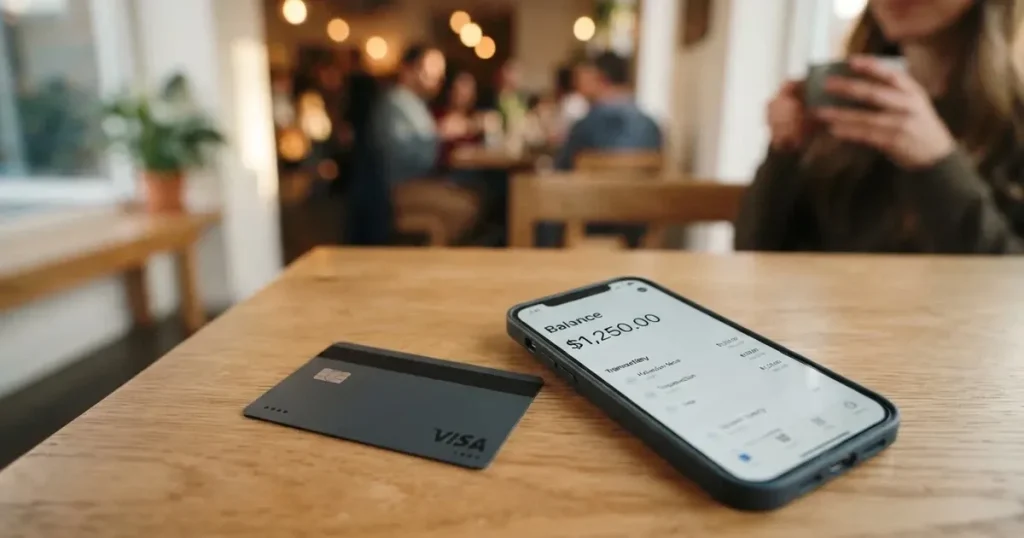
Wayment is a virtual, prepaid, US-dollar card that is often used for one job: paying for services abroad that a standard card might not touch. It is issued after you register in Telegram, it costs nothing in the first year of service and then charges a yearly fee that matches the tier you bought, and it spends only the balance you have loaded. There is no passport step, no monthly charge, no cash machine and no App Store listing — it lives in a Telegram mini-app, a bot and a web cabinet. That combination is genuinely useful for its one audience and genuinely thin for anyone else. After working through the card’s own conditions, the costs, the wallet support, the blocked merchant categories and the company behind it, I put it at 4.6 out of 10 — a card that works, priced like a membership, and largely unexplained on the pages that would explain it.
The conditions described here are current as of October 28, 2026.
Verdict: 4.6 out of 10, and a card with one job in mind
The score is not a verdict on whether the card works. It works. It is a measure of how much the card delivers for the money and against what a person cannot check on its public pages. The middle of that range is where this lands, and the table shows exactly which parts pulled it where.
| Criterion | Mark | Why |
|---|---|---|
| Who can get it | 5 / 10 | A Russian-language service aimed at paying foreign services from Russia; no country list and no citizenship rules published, while the site says a card works offline in 190+ countries |
| Cost | 3 / 10 | Subscriptions 2,990 RUB, Travel 3,990 RUB, Premium 7,990 RUB; after the first free year the annual fee equals the tier price; payments 0.30–0.50 USD, failed payments 0.50 USD, conversion typically up to 2%, top-up 0% |
| Top-up options | 4 / 10 | SBP from any Russian bank and cryptocurrency through the app; coins and networks not disclosed, minimum top-up 10 USD |
| Reliability and complaints | 6 / 10 | LVLUP LIMITED, Hong Kong (registration 77106962); issuer a Singapore bank on Subscriptions and an Armenian bank on Travel and Premium, neither bank nor licence named; no specific complaints found, crmindex.ru shows 5 from 11 reviews |
| Everyday use | 5 / 10 | Virtual USD card only, up to 3 cards; Apple Pay, Google Pay, Alipay and WeChat Pay on Travel and Premium, Google Pay and Alipay on Subscriptions; no cash machine |
Taken together those marks describe something I would describe as a well-targeted workaround with the documentation of a small operation. The fee structure is the strongest point — a 0% top-up fee is genuinely better than most of this category, and the tiers are priced in rubles a Russian user can reason about. The weak points are the annual fee that arrives after the free year, the flat per-payment charge that quietly dominates small transactions, the conversion loss of up to 2% on any non-USD purchase, and the fact that neither the issuing banks nor their licences are named anywhere I could find.
Who this suits: anyone paying for overseas subscriptions and services, who is comfortable with Telegram as the interface, who does not need cash, who does not need a bank account relationship with the card, and who is looking for a digital-first payment solution. Who it does not suit: anyone who wants a physical card, anyone who withdraws cash, anyone who needs Apple Pay on the cheapest tier, anyone who pays in currencies other than dollars frequently, and anyone who wants to know the name of the bank that holds their balance. The last one is the most serious mismatch, and I come back to it below.
Will they give you the card?
They will, and that is nearly the wrong question. Wayment publishes no country list and no citizenship or residence rule. The card is described as a Russian-language service for paying foreign services from Russia, with Russia named as the top-up market through SBP, and separately as a card that works abroad, offline payment in 190+ countries according to the site. Those two statements are not in tension — the top-up route is Russian, the card is not Russian — but the absence of any eligibility statement means nobody at the card has told you, in writing, who is accepted. If you are reading this outside Russia, you have no stated answer to whether you can hold one, and I would put that question to support before you pay anything.
The one restriction the card does mention is not about eligibility but about use: the help centre notes that Apple Pay and Google Pay are restricted in some countries, and Russia is named among them. That is a statement about wallets, not about cardholders, but in practice it means the mobile wallets that make a virtual card feel normal may not work everywhere you would want them to.
On identity, the card’s position is unambiguous and, compared with much of the category, unusual: no passport or identity verification is required. There are no KYC levels, no identity checks stated, nothing to upload. Whatever else you decide about this card, understand that this is the fact that most affects how a stranger’s company sees you when something goes wrong. The section on what can go wrong picks that up.
How to get it
The process is short enough to describe in three sentences. You register in the Telegram app with a Telegram account. You pay the tier price. The card is issued within a couple of minutes. After issuance, the only identifier the card asks for is an email address.
There is no physical delivery to wait for and no plastic to lose. What you receive is a virtual card: a number, an expiry date and a CVV, in US dollars. You can hold up to three cards on one account, and each tier’s validity differs — Subscriptions is valid for five years, Travel and Premium for two and a half. The card’s payment network is not stated on any official page I read; a third-party catalogue lists Mastercard and Visa, which is worth knowing as an unofficial pointer and not as a confirmed fact. Currency is USD, full stop.
What the card is not is stated just as plainly: no physical delivery exists. If you are choosing a card because a wallet slot is not available to you and you want something you can hand over at a till, this is not that card.
Activation is not a step you will find described separately. The card arrives with its details inside the app or bot, and from there the normal first step is adding it to a wallet — which brings us to which tier you should pick, and that is a cost decision as much as a feature one.
Fees: what a payment really costs you
This is where the card asks the most careful reading, because the headline numbers and the effective numbers are not the same. The annual fee is the headline: pay the tier price once and the first year of service is free, then the same amount is charged every year. A payment is not free either: Subscriptions charges 0.30 USD on payments up to 30 USD and nothing above that, Travel and Premium charge 0.50 USD per payment, and a failed payment costs 0.50 USD on all three. On top of that, a 3-D Secure code costs 0.03 USD each on Subscriptions and is free on the other two, and a 0.20 USD bank fee may apply to verification checks on Subscriptions. Conversion is charged as a loss “typically up to 2%” on non-USD payments. Top-ups are free.
| Fee or limit | Value |
|---|---|
| Issuance | Subscriptions 2,990 RUB; Travel 3,990 RUB; Premium 7,990 RUB |
| First year of service | Free |
| Annual fee after the first year | Equal to the tier price: 2,990 / 3,990 / 7,990 RUB |
| Top-up fee | 0% |
| Payment, Subscriptions | 0.30 USD on payments up to 30 USD; none above |
| Payment, Travel and Premium | 0.50 USD per payment |
| Failed payment | 0.50 USD on all tiers |
| 3-D Secure code | 0.03 USD each on Subscriptions; free on Travel and Premium |
| Verification bank fee | 0.20 USD may apply on Subscriptions |
| Conversion (non-USD payment) | Loss “typically up to 2%” |
| ATM | Not available: cash withdrawals, transfers and withdrawals not supported |
| Daily limit | 50,000 USD for top-ups and spending, all cards |
| Monthly limit | 200,000 USD for top-ups and spending, all cards |
| Minimum top-up | 10 USD |
| Welcome bonus | 10 USD credited per card |
Now the everyday arithmetic, because the per-payment fee is where the design shows its teeth. Take a 5 USD coffee paid on Travel: 0.50 USD of fee is ten percent of the spend, and that is before any conversion loss if the coffee is not priced in dollars. Take the same 5 USD coffee on Subscriptions: 0.30 USD is six percent. Take a 40 USD monthly subscription on Subscriptions: the payment itself is free, since the fee stops above 30 USD, which makes Subscriptions the tier built for recurring charges of a reasonable size. Take a 15 USD payment on Subscriptions: 0.30 USD is two percent, and if it is in a non-USD currency you add a conversion loss of up to 2% on top. That is the everyday picture — small payments are expensive, larger ones are cheap, and anything not in dollars costs extra.
There is a $10 welcome bonus per card and $5 for each card issued by a friend you referred. No cashback is stated anywhere.
The three tiers, as the card describes them:
- Subscriptions (2,990 RUB). Payments up to 30 USD cost 0.30 USD, none above. Google Pay and Alipay. Works with ChatGPT and Claude.
- Travel (3,990 RUB). 0.50 USD per payment. Apple Pay, Google Pay, Alipay and WeChat Pay. Valid two and a half years.
- Premium (7,990 RUB). Extended limits and the best top-up rate for SBP and credit-card top-ups, same wallets as Travel.
There is a detail in that list worth pausing on. Travel and Premium do not work for ChatGPT or Claude. The tier named Subscriptions exists for subscriptions, and the two tiers named for travel and premium do not cover the service most people reading a Russian-language virtual card page were probably thinking of. Choose on that basis, not on the price difference.
Top up: two routes, one of them undocumented
Topping up is free, and that is the single best number in this review. Two routes are published. SBP works from any Russian bank, including from a credit card. And you can deposit cryptocurrency through the app.
What is not published is what matters most about the second route: which coins and which networks. The card’s own answer is that the app displays the available options. Minimum top-up is 10 USD. Credited in USD at the service’s internal rate, and Premium gets the best rate for SBP and credit-card top-ups. Arrival is usually a few minutes; if fifteen minutes have passed, contact support. Network fees for a crypto deposit are not stated by the card — on-chain fees are charged by the blockchain, not by the card provider, so they are yours to account for and they eat into what arrives.
And here is the part to weigh before you send anything: blockchain transfers are irreversible. If you send on a network the provider does not support, or to an address belonging to a different network, the funds can be lost or need manual recovery through support, with no guarantee. Since the app shows you the options at the time of deposit, take that list at face value rather than assuming, and never reuse an address you copied earlier for a different network. One further detail: Circle stopped supporting USDC on Tron in February 2024, so the familiar “USDC over TRC20” route is not a native option here.
There is no way out. Withdrawals and transfers are not supported, so money you load is money that can only be spent on the card. What happens to a balance if you delete the account or the card expires is not described. The one exception is referral bonuses, which can be withdrawn to the Wayment card itself.
Paying with it every day
The day-to-day experience is the app and the wallets. You manage the card from a Telegram mini-app, a bot at @WaymentBot and a web cabinet at wayment.net/cabinet/ — there is no App Store or Google Play listing, which tells you something about how the service expects to be reached. Wallet support is tiered: Subscriptions gives you Google Pay and Alipay; Travel and Premium add Apple Pay and WeChat Pay.
Those wallets are where the card feels like a normal payment card. Adding it to a mobile wallet replaces the card number with a device-specific number held in the phone’s secure hardware, and each payment uses a one-time dynamic code — so a card that lives in Telegram can still be tapped without handing over your details. Keep in mind that the issuer can restrict a tokenised number to particular channels, and that Apple Pay and Google Pay are restricted in some countries including Russia.
What does not work is as important as what does. There is no cash machine — cash withdrawals, transfers and withdrawals are all unsupported, which means the card cannot be used to get physical money or to send money to another person. And a long list of merchant categories is blocked:
- money transfers, and quasi-cash such as buying crypto or topping up e-wallets
- financial services, securities, gambling and lotteries
- utilities, pharmacies, oil and fuel
- some game-key sites, and 18+ content
Blocked categories are the issuer’s policy rather than a law, and the list differs between issuers — but this one is stated, so plan around it. In practice the card is for subscriptions, software and services, not for a fortnight in a country without a bank branch.
Two more everyday matters. Refunds: the card states that standard refunds are not issued. Where the fault is Wayment’s, cases are reviewed individually through support. For a failed payment, a hold returns automatically; otherwise you contact support with the card, the service, the amount, the date and screenshots. No time frames are stated, so do not assume a quick answer. And know that a declined authorisation can leave a hold on your funds for several days — up to seven is typical — so a card that looks empty may be a card waiting.
What can go wrong
The first thing to check, and the thing I could not resolve, is who holds your money. The company behind the card is LVLUP LIMITED, registered in Hong Kong (registration number 77106962) at 7/F MW Tower, 111 Bonham Strand, Sheung Wan, Hong Kong. The issuing banks are not named: a Singapore bank issues Subscriptions, and an Armenian bank issues Travel and Premium. Licences are not named either. For a card that asks you for no identity documents at all, that is a thin answer to the only question that would let you judge whether your balance is protected. Under EU rules, electronic money institutions must safeguard customer funds by segregating them or insuring them, and safeguarded funds are not the same as bank deposits and may sit outside deposit guarantee schemes — but that is a general principle, not something I can attribute to this particular issuer.
Custody follows from the same place. The balance is held in the service, and the virtual card is linked to a Wayment account. You can freeze and unfreeze the card in the app at any time and manage spending limits in the bot. Two-factor authentication and safeguarding arrangements are not stated.
What about the platform itself? This is where the category’s history is relevant. Custodial platforms have failed before, and the losses were large — Mt. Gox, about US$350 million reported stolen between 2011 and 2014; Coincheck, about US$400 million in 2018; Ronin Network, US$625 million in 2022. Holding funds with a custodian carries counterparty and hack risk. Card programmes have also been shut down mid-life: Visa terminated its global agreements with FTX on 13 November 2022 and the FTX US debit card was wound down by its issuer, and WaveCrest, a Visa issuer that supplied crypto card brands, was suspended in Europe in 2018, closing all its Visa programmes. A closure typically means a notice period, then spending and loading stop, then you are asked to withdraw remaining balances — and on a card with no withdrawal support, that last step is the one that would hurt. That is not a prediction about Wayment. It is the shape this failure takes, and it is worth weighing when a provider asks you to hold funds.
Then the ordinary frictions. Merchants can look up the card’s issuing country from the first six or eight digits of the number and may apply extra scrutiny when it differs from your billing address, and some merchants decline prepaid or foreign-issued cards for exactly that reason. Address verification is offered mainly in the US, Canada and the UK and is generally unavailable for foreign-issued cards, which can cause declines. A payment to a Russian service will look foreign. Add the up-to-2% conversion loss, the 0.50 USD failed-payment charge and holds lasting up to seven days, and ordinary friction becomes part of the cost model.
The company-level evidence is mixed and thin. No specific complaints about the card were found. An aggregator, crmindex.ru, shows 5 from 11 reviews, with the text not visible. A Russian catalogue notes that cash withdrawal is not available, which matches the card’s own statement rather than contradicting it. On the other side, the site shows its own ratings — 4.9 on Yandex Maps, 4.9 on Exnode, 5.0 on Otzovik — and a catalogue, 1000bankov.ru, shows 4.5 from 898 votes for the site, which is the site rather than the card. No Trustpilot page was found, which is what you would expect from a Russian-language service. The site claims 10,000+ active users and 15,000+ cards issued; that is the company’s own claim and no news or independent coverage was found to test it.
Support is real and reachable: a Telegram bot at @WaymentSupBot, [email protected] and a knowledge base at help.wayment.net, in Russian, daily 09:00–00:00 Moscow time. When something goes wrong, that bot is your first and probably only route.
What to take instead
I compare four cards below on the same axes, with the same care about what is published and what is not. Three of them score higher than Wayment on my mark. None of them is a like-for-like replacement, and I would rather say that plainly than pretend otherwise.
Ape Wallet — 5.5 / 10. Also Russian-facing: SBP payments, and a KYC that uses a Russian passport. No country list is given, and nothing is stated about citizenship versus residence or about restrictions. Two virtual Visa products, a “service card” for subscriptions and online spending and an Apple Pay / Google Pay card; card currency not stated. Issuance price not stated — promo codes change it, and holders of an active Apple or Google Pay card get a discount on a service card. No fee amounts published; the site says the fee and total are shown before you confirm any operation. Transfers to other users by Telegram username are free of fees. Balance in USDT. No cashback stated; a two-level referral programme pays a share of card purchases by invited users, with no percentages given. The appeal is the published-fee-before-you-confirm design; the drawback is that you cannot price it from a page.
MaxSwap — 5.2 / 10. Not stated who can get one; the site claims no geographical restrictions. Virtual only, Mastercard, currency not stated on the home page although amounts in fees are in USD. Card costs 50 USD with a 25 USD first deposit required, total issuance listed as 77.125 USD; no monthly fee stated. Fees are the most transparent here and the most expensive: top-up 4.5% plus $1, transaction 0.25 USD plus 0.4%, and no separate FX rate — the site just tells you to account for possible fees when paying and converting currencies. Funded with crypto across a long list of networks and assets — ADA, ALGO, AVAX, BCH, BNB, BTC, DOT, ETH, HBAR, HT, KRRX, LINK, LTC, MATIC, NEAR, SHIB, SUSHI, TON, TRX, UNI, USDC, USDT, XLM, XRP. No cashback mentioned.
AnoCard — 5.9 / 10. The highest of the four, and the least verifiable: the details below were not readable on the page at the time of checking, and the site was down. What is known describes a different shape of product — virtual cards, reloadable and one-time, across several BINs, chosen with filters in a SORN web dashboard, with network and currency depending on the BIN. Creation fee varies by BIN and some products carry a maintenance fee; all of it is shown in SORN before payment, and top-up percentage and minimum depend on the asset route, also shown before payment. Starting data, unverified here: SOL, BTC, USDT, USDC, ETH and more, via Telegram bot or web dashboard. No cashback; a referral programme pays $5 per referred card creation and 0.25% of referred top-ups.
| Wayment | Ape Wallet | MaxSwap | AnoCard | |
|---|---|---|---|---|
| Mark | 4.6 / 10 | 5.5 / 10 | 5.2 / 10 | 5.9 / 10 |
| Shape | Virtual USD prepaid | Virtual Visa, service card and wallet card | Virtual Mastercard | Virtual cards, reloadable and one-time, multiple BINs |
| Annual or monthly charge | Free first year, then 2,990 / 3,990 / 7,990 RUB | Not stated | Not stated | Maintenance fee on some BINs |
| Payment fee | 0.30–0.50 USD | Not stated, shown before confirming | 0.25 USD + 0.4% | Not published |
| Top-up fee | 0% | Not stated | 4.5% + $1 | Not published, depends on route |
| Minimum top-up | 10 USD | Not stated | Not stated | Not published |
| Cash machine | Not supported | Not stated | Not stated | Not stated |
| Identity check | None stated | Russian passport for KYC | Not stated | Not stated |
Where that table leaves you depends on which column’s silence you can live with. Wayment at least tells you its numbers. MaxSwap tells you its numbers too, and they are heavier. Ape and AnoCard will show you a fee before you confirm, which is a genuinely good design, but you cannot plan a month around it from a static page. And every one of these cards, like Wayment, is spent from a stored balance rather than from a bank account, so none of them gives you an overdraft, a credit line or a bank relationship.
Who I would recommend it to
I would recommend Wayment to someone specific: a user paying a handful of foreign subscriptions and services each month, paying in US dollars, spending more than about 30 USD per transaction, and entirely comfortable with a card that lives in Telegram and asks for no documents at all. For that person the deal is good — free top-ups, no monthly charge in year one, a clear per-payment price, and instant issuance.
I would not recommend it to someone who needs Apple Pay on the cheapest tier, who withdraws cash, who pays mostly in euros or roubles and would wear the 2% conversion, who wants to know the name of the bank holding their funds, or who treats “no identity verification” as a feature rather than a fact about how a dispute will be handled. I would also flag the annual fee: the free year is genuinely free, and the second year is not, so anyone planning to hold this for years should compare that against a pay-as-you-go card before renewing rather than after.
The honest summary is that this is a focused tool with good unit economics on the top-up and mediocre ones on everything else. Judge it on what you will actually pay with it.
Frequently asked questions
What is Wayment?
Wayment is a virtual prepaid card issued to users through Telegram, aimed at paying for foreign services from Russia. You register in Telegram, pay a tier price, and receive card details within a couple of minutes; the card is USD-denominated, virtual only, with no physical delivery, and up to three cards can be held on one account. The balance is spent like a stored-value card, and withdrawals are not supported.
Is Wayment a bank?
No — and that matters. The company is LVLUP LIMITED in Hong Kong, and the card is issued by a Singapore bank on the Subscriptions tier and an Armenian bank on Travel and Premium, with neither bank nor their licences named publicly. The balance is held inside the service rather than as a bank deposit, so safeguarded-funds rules should not be assumed to cover it.
Does Wayment require KYC?
No. The card states that no passport or identity verification is required, and there are no KYC levels and no identity checks listed. You register with a Telegram account and, after issuance, only an email address is asked for. Remember that this is also what a dispute would look like if one ever arose.
What does a Wayment card cost?
The first year of service is free and the annual fee after that equals the tier price: 2,990 RUB for Subscriptions, 3,990 RUB for Travel, 7,990 RUB for Premium. Payments cost 0.30 USD on Subscriptions up to 30 USD (none above) and 0.50 USD on the other tiers, with 0.50 USD for a failed payment on all of them. Top-ups are free.
How do I top up the Wayment card?
Two published routes: SBP from any Russian bank, including a credit card, or cryptocurrency through the app. The top-up fee is 0%, the minimum is 10 USD, and the amount is credited in USD at the service’s own rate, usually within a few minutes. Coins and networks are not listed publicly — the app shows the available options — and on-chain network fees are not covered by the card.
Can I withdraw money from a Wayment card?
No. Cash withdrawals, transfers and withdrawals are all unsupported, so loaded money can only be spent. The single exception is referral bonuses, which can be withdrawn to the Wayment card. What happens to a remaining balance if you delete the account or the card expires is not described anywhere I could find, which is worth knowing before you load more than you plan to spend.
Which wallets can I add the Wayment card to?
Google Pay and Alipay on Subscriptions; Apple Pay, Google Pay, Alipay and WeChat Pay on Travel and Premium. Note that the help centre says Apple Pay and Google Pay are restricted in some countries, and Russia is named among them. A further wrinkle: Travel and Premium do not work for ChatGPT or Claude, so if that is your target service, Subscriptions is the tier.
Where can I actually use the card?
The site says a card works abroad for offline payment in 190+ countries. In practice the useful range is subscriptions, software and foreign services priced in dollars, because there is no ATM support and a long blocked list: money transfers, buying crypto or topping up e-wallets, financial services, securities, gambling and lotteries, utilities, pharmacies, oil and fuel, some game-key sites and 18+ content.
Is the Wayment card safe?
Safe enough to be honest about its own shape: the balance is held by the service, you can freeze the card in the app at any time, and spending limits are managed in the bot — but two-factor authentication and safeguarding are not stated, the issuing banks are unnamed, and standard refunds are not issued. Holdings like this carry counterparty risk, and card programmes in this category have been shut down before, which matters more here than usual because there is no withdrawal route.
Does Wayment have fees I will forget about?
Three are easy to miss. The annual fee arrives after the free first year and equals the tier price. Conversion loss on any non-USD payment is “typically up to 2%”. And Subscriptions charges 0.03 USD per 3-D Secure code, plus a possible 0.20 USD bank fee on verification checks — while a declined payment costs 0.50 USD and can leave a hold on your funds for up to seven days.
Virtual cards for online use – cryptocardselect
Content created by the «cryptocardselect» team