
A virtual Visa that spends USDC straight from your own wallet
 Available in US
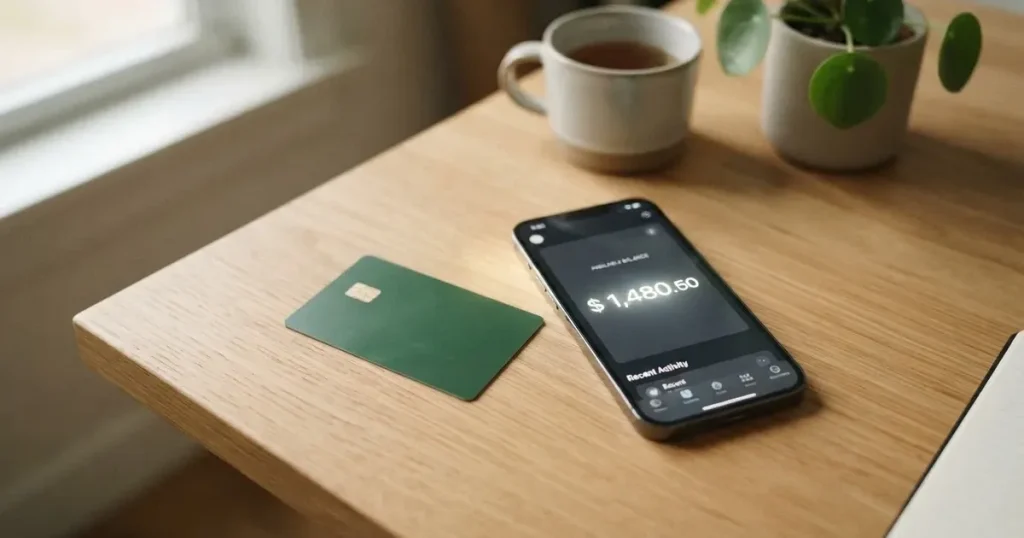
whitecryptocard.com is a virtual Visa card that draws on USDC you hold in your own self-custody wallet, converting and spending from that balance the way you would spend from a prepaid card. It is not a bank account, there is no plastic card, and the only asset it is built around is USDC on Base, Arbitrum or Ethereum. That narrowness is both the point and the limit: if your crypto sits in your own wallet and you want a card that spends it directly, the design fits. If you want a normal everyday card with plastic in the post, or a card that also works as a bank fallback, it will not.
The conditions described here are current as of October 28, 2026.
Verdict: a narrow but coherent card, held back by its own fee contradictions
I gave whitecryptocard.com a score of 5.4 / 10. It is a competent, well-specified product with an unusually clear idea of what it is for — spending USDC from a self-custody wallet — and the everyday-use side of it (Apple Pay, Google Pay, a virtual Visa, a fixed ATM price) is genuinely practical. What holds it back is not the design but the paperwork around it: fees that the site states two different ways, a country list that does not exist in public, a fee schedule with several unstated gaps, and a parent brand with no complaint record to check and no incident history to reassure you either.
Let me be clear about who this suits. This card is for the person who already holds USDC, already has a self-custody wallet set up, and wants that balance to be spendable at an ordinary shop without moving it to an exchange. If that is you, the mechanics are sound and the monthly cost is small. It is not for the person who wants to open a first card, keep a buffer of bank money behind it, or avoid handing over identity documents; this is a KYC’d financial product with a sanctions screen, not an anonymous spending tool, and I want to be clear that I would not treat it as one.
Here is the score broken down by what I actually checked:
| Criterion | Mark | Why |
|---|---|---|
| Who can get it | 6 / 10 | No public country list; eligibility “determined during your application” and depends on residence (citizenship not mentioned); sanctioned persons/countries prohibited |
| Cost | 3 / 10 | Virtual setup 5.00 USD, account maintenance 3.00 USD per card per month, closure 10.00 USD; non-USD payments 1.99%, payments under 25 USD 0.20 USD; top-up 2% in the fee table but “0% deposit fees” on the site (contradiction) |
| Top-up options | 6 / 10 | USDC as collateral in a self-custody wallet on Base, Arbitrum or Ethereum; no other coins; the networks are named inconsistently on the site |
| Reliability and complaints | 6 / 10 | Codego Group brand, cards issued by an unnamed Visa Principal Member, “not a bank”; law of England and Wales; no incidents or complaints found, no Trustpilot page |
| Everyday use | 7 / 10 | Virtual Visa, Apple Pay and Google Pay, ATM at 1.50 USD fixed or 1% + 1 USD; no plastic, app in the stores marked “Coming soon” |
| Total | 5.4 / 10 | A narrow product, honestly built, with a cost sheet that contradicts itself |
The word I keep coming back to is “narrow”. This is a card for a specific habit — spending stablecoins you already hold — and it does that habit about as directly as it can. The scoring does not reflect a bad product; it reflects a young one, with a brand new parent, a fee sheet that has not settled, and an app that is not yet in the store.
Will they give you the card?
The honest answer is: you will not find out from the website. There is no public country list for whitecryptocard.com. Eligibility is stated only as “determined during your application” and it depends on your place of residence — citizenship is not mentioned at all. The site does say that sanctioned persons and sanctioned countries are prohibited, which is the one eligibility rule that is stated plainly.
That is a thin answer for anyone deciding whether to spend twenty minutes on an application. In this category, some providers publish a list of supported countries so you can check before you start; others deliberately do not, because a published list goes stale the moment a licensing or risk position changes. Whitecryptocard.com is in the second group. So before you apply, you should know two things: the decision is made on where you live, and the people who apply and are refused are not going to be told why, because rejection reasons are not stated.
The contrast with the alternatives here is worth noticing. Decaf publishes an explicit restricted list — countries including Belarus, China, India, Iran, Iraq, Israel, Myanmar, Nepal, Russia, Syria, Turkey, Ukraine, Venezuela, Vietnam and others, plus specific US states such as Arizona, Delaware, Georgia, Idaho, Louisiana, Maryland, Montana, Ohio, Oregon, Rhode Island, Washington and Wisconsin. BloFin’s starting data lists 35 countries including the US, Australia, Japan, the UAE, Brazil, Mexico, Malaysia and New Zealand, though the card page itself just says “select your country or region” in the app. SafePal says it is for “citizens of supported regions who live in supported areas” — but the regions page was empty when it was checked, which is the same problem as here, only with a promise of a list attached.
So: if you need certainty before you commit your documents, whitecryptocard.com will not give it to you. If you can accept applying and finding out, the rule you are really being judged on is residence.
How to get it
Two steps, stated simply: verify your identity, then the card is issued. There is no third stage in between, and no physical card in the post — what arrives is a virtual card you put in a mobile wallet.
What you will need to upload is standard: a government photo ID plus a selfie with a liveness match, and proof of address — a recent utility bill or bank statement. Your age is not stated anywhere on the public pages, which is unusual, so if you are under 18 or just under 20, do not assume you are eligible; ask. The general rule in this category is that prepaid and debit cards go to adults (18+) and some issuers set a higher floor, but I am reporting what the card says, and what the card says is nothing.
On the KYC depth: there are no tiers defined. What is described is ordinary due diligence before the card is issued, source-of-funds checks above certain risk thresholds, and enhanced due diligence for higher-risk cases. The processing time is not stated, and the reasons for refusal are not stated.
That last point is the one to sit with. A card that does not publish processing times is telling you to expect to wait without telling you how long. And a card with no stated refusal reasons means a refusal arrives as a bare no. Both are normal in this category, and both are more frustrating than they should be.
The card itself: it is a virtual card, which is what “virtual card setup” in the fee list refers to. The card network tier is a point I want to flag carefully because the site is not consistent — the fees list names Visa Infinite, and in the same breath also mentions Platinum and Signature. Those are three different Visa tiers with three different entitlements, and the public pages do not settle which one you actually get. The card currency is USD, and non-USD transactions carry the FX fee discussed in the costs section below.
Two more things before you start. First, delivery is not stated — the pages do not say how or when a virtual card reaches you, presumably through the app, but the app itself is marked “Coming soon” in the App Store and Google Play as of 2026-10-21, with no ratings. Second, no card tiers are defined, though a “Standard tier” is named in the FAQ, and both Individual and Business accounts exist. What the other tier benefits are is not stated.
Fees: what it really costs
This is where whitecryptocard.com is weakest, and I would not want you to sign up without reading this section twice. The fee schedule is specific in places — genuinely specific, better than most in this category — but the site’s own pages say two different things about the cost of loading money, and that contradiction is unresolved on the public site as far as I can tell.

| Fee or limit | Value |
|---|---|
| Virtual card setup | 5.00 USD per card |
| Account maintenance | 3.00 USD per card per month |
| Account closure | 10.00 USD, one-time |
| Annual fee, Standard tier | None |
| Non-USD transaction (FX) | 1.99% |
| Payment under 25 USD | 0.20 USD |
| Crypto conversion fee | Not separately stated |
| ATM withdrawal | 1.50 USD fixed per withdrawal, or 1% + 1 USD (both listed) |
| Auth / balance / decline | 0.60 USD |
| ATM free allowance | Not stated |
| Top-up | Fee table says 2%; site also says “0% deposit fees” and “No fee on USDC top-ups” — conflict unresolved |
| Daily and monthly limits | Not published; shown in the app, depend on verification tier, card type and risk profile |
| Dispute / chargeback processing | 35.00 USD per case |
Let me run three ordinary payments through that table, because the small print behaves differently at different sizes.
A 4 USD coffee. Under 25 USD, so the 0.20 USD small-transaction fee applies, on top of whatever the conversion does. That is a 5% hit on a 4 USD purchase before you have counted anything else. Small payments are where this card is most obviously expensive, and if you are the kind of person who buys a coffee twice a week, add it up honestly before you commit.
A 40 USD supermarket shop, in USD, from a US balance. No FX fee (the transaction is in USD), no small-transaction fee (it clears 25 USD). The 3.00 USD monthly card fee is amortised against whatever else you spend in the month. This is the case the fee sheet is actually built for, and here it behaves.
A 40 USD purchase at a shop in Europe that charges you in euros. Here the 1.99% FX fee lands, so roughly 0.80 USD on 40 USD, plus the 3.00 USD monthly fee if this is the only thing you do that month. The 1.99% is the number to notice if you are outside the US: it applies to every non-USD transaction, and the card currency is USD, so any spending in your own local currency pays it every time.
The ATM line is the one to read twice, because the site lists both a 1.50 USD fixed fee per withdrawal and a 1% plus 1 USD fee. Which one you pay, and under what condition, is not explained on the public pages. Ask before you rely on cash.
And the limits: the amounts are not published. Daily and monthly spending, withdrawal and top-up limits are shown in the app and depend on your verification tier, your card type and your risk profile — and you can set your own limits. That last part is a genuinely good feature: it means the ceiling is not entirely someone else’s decision. But you cannot know your ceiling before you are inside the app, and the app is not yet in the stores.
One thing the fee sheet does not mention that will matter to you anyway: the crypto conversion fee is not separately stated. On a chain-based transfer, the network gas is charged by the blockchain, not by the card provider — but what the provider takes for turning your USDC into a spendable balance is the number that actually determines your cost per purchase, and it is not on the table above.
Top up: one coin, three networks, and a contradiction
The way this card is funded is its defining feature and the reason to consider it at all. You hold USDC as collateral in a self-custody wallet, on Base, Arbitrum or Ethereum. The card spends from that. There are no other coins, and no fiat top-up route is stated.
One caveat about the networks: the home page and the FAQ name them differently — the FAQ mentions Base and Arbitrum only, while the main description includes Ethereum as well. So which chains actually work is something to confirm before you send funds. That matters more than usual, because blockchain transfers are essentially irreversible: a deposit sent on a network the provider does not support, or to an address belonging to a different network, can be lost or need manual support recovery with no guarantee of success.
The fee on top-up is the contradiction I flagged above, and I want to be precise about it rather than smooth it over. The fee table says 2% on all listed coins and networks. The site also says “0% deposit fees” and “No fee on USDC top-ups”. These cannot both be right. Until the provider resolves it publicly, treat the 2% as the number that is most likely to appear on a statement and confirm it in the app before you load a large balance.
Two smaller points on loading. Network gas is paid by you, on top of whatever the provider charges. And the minimum top-up is not stated — which matters if you are funding from an exchange and want to know the smallest amount worth sending.
Withdrawal is a separate matter: it is not stated whether you can withdraw balance back out. What is stated is that your collateral stays in your own self-custody wallet after termination of the account. That is the point of the design — your money never really leaves your wallet — but it also means the “account” is a card sitting in front of your crypto rather than a container holding it.
For comparison, the alternatives are broader on the funding side. BloFin Wallet Card is topped up with USDT and USDC on Arbitrum and Base. SafePal accepts crypto from 40+ blockchains, converted to USDC (the default) or fiat, with transactions on Arbitrum. Decaf is funded differently again — you can pay a Decaf payment link or account details by card, bank transfer or USDC, with the app running on Solana and Stellar, though which coins and networks top the card up itself is not stated.
| whitecryptocard.com | BloFin | Decaf | SafePal | |
|---|---|---|---|---|
| Asset | USDC only | USDT and USDC | USDC balance shown | 40+ chains, to USDC or fiat |
| Networks | Base, Arbitrum, Ethereum (site inconsistent) | Arbitrum, Base | Solana and Stellar app | Arbitrum |
| Fiat top-up | Not stated | Not stated | Card, bank transfer or USDC | Not stated |
| Top-up fee | 2% in table, “0%” on site | Not stated here | Not stated | 0% standard; “as low as 0.4%” top tier |
| Withdrawal | Not stated | Not stated | Not stated | Not stated |
Paying with it every day
Here is the card’s strongest suit, and the reason its everyday-use score is the highest of its marks.
You get a virtual Visa, and you add it to Apple Pay and Google Pay — both supported, with the wallet fee stated as free. Those two are the actual card, for most purposes: you tap or hold your phone and pay. Because Apple Pay replaces the card number with a device-specific number stored in the phone’s secure hardware, each payment carries a one-time code, which is a real security advantage over a magnetic stripe.
There is no plastic. No card arrives in the post, and there is no physical version mentioned anywhere. If you have ever had a payment method declined because it did not work at a terminal, that problem does not apply to you here — but so does the fallback problem. If your phone dies, you are not holding a card that works without it.
The app, though, is the weak point of daily use. The App Store and Google Play listings are marked “Coming soon” (read 2026-10-21) and carry no ratings. So the control panel for this card — limits, freeze, transactions — is not something I can point you at and say “look, here is what it does”. The card’s stated security features are real on paper: card freeze, 3-D Secure, step-up verification, anti-screenshot protection, and per-merchant controls. Whether they are pleasant to use is something I cannot tell you from a not-yet-published app.
Rewards: no cashback is stated. There is a referral scheme — 0.15% of your referred friends’ spend, plus 10 USD per friend who reaches 500 USD of spending, paid monthly in USDC. Work the arithmetic before you value it: at 0.15%, you need roughly 6,667 USD of referred spend to earn 10 USD yourself. It is a nudge, not a programme.
Two things to know about getting paid back when something goes wrong. If you see an unauthorised or incorrect transaction, you have 60 days from the posting date to report it; investigations then follow the Visa Operating Regulations, and there is a dispute or chargeback processing fee of 35.00 USD per case. That fee is worth pausing on. It is charged per case, so a 30 USD disputed transaction is not worth filing over — the process costs more than the money. And note that 35.00 USD is a very large share of the 3.00 USD monthly fee, which tells you roughly where this operator thinks disputes cost them.
Prohibited uses are stated: unlicensed gambling, illegal drugs and weapons. Which merchant categories are blocked is not stated — so you cannot check in advance whether that category you use is on the list.
For comparison, the alternatives are differently shaped rather than simply better. Decaf’s card can be virtual or physical, with tracked delivery (a physical card is 5 USD worldwide as a virtual equivalent, 10 USD in the US, or 90 USD elsewhere), and Decaf adds no FX fee of its own — “the FX is the one Visa offers”. SafePal runs a virtual Mastercard debit with limits set in EUR. BloFin is a Visa Platinum card whose virtual and physical form is not stated.
What can go wrong
I want to separate three different things here: the risks of the design, the risks of the operator, and the practical things that can go wrong at a till.
The design’s own risk is the seed phrase. The wallet is non-custodial and controlled by you through a 24-word recovery phrase. A lost phrase cannot be recovered — there is no support desk that can restore it, no password reset. This is the trade the whole product is built on: your crypto is yours, and the cost of that is that a mistake is final. A standard 12-to-24-word phrase is simply the private key written out in words, so anyone who sees a photo of it can restore the wallet and spend the balance, and transfers on-chain are irreversible with no freeze or refund function built into the network. Keep it offline.
The operator behind it: the brand is owned and operated by Codego Group. The cards are issued by an unnamed Visa Principal Member — a licensed card-issuing partner — and the issuer country is not stated. The service is “not a bank”, and the agreement is governed by the laws of England and Wales. Codego has reported 350,000+ users in a 2025 press release — that is a company claim, not an audited figure, and it counts the parent, not this card.
And here is the part most reviews would skip: I found no official incidents and no user reports for whitecryptocard.com, and there is no Trustpilot page — not for the card, not for Codego. News is not stated either. So there is no scandal here, and there is also nothing reassuring to point at. A brand-new product with no complaints is exactly what you would expect; it is not evidence of a clean track record. You are the early customer, and you should price that in.
What actually goes wrong at a till is mostly not about the card. Merchants can look at the first six or eight digits of a card number and see which institution issued it and from which country, and some will treat a card whose issuer country differs from the billing address with extra caution. Some decline prepaid or foreign-issued cards for that reason. Address verification, which compares the numeric parts of the billing address a buyer types against the issuer’s records, is largely a US, Canada and UK mechanism and is generally unavailable on foreign-issued cards — which causes declines. And a declined authorisation can leave a hold on your funds for several days, typically up to seven.
Add to that the crypto-specific friction: gas is paid separately and in the network’s own token, so a wallet holding a stablecoin with nothing else in it cannot actually send. And a card that only speaks USDC is a card that only works while USDC is the thing you are spending.
The regulatory picture is worth understanding at a level of generality rather than specifics, because it shapes what a card like this can promise you. In the EU, MiCA took legal effect in June 2023; the rules on stablecoins applied from 30 June 2024 and the crypto-asset service provider rules from 30 December 2024. Under MiCA, e-money tokens may be issued only by a credit institution or an electronic money institution, and providers already operating under national law have until 1 July 2026 at the latest to come in line. A card itself is a payment service regulated separately from the crypto side, so a product like this tends to depend on two licences — one for the money, one for the card. And ESMA keeps a public register of authorised providers, which is a reasonable place to check a name you have been given.
What to take instead
None of these is automatically better; they are better at different things. Here is how the field looks.
BloFin Wallet Card — 6.9 / 10. The highest-scoring option here. Zero for activation, annual, issuance and dormancy fees, and no cancellation fee — which on price alone beats whitecryptocard.com’s 3.00 USD monthly charge. On spend it charges 1% or lower depending on VIP tier, stepping down from 1.00% at VIP 0 to 0.00% at VIP 5, charged at the point of payment; its FX fee is not stated. You can top up with USDT and USDC on Arbitrum and Base. What it does not do is rebates: it is explicit that there is no cashback or rebate, only a lower spend rate. Its country list is not published on the card page either — you select your country in the app — though its starting data names 35 countries including the US, Australia, Japan, the UAE, Brazil, Mexico, Malaysia and New Zealand, with citizenship versus residence unstated.
Decaf — 6.2 / 10. The one that publishes its restricted list, which as I said above is worth something on its own. It is the only option here with no annual or monthly fee, and it adds no FX fee — the exchange rate you get is Visa’s own. Its catch is physical: a virtual card is 5 USD worldwide, but the physical card is 10 USD in the US and 90 USD elsewhere, and funding runs through a payment link or account details by card, bank transfer or USDC on Solana and Stellar.
SafePal — 6.2 / 10. The broadest funding: 40+ blockchains, converted to USDC or fiat, with a virtual Mastercard debit and no account creation or management fees. Its costs are thinner in disclosure: a 1% FX fee on Mastercard non-USD settlement, 1 USD/EUR/CHF or 7 CNH refund processing fee, swaps that include an unquantified spread, and a top-up fee of 0% standard or “as low as 0.4%” on the top tier — two numbers on its own site that do not obviously agree. Spending limits are denominated in EUR because the underlying account is a Swiss one.
And the option that is not a card at all: keeping the crypto in your own wallet and not spending it through a payment instrument. For a reader who has trouble getting an ordinary bank card, that is usually not available — which is exactly why cards like this exist and why the identity checks are real.
| Option | Score | Standing fees | Spending fee | Notable strength |
|---|---|---|---|---|
| whitecryptocard.com | 5.4 / 10 | 5.00 setup, 3.00 per month, 10.00 closure | 1.99% non-USD, 0.20 under 25 USD | Spends USDC straight from your own wallet |
| BloFin Wallet Card | 6.9 / 10 | 0.00 across activation, annual, issuance, dormancy | 1% or lower, down to 0% at VIP 5 | Cheapest to hold, widest fee tier ladder |
| Decaf | 6.2 / 10 | 5.00 virtual, 10.00 US physical / 90.00 elsewhere; no annual | No FX fee added; Visa’s own rate | Published restricted-country list |
| SafePal | 6.2 / 10 | No account fees; issuance fee not stated | 1% FX; unquantified swap spread | Funding from 40+ blockchains |
Who I would recommend it to
I would recommend whitecryptocard.com to exactly one kind of person, and describe them plainly: someone who already holds USDC, already runs a self-custody wallet competently, keeps their recovery phrase offline, and wants that balance spendable in an ordinary shop without touching an exchange. For that person this card does its job cleanly — the funding model is the point, the mobile wallets are supported, the ATM price is fixed and stated, and 3.00 USD a month is a small price for not routing everyday spending through a custodial exchange account.
I would not recommend it to someone who is opening their first payment card, who needs a reliable backup when a card declines at a till, who wants physical card in the post, or whose spending is mostly outside the US — the 1.99% applies to every non-USD transaction and there is no plastic to fall back on. Nor would I recommend it to anyone who intends to load a large balance before resolving that 2% versus “0% deposit fees” contradiction, or who plans to dispute a transaction under about 35 USD, since the per-case fee exceeds the likely recovery.
Two practical orders of operations, if you are in the first group. First, confirm which networks are live before you send anything, because the site’s own pages disagree and an unsupported transfer may not come back. Second, ask which ATM fee applies — 1.50 USD fixed or 1% plus 1 USD — since the site lists both without saying when each one kicks in. Neither question takes long, and both are cheaper than finding out later.
The wider context is worth holding onto, because it is not card-specific. Card programmes get suspended and closed: Visa terminated its global agreements with FTX on 13 November 2022, and WaveCrest, a card issuer that supplied several crypto brands, was suspended in Europe in 2018 with all its Visa programmes closed. When a programme winds down, the usual sequence is a notice period, then spending and loading stop, then you are asked to withdraw what is left. For this card specifically, one thing is in your favour on that score: your collateral stays in your own wallet when the account ends. That is a real structural advantage over a custodial card, and it is the one thing I would keep if I were keeping one.
Frequently asked questions
What is whitecryptocard.com card?
It is a virtual Visa card that spends USDC held in your own self-custody wallet, on Base, Arbitrum or Ethereum. The card is USD-denominated and draws down a converted balance much like a prepaid card. It is issued by an unnamed Visa Principal Member under the Codego Group brand, and the provider states plainly that it is not a bank. There is no physical version and no other coin is supported.
How does whitecryptocard.com card work?
You keep USDC in a wallet you control through a 24-word recovery phrase, and the card spends against it as collateral. At payment, the crypto is converted into a spendable balance and the purchase goes through as an ordinary Visa transaction, including in Apple Pay and Google Pay, which both support it for free. The wallet fee is stated as free, and daily limits are set by the app rather than fixed by the provider.
Is whitecryptocard.com a bank?
No, and the site says so. It is a card programme issued through a licensed Visa Principal Member and described as not a bank. Your agreement is governed by the laws of England and Wales, and the issuer country is not stated on the public pages. What you are actually holding is crypto in your own wallet, with a card in front of it, rather than a deposit with an institution.
Who owns whitecryptocard.com?
The brand is owned and operated by Codego Group, and Codego has reported more than 350,000 users in a 2025 press release — a company claim rather than an audited figure, and it counts the parent rather than this card. I found no Trustpilot page for either the card or the parent, and no user reports to weigh either way, so the ownership is clear and the track record is simply not yet written.
Does whitecryptocard.com card require KYC?
Yes. You need a government photo ID, a selfie matched against it by liveness, and proof of address such as a recent utility bill or bank statement. There are no defined tiers; ordinary due diligence runs before issuance, source-of-funds checks apply above risk thresholds, and higher-risk cases get enhanced due diligence. Age is not stated, and neither is the processing time or the reasons for a refusal.
Is whitecryptocard.com card available in my country?
There is no public country list. Eligibility is “determined during your application” and depends on your place of residence rather than citizenship, and sanctioned persons and countries are excluded outright. Some rivals publish an explicit restricted list — Decaf does, naming countries and specific US states — so if you need an answer before applying, whitecryptocard.com is the one that will not give you one.
Is whitecryptocard.com card free?
Not quite, and the honest figure is 3.00 USD per card per month, on top of 5.00 USD to set up the virtual card and 10.00 USD to close the account. Non-USD transactions cost 1.99%, payments under 25 USD add 0.20 USD, and an ATM withdrawal is listed at either 1.50 USD fixed or 1% plus 1 USD. Top-up is the confusing one: the fee table says 2%, the site says 0%.
How do I top up the whitecryptocard.com card?
You send USDC to your own self-custody wallet on Base, Arbitrum or Ethereum, and the card draws on it as collateral. There is no other coin and no fiat top-up route stated, and network gas is paid by you on top of any provider fee. Check which networks are actually live before sending, because the FAQ mentions only Base and Arbitrum while the main description also lists Ethereum.
How do I add it to Apple Wallet or Google Pay?
Both are supported and the wallet fee is free, so you add the virtual card number to Apple Pay or Google Pay and use your phone as the card. The tokenised number is stored in the device’s secure hardware rather than on Apple’s servers, and each payment uses a one-time code. The issuer can also restrict the tokenised number for phone, website or stripe use, and note that the app itself is still marked “Coming soon” in both stores.
Is whitecryptocard.com card safe?
It depends on which risk you mean. Your crypto is in a self-custody wallet, so the provider cannot spend it, but a lost 24-word recovery phrase cannot be recovered by anyone, and transfers are irreversible. The card side lists sensible protections — freeze, 3-D Secure, step-up verification, per-merchant controls — and I found no incidents or complaints, but with no Trustpilot page and no independent history, that absence of complaints reflects newness rather than a proven record.
Wallet-linked cards – cryptocardselect
Content created by the «cryptocardselect» team