
A self-custody wallet with cards attached, priced for crypto users
 Available in US
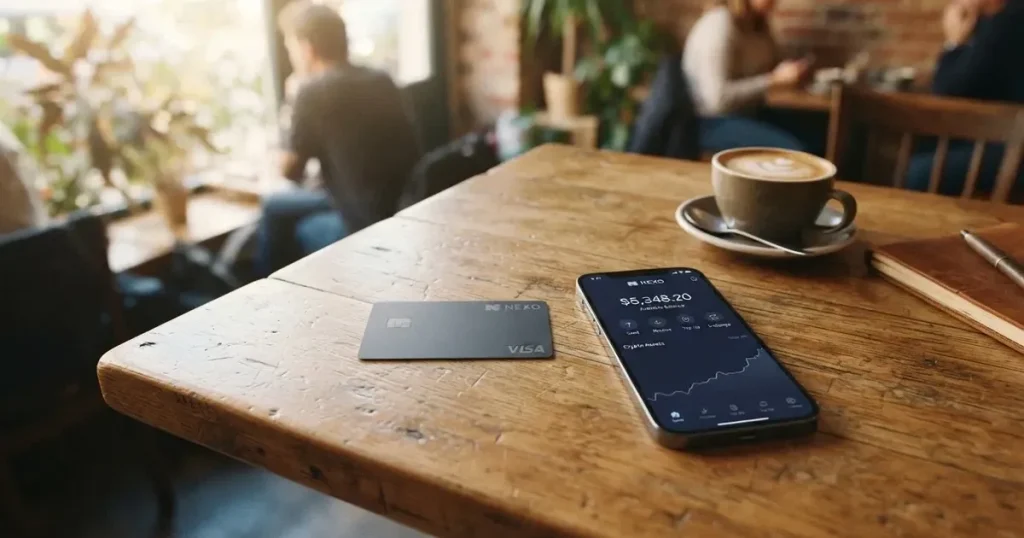
XHYPE is not a bank. It is a crypto wallet with a payment card bolted to the front: you hold the keys, the wallet converts your coins into a spendable balance, and a virtual or physical card sits on top of it. That combination is genuinely unusual at this price — the top-up fee runs from 2.1% down to 1.2% depending on plan, and cards can be ordered from 203 countries and territories. But two things sit underneath that: the company behind it, XHYPE FZCO of Dubai Silicon Oasis, states in its own terms that it is not the card issuer and does not name who is, and almost nobody outside the company publishes a reliable figure for what a foreign-currency conversion costs you. My score is 7.0 out of 10 — good product, thin disclosure.
The conditions described here are current as of October 28, 2026.
The score at a glance
Before the details, the marks I gave each area and why. Total: 7.0 / 10.
| Criterion | Mark | Why |
|---|---|---|
| Who can get it | 9 / 10 | Ordered from 203 countries and territories, with admission depending on country of residence and citizenship |
| Cost | 5 / 10 | Essential $10 a year, Premium $58 (1 yr), Whale $70 (1 yr); top-up 2.1% / 1.8% / 1.2%; FX fee not disclosed |
| Top-up options | 9 / 10 | USDT, USDC or the native coin on BNB Smart Chain, Ethereum, Base, Polygon and Arbitrum |
| Reliability and complaints | 4 / 10 | XHYPE FZCO, Dubai, “We are not a card issuer”, issuer unnamed; reported top-up failures, delayed refunds |
| Everyday use | 9 / 10 | Virtual card on every plan, physical on Premium and Whale, Apple Pay and Google Pay on all cards, ATM up to $1,500 a day |
The pattern is easy to read. Wherever the card is a piece of software over your own wallet, it scores well. Wherever the card becomes a piece of money issued by somebody in a licence you cannot read, it scores badly. That is not a flaw in the product design — it is where every self-custody card hits a wall.
Who this suits: you already hold USDT or USDC, you want a card that spends that balance without a bank in the middle, and you live somewhere an ordinary bank card has been awkward to obtain. Who it does not suit: anyone whose priority is a known counterparty, a published FX rate, a cashback scheme, or a complaints process that exists on paper in your jurisdiction.
Will they give you the card?
Yes, broadly. Cards can be ordered from 203 countries and territories, and eligibility depends on your country of residence and your citizenship at the moment you apply — both, not one or the other. The terms add that use is prohibited “in jurisdictions where such services are restricted”, which is a self-referential sentence: it tells you a restriction exists without listing it.
A third-party profile (CryptoCardHub, August 2026 — unofficial, not confirmed by the card) puts the practical picture at 184 countries available and 9 restricted: Afghanistan, Cuba, Iran, North Korea, Somalia, South Sudan, Sudan, Syria, Yemen. I would treat that list as a useful warning rather than a guarantee, because it comes from a profile rather than from the terms themselves.
The honest way to check your own case is the KYC step, not the country list. Verification runs through Verinex and XHYPE receives only the result — the check is described as “Private KYC”. The terms set the minimum age at 18+. What the public pages do not say is the document list, whether proof of address is required, how many KYC levels there are, how long processing takes, or what the rejection reasons are. Not stated means exactly that: nobody has published it, not that it does not exist.
One note from the same third-party source, and it cuts against the marketing: routine ID checks are not advertised at signup, but every deposit is AML-screened and flagged funds may be rejected. Take that as the shape of the thing — the screening happens at the money movement, not necessarily at the door.
How to get it
The path is short and entirely in a browser. Sign up in the web app at superwallet.xhype.io — the site is explicit that there is nothing to download, so there is no app store listing and no store rating to read. Verify through the private KYC flow, pick a plan, deposit crypto, and load the card. That is the whole sequence.
On the card itself: it is prepaid. A virtual card exists on every plan; a physical card comes with Premium and Whale. The official page does not state the card network. That is not a small gap — Visa and Mastercard behave differently at some merchants, and a network-less description means you are buying a prepaid instrument whose scheme you have not been told.
What is stated: the virtual Essential card is delivered instantly, and physical cards arrive about 15 days after a correct address is entered. Shipping countries, shipping cost and replacement cost are not stated. Plan for 15 days and an unknown fee if the card is lost.
One conflict worth knowing about before you sign up: a third-party profile (CryptoCardHub, August 2026 — unofficial) advertises Visa and Mastercard programmes, virtual only, with no physical card. That directly contradicts the official physical-card offering. Where official terms and third-party profiles disagree, the terms win, but the disagreement itself tells you that some of what circulates about XHYPE is not from XHYPE.
Fees: what it really costs
The headline prices look cheap. The details behind them are where the plan’s value lives.
| Fee or limit | Value |
|---|---|
| Essential | $10/year, 1 virtual card |
| Premium | $58 (1 yr) or $118 (3 yrs), 1 virtual + 1 physical |
| Whale | $70 (1 yr) or $148 (3 yrs), 2 virtual + 1 physical |
| Top-up fee | 2.1% (Essential), 1.8% (Premium), 1.2% (Whale) |
| FX fee | Not stated |
| ATM fee | Not stated |
| ATM limits (physical cards) | $1,500 per transaction and per day, 30 operations per day, $15,000 per month |
| Annual limit | $50,000 (Essential), $250,000 (Premium), $1,000,000 (Whale) |
The site says the app shows current prices, so treat the figures above as a snapshot rather than a promise. An unofficial third-party listing (CryptoCardHub, August 2026, conflicting with the official prices) quotes a different world entirely: Essential $108/year, Premium $228, Whale $588 — roughly $9, $19 and $49 monthly — auto-renewed, with reload fees of 4.5% / 3.5% / 2.3%. I cannot reconcile those two sets, and I would not build a budget on the higher set without seeing it in the app yourself. But it tells you something useful: pricing on this card has been contested, and the app in front of you is the only authoritative source.
Now three ordinary payments, because the top-up fee is only half the arithmetic.
- A $30 lunch paid from a prepaid balance, same country. The top-up fee already applied when you loaded the card, so no further charge is documented. This is the cheapest way to spend XHYPE and the reason the low top-up percentage matters most.
- A $30 subscription in euros or pounds. Here you hit the undisclosed part. The card converts, the question is what it charges for it, and that figure is not published. A third-party profile (unofficial) describes only a “standard fee” with no percentage. This is the single largest practical unknown on the card.
- $200 withdrawn from an ATM in the local currency on Premium or Whale. 30 operations a day, $1,500 per transaction — but the ATM fee itself is not stated, so the cost per withdrawal is unbounded on paper.
Two further limits deserve a note. Annual limits run $50,000 / $250,000 / $1,000,000 by plan. An unofficial profile instead reports annual recharge limits of $25,000 / $50,000 / $100,000 and no universal daily or monthly spend cap; again unofficial, and the gap between $50,000 annual spend (Essential, official) and $25,000 annual recharge (unofficial) is exactly the kind of thing you should verify before you rely on a large balance.
Card currency is not stated officially. The unofficial reading is that the card converts USDT to USD for spending. If you are paid in euros or pounds, that makes the FX line the one to watch.
Top up
You deposit USDT, USDC, or the native coin, on BNB Smart Chain, Ethereum, Base, Polygon or Arbitrum, into the XHYPE Superwallet, and then load the card from that balance. Five networks and two stablecoins plus native gas tokens is a genuinely wide door, and it is the reason I marked this 9 out of 10 — you are not forced into Tron or into a single chain.
The unofficial version is much narrower: USDT only, on Tron (TRC20) and BNB Chain (BEP20), per CryptoCardHub in August 2026, which conflicts with the official list. Again, the official terms govern. But if you happen to hold Tron-based USDT and nothing else, this is worth checking in the app before you move funds.
The top-up fee is 2.1% / 1.8% / 1.2% by plan. What is not stated: the minimum deposit, whether network gas is charged to you or absorbed, and whether fiat top-up exists at all. An unofficial reading of the user guide gives a minimum crypto deposit of 15 USDT — unofficial, so treat it as a starting point. Fiat on-ramps are not stated, which is a meaningful difference from cards that let you fund from a bank account.
On the way out, almost nothing is stated. The terms are silent on refunds, account closure and what happens to a remaining balance. That silence matters more here than on an ordinary prepaid card, because the balance is funded by crypto, and crypto transfers are irreversible in a way card payments are not. If you want to know whether you can get money back out before you need to, that question has no published answer — you would have to ask support.
One small upside: gift cards and eSIMs are also payable in crypto through the same setup.
Paying with it every day
Day to day, this behaves like a prepaid card with a crypto engine behind it. Apple Pay and Google Pay work on every virtual and physical card, which is the practical detail that decides whether the card gets used or sits in a drawer — most contactless terminals take the phone first. Whether any merchant categories are blocked is not stated, and that includes the ones that matter: gambling (MCC 7995), fuel, and travel.
There is no cashback on the official page — none mentioned. An unofficial source adds a welcome credit of $5 / $10 / $40 by plan, XTraveler points of 290 / 690 / 2,490, and a referral commission of 15% of referred users’ reload fees paid in USDT. Those are plausible, they are not official, and referral structures are usually the part of a card that changes without notice.
Two everyday frictions are worth knowing because they apply to this category, not just to XHYPE. First, a merchant can look up the card’s issuer identification number and see the issuing institution and country; if that country differs from your billing address, some shops apply extra scrutiny or decline the card outright. A card issued in one country can look foreign in another. Second, address verification — the comparison of the street number and postal code you type at checkout against the issuer’s records — is mainly offered in the US, Canada and the UK, and is generally unavailable for foreign-issued cards, which causes declines. That is a plausible explanation for a payment that fails at a hotel or a car rental, and it is not a fault in your balance.
Refunds, disputes and chargebacks are not stated in the terms. There is no description of a dispute process, no reason codes, no timeline. Treat that as an open item rather than assuming the protections you would have with a card issued by a bank you can complain to.
What can go wrong
This is where the card loses points, and it is not one single failure — it is a pattern.
The company is XHYPE FZCO, registered in Dubai Silicon Oasis, United Arab Emirates. Its terms say plainly: “We are not a card issuer”. The cards come from an unnamed independent third-party issuer. The terms are governed by UAE law and Dubai courts. Licences are not stated. An unofficial source says the issuer is reportedly a licensed provider in jurisdictions including Hong Kong — unofficial, and not something the card confirms. So the chain is: your crypto is in your own wallet, and your spendable balance sits with a third-party issuer you cannot name, governed by terms that say the brand has no obligation as an issuer. You are trusting two entities and can only read one of them.
The terms were last updated 04-Jun-2025. That is not ancient, but on a product that ships updates — XKARD v2 was announced in April 2025 — it means the document in front of you may predate features you are using.
Then the record. No official incident notice appears on the site. But a third-party user report (CryptoCardHub, August 2026 — unofficial) describes a June–July 2025 disruption affecting HKD Visa recharge and spending, later marked resolved with balances reportedly refunded. The recurring themes in that report are high combined costs, AML-related restrictions, refunds missing for months, and slow support. KYCnot.me carries 7 ratings averaging about 2.9 out of 5. I looked for a Trustpilot page for the card and for a Reddit thread; neither exists under this name — the Trustpilot hit belongs to xkode.io, a different service — so there is almost no independent public record either way. Read that carefully: absence of complaints is not a clean bill of health, it is a thin sample.
On security, the wallet side is strong by design. The Superwallet is self-custody: you control the authentication factors and can export the private key into wallets such as MetaMask or Trust Wallet, and the site describes a “Zero Data model” for privacy. That is a real advantage — but it is the wallet’s advantage, not the card’s. Card balances are held by the independent card issuer, not by you, which is the same custodial exposure any card carries. Whether 2FA, card freeze and spending controls exist is not stated.
Support is 24/7 in English and Spanish, on Telegram only, at @xhype_support. Telegram-only support is not disqualifying, but it is one more place where a frozen balance leaves you with a chat window rather than a regulated complaints procedure.
And the structural risk that applies to every card in this category: the issuer can close the programme. A closure typically means a notice period, then spending and loading stop, then you are asked to withdraw remaining balances. One 2026 closure reported by a secondary source had new loads ending 8 July 2026 and spending stopping 8 August 2026 — single source, unconfirmed. When that happens, the person holding your money and the person who owes you money may not be the same company, and the terms you read beforehand may not say who is responsible.
What to take instead
If the reason you are reading about XHYPE is that an ordinary bank card has been hard to get, it is worth knowing there are three other cards with published numbers. All three score below XHYPE’s 7.0 — 6.9, 6.2 and 6.2 — but each is clearer on something XHYPE is vague about.
| Card | Score | Card type | Stated cost | FX |
|---|---|---|---|---|
| BloFin Wallet Card | 6.9 / 10 | Visa Platinum, virtual/physical not stated | Activation, annual, issuance and dormancy fees $0.00 each; cancellation free | Not stated |
| Decaf | 6.2 / 10 | Visa, virtual or physical (tracked delivery) | Activation: $5 virtual, $10 physical (US) or $90 (rest of world); no annual or monthly fee | Decaf adds no fee — “the FX is the one Visa offers” |
| SafePal | 6.2 / 10 | Virtual Mastercard debit; physical not stated | No account creation or management fees; card issuance fee not stated | 1% on Mastercard non-USD settlement |
Three contrasts are worth your time.
- Decaf is the transparent one on FX. It states outright that it adds no fee and that you get Visa’s own exchange rate. That is a stronger disclosure than XHYPE’s silence. In exchange, its country restrictions are explicit and long: not issued in Belarus, China, North Korea, India, Iran, Iraq, Israel, Myanmar, Nepal, Russia, Syria, Turkey, Cuba, Ukraine, Venezuela, Vietnam, Nicaragua, Puerto Rico or Nigeria, plus a list of restricted US states including Arizona, Delaware, Georgia, Idaho, Louisiana, Maryland, Montana, Ohio, Oregon, Rhode Island, Washington and Wisconsin. Whether the rule follows citizenship or residence is not stated.
- BloFin charges you at payment instead of at load. Spend fee “1% or lower” by VIP tier, from 1.00% at VIP 0 down to 0.00% at VIP 5. That is the same kind of tier ladder as XHYPE’s plan structure, only levied on the other side of the transaction. Its country list is not published on the card page — you select your country in the app — and the starting data mentions 35 countries including the US, Australia, Japan, UAE, Brazil, Mexico, Malaysia and New Zealand. Top-up is USDT and USDC on Arbitrum and Base.
- SafePal is the one with a named FX number. A virtual Mastercard debit with no cashback, a 0% standard top-up fee, and a 1% Mastercard non-USD settlement fee; swaps carry an unquantified spread. Crypto comes from 40+ blockchains converted to USDC or fiat, with transactions on Arbitrum. Its supported-region list was empty when fetched, which is its own kind of warning.
Two smaller notes. SafePal issues a virtual Mastercard, not a physical card, and gives spending limits in EUR against a Swiss Fiat24 account. Decaf’s own funding route is a payment link or account details paid by card, bank transfer or USDC, on Solana and Stellar — which coins and networks actually top up the card is not stated. None of the three publishes a cashback programme.
Who I would recommend it to
To people who already live in crypto. If USDT or USDC is how you get paid, or how you hold savings, XHYPE is a sensible way to spend it: five networks, two stablecoins, a top-up fee that falls to 1.2% on the top plan, virtual cards instantly, physical cards in about 15 days, Apple Pay and Google Pay everywhere, and ATM access up to $1,500 a day. The self-custody wallet is the genuine article — you can export your key to MetaMask or Trust Wallet, which is not something most cards in this category will let you do.
I would not recommend it to someone whose main concern is getting their money back if something goes wrong. The issuer is unnamed, the brand says in its own terms that it is not the issuer, the complaints record is thin and the reviews that exist average about 2.9 out of 5, refunds have reportedly gone missing for months, support is Telegram only, and the terms are silent on refunds, disputes and chargebacks. If that sentence worries you — and it should worry anyone — then XHYPE is the wrong shape of product for you, however good the wallet is.
Two specific situations where I would think twice. If you spend in a currency other than the dollar regularly, you are paying an FX fee nobody has published, and you are funding a savings habit you cannot price. If you are in a country where crypto is restricted or where you need a card that looks local, the issuer-country lookup at the merchant is a real friction you will meet at the worst possible moment — a hotel, a car hire desk, a hospital.
Before you commit anything: open the app and read the current prices, since they are contested. Ask support what the FX fee is, in writing. Ask what happens to your balance if the card programme ends. And keep your crypto in your own wallet until the moment you load — which is exactly what this card lets you do, and the reason it is worth a look at all.
Frequently asked questions
What is the XHYPE card?
XHYPE is a self-custody crypto wallet with a prepaid payment card attached. You hold your own keys and can export the private key to wallets like MetaMask or Trust Wallet. The wallet converts crypto into a spendable balance, and a virtual card (all plans) or physical card (Premium and Whale) draws on that balance.
How does the XHYPE card work?
You deposit USDT, USDC or the native coin into the XHYPE Superwallet, then load the balance onto the card. Spending behaves like a prepaid card: the card cannot overdraw, and only what you loaded is available. Apple Pay and Google Pay work on every card. Unlike a debit card, it does not ask a bank for funds at purchase time.
Is XHYPE a bank?
No, and the card says so itself. The terms state “We are not a card issuer” — XHYPE FZCO of Dubai Silicon Oasis is the brand, and the cards come from an unnamed independent third-party issuer. XHYPE is governed by UAE law with Dubai courts. If you need a bank with a deposit guarantee scheme, this is not one.
Who owns XHYPE?
XHYPE FZCO is registered in Dubai Silicon Oasis, United Arab Emirates. Its terms were last updated 04-Jun-2025. Licences are not stated on the public pages. An unofficial third-party source says the card’s issuer is reportedly a licensed provider in jurisdictions including Hong Kong, but the card does not confirm this.
Is the XHYPE card available in my country?
Cards can be ordered from 203 countries and territories, and eligibility depends on both your country of residence and your citizenship. Terms say use is prohibited “in jurisdictions where such services are restricted” without listing them. An unofficial profile lists 9 restricted countries, including Cuba, Iran, Syria and Yemen. Your verification check, not the country list, is the real gate.
Does the XHYPE card require KYC?
Verification runs through Verinex under “Private KYC”, and XHYPE receives only the result; the minimum age is 18+. The document list, proof-of-address requirements and rejection reasons are not stated. A third-party source adds that routine ID checks are not advertised at signup, but every deposit is AML-screened and flagged funds may be rejected.
How much does the XHYPE card cost?
Officially: Essential $10/year, Premium $58 for one year or $118 for three, Whale $70 for one year or $148 for three. Top-up fees are 2.1%, 1.8% and 1.2% by plan. An unofficial third-party listing quotes much higher prices — $108, $228 and $588 a year — which conflicts with the official site. The app shows current prices; check them there.
What are the fees and limits on the XHYPE card?
Top-up is 2.1% (Essential), 1.8% (Premium), 1.2% (Whale). The FX fee and the ATM fee are not stated. Annual limits are $50,000, $250,000 and $1,000,000 by plan. Physical cards work at ATMs up to $1,500 per transaction and per day, 30 operations a day and $15,000 a month.
Is the XHYPE card safe?
Split the answer. The wallet is self-custody — you control the keys and can export them, which is stronger than most. The card is not: balances are held by an unnamed third-party issuer, disputes and chargebacks are not specified in the terms, and support is Telegram-only at @xhype_support. Card balances carry the usual issuer and programme-closure risk.
Is the XHYPE card worth it?
Worth it if you already live in crypto and want a low-fee way to spend stablecoins across five networks with self-custody on the wallet side. Not worth it if you need a published FX rate, a cashback scheme, or a named issuer you can complain to. The main thing to establish before depositing is the FX fee, which the public pages do not disclose.
Wallet-linked cards – cryptocardselect
Content created by the «cryptocardselect» team